Source Intelligent Control Peristaltic Pump for Lab, Medical, and Industrial Uses
Find 30 models of Intelligent Control Peristaltic Pump with features like stepper motors, LCD displays, and variable flow rates. Compare specifications including speed resolution, power consumption, and communication protocols from verified Chinese manufacturers; compare the available evidence and request quotations based on your requirements.
Key considerations
Products List




Comprehensive Sourcing Guide
Intelligent Control Peristaltic Pump Sourcing Guide
Procuring intelligent control peristaltic pumps requires a strategic approach that balances precise fluid handling capabilities with robust digital integration. These devices are essential for applications demanding accurate dosing, reversible flow, and remote monitoring, making them critical components in laboratory, industrial, and medical settings. Buyers must navigate a market where specifications vary significantly, from low-power desktop units to high-capacity industrial systems. Understanding the interplay between motor type, flow rate, and control interface is vital for selecting the right equipment for specific operational needs.
The sourcing process involves evaluating multiple technical parameters, including speed resolution, maximum flow rates, and communication protocols. Suppliers often offer customizable options, allowing buyers to tailor pumps to unique process requirements. However, this customization can impact lead times and pricing structures. It is crucial to establish clear technical requirements early in the engagement to ensure that the selected pump meets both current operational demands and future scalability needs. This guide provides a framework for making informed decisions based on observed market data and industry standards.
Product Scope and Observed Listing Signals
The current market for intelligent control peristaltic pumps exhibits a wide range of specifications, reflecting diverse application requirements. Observed listings indicate a price range from approximately $1 to $22,500 USD, suggesting significant variation in build quality, features, and intended use cases. Minimum order quantities (MOQs) are generally low, ranging from 1 to 9 units, which facilitates easy procurement for small-scale laboratories or pilot projects. This accessibility allows buyers to test performance before committing to larger orders, reducing initial risk and enabling iterative process optimization.
Product models such as the BT600LC, BT100FC, and BG600FC-S demonstrate the variety available in terms of flow capacity and control mechanisms. Some units feature stepper motors with power consumption under 50W, suitable for energy-efficient laboratory environments, while others support higher power levels up to 400W for more demanding industrial tasks. Flow rates can range from as low as 0.3 ml/min to as high as 12,000 ml/min, catering to both micro-dosing and high-volume transfer applications. Buyers should carefully match these observed signals to their specific throughput and precision requirements.
Technical Specifications to Verify
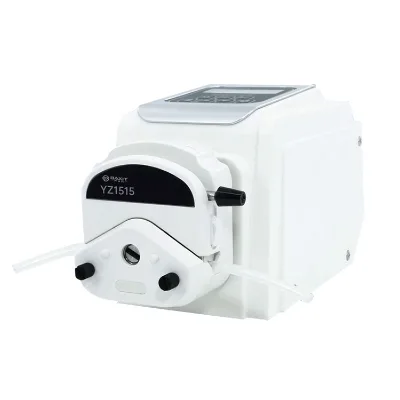
When evaluating technical specifications, buyers must prioritize motor type and control interface to ensure compatibility with existing systems. Stepper motors are commonly observed, offering precise speed control with resolutions as fine as 0.1 rpm. This level of precision is critical for applications requiring consistent dosing accuracy. Additionally, the presence of color LCD displays and touch screen adjustments enhances user interaction, allowing for intuitive operation and real-time monitoring of process parameters. Verifying these features ensures that the pump can be easily integrated into automated workflows or manual setups.
Flow rate and speed range are equally critical parameters that must be verified against process needs. Some models offer reversible flow capabilities, which can be advantageous for cleaning cycles or specific chemical handling procedures. Communication protocols such as RS485 with Modbus support enable seamless integration with PLCs or SCADA systems, facilitating remote control and data logging. Buyers should also consider physical dimensions and weight, as these factors impact installation space and portability. Ensuring that the pump’s overall dimensions and weight align with facility constraints is essential for successful deployment.
Compliance and Safety Documentation
Compliance with international standards is a non-negotiable aspect of sourcing intelligent control peristaltic pumps. Certifications such as CE and ISO9001 are frequently observed, indicating adherence to quality management and safety regulations. These certifications provide assurance that the manufacturer follows established processes for design, production, and testing. Buyers should request valid certification documents to verify that the specific model meets the regulatory requirements of their target market. This step is crucial for avoiding legal complications and ensuring product reliability in regulated industries.
Protection grades and environmental operating conditions are also key documentation elements to review. IP ratings, such as IP31, indicate the level of protection against solid objects and water ingress, which is vital for maintaining equipment integrity in various environments. Additionally, specifications regarding working temperature and humidity ranges help determine the suitability of the pump for specific facility conditions. Buyers should ensure that the pump’s operational limits align with their facility’s environmental controls to prevent premature failure or performance degradation.
Cost Drivers and Commercial Terms
Several factors influence the total cost of ownership for intelligent control peristaltic pumps, including customization options and power consumption. Customized features, such as specific flow rates or control interfaces, can increase the initial purchase price but may offer long-term efficiency gains. Power ratings, ranging from under 22W to 400W, also impact operational costs, with lower power models being more energy-efficient for continuous use. Buyers should evaluate the total cost, including energy consumption and maintenance, rather than focusing solely on the initial purchase price.
Commercial terms, including delivery times and packaging, play a significant role in procurement planning. Lead times can vary, with some suppliers offering delivery within 10 days by air or 20 days by ship. Understanding these timelines helps in managing inventory and production schedules effectively. Packaging details, such as carton or carton package, ensure safe transit and protect the equipment from damage. Buyers should negotiate clear terms regarding shipping, insurance, and warranty to mitigate risks associated with international procurement and ensure a smooth supply chain experience.
Supplier Qualification and Quality Control
Supplier qualification is a critical step in ensuring the reliability and consistency of intelligent control peristaltic pumps. Buyers should verify the supplier’s manufacturing capabilities, quality control processes, and after-sales support. Suppliers located in regions like Hebei and Shaanxi, China, may offer competitive pricing, but it is essential to assess their track record and customer feedback. Requesting samples or conducting factory audits can provide valuable insights into the supplier’s production standards and ability to meet specific requirements.
Quality control measures, such as rigorous testing and inspection protocols, are vital for maintaining product performance. Buyers should inquire about the supplier’s testing procedures, including flow rate accuracy, speed stability, and durability assessments. Additionally, understanding the supplier’s approach to continuous improvement and customer feedback can indicate their commitment to product excellence. Establishing a strong relationship with a qualified supplier ensures access to high-quality products and reliable support throughout the product lifecycle, reducing the risk of operational disruptions.
Long-Term Procurement Checks
Long-term procurement success depends on establishing robust performance monitoring and maintenance protocols for intelligent control peristaltic pumps. Buyers should implement regular checks on flow rate accuracy, speed resolution, and communication stability to ensure consistent performance over time. Tracking key performance indicators, such as downtime and maintenance frequency, helps identify potential issues early and optimize operational efficiency. This proactive approach minimizes disruptions and extends the lifespan of the equipment, providing a better return on investment.
Continuous evaluation of supplier performance and product updates is also essential for long-term procurement strategies. Buyers should stay informed about technological advancements and new features that may enhance their processes. Regular communication with suppliers can facilitate access to upgrades, spare parts, and technical support. By maintaining a dynamic procurement strategy, buyers can adapt to changing operational needs and leverage new innovations, ensuring that their peristaltic pump systems remain competitive and efficient in the long run.
FAQs
What certifications do these pumps hold?
The pumps hold CE and ISO9001 certifications as documented in the product specifications. Some models also carry ISO certification. These standards ensure compliance with international safety and quality management requirements for industrial and laboratory applications.
Can I customize the pump specifications?
Customization is available for certain models like the BT600LC and BT300L series. However, other models such as the BG600FC-S are listed as non-customized. Buyers should verify specific customization options based on the selected product model and supplier capabilities.
What is the maximum flow rate available?
The maximum flow rate ranges from 0.3 to 6000 ml per minute depending on the specific model selected. For instance, the BT100FC supports up to 12000 ml per minute while the BT600LC offers a range of 0.3 to 6000 ml per minute.
How fast can the motor rotate?
Motor speeds vary by model, with maximum speeds reaching up to 600 rpm for the BG600FC-S. The BT600LC supports up to 100 rpm reversible operation. Speed resolution is typically 0.1 rpm for precise control in laboratory settings.
Where are these pumps manufactured?
Manufacturing locations include Hebei and Shaanxi provinces in China. Specific models like the BT600LC originate from Hebei, while the BT300L is produced in Shaanxi. Buyers should confirm the origin for each specific order to ensure accurate logistics planning.
What is the delivery time for orders?
Delivery times are approximately 10 days by air or 20 days by ship for standard orders. This lead time applies to the BT300L model and similar configurations. Actual times may vary based on shipping method and specific supplier schedules.
What power consumption do these pumps use?
Power consumption is generally low, with some models using less than 50W or 22W. The BG600FC-S model consumes less than 400W. These low-power stepper motors ensure energy efficiency during continuous operation in various industrial and lab environments.