Source Intelligent Fuzzy PID Microplate Incubator for Lab, Hospital, School
Compare 30 listings for the Intelligent Fuzzy PID Microplate Incubator featuring PID microcomputer control and OLED displays. Buyers can evaluate temperature ranges, power consumption, and customization options for lab, hospital, and school applications.
Key considerations
Products List

SCITEK Microplate Incubator 4 Microplates PID Fuzzy Control Technology Incubator
$210.00 - $450.00
MOQ: 1 unit


Microplate Incubator Pid Control and Double-Layer Heating System Incubator for Lab
$399.00 - $425.00
MOQ: 1 Pieces
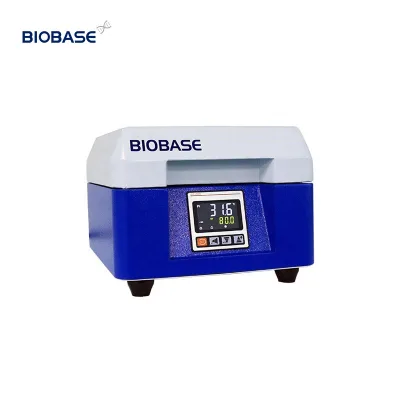
BIOBASE Microplate Incubator RT.+5°C~90°C Adopt Intelligent Fuzzy PID Control for Lab
$200.00 - $250.00
MOQ: 1 Minimum

Biobase Pid Control Microplate Incubator Small Microplate Incubator for Laboratory
$50.00 - $120.00
MOQ: 1 Unit

Automatic Temperature Humidity Control Microplate Incubator Bjpx-Ht150
$500.00 - $600.00
MOQ: 1 Pieces

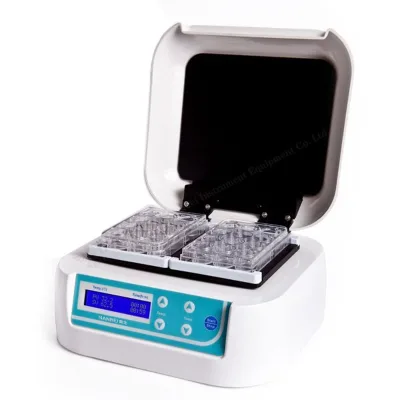


Rapid Incubation Equipment Microplate Rapid Incubator for Enzyme Linked Immunoassay
$2980.00 - $3180.00
MOQ: 1 Pieces



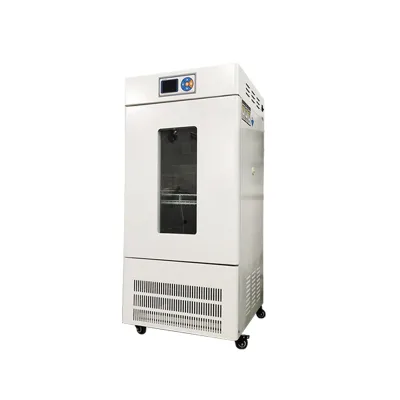

Comprehensive Sourcing Guide
Strategic Sourcing Guide for Intelligent Fuzzy PID Microplate Incubators
Understanding the Core Technology and Operational Mechanics
The procurement of an Intelligent Fuzzy PID Microplate Incubator requires a deep understanding of the specific control architecture that distinguishes these units from standard laboratory equipment. The core technology relies on a PID (Proportional-Integral-Derivative) microcomputer intelligent control system, which is explicitly noted in the product attributes as the primary method for temperature regulation. This system is designed to minimize thermal fluctuations and ensure stability within the incubation chamber, a critical factor for cell culture and biological assays. The "fuzzy" logic component implies an adaptive algorithm that adjusts heating and cooling outputs based on real-time deviations, rather than relying on fixed thresholds.
In the context of the available product data, the temperature control range is observed to vary significantly between models. Some units offer a range of RT.+5°C to 90°C, while others are specified with a range of 4°C to 60°C or RT.+5°C to 80°C. This variance suggests that buyers must carefully match the incubator's thermal envelope to their specific experimental requirements. For instance, applications requiring high-temperature incubation up to 90°C will necessitate a unit with the broader range, whereas standard bacterial cultures often function well within the 4°C to 60°C window. The display accuracy is consistently reported as 0.1°C or 0.1 degree, providing the granular feedback necessary for precise experimental replication.
The physical structure of these incubators is predominantly desktop, designed to fit on standard laboratory benches without occupying excessive floor space. The dimensions for a typical unit, such as the model referenced as MY-B088F, are listed as 250300200mm, with a single gross weight of 7.700 kg. This compact form factor is essential for labs with limited bench space. Furthermore, the convection mode is specified as "forced convection," indicating the use of fans to circulate air evenly throughout the chamber. This ensures that temperature gradients are minimized, preventing hot or cold spots that could compromise sample integrity. The heating time is a critical performance metric, with some models claiming a heating duration of ≤10 minutes to reach 90°C from 30°C, demonstrating rapid thermal recovery capabilities.
Compliance, Certification, and Regulatory Standards
When sourcing laboratory equipment, verifying compliance with international standards is non-negotiable. The product attributes indicate that the incubators under review carry ISO and CE certifications. The ISO certification generally implies adherence to quality management systems, ensuring that the manufacturing process is consistent and reliable. The CE mark signifies that the product meets the health, safety, and environmental protection standards for products sold within the European Economic Area. However, buyers must treat these certifications as observations of the specific listings provided rather than universal guarantees for every unit in the market.
The product origin is identified as China, specifically from the Shandong province. This geographic detail is relevant for understanding the supply chain dynamics and potential logistical considerations. The standard export packaging is a common feature, though some models utilize a "Standard Wooden Package," which may offer enhanced protection during long-distance shipping. Buyers should verify that the packaging standards align with the fragility of the internal components, particularly the OLED touch screens and the PID control boards.
Regarding safety and electrical standards, the power supply requirements are flexible, supporting AC220/110V or AC100V~245V at 50/60Hz. This wide voltage range is a significant advantage for international procurement, as it reduces the need for external transformers in many regions. However, the specific power consumption varies, with observed values of 120W and 300W. This difference likely correlates with the size of the chamber and the intensity of the heating elements. Buyers must ensure their facility's electrical infrastructure can support the peak load of the selected model.
Cost Drivers and Pricing Structure Analysis
The pricing for intelligent fuzzy PID microplate incubators exhibits a wide spectrum, with observed listed prices ranging from $50 to $5,330 USD. This substantial range indicates that the cost is driven by several distinct factors beyond the basic functionality of temperature control. The lower end of the spectrum likely corresponds to simpler models with basic digital displays and standard heating elements, while the higher end reflects units with advanced features such as OLED touch screens, multi-terminal programming, and higher power consumption capabilities.
The Minimum Order Quantity (MOQ) for these products is consistently observed as 1, which is highly favorable for procurement flexibility. This low MOQ allows laboratories to purchase single units for immediate deployment or to test specific models before committing to larger orders. The customization options, including ODM (Original Design Manufacturer) and OEM (Original Equipment Manufacturer) support, also play a role in pricing. Customized units, which may feature specific branding, unique dimensions, or tailored control interfaces, will naturally command a premium over standard off-the-shelf models.
Additional cost drivers include the warranty terms and the complexity of the control system. A standard warranty of 1 Year is noted in the product data, but buyers should investigate whether extended warranty options are available for a fee. The inclusion of advanced features like multi-terminal programming and intelligent control algorithms adds to the manufacturing cost, which is reflected in the final price. Buyers should also consider the total cost of ownership, including energy consumption. Models with higher wattage (e.g., 300W) will incur higher operational costs over time compared to more energy-efficient 120W units, particularly in facilities with high electricity rates.
Typical Applications and Operational Versatility
The versatility of intelligent fuzzy PID microplate incubators makes them suitable for a diverse range of applications across multiple sectors. The product attributes explicitly list applications in labs, hospitals, schools, and industries. This broad applicability stems from the precise temperature control and the ability to handle various types of culture vessels. The capacity is specified as holding 2PCS Microplates or Culture Plates, indicating that these units are optimized for high-throughput screening and small-scale experiments.
In a laboratory setting, these incubators are essential for cell culture, bacterial growth, and enzymatic reactions where temperature stability is paramount. The forced convection mode ensures uniform temperature distribution, which is critical for reproducible results in sensitive biological assays. In hospital environments, they may be used for preparing samples for diagnostic testing or for maintaining specific cultures required for patient care. Educational institutions, such as schools and universities, utilize these units for teaching laboratory techniques and conducting student research projects.
The industrial application is equally significant, particularly in biotechnology and pharmaceutical research. The ability to program complex temperature profiles using the multi-terminal programming feature allows for the simulation of various environmental conditions. This is particularly useful for stress testing biological samples or optimizing growth conditions for industrial strains. The timing range, which can extend up to 9999 hours or 999.9 hours depending on the model, supports long-term experiments without the need for constant monitoring. The amplitude of 26mm and oscillation frequency of 0-300rpm, observed in some product listings, suggest that certain models may also function as shakers, adding another layer of versatility for applications requiring agitation.
Supplier Evaluation and Quality Control Protocols
Evaluating suppliers for microplate incubators requires a rigorous approach to ensure product quality and reliability. Since the product origin is China, buyers should prioritize suppliers who can provide transparent documentation regarding their manufacturing processes and quality control measures. The presence of ISO certification is a positive indicator, but it should be verified against the specific certification body and the scope of the certification. Buyers should request copies of the ISO and CE certificates to confirm their validity and current status.
Quality control should extend beyond the initial purchase to include post-delivery inspections. The display accuracy of 0.1°C and temperature accuracy of ≤±0.5°C are key performance indicators that should be validated upon receipt. Buyers can perform a simple calibration check using a certified thermometer to ensure the unit's internal sensor aligns with the displayed values. The heating time specification of ≤10 minutes is another metric that can be tested to verify the unit's performance against the manufacturer's claims.
The structural integrity of the incubator is also a critical quality factor. The desktop structure and the use of materials such as plastic and stainless steel should be inspected for durability and resistance to corrosion. The packaging, whether standard export or wooden, should be examined for signs of damage that could indicate rough handling during transit. Additionally, the power supply compatibility should be tested to ensure the unit operates correctly on the local electrical grid without overheating or tripping breakers.
Long-Term Procurement and Maintenance Considerations
Long-term procurement strategies for intelligent fuzzy PID microplate incubators should focus on sustainability, maintenance, and scalability. The warranty period of 1 Year is a standard baseline, but buyers should negotiate for extended coverage or service contracts that include regular maintenance visits. This is particularly important for units with complex electronic components like OLED touch screens and PID controllers, which may require specialized repair services.
Energy efficiency is another long-term consideration. While the initial purchase price is a significant factor, the operational cost of running the incubator 24/7 can be substantial. Buyers should compare the power consumption ratings of different models to select the most energy-efficient option that meets their performance needs. The ability to program temperature profiles and timing can also contribute to energy savings by allowing the unit to operate at lower power levels during non-critical phases of an experiment.
Scalability is crucial for growing laboratories. The low MOQ of 1 allows for the gradual expansion of the incubator fleet, but buyers should consider the compatibility of different models within the same facility. Standardizing on a single brand or model family can simplify training, maintenance, and parts procurement. The customization options, such as ODM and OEM, offer the potential to tailor future purchases to specific institutional needs, ensuring that the equipment evolves alongside the laboratory's research requirements.
Finally, the supply chain stability should be assessed. Given the product origin in Shandong, China, buyers should evaluate the supplier's ability to maintain consistent lead times and inventory levels. Disruptions in the global supply chain can impact the availability of spare parts and replacement units. Establishing a relationship with a supplier who has a robust logistics network and a history of reliable delivery is essential for ensuring uninterrupted laboratory operations. By focusing on these long-term factors, buyers can secure a procurement strategy that delivers value and reliability over the lifespan of the equipment.
FAQs
What temperature range does this incubator support?
The incubator supports a temperature control range of RT.+5°C to 90°C or 4°C to 60°C depending on the specific model. This wide range allows for diverse applications including bacterial culture and high-temperature incubation needs in labs and hospitals.
Can I customize the incubator for my brand?
Yes, customized support including OEM and ODM options is available for these units. Buyers can request specific branding or design modifications, though this may affect the final price and lead time compared to standard off-the-shelf models.
Which certifications do these incubators hold?
The products listed carry ISO and CE certifications to ensure quality and safety standards. These certifications indicate adherence to international management systems and European health and safety requirements for laboratory equipment sold in global markets.
How much power does the incubator consume?
Power consumption varies between 120W and 300W depending on the specific model and heating requirements. The unit operates on AC100V to 245V at 50/60Hz, making it suitable for various international electrical standards without needing external transformers.
What is the minimum order quantity for purchase?
The minimum order quantity is one unit, allowing for flexible procurement of single items. This low MOQ enables laboratories to test specific models or purchase immediately without committing to bulk orders or large inventory investments.
Where are these incubators manufactured?
These incubators originate from China, specifically the Shandong province. Buyers should consider this geographic origin when planning logistics and supply chain timelines for international shipping and customs clearance.
How accurate is the temperature display and control?
The display accuracy is 0.1°C, and the temperature accuracy is maintained within ±0.5°C. This precision is achieved through PID microcomputer intelligent control and forced convection to ensure uniform heating for sensitive biological experiments.