Source Intelligent Home Control Panel for Lighting, HVAC, and Security
Compare 30 available Intelligent Home Control Panel options featuring TFT displays, capacitive touch, and smart group control. Buyers can evaluate specifications like resolution, interface types, and customization support from verified suppliers in China.
Key considerations
Products List


Smart Home Touch Control Panel Smart Room Dashboard Hotel Touchscreen Smart Switch 4inch
$140.00 - $150.00
MOQ: 1000 Pieces


10 Inch Smart Home Building Automation Solution Android Touch Control Panel
$125.00 - $158.00
MOQ: 2 pieces

8 Inch IPS Screen Home Automation Touch Monitor Android Touch Control Panel
$95.00 - $118.00
MOQ: 1 Pieces

11 Inches 12 Inches 11.6 Inches Home and Room Automation Smart Control Touch Panel
$155.00 - $176.00
MOQ: 2 pieces


4inch Smart Home Touch Control Panel Screen Applied for Household Appliances
$28.80 - $58.80
MOQ: 1 Pieces

Smart Home 3.95inch Touch Control Panel Touchscreen with Smart Switch Dashboard
$28.80 - $58.80
MOQ: 1 Pieces


Comprehensive Sourcing Guide
Strategic Sourcing Guide for Intelligent Home Control Panels
The global shift toward smart living environments has elevated the Intelligent Home Control Panel from a niche luxury to a fundamental component of modern building infrastructure. For B2B procurement professionals, sourcing these devices requires a nuanced understanding of the intersection between hardware specifications, connectivity protocols, and system integration capabilities. The market offers a diverse array of options, ranging from standalone touch interfaces to complex group control systems designed for automation. This guide provides a disciplined framework for evaluating suppliers and selecting products that align with rigorous technical and operational requirements, ensuring that procurement decisions are based on verifiable data rather than marketing assertions.
Technical Architecture and Display Specifications
The core functionality of an Intelligent Home Control Panel relies heavily on its display technology and processing architecture. When evaluating potential products, buyers must scrutinize the module outline and active area dimensions to ensure compatibility with existing installation frameworks. Current market observations indicate that 4-inch modules are prevalent, with specific model configurations offering a module outline of approximately 74.23mm in height and 77.20mm in width, with a thickness of 2.16mm. The active display area typically measures around 70.53mm by 71.28mm, providing sufficient real estate for user interfaces without compromising the aesthetic profile of the device.
Display technology is a critical differentiator. High-performance panels often utilize TFT (Thin Film Transistor) technology with IPS (In-Plane Switching) modes to ensure wide viewing angles and consistent color reproduction. The display mode is frequently described as transmissive and normally black, which optimizes contrast ratios and power consumption. Resolution standards vary, but a 480RGB by 480 pixel count is a common benchmark for this form factor, delivering sharp imagery suitable for icons and text. Color depth is another vital metric; capable units support 16.7 million colors, ensuring a vibrant user experience.
Response time is a functional attribute that directly impacts user satisfaction. A response time of 25 milliseconds is observed in high-quality units, ensuring that touch inputs are registered instantly without perceptible lag. The interface technology is predominantly capacitive, offering a smooth and responsive touch experience compared to resistive alternatives. The interface data transmission often utilizes an 18-bit RGB configuration, which is essential for maintaining signal integrity between the controller and the display driver. Buyers should verify that the selected panel supports the specific driving mode required by their system, whether it is independent or non-independent, as this dictates the complexity of the integration process.
Connectivity Protocols and System Integration
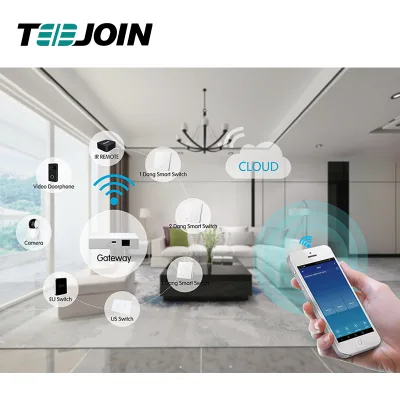
The intelligence of a home control panel is defined by its ability to communicate with other devices and central systems. Connectivity is not merely an add-on but a foundational requirement for modern automation. The observed market data highlights support for multiple transport protocols, including WiFi, Bluetooth, and Zigbee. This multi-protocol capability allows the panel to integrate seamlessly into diverse network topologies, from direct cloud connections to localized mesh networks.
Specific models feature Zigbee connectivity with two antennas, which significantly enhances signal reliability and range within the home environment. The working temperature range for these communication modules is typically specified between 0°C and 40°C, while the storage temperature can withstand extremes from -30°C to 80°C. Humidity tolerance is also a critical specification; units are often rated to operate in environments with 5% to 90% relative humidity, provided the humidity is non-condensing. This robustness ensures that the panel remains functional in various room conditions, from dry living rooms to humid kitchens.
The control mode of the system is another area requiring careful verification. Some advanced units employ electronically controlled pneumatic adjusting mechanisms, particularly in industrial or specialized HVAC integration scenarios. The driving mode may be non-independent, meaning the panel relies on a central controller for processing logic. For buyers seeking a standalone solution, the availability of "Smart House Control System" capabilities as a key work function is essential. Additionally, the "Group Control" attribute suggests the ability to manage multiple zones or devices simultaneously, a feature that is increasingly demanded in large-scale residential and commercial projects.
Operational Parameters and Environmental Resilience
Procurement decisions must account for the physical and environmental constraints of the installation site. The operating temperature range for the Intelligent Home Control Panel is a primary consideration. While some units are rated for a broad operating range of -20°C to 70°C, others may be limited to 0°C to 40°C depending on the internal component selection. Buyers must match the panel's thermal specifications to the ambient conditions of the intended location to prevent premature failure.
Power requirements are equally critical. The maximum voltage rating for these devices typically spans 100V to 240V at 50/60Hz, ensuring compatibility with global power standards. The maximum current draw is often capped at 10A, which influences the design of the electrical circuit and the sizing of the power supply unit. Mechanical life is a key durability metric; observed data indicates a mechanical life of 500,000 actuation cycles, which is sufficient for high-traffic residential applications. However, for commercial settings with heavy usage, this figure should be validated against specific usage projections.
Customization and Product Configuration
The ability to customize the product is a significant advantage for B2B buyers who require tailored solutions. The market offers extensive customization options, including software reengineering to align the user interface with specific brand guidelines or functional requirements. The product packing is another area where customization plays a role. While standard export cartons are common, specific orders may require anti-static bags, bubble polyfoam boxes, and outer cartons to protect sensitive electronics during transit.
Product models vary significantly, with identifiers such as TM-SHCS, FT-TP, and 12475 representing different configurations. The standard for these products is often defined by the physical dimensions, such as the 4-inch standard, or specific packaging dimensions like 81.5mm by 79.6mm by 5mm. The origin of the product is also a factor in the supply chain; while some units originate from specific manufacturing hubs like Shangshang or Shenzhen, China, buyers should verify the actual production location to ensure compliance with regional trade regulations. The "set" standard implies that the product may be sold as part of a complete system rather than a standalone component, which affects the procurement strategy and inventory management.
Supplier Evaluation and Quality Assurance
Evaluating suppliers for intelligent home control panels requires a multi-faceted approach that goes beyond price comparison. The "Automation" advantage is a key attribute to look for, indicating that the supplier has invested in automated manufacturing processes that reduce human error and improve consistency. A warranty period of one year is a standard baseline, but buyers should investigate the terms of this warranty, including coverage for manufacturing defects and the process for handling returns.
Quality control should be a central pillar of the supplier selection process. Buyers must verify that the supplier adheres to specific standards, even if the exact standard number is not immediately visible in the product listing. The "set" standard mentioned in product data suggests a defined set of criteria that the product must meet. It is imperative to request documentation that confirms the product meets these standards, particularly regarding the digital LCD module type, which is often categorized as a timing module.
The origin of the product, whether from Shangshang or Shenzhen, can influence the supply chain dynamics. Shenzhen is a known hub for electronics manufacturing, offering a robust ecosystem of component suppliers and logistics support. However, buyers should not assume that all products from a specific location meet the same quality threshold. Instead, they should request third-party test results and performance data to validate the claims made by the supplier. The absence of specific certification names in the provided data means that buyers must explicitly ask for certifications relevant to their target market, such as CE, FCC, or RoHS compliance.
Cost Drivers and Procurement Strategy
The cost of intelligent home control panels is influenced by several factors, including the complexity of the display technology, the connectivity protocols, and the level of customization required. The observed price range in the market is broad, spanning from $0.10 to $5,000, reflecting the diversity of products from basic modules to fully integrated smart home systems. The minimum order quantity (MOQ) also varies, with ranges observed from 1 to 1,000 units. This flexibility allows buyers to scale their orders based on project needs, from small pilot installations to large-scale deployments.
Lead times and production capacity are critical considerations for project planning. While specific lead times are not provided in the source data, buyers should establish clear timelines with the supplier to ensure that the delivery schedule aligns with the project milestones. The packaging method, whether it is a standard export carton or a specialized anti-static package, can also impact the overall cost and logistics.
Long-Term Procurement Considerations
Sourcing intelligent home control panels is not a one-time transaction but a long-term partnership that requires ongoing management. The "Smart" system attribute implies that the product will require firmware updates and software support over its lifecycle. Buyers should evaluate the supplier's ability to provide long-term software reengineering support and updates to ensure the system remains secure and functional.
The "Group Control" feature suggests that the system is designed to scale. As the number of connected devices increases, the control panel must maintain its performance. Buyers should verify that the supplier has a roadmap for future product enhancements and that the current models are compatible with upcoming standards. The mechanical life of 500,000 cycles is a strong indicator of durability, but the actual lifespan of the system will depend on the quality of the installation and the environmental conditions.
In conclusion, sourcing intelligent home control panels requires a meticulous approach that balances technical specifications, connectivity requirements, and supplier reliability. By focusing on verifiable attributes such as display resolution, response time, and operating temperature ranges, buyers can make informed decisions that mitigate risk and ensure the success of their smart home projects. The broad range of available models and customization options provides the flexibility needed to meet diverse market demands, but it also necessitates a disciplined evaluation process to select the right product for the specific application.
FAQs
What customization options are available for the smart home control panel?
Customization is available including software reengineering to align with specific brand guidelines. Buyers can request tailored solutions for user interfaces and functional requirements while maintaining standard export packaging.
Which connectivity protocols does the Intelligent Home Control Panel support?
The panel supports multiple transport protocols including WiFi, Bluetooth, and Zigbee. Specific models feature Zigbee connectivity with two antennas to enhance signal reliability and range within the home environment.
How does the display technology ensure high performance for users?
The display utilizes TFT technology with IPS mode for wide viewing angles and consistent color reproduction. It offers a 25ms response time and 16.7 million colors for a vibrant user experience.
What are the operating temperature and humidity limits for the device?
Operating temperatures range from -20 to 70 degrees Celsius with storage limits up to 80 degrees. The device functions in 5% to 90% relative humidity provided the humidity remains non-condensing.
Can the system support group control for multiple zones?
Yes, the system features group control capabilities to manage multiple zones or devices simultaneously. This attribute is essential for large-scale residential and commercial projects requiring centralized automation.
What is the mechanical life expectancy of the touch screen?
The mechanical life is rated for 500,000 actuation cycles, suitable for high-traffic residential applications. Buyers should validate this figure against specific usage projections for commercial settings.