Find Internal Pipe Cutting Machine for Steel, Metal, and Alloy
Source 30 internal pipe cutting machines with varying capacities from 2 to 36 inches. Compare semi-automatic and automatic models powered by electric or pneumatic systems for cutting stainless steel, aluminum, and carbon steel in industrial applications.
Key considerations
Products List


$200.00 - $700.00
MOQ: 1 Sets


$1000.00 - $20000.00
MOQ: 1 Pieces

$1000.00 - $20000.00
MOQ: 1 Pieces
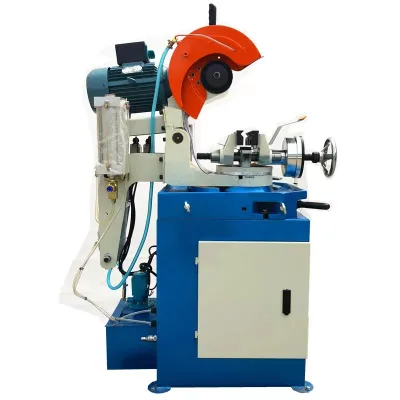
High-Performance Square and Round Pipe Cutting Machine for Metalworking
$1015.13 - $1199.60
MOQ: 1 cases


Comprehensive Sourcing Guide
Strategic Sourcing Guide for Internal Pipe Cutting Machines
Procuring internal pipe cutting machines requires a rigorous approach to technical specification matching, compliance verification, and supplier evaluation. These specialized industrial tools are designed to perform precise cuts within the confines of pipe interiors, a task that demands high torque, specific speed controls, and robust mounting capabilities. The market offers a diverse array of models, ranging from semi-automatic units to fully automated systems, each tailored for specific pipe diameters, wall thicknesses, and material compositions. Buyers must navigate a landscape where attributes such as power output, drive mode, and cutting capacity vary significantly between models. This guide provides a structured framework for evaluating these machines based on observed market data and verified technical parameters, ensuring that procurement decisions are grounded in factual evidence rather than marketing claims.
Technical Specifications and Performance Parameters
The primary determinant in selecting an Internal Pipe Cutting Machine is the alignment of technical specifications with the intended application. The observed market data reveals a distinct segmentation based on pipe capacity and power requirements. For instance, models designated with item numbers such as CM-20 and CM-12 demonstrate varying capacities, with the CM-20 supporting a range of 8" to 20" and the CM-12 accommodating 2" to 12" pipes. These differences dictate the machine's suitability for specific industrial projects. The CM-20, for example, is equipped with an 1100W power source, whereas other models like the HC-2X operate with a 550W motor. This variance in wattage directly influences the machine's ability to cut through different wall thicknesses, with the CM-20 capable of handling a maximum wall thickness of 10mm.
Drive mode and automation levels are equally critical. The market includes both semi-automatic and fully automatic configurations. The CM-20 is identified as a semi-automatic unit with an electric drive mode, offering an output speed of 23 Rpm. In contrast, the HC-2X model features a drill chuck speed of 240rpm and a pipe mounting capacity ranging from 1 1/4" to 8" (32mm to 200 mm). The PTC140 model presents a different operational profile with a variable output speed of 0-350 Rpm and a capacity of 12mm to 141mm. Buyers must carefully match these rotational speeds and power outputs to the material being cut. The HC-2X, for example, supports a drill chuck capacity of 1/16" to 5/8" (2mm to 16 mm), which is essential for smaller diameter operations. Furthermore, the layout of the machine, whether coaxial or horizontal, affects the stability and precision of the cut. The OCE-762 and OCP-914 models, with working ranges of 24"-30" and 30"-36" respectively, illustrate the need for machines capable of handling larger diameter pipes in industrial settings.
Material Compatibility and Cutting Capabilities
The versatility of an Internal Pipe Cutting Machine is largely defined by its ability to process various materials. The observed data indicates that these machines are engineered to cut a wide spectrum of metals, including stainless steel, metal alloys, aluminum, iron, carbon steel, and copper. This broad material compatibility is a significant advantage for general contractors and specialized fabrication shops that handle diverse piping requirements. However, the cutting capability is not uniform across all models. The HC-2X, for instance, is explicitly noted for a cutting capacity of 4" (114mm), which serves as a hard limit for that specific unit.
When evaluating material compatibility, buyers must consider the interaction between the machine's power, the cutting tool's speed, and the material's hardness. The OCE-762 model, for example, is designed for metal applications and features a pneumatic power source, suggesting a reliance on compressed air for operation. This is distinct from the electric drive modes seen in the CM series. The ability to cut stainless steel and carbon steel requires sufficient torque and appropriate cutting speeds to prevent tool wear or material deformation. The HC-2X's drill chuck capacity of up to 16 mm suggests it is optimized for smaller, more precise cuts, whereas the CM-20's 10mm wall thickness limit indicates a focus on structural piping. Buyers should verify that the specific model selected can handle the specific alloy and wall thickness of the pipes in their inventory, as exceeding these limits can lead to equipment failure or unsafe operating conditions.
Compliance, Certification, and Safety Standards
Ensuring that a machine meets international safety and quality standards is a non-negotiable aspect of B2B procurement. The market data highlights that some models, such as the OCE-762, carry ISO 9001 and CE certifications. These certifications are critical indicators of a manufacturer's commitment to quality management systems and compliance with European safety directives. The ISO 9001 standard specifically relates to quality management, ensuring consistent production processes, while the CE mark indicates conformity with health, safety, and environmental protection standards for products sold within the European Economic Area.
However, buyers must exercise caution regarding the scope of these certifications. The presence of an ISO 9001:CE mark on a specific model does not automatically imply that all machines in a supplier's catalog share the same certification status. It is essential to verify the certification for the exact model number being purchased. Additionally, the OCE-762 model lists a waterproof rating of IPX-0, which indicates a lack of protection against water ingress. This is a crucial safety consideration for machines that may be used in environments where moisture or coolant is present. Buyers should assess whether the IP rating of the machine matches the environmental conditions of the intended work site. For operations in wet or dusty environments, a higher IP rating would be necessary to prevent electrical hazards and equipment damage. The warranty terms, such as the 1-year warranty observed on the OCE-762, also serve as a proxy for the manufacturer's confidence in the product's durability and compliance with safety standards.
Cost Drivers and Procurement Economics
The cost of internal pipe cutting machines is influenced by a complex interplay of factors, including power output, automation level, material handling capacity, and packaging requirements. The observed price range in the market spans from $1 to $95,000, reflecting the vast difference between basic manual or semi-automatic units and high-end automated systems. The CM-20, with its 1100W power and 10mm wall thickness capacity, likely occupies a mid-range price point compared to the more specialized HC-2X or the heavy-duty OCE-762.
Packaging and logistics also contribute to the total cost of ownership. The CM-20 and CM-12 models are shipped in plywood cases, which provide robust protection during transit but add to the shipping weight and volume. In contrast, the OCE-762 is described as having a shrink-wrapped machine body inside an exported stand, a configuration that may offer different protection levels and handling requirements. The dimensions of the packaging, such as the 9080100cm standard for the CM-20 or the 14001400320mm standard for the OCE-762, directly impact freight costs and storage requirements. Buyers should factor in these logistical costs when comparing total acquisition costs. Furthermore, the minimum order quantity (MOQ) observed in the market ranges from 1 to 5 units, allowing for flexibility in procurement for both small workshops and large industrial enterprises. Understanding these cost drivers helps in budgeting and negotiating effectively with suppliers.
Supplier Evaluation and Quality Assurance
Selecting a reliable supplier is as important as selecting the right machine. The market data indicates that the majority of these machines originate from China, a major hub for industrial machinery manufacturing. While this offers access to a wide variety of models, it necessitates a thorough supplier evaluation process. Buyers should verify the supplier's track record, production capacity, and after-sales support capabilities. The presence of certifications like ISO 9001 and CE on specific models suggests that the manufacturer adheres to certain quality standards, but this should be confirmed through direct communication and documentation requests.
Quality control measures should be a central part of the procurement strategy. Buyers should request detailed test results, inspection reports, and maintenance manuals for the specific models they intend to purchase. The OCE-762 model, for instance, is listed as "New" and includes a 1-year warranty, which are positive indicators of product condition and supplier confidence. However, buyers must ensure that these attributes apply to the specific batch of machines they are ordering. It is also advisable to conduct pre-shipment inspections to verify that the machines meet the agreed-upon specifications, such as the correct power output, speed, and cutting capacity. The layout of the machine, whether horizontal or coaxial, should be verified against the buyer's operational requirements to ensure seamless integration into existing workflows.
Long-Term Procurement and Operational Considerations
Long-term procurement considerations extend beyond the initial purchase price and include maintenance, spare parts availability, and operational efficiency. The automation level of the machine plays a significant role in long-term operational costs. Semi-automatic models like the CM-20 may require more operator intervention, potentially increasing labor costs over time, whereas fully automatic models like the OCP-914 could offer higher throughput and reduced labor dependency. The working range of the machine, such as the 24"-30" range for the OCE-762 or the 30"-36" range for the OCP-914, determines its versatility and potential for future projects.
Buyers should also consider the customization options available. The market data indicates that customization is available for these machines, allowing for modifications to meet specific project requirements. This flexibility can be a significant advantage for buyers with unique operational needs. However, customization may impact lead times and costs, so it is essential to discuss these details with the supplier early in the procurement process. The condition of the machine, whether new or refurbished, is another critical factor. The OCE-762 is listed as "New," which generally implies a longer service life and lower maintenance needs compared to refurbished units. Finally, buyers should establish a clear maintenance schedule and ensure access to technical support and spare parts to minimize downtime and maximize the lifespan of the equipment.
Conclusion
Sourcing internal pipe cutting machines requires a meticulous approach that balances technical specifications, compliance requirements, and economic factors. The diverse range of models available, from the semi-automatic CM-20 to the pneumatic OCE-762, offers solutions for various industrial applications. By carefully evaluating power output, cutting capacity, material compatibility, and certification status, buyers can make informed decisions that align with their operational needs. The observed market data provides a solid foundation for understanding the capabilities and limitations of these machines, but continuous verification and supplier engagement are essential to ensure a successful procurement outcome. Ultimately, the goal is to acquire equipment that delivers precision, safety, and efficiency, supporting the long-term success of the buyer's industrial operations.
FAQs
What is the maximum wall thickness the CM-20 can cut?
The CM-20 model can cut a maximum wall thickness of 10mm. This semi-automatic machine operates with an electric drive mode and supports pipe capacities ranging from 8 to 20 inches.
Which models support cutting stainless steel and carbon steel?
The internal pipe cutting machines listed can process stainless steel, metal alloys, aluminum, iron, carbon steel, and copper. This material compatibility applies to the observed product range including the HC-2X and CM series.
Can buyers find machines with ISO 9001 and CE certifications?
Yes, specific models like the OCE-762 carry ISO 9001 and CE certifications. Buyers should verify that these quality and safety standards apply to the exact model number being purchased before finalizing the order.
What is the price range for these internal pipe cutting machines?
The observed price range for these machines spans from 1 to 95000 USD. This wide variation reflects differences in automation levels, power output, and specialized cutting capacities across the available models.
How does the HC-2X model differ in cutting capacity?
The HC-2X model features a cutting capacity of 4 inches or 114mm. It also supports a pipe mounting capacity from 1 1/4 to 8 inches and operates with a 550W power source.
What packaging options are available for the CM-20 model?
The CM-20 model is packed in a plywood case with standard dimensions of 90 by 80 by 100cm. This packaging ensures robust protection during transit for the semi-automatic electric unit.
Are customization options available for these machines?
Customization is available for the internal pipe cutting machines listed. Buyers can request specific modifications to meet unique project requirements, though this may impact lead times and overall costs.