Source IP65 Phosphor Converted LED Chip for Cameras, Cars, Lighting
Compare 30 listings for IP65 Phosphor Converted LED Chip options suitable for digital still cameras, car lights, and general lighting. Buyers can review specifications including voltage, current, and luminous intensity from verified suppliers.
Key considerations
Products List

SMD 2835 0.5W1w1.5W 3V 6V 9V 18V 36V Phosphor Converted Red 620-630nm LED Chip
$0.02 - $0.03
MOQ: 60000 Pieces


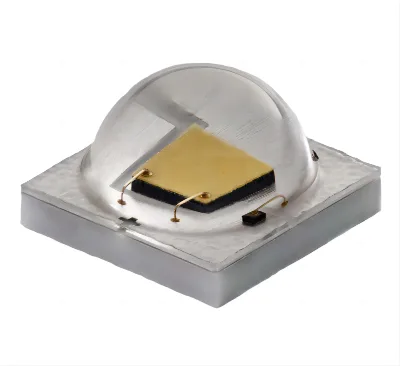
Original Packaged CREEs LEDs High Power LED Chip for Industrial Lighting
$0.33 - $0.35
MOQ: 5000 pieces

$8.87 - $10.60
MOQ: 100 Pieces


Original LED 410nm 420nm UVA Purple LED Light LED Chip High Power 3W
$0.01 - $0.03
MOQ: 1000000 Pieces


Comprehensive Sourcing Guide
Strategic Sourcing Guide for IP65 Phosphor Converted LED Chips
Navigating the procurement landscape for IP65 phosphor-converted LED chips requires a disciplined approach that balances technical performance with supply chain reliability. Buyers seeking these components must understand that "IP65" in the context of LED chips often refers to the final module or lens assembly rating rather than the bare die itself, as the chip substrate is typically not rated for water ingress in isolation. The core keyword suggests a focus on high-reliability, environmentally resistant lighting solutions, likely utilizing phosphor conversion technology to achieve specific color temperatures from blue or UV emitters. This guide outlines the critical factors for sourcing these components, drawing on observed market data and standard industry practices to ensure informed decision-making.
Technical Specifications and Performance Metrics
When evaluating phosphor-converted LED chips, the primary technical differentiators are the chip material, luminous efficacy, and thermal management capabilities. The market data indicates a diversity in chip materials, with InGaN (Indium Gallium Nitride) being a prevalent choice for blue and white light generation, while AlGaInP (Aluminum Gallium Indium Phosphide) is observed in applications requiring amber or red emission. For phosphor-converted white LEDs, the InGaN base is standard, where a blue LED chip excites a phosphor layer to emit white light. Buyers must verify the specific chip material to ensure compatibility with the intended optical design.
Luminous flux and efficacy are critical for efficiency calculations. Observed data points to luminous flux values ranging from 100 lumens for specific high-power configurations, with efficacy figures around 48 lumens per watt. However, these figures are highly dependent on the drive current and thermal conditions. The current operating ranges observed span from 350mA to 1500mA, indicating that the sourcing strategy must account for the driver circuit's ability to handle these variances. Power dissipation is another key metric; while some high-power units are rated at 5W, others operate at 1W. The thermal design of the PCB and the heat sink must be matched to the specific power dissipation of the selected chip to prevent premature failure.
The physical dimensions of the chip also dictate the assembly process. Standardized sizes such as 2.8x3.5mm, 5.7x3.0mm, and 3x3mm are common in the market. The beam angle is a crucial optical parameter, with 120° being a standard observation for broad-area illumination. Buyers should verify if the phosphor coating is uniform, as inconsistencies can lead to color mixing issues. Additionally, the optical attenuation rate, observed as low as 0.5% or 0.001 in specific datasets, is a vital indicator of long-term color stability. A lower attenuation rate suggests better resistance to degradation over time, which is essential for applications requiring consistent color rendering.
Compliance and Certification Verification
In the global LED market, compliance is not merely a formality but a prerequisite for market access and liability protection. The observed certification landscape includes RoHS (Restriction of Hazardous Substances), CE (Conformité Européenne), and EMC (Electromagnetic Compatibility). Some suppliers also list CCC (China Compulsory Certification), which is mandatory for products sold within the Chinese market. When sourcing IP65-rated modules or chips intended for such ratings, buyers must ensure that the certifications cover the specific component type and not just the finished assembly.
The presence of these certifications should be verified through valid documentation from the manufacturer. RoHS compliance ensures that the lead content and other hazardous materials are within legal limits, which is critical for environmental regulations in Europe and North America. EMC certification confirms that the LED chip does not emit excessive electromagnetic interference that could disrupt nearby electronics. CE marking indicates conformity with health, safety, and environmental protection standards for products sold within the European Economic Area.
It is important to note that while certifications are listed as facts for certain products, they are not universal guarantees for every item in a catalog. Buyers must request specific test reports for the exact model number being procured. For instance, a model with a 5-year warranty might have different certification requirements than a standard commercial grade chip. The "IP65" rating itself, if claimed for the final assembly, requires rigorous testing for dust tightness and water jet resistance, which should be validated by independent third-party laboratories rather than relying solely on the supplier's internal claims.
Cost Drivers and Pricing Dynamics
The pricing of LED chips is influenced by a complex interplay of factors, including chip material, power rating, and order volume. The observed price range in the market spans from $0.01 to $19.59, reflecting the vast difference between low-power indicator LEDs and high-power illumination chips. The minimum order quantity (MOQ) varies significantly, ranging from 1 unit for sampling to 1,000,000 units for bulk industrial contracts. This wide MOQ range allows buyers to scale their procurement based on project phases, from prototyping to mass production.
High-power chips, such as those rated at 5W, generally command a higher price point due to the advanced packaging and thermal management required. Conversely, lower power chips, like the 1W variants, are more cost-effective for general lighting applications. The packaging type also affects cost; chips packaged in rolls (e.g., 2000 to 5000 pieces per roll) are optimized for automated pick-and-place assembly, which can reduce downstream manufacturing costs. Customization availability is a significant cost driver; while standard products are cheaper, custom phosphor formulations or specific binning for color consistency will incur additional charges.
Buyers should be aware that the "observed" price range is a snapshot of the market and does not represent a fixed standard. Fluctuations in raw material costs, particularly for gallium and indium, can impact pricing. Furthermore, the origin of the product, often listed as Guangdong, China, plays a role in logistics costs and lead times. Buyers must factor in the total cost of ownership, which includes shipping, tariffs, and potential quality control costs, rather than focusing solely on the unit price.
Typical Applications and Integration Requirements
The versatility of phosphor-converted LED chips makes them suitable for a wide array of applications. The data highlights specific use cases such as digital still cameras and car lighting, where color accuracy and reliability are paramount. In automotive applications, the IP65 rating is particularly relevant for exterior lighting components that must withstand rain, dust, and temperature extremes. The high luminous intensity, observed between 380 and 430 lumens for certain models, supports applications requiring bright, focused illumination.
For general lighting, the availability of both warm white and white emitting colors allows for customization based on the desired ambiance. The 50,000-hour life expectancy observed in the market data suggests that these chips are suitable for long-life installations where maintenance is difficult or costly, such as street lighting or industrial facilities. The support for dimming, however, is not universal; some products explicitly state "NO" for dimming support, requiring buyers to verify compatibility with their existing control systems.
Integration into the final product requires careful consideration of the electrical parameters. The voltage range of 2.8V to 3.4V is typical for white LEDs, but the current requirements can vary from 700mA to 1500mA. This necessitates robust driver circuits to maintain constant current and prevent thermal runaway. The physical size of the chip, such as the 2.0x1.6x0.65mm form factor, influences the PCB layout and the thermal path design. Buyers must ensure that the mechanical design of their product can accommodate the specific dimensions and mounting requirements of the chosen chip.
Supplier Evaluation and Quality Assurance
Selecting the right supplier is as critical as selecting the right component. The market data indicates that suppliers often provide additional services such as lighting and circuitry design, which can be valuable for complex projects. However, buyers must evaluate these claims against the supplier's actual track record and technical capabilities. A supplier offering a 5-year warranty demonstrates confidence in their product's longevity, but the terms of the warranty should be clearly understood, including what constitutes a failure and the process for claims.
Quality control should be a central part of the procurement process. Buyers should request detailed test reports covering luminous flux, color temperature, forward voltage, and reverse leakage current. The optical attenuation rate is a key quality metric; a rate of 0.001 indicates superior stability compared to higher rates. It is also essential to verify the consistency of the phosphor coating, as variations can lead to color shifts over time. The "Customization" attribute observed in the market suggests that suppliers are willing to tailor products, but this requires a rigorous validation process to ensure that custom specifications meet the required performance standards.
When evaluating suppliers, buyers should look for transparency in their manufacturing processes and supply chain. The origin of the product, often Guangdong, China, is a major manufacturing hub, but it is crucial to verify that the specific facility meets international quality standards. Third-party audits and on-site inspections can provide valuable insights into the supplier's quality management systems. Additionally, the availability of technical support and the responsiveness of the supplier to inquiries are indicators of a reliable partnership.
Long-Term Procurement and Lifecycle Management
Sourcing LED chips is not a one-time transaction but a long-term engagement that requires strategic planning. The 50,000-hour life expectancy of the chips suggests that procurement strategies should focus on minimizing downtime and ensuring a steady supply of replacement parts. Buyers should establish relationships with suppliers who can guarantee consistent quality over time, especially for products with long lifecycles. The availability of customization options allows for future-proofing designs, enabling adjustments as technology evolves or market demands change.
Inventory management is another critical aspect. The wide range of packaging options, from 4000 to 5000 pieces per roll, offers flexibility in stocking levels. However, buyers must balance the cost of holding inventory against the risk of obsolescence. Given the rapid pace of LED technology advancement, it is advisable to adopt a just-in-time (JIT) approach for standard components while maintaining strategic stock for critical, customized parts.
Finally, buyers should monitor the market for changes in standards and regulations. As environmental regulations tighten, the demand for more efficient and sustainable lighting solutions will grow. Suppliers who invest in R&D and stay ahead of regulatory changes will be better positioned to support buyers in the long term. By focusing on quality, compliance, and strategic partnerships, buyers can ensure a reliable supply of high-performance LED chips that meet the demanding requirements of modern lighting applications.
FAQs
What certifications do ip65 phosphor converted led chips typically have?
These chips commonly carry RoHS, CE, and EMC certifications. Some models also include CCC certification for the Chinese market. Buyers must verify specific test reports for the exact model number to ensure compliance with regional regulations.
How long is the operational life of these LED chips?
The observed operational life is approximately 50,000 hours. This longevity supports long-life installations where maintenance is difficult. However, actual lifespan depends on thermal management and drive current conditions during operation.
Which chip materials are used for phosphor converted LEDs?
InGaN is the standard material for blue and white light generation. AlGaInP is observed for amber or red emission applications. Selecting the correct material ensures compatibility with the intended optical design and color temperature requirements.
Can these chips be customized for specific projects?
Customization is available for specific project needs. Buyers can request tailored phosphor formulations or specific binning for color consistency. This service may incur additional charges compared to standard products.
What is the typical power rating for high power LED chips?
High power variants are rated at 5W, while others operate at 1W. The thermal design of the PCB must match the specific power dissipation to prevent premature failure. Drive current ranges from 350mA to 1500mA.
Where are these LED chips typically manufactured?
Products originate from Guangdong, China, a major manufacturing hub. The location influences logistics costs and lead times. Buyers should verify that the specific facility meets international quality standards.