Source ISOCCC CE Fuel Tanker for Bus Station, Port, and Wharf
Find 30 verified ISOCCC CE Fuel Tanker units suitable for bus stations, ports, and wharves. Buyers can compare specifications, certifications, and prices for metal storage tanks and marine cargo ships with ISO and ABS approvals.
Key considerations
Products List

ISO Liquid Container Truck Trailer Tractor Heavy Utility Oil Fuel Tanker
$3600.00 - $4000.00
MOQ: 1 set

Fuel Tanker Oil Tank Trailers for Sale Gasoline Crude Water Milk Transport
$3500.00 - $3900.00
MOQ: 1 set


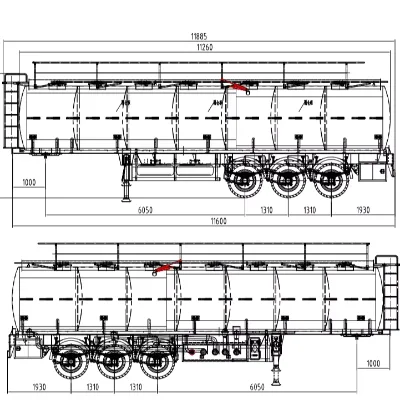

$100000.00 - $10000000.00
MOQ: 1 Pieces


Oil Tanker for Sales with Long-Range Fuel Tanks and Premium Price
$360000.00 - $460000.00
MOQ: 1 Pieces


a Strong-Built Oil Tanker with a Capacity of 4500 Tons Is Currently for Sale
$360000.00 - $460000.00
MOQ: 1 Pieces

The Outstanding Oil Tankers Are of High Quality and Reasonable Price
$360000.00 - $460000.00
MOQ: 1 Pieces

Transport Fuel Tanker Oil Storage Tank
$3000.00 - $8000.00
MOQ: 1 Pieces
Shaanxi Xixian New Area Zhongcheng Machinery Manufacturing Co., Ltd.


Oil Tanker Fuel Tank Truck 13000 Liter Fuel Tank Truck Fuel Carrier Truck
$11000.00 - $15000.00
MOQ: 1 Pieces


Comprehensive Sourcing Guide
Strategic Sourcing Guide for ISO-Compliant CE Fuel Tanker Systems
The global demand for specialized fuel transport and storage infrastructure continues to drive procurement strategies in the maritime and heavy industrial sectors. Buyers searching for "ISOCCC CE Fuel Tanker" are typically seeking vessels or stationary units that adhere to rigorous international safety standards, specifically those related to the International Organization for Standardization (ISO) and the European Economic Community (ECE) or CE marking requirements. This guide provides a disciplined, evidence-based approach to sourcing these critical assets. It focuses on interpreting available product attributes, verifying compliance claims, and understanding the technical parameters that define a reliable fuel tanker system. The objective is to equip procurement professionals with the knowledge to navigate a complex market where specifications can vary significantly between manufacturers.
Technical Specifications and Structural Integrity
When evaluating fuel tankers, particularly those designated for marine or heavy-duty land applications, the structural integrity of the vessel or unit is paramount. The core product data indicates a diverse range of configurations, from marine cargo ships designed for liquid cargo to stationary diesel oil storage tanks. A critical observation in the current market is the variation in material composition. While some units are specified as "Cast Steel," others are listed simply as "Metal" or "Steel." Buyers must verify the specific grade of steel used, as the data suggests a "Heavy Duty" grade is available for certain semi-trailer configurations. This distinction is vital for ensuring the unit can withstand the corrosive nature of petroleum products and the mechanical stresses of transport.
Dimensional specifications also vary widely depending on the application. For instance, specific models are noted with dimensions of 8000mm x 2500mm x 2300mm, while others are described by volume ranges such as 5000 Liters to 100,000 Liters. The wall construction is another area requiring careful scrutiny. The market offers both "Single Wall" and "Double Wall" options, with some units explicitly labeled as having "Single or Double Layers." The thickness of the material is a key indicator of durability, with observed ranges spanning from 4mm to 6mm for certain models and extending up to 10mm for others. Procurement teams must match these thickness requirements to the specific pressure and volume demands of their operation. A unit designed for a 20FT or 40FT container standard may have different structural requirements compared to a self-propelled barge.
Furthermore, the mounting type and shape are essential for installation planning. The data highlights "Horizontal" mounting types and "Column" shapes for specific storage units, while marine applications are described as "Cargo Barge" or "Marine Cargo Ship." The position of these units is typically "On the Ground" for stationary tanks, but mobile units may feature different mounting arrangements. Understanding these geometric constraints is the first step in ensuring the equipment fits the intended site or vessel.
Compliance and Certification Verification
The search term "isoccc ce" implies a high expectation for regulatory compliance. In the actual product listings, certifications such as ISO, ABS (American Bureau of Shipping), ISO 9001, CE, GCC, and ECE are frequently cited. However, the presence of a certification label does not automatically guarantee that every listed product satisfies all these standards. Buyers must treat these as observations of the supplier's portfolio rather than universal attributes of every unit. For example, while "ISO" and "ABS" are listed as certifications for certain marine applications, other entries mention "ISO CE" or "ISOCE, GCC, ECE."
The "Ship Inspection Certificate" is a specific document noted as being present for certain vessels, which is a critical requirement for maritime operations. For land-based or semi-trailer units, the focus often shifts to ISO 9001 for quality management systems. It is important to note that some product entries list "ISO 9001:ISO 9001:Material:Cast Steel," which suggests a potential data aggregation error or a specific material certification. Buyers should verify the validity of these certificates directly with the issuing bodies rather than relying solely on the product description. The "CE" marking, while mentioned in the background data, requires specific verification against the actual product documentation to ensure it applies to the specific model being purchased.
Compliance also extends to the "prod_standard" field. Some units adhere to "container" standards, while others are "customized" or refer to a "parameter table for details." This variability means that a buyer cannot assume a standard compliance level across all inventory. The "customized" standard indicates that the product may be tailored to specific regional regulations, which is a significant advantage for international procurement but requires close coordination with the supplier to ensure the final product meets the destination country's legal requirements.
Cost Drivers and Pricing Dynamics
The pricing landscape for fuel tankers is influenced by a complex array of factors, including material costs, customization levels, and certification requirements. The observed price range in the market is substantial, spanning from $3,000 to $10,000,000. This wide disparity reflects the difference between small-scale storage units and large-scale marine cargo ships or heavy-duty semi-trailers. The "Load Capacity" is a primary driver of cost, with specific units noted to have a capacity of 50T (tonnes). Larger capacities generally correlate with higher material usage, more robust engineering, and increased certification costs.
Material grade is another significant cost factor. Units specified as "Heavy Duty" or constructed from "Cast Steel" will typically command a premium over standard steel alternatives. The thickness of the walls, ranging from 4mm to 10mm, directly impacts the amount of raw material required, thereby influencing the final price. Additionally, the "Customization" attribute is a major variable. While standard models may be available at lower price points, units requiring "Customized" dimensions, "Single or Double Wall" configurations, or specific "Colour" finishes will incur additional engineering and manufacturing costs.
The "Packing" method also affects logistics costs. Some units are shipped in "Nude Package" or "Without Packing," which reduces shipping volume but may require the buyer to arrange for protective packaging. Others are delivered in "Wooden Case," which adds to the initial cost but ensures better protection during transit. The "Daily Maintenance" rating of "Very Good" suggests that units with lower long-term maintenance costs may have a higher upfront price, representing a trade-off between capital expenditure and operational expenditure. Buyers should analyze the total cost of ownership, including maintenance, fuel efficiency, and lifespan, rather than focusing solely on the initial purchase price.
Typical Applications and Operational Context
Fuel tankers serve a variety of critical applications, ranging from maritime transport to onshore storage. The product data identifies specific use cases such as "Bus Station," "Port," and "Wharf," indicating that these units are often deployed in high-traffic logistics hubs. For marine applications, the "Type" is explicitly defined as "Cargo Barge" or "Marine Cargo Ship," designed for "Liquid Cargo Ships Carrying Bulk Petroleum and Ref." These vessels are equipped with "Self Propelled" capabilities, allowing for independent movement within port facilities or along waterways.
On the land-based side, the "Semi-Trailer" configuration is a common application, featuring "ABS Anti-lock Braking System" and a "Wheel Base" of 7000-8000mm. These units are designed for the transport of diesel oil and other petroleum products, with specific models like the "Zczyg30" and "ZCZYG40" indicating specialized diesel oil storage tanks. The "Function" is clearly defined as "Oil Storage," and the "Self-dumping" feature is available for certain models, enhancing operational efficiency in specific loading and unloading scenarios.
The "Application" field also lists "Liquid Cargo Ships Carrying Bulk Petroleum and Ref," highlighting the versatility of these units in handling various types of liquid fuels. The "Position" being "On the Ground" for many units suggests they are often used as stationary storage solutions at industrial sites, while the "Self Propelled" attribute indicates mobility for others. Buyers must align the specific application requirements with the product's design, ensuring that the chosen unit can operate effectively in the intended environment, whether it be a bustling port, a remote bus station, or a fixed industrial facility.
Supplier Evaluation and Quality Assurance
Evaluating suppliers for fuel tanker systems requires a rigorous approach to quality assurance and reliability. The "Condition" of the products is consistently listed as "New," which is a baseline expectation but does not guarantee long-term performance. Buyers should verify the "Daily Maintenance" rating, which is noted as "Very Good" for certain units, to ensure that the supplier provides products designed for ease of upkeep. The "Painting" process is another critical quality indicator, with some units undergoing "Complete Chassis Sand Blasting to Clean Rust" followed by a specific number of coats. This level of surface preparation is essential for preventing corrosion and extending the lifespan of the equipment.
The "Material" grade, specifically "Heavy Duty," is a strong indicator of a supplier's commitment to quality. However, buyers must cross-reference this claim with the actual product specifications, such as wall thickness and material composition. The presence of certifications like "ISO," "ABS," and "CE" should be validated through direct communication with the supplier and independent verification bodies. A supplier that offers "Customization" is likely to have a more flexible manufacturing process, but this also requires a higher level of oversight to ensure that the custom specifications are met accurately.
Quality control should also extend to the "Packing" and "Shipping" processes. Units shipped in "Wooden Case" or "Nude Package" may have different risks associated with transit damage. Buyers should request detailed packing lists and inspection reports before shipment. The "Model No" and "prod_model" fields, such as "YN," "Zczyg30," and "ZCZYG40," serve as unique identifiers that can be used to track the production history and quality records of specific units. By focusing on these tangible attributes, buyers can build a more robust supplier evaluation framework that goes beyond marketing claims.
Long-Term Procurement and Lifecycle Management
Procuring fuel tankers is a long-term investment that requires careful consideration of lifecycle management and future scalability. The "Customization" availability is a key factor here, as it allows buyers to adapt the equipment to changing operational needs without replacing the entire unit. The "Standard" field, which includes options like "customized" or references to a "parameter table," suggests that suppliers are willing to adjust specifications to fit future requirements. This flexibility is crucial for businesses that anticipate growth or changes in regulatory environments.
Maintenance is a central component of long-term procurement. The "Daily Maintenance" rating of "Very Good" indicates that the equipment is designed for reliable operation with minimal downtime. However, buyers must establish a proactive maintenance schedule that aligns with the manufacturer's recommendations. The "ABS Anti-lock Braking System" and other safety features require regular inspection to ensure they remain functional. The "Load Capacity" of 50T and the "Thickness" of the walls are also critical factors in determining the unit's lifespan. Overloading or operating outside the specified parameters can lead to premature wear and failure.
Finally, the "Location" of the product origin, specifically "China," is a relevant factor for logistics and supply chain planning. Buyers should consider the lead times and shipping costs associated with importing from this region. The "MOQ" (Minimum Order Quantity) range of 1-1 suggests that suppliers are flexible in terms of order size, which can be beneficial for smaller projects or pilot programs. By understanding these long-term factors, buyers can make informed decisions that balance immediate needs with future operational goals, ensuring a sustainable and efficient procurement strategy.
FAQs
What certifications do isoccc ce fuel tankers typically hold?
These units commonly hold ISO, ABS, and CE certifications. Some models also feature ISO 9001 and specific ship inspection certificates. Buyers must verify that the specific certificate applies to the purchased model rather than assuming universal compliance across all inventory.
How are isoccc ce fuel tankers constructed regarding material and thickness?
Manufacturers use metal, steel, or cast steel with wall thicknesses ranging from 4mm to 10mm. Options include single or double wall configurations depending on the specific model requirements. Heavy-duty grades are available for semi-trailer applications to ensure structural integrity.
Which dimensions are standard for ISOCCC CE Fuel Tanker storage units?
Standard dimensions can reach 8000mm by 2500mm by 2300mm for specific models. Volume capacities vary significantly from 5000 liters up to 100,000 liters. Buyers should refer to the parameter table for exact specifications as customization is often available.
Can isoccc ce fuel tankers be customized for specific applications?
Yes, customization is available for dimensions, colors, and wall configurations. Units can be tailored for marine cargo ships or ground-based storage tanks. This flexibility allows buyers to meet specific regional regulations and operational needs through direct supplier coordination.
What is the price range for ISOCCC CE Fuel Tanker systems?
Prices range from 3000 USD to 10,000,000 USD depending on capacity and type. Costs are driven by material grade, wall thickness, and certification requirements. Larger units like marine cargo ships command higher prices compared to smaller storage tanks.
How are isoccc ce fuel tankers packed for shipment?
Packing methods include nude packages, wooden cases, or no packing depending on the model. Some units are shipped without packing to reduce volume, while others require wooden cases for protection. Buyers should confirm the packing method to plan logistics and insurance accordingly.
Where are isoccc ce fuel tankers manufactured and what is the origin?
The primary origin for these units is China. Manufacturers produce various types including cargo barges and semi-trailers. Buyers should verify the specific factory location and lead times as these factors influence the overall procurement timeline and shipping costs.