Find Jcb Excavator Track Adjuster for ZX200LC, 320D, E324DL
Source 30 verified listings for the Jcb Excavator Track Adjuster compatible with models like ZX200LC, 320D, and E324DL. Buyers can compare specifications, prices, and delivery times from suppliers in China offering export-standard packaging and warranty options.
Key considerations
Products List

Excavator Track Adjuster for Jcb Js200 Js220LC Tractor Undercarriage Replacement
$100.25 - $126.85
MOQ: 2 Pieces


Tracked Excavators Undercarriage Parts Track Adjuster for Jcb Js160 Js200
$100.25 - $126.85
MOQ: 2 Pieces


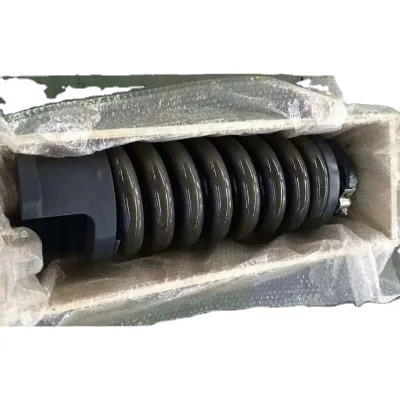

Sell Excavator Construction Machinery Spare Parts Excavator Track Adjuster
$59.00 - $129.00
MOQ: 1 Pieces


Sell Excavator Track Adjuster Ex40 Ex45 Ex50 Ex60 Ex70 Ex90 Ex100 Ex120
$59.00 - $129.00
MOQ: 1 Pieces


Excavator Track Adjuster Assembly Track Spring PC650 (21M-30-14100/21M-30-14200)
$150.00 - $215.00
MOQ: 2 Pieces


High-Quality Wholesale of PC Excavator Track Adjuster and Sy Excavator Spare Parts
$50.00 - $250.00
MOQ: 1 Pieces


Comprehensive Sourcing Guide
Strategic Sourcing Guide for JCB Excavator Track Adjusters
Navigating the global market for heavy machinery components requires a disciplined approach to verification and specification alignment. When sourcing a Jcb Excavator Track Adjuster, buyers must distinguish between generic aftermarket parts and components designed to meet specific operational demands. The supply chain for these critical undercarriage components is characterized by a diverse range of manufacturers, varying material compositions, and distinct certification standards. This guide provides a structured framework for evaluating potential suppliers and products, ensuring that procurement decisions are grounded in observable facts and industry-standard verification protocols rather than unverified marketing claims.
Technical Specifications and Material Composition
The performance and longevity of a track adjuster are fundamentally dictated by its material composition and mechanical properties. In the current market, suppliers offer components manufactured from various steel grades, each selected for specific hardness and durability characteristics. Observed data indicates that common materials include 45# steel, 50mn, and 35mnbh. These designations refer to specific carbon and alloy steel formulations that influence the part's ability to withstand high stress and abrasive conditions.
Hardness is a critical metric for track adjusters, as the component must resist deformation while maintaining the tension required for proper track alignment. Market listings frequently cite hardness ranges between HRC 50 and HRC 56. A hardness value within this spectrum suggests a balance between toughness and wear resistance. However, buyers should verify that the specific hardness rating applies to the critical wear surfaces of the adjuster, not just the bulk material.
Production methods also vary significantly among suppliers. The primary techniques observed include casting and forging. Forging generally implies a denser grain structure and higher tensile strength compared to casting, which can be a decisive factor for heavy-duty applications. The physical dimensions and compatibility are equally vital. Specific model numbers such as 9303132, 1U3302, and 1U3302RC are frequently associated with specific excavator series. Compatibility extends beyond the model number; the part must align with the hydraulic system and mechanical linkage of the specific JCB machine variant, whether it is a standard crawler or a specialized model.
Compliance and Certification Verification
In the B2B procurement of industrial machinery parts, certification serves as a proxy for quality management system maturity. While specific product certifications can vary by batch and manufacturer, the presence of recognized standards is a baseline requirement for serious suppliers. The most commonly observed certifications in this sector include CE marking and ISO 9001. These indicate that the manufacturing facility adheres to specific safety and quality management protocols.
Beyond the general ISO 9001 standard, some suppliers reference additional compliance frameworks such as GB/T24001-2004 for environmental management and OHSAS 18001:1999 for occupational health and safety. The presence of these certifications suggests a comprehensive approach to production control. However, buyers must treat these as observations of the supplier's facility status rather than guarantees of every individual part's performance. The HS Code 84314999 is the standard classification for parts suitable for use with earth-moving machinery, which aids in customs clearance and tariff determination.
When evaluating a supplier, procurement teams should request valid copies of these certificates and verify their expiration dates. It is essential to confirm that the certification covers the specific manufacturing site where the track adjuster is produced. A certificate held by a parent company does not automatically extend to all subsidiary production lines. Additionally, the "Condition: New" status should be explicitly confirmed in the product description to avoid receiving refurbished or remanufactured units unless that is the specific procurement requirement.
Cost Drivers and Pricing Dynamics
The pricing structure for excavator track adjusters is influenced by a complex interplay of factors, including material costs, manufacturing complexity, and supply chain logistics. The observed price range in the market spans from $1 to $1,599 USD. This wide variance reflects differences in brand positioning, material quality, and the specific model compatibility. Lower-priced items often correspond to generic aftermarket solutions or smaller volume orders, while higher-priced units may reflect premium materials, specific OEM-equivalent engineering, or bulk packaging.
Minimum Order Quantity (MOQ) is another significant cost driver. Suppliers typically set MOQs ranging from 1 to 100 units. For buyers requiring a single replacement part, an MOQ of 1 is ideal, but this may come with a higher unit price. Conversely, purchasing in larger quantities, such as the observed supply ability of 500 pieces per month, can often secure better pricing tiers. The payment terms, commonly cited as T/T (Telegraphic Transfer) or other flexible arrangements, also impact the financial planning of the procurement.
Logistics costs are substantial and must be factored into the total landed cost. The standard shipping port for these components is often Xiamen, with a delivery time of approximately 10 days after advance payment. However, some suppliers offer expedited delivery windows of 1-3 days for specific items. The packaging method, typically export wooden pallets or wooden cases, adds to the weight and volume, influencing freight charges. Buyers should compare the total cost of ownership, including freight and insurance, rather than focusing solely on the unit price.
Typical Applications and Machine Compatibility
Excavator track adjusters are essential components for maintaining the operational efficiency of crawler machines. They are designed to absorb shock and maintain track tension, which is critical for preventing derailment and reducing wear on the track chain and rollers. The applications extend beyond JCB machines to include a wide array of brands and models. Market data indicates compatibility with brands such as Caterpillar, Hitachi, JCB, Volvo, Kobelco, Hyundai, Shantui, and Komatsu.
Specific model applications are often listed in detail. For instance, the track adjuster with part number 9303132 is explicitly noted for use with the ZX200LC excavator. Other model numbers like JS130, JS200, JS220, JS330, and JS360 represent various excavator series that utilize similar undercarriage systems. The versatility of these components allows them to be used across different machine types, including excavators and bulldozers.
The color of the component, often yellow, black, or grey, is primarily a cosmetic or identification feature and does not affect performance. However, the depth of the component, ranging from 4mm to 10mm in some specifications, is a technical parameter that must match the original equipment specifications. Buyers must ensure that the replacement part matches the exact depth and dimensions of the original to avoid fitment issues that could compromise the machine's stability and safety.
Supplier Evaluation and Operational Capabilities
Evaluating a supplier requires a thorough assessment of their operational capabilities and reliability. Key indicators include the supplier's location, production capacity, and delivery track record. Many suppliers are located in China, with specific origins noted in Shandong and Fujian provinces. These regions are known for their manufacturing clusters in heavy machinery components.
The supply ability of a supplier is a critical metric for long-term partnerships. An observed capacity of 500 pieces per month suggests a medium-sized operation capable of handling regular maintenance orders but may require lead time planning for larger fleet overhauls. The availability of customization is another valuable attribute, allowing buyers to request specific modifications or packaging requirements.
Buyers should also consider the supplier's video outgoing-inspection capabilities. While some suppliers offer video inspections of the production process, others do not. The absence of this feature does not necessarily indicate poor quality, but it limits the buyer's ability to verify the product before shipment. The "Advantage" claims of high quality, competitive price, and prompt delivery should be treated as marketing statements and verified through independent references or trial orders.
Quality Control and Long-Term Procurement Considerations
Quality control is paramount when sourcing critical undercarriage components. The warranty period is a direct indicator of the supplier's confidence in their product. Observed warranty times range from 6 months to 12 months. A 12-month warranty suggests a higher level of assurance regarding the part's durability and performance. However, the warranty terms should be clearly defined, covering specific failure modes and excluding damage caused by improper installation or misuse.
Long-term procurement considerations involve building a relationship with a reliable supplier who can provide consistent quality over time. The use of export-standard packaging, such as wooden cases or carton boxes, ensures that the parts arrive in pristine condition. The standard of export packaging is crucial for protecting the component during transit, especially given the heavy nature of the product.
Buyers should also verify the production method and material hardness for every batch. While the general specifications may remain constant, variations in the casting or forging process can occur. Establishing a protocol for regular quality checks, including hardness testing and dimensional verification, is essential for maintaining fleet reliability. The compatibility with various brands and models offers flexibility, but it also requires rigorous verification to ensure that the correct part is selected for each specific machine.
Final Procurement Recommendations
Sourcing a Jcb Excavator Track Adjuster requires a methodical approach that balances technical specifications, cost efficiency, and supplier reliability. Buyers must prioritize verification of material grades, hardness ratings, and certification status over marketing claims. The wide range of available models and brands necessitates careful cross-referencing of part numbers and machine specifications to ensure compatibility.
By focusing on suppliers with clear production methods, valid certifications, and transparent warranty terms, buyers can mitigate the risks associated with aftermarket component procurement. The observed data suggests a robust market with diverse options, but the responsibility lies with the buyer to conduct due diligence. Establishing a clear evaluation framework based on the technical and operational facts provided will lead to more successful procurement outcomes and sustained operational efficiency for heavy machinery fleets.
FAQs
What certifications do Jcb Excavator Track Adjuster suppliers typically hold?
Suppliers typically hold CE and ISO9001 certifications for their products. Some also reference GB/T24001-2004 and OHSAS 18001:1999 standards. These indicate adherence to safety and quality management protocols but do not guarantee every individual part's performance.
Which materials are commonly used for jcb excavator track adjusters?
Common materials include 45# steel, 50mn, and 35mnbh alloy steel. These grades are selected for their ability to withstand high stress and abrasive conditions. The specific material composition influences the part's durability and wear resistance in heavy-duty applications.
Can I find jcb excavator track adjusters with a 12-month warranty?
Yes, some suppliers offer a 12-month warranty on these components. Other listings may provide a 6-month warranty period. Buyers should verify specific warranty terms to ensure coverage for failure modes and exclude damage from improper installation.
How long is the delivery time for jcb excavator track adjusters?
Standard delivery time is 10 days after advance payment. Some suppliers offer expedited delivery windows of 1-3 days for specific items. The actual lead time depends on the supplier's location and current production capacity.
What is the minimum order quantity for jcb excavator track adjusters?
The minimum order quantity ranges from 1 to 100 units depending on the supplier. Single item purchases are available, though bulk orders may secure better pricing. Buyers should check specific supplier requirements before placing an order.
Which brands are compatible with jcb excavator track adjusters?
These parts are compatible with brands like Caterpillar, Hitachi, JCB, Volvo, Kobelco, Hyundai, Shantui, and Komatsu. Specific model numbers such as 9303132 are designed for particular excavator series. Always verify compatibility with the specific machine variant.
Where are Jcb Excavator Track Adjuster manufacturers located?
Manufacturers are primarily located in China, with origins in Shandong and Fujian provinces. The standard shipping port for these components is often Xiamen. Buyers should confirm the specific origin to understand logistics and lead times.