Source Kitchen LPG Composite Gas Cylinder for gas, food, and electronic uses
Find 26 Kitchen LPG Composite Gas Cylinder options from verified suppliers. Compare specifications like water capacity, pressure ratings, and wall thickness to select the right vessel for gas storage, food processing, or electronic applications.
Key considerations
Products List




Comprehensive Sourcing Guide
Strategic Sourcing Guide for Kitchen LPG Composite Gas Cylinders
Understanding the Technical Landscape of Composite LPG Vessels
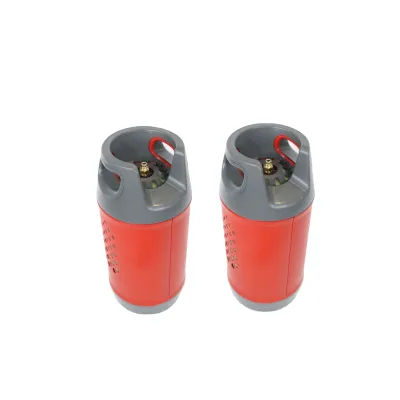
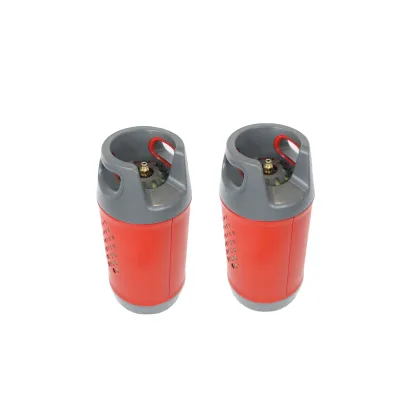
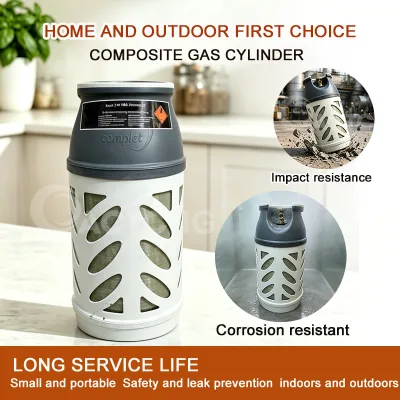
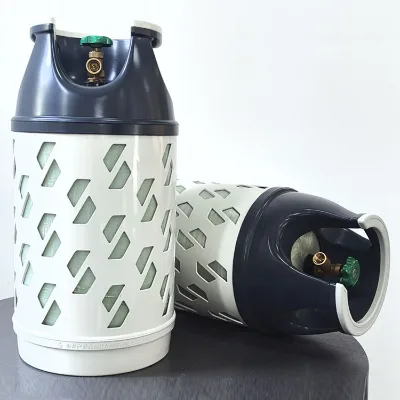
The procurement of kitchen LPG composite gas cylinders requires a precise understanding of the distinct engineering parameters that separate composite vessels from traditional steel alternatives. In the current market, these vessels are primarily engineered as pressure vessels designed for the storage and transport of liquefied petroleum gas (LPG). The core functionality observed in available inventory includes roles as reaction pressure vessels, heat pressure vessels, separation pressure vessels, and storage pressure vessels, with a specific emphasis on gas storage applications for kitchen environments.
A critical technical differentiator is the material composition. While traditional cylinders rely on steel, the composite variants utilize advanced composite materials. This shift in material science directly influences the vessel's weight, durability, and safety profile. The observed specifications indicate a variety of wall thicknesses depending on the model, ranging from 1.2 mm to 2.3 mm for specific designs, which correlates with the intended pressure containment and structural integrity. The outer diameter of these bodies varies significantly across models, with observed measurements including 200 mm, 307 mm, and 321 mm. These dimensional variances are not arbitrary but are engineered to match specific water capacities and gas filling weights.
The working pressure for these units is a paramount safety consideration. The data indicates a pressure level classified as medium pressure, specifically defined within the range of 1.6 MPa to less than 10.0 MPa. Specific observed test parameters show a working pressure of 20 bar with a hydrostatic test pressure of 30 bar. This ratio is essential for verifying the vessel's ability to withstand operational surges without failure. Furthermore, the physical dimensions are tightly coupled with capacity. For instance, a model with a water capacity of 30.5 liters corresponds to a length of 680 mm (without valve) and is designed to hold approximately 12.5 kg of propane or 14.9 kg of butane. Conversely, a 24.5-liter water capacity model measures 570 mm in length, accommodating 10 kg of propane or 12 kg of butane. Buyers must ensure that the selected cylinder's dimensions and capacity align precisely with the intended kitchen infrastructure and gas supply requirements.
Compliance and Certification Verification Protocols
When sourcing LPG cylinders, compliance with international and regional standards is non-negotiable. The procurement process must prioritize verification of the executive standards applied during manufacturing. In the observed market data, the standard EN12245 is explicitly cited, with some entries specifying the version EN12245:2009. This standard governs the design, manufacturing, and testing of seamless steel cylinders and composite cylinders for the transport of gases. It is imperative for buyers to request and validate that the supplier's production line adheres to this specific executive standard or an equivalent recognized regulatory framework.
Certification status serves as the primary evidence of compliance. The available product listings reference ISO certification, which indicates adherence to international quality management systems. However, buyers should not assume that a generic "ISO" label covers the specific safety requirements for gas cylinders. The procurement team must verify if the certification extends to specific product standards such as ISO 11439 or ISO 11119, which are relevant to high-pressure gas cylinders, even if these specific numbers are not explicitly listed in every product description. The absence of a specific standard number in a listing should trigger a request for the full technical file rather than an assumption of compliance.
Thread specifications are another critical compliance element. The data points to a thread specification of "25e," which likely refers to a specific thread profile or size standard. In the context of LPG cylinders, thread compatibility with kitchen regulators and valves is vital to prevent leaks and ensure secure connections. Buyers must verify that the thread specification matches the local regulatory requirements for gas appliances in their target market. Additionally, the "Parts" attribute lists "Valve" as a component, implying that the valve is an integral part of the assembly. The integration of the valve must be tested to ensure it meets the pressure ratings of the vessel body, typically requiring the valve to withstand the same hydrostatic test pressure as the cylinder itself.
Cost Drivers and Pricing Structure Analysis
The pricing of kitchen LPG composite gas cylinders is influenced by a complex interplay of material costs, manufacturing complexity, and order volume. The observed price range in the market spans from 3 to 59 USD, a wide variance that reflects differences in capacity, material grade, and customization levels. A cylinder priced at the lower end of this spectrum likely represents a smaller capacity unit or a standard configuration with minimal customization. Conversely, units at the higher end may feature larger capacities, specialized composite layups, or custom branding and packaging.
Material costs are a primary driver, particularly for composite cylinders. The use of composite materials, which often involves carbon fiber or fiberglass reinforcement with a polymer liner, is inherently more expensive than standard steel fabrication. The wall thickness, observed between 1.2 mm and 2.3 mm, also impacts the cost, as thicker walls require more material and more rigorous manufacturing processes to ensure uniformity. The "Selling Units" attribute indicates that these items are often sold as single items, which can affect the per-unit cost compared to bulk industrial packaging.
Order volume plays a significant role in the final landed cost. The observed Minimum Order Quantity (MOQ) ranges from 10 to 50,000 units. Buyers purchasing at the lower end of the MOQ spectrum (e.g., 10 units) will likely face a higher per-unit price due to the fixed costs of production setup and logistics. As the order volume increases toward the 50,000-unit threshold, economies of scale typically drive the unit price down. However, buyers must balance the cost savings of bulk ordering against their inventory holding costs and cash flow constraints. Customization is listed as "Available," which introduces another variable. Requests for specific packing based on customer requirements, custom branding, or unique dimensional adjustments will invariably increase the unit cost and potentially extend the lead time.
Typical Applications and Operational Context
While the core keyword focuses on "kitchen" applications, the technical data reveals a broader spectrum of potential use cases that inform the selection process. The primary application listed is "Gas," with a specific mention of "LPG" as the filling medium. The "Use" attribute explicitly states "LPG," confirming the vessel's suitability for residential and commercial cooking applications. However, the "Application Fields" attribute expands the scope to include New Energy, Food, and Electronic sectors. This suggests that the same composite technology used for kitchen cylinders may be adapted for specialized industrial gas storage or portable power solutions in the new energy sector.
The "Purpose" is defined as "Gas Storage," which is the fundamental function of the vessel. In a kitchen context, this translates to providing a safe, portable, and efficient storage solution for cooking fuel. The capacity variations observed—ranging from 12 liters to 30.5 liters—cater to different usage intensities. A 12-liter cylinder, with a max filling gas weight of 5 kg, is suitable for small households or temporary setups. The 30.5-liter model, capable of holding 12.5 kg of propane, is better suited for larger families or small commercial kitchens with higher consumption rates.
The "Manufacturing Method" is described as "Controlled gas cylinders," implying a standardized and regulated production process. This is crucial for kitchen applications where safety is paramount. The "Condition" is listed as "New," ensuring that buyers receive vessels that have not been subjected to previous service life, which is a critical safety requirement for gas storage equipment. The "Parts" attribute highlights the inclusion of a valve, which is the primary interface between the gas supply and the kitchen appliance. The reliability of this valve is essential for preventing leaks in a domestic environment.
Supplier Evaluation and Origin Verification
Evaluating suppliers for LPG composite cylinders requires a rigorous assessment of their manufacturing capabilities and geographic origins. The observed product origin is consistently listed as "China," with a specific mention of "Anhui China" for certain models. This regional concentration suggests a specialized manufacturing hub for pressure vessels. Buyers should verify the specific factory location to understand the local regulatory environment and logistics capabilities. The "Brand Name" observed is "LD," but buyers should not limit their search to a single brand. Instead, they should evaluate the supplier's ability to provide the "LD" brand or equivalent quality under private label arrangements.
The "prod_packing" attribute indicates that packaging can be based on the customer's request or standard container shipping. This flexibility is a positive indicator of a supplier's adaptability. However, buyers must ensure that the packaging is robust enough to protect the composite cylinders during transit, as composite materials can be susceptible to impact damage if not properly cushioned. The "Selling Units" being "Single item" suggests that the supplier is capable of handling both small trial orders and large bulk shipments, provided the MOQ is met.
When evaluating a supplier, buyers should request evidence of their "Manufacturing Method" and quality control processes. The "Controlled gas cylinders" description implies a high level of process control, but this must be validated through audits or third-party reports. The supplier's ability to meet the "Executive Standard" of EN12245 is a baseline requirement. Additionally, the "Customization" availability should be explored in detail. Can the supplier modify the thread specification, wall thickness, or dimensions to meet specific market needs? The ability to customize is a significant competitive advantage for suppliers serving diverse global markets.
Quality Control and Long-Term Procurement Strategy
Quality control in the production of LPG composite cylinders is a multi-stage process that begins with raw material selection and ends with final pressure testing. The "Wall Thickness" specifications, ranging from 1.2 mm to 2.3 mm, must be strictly monitored during the manufacturing process to ensure uniformity. Variations in wall thickness can lead to stress concentrations and potential failure points under pressure. The "Design Wall Thickness" is a critical parameter that must be verified against the actual produced dimensions.
Long-term procurement considerations involve the lifecycle management of the cylinders. The "Condition" is listed as "New," but buyers must also consider the expected service life and maintenance requirements. Composite cylinders generally offer a longer lifespan than steel cylinders due to their resistance to corrosion, but they are subject to specific degradation mechanisms related to the polymer liner and fiber reinforcement. Buyers should inquire about the recommended inspection intervals and the criteria for decommissioning a cylinder.
The "Test Results" for hydrostatic testing are a key quality metric. The observed ratio of 20 bar working pressure to 30 bar test pressure provides a safety margin, but buyers should request detailed test reports for each batch. These reports should include data on burst pressure, fatigue testing, and leak testing. The "Certification" status, specifically ISO, should be maintained through regular audits to ensure continued compliance.
Finally, the "Parts" availability, particularly the valve, is a critical long-term consideration. Buyers should ensure that the supplier can provide replacement valves or that the valve design is compatible with standard replacement parts available in the target market. The "Filling medium type" is specified as "LPG steel cylinders" in one entry, which may be a classification error or a reference to the industry standard for the medium. Buyers must clarify this to ensure the cylinder is compatible with the specific LPG blend used in their region. By focusing on these technical and operational details, buyers can build a robust supply chain that ensures safety, compliance, and cost-effectiveness for their kitchen LPG cylinder procurement needs.
Comparative Analysis of Key Specifications
To facilitate informed decision-making, the following table summarizes the key technical specifications observed in the market for kitchen LPG composite gas cylinders. This comparison highlights the trade-offs between capacity, dimensions, and weight.
| Model Identifier | Water Capacity | Propane Capacity | Butane Capacity | Length (No Valve) | Outer Diameter | Wall Thickness | Weight (No Valve/Cap) |
|---|---|---|---|---|---|---|---|
| LPG-30.5L | 30.5 L | 12.5 kg | 14.9 kg | 680 mm | 307 mm | 1.5 mm | 7.5 kg |
| LPG-24.5L | 24.5 L | 10 kg | 12 kg | 570 mm | 321 mm | 1.2 mm | 7.5 kg |
| General Model | 12 L | 5 kg | N/A | 430 mm (Height) | 200 mm | 2.3 mm | N/A |
Note: The table reflects observed data points. Specific dimensions and capacities may vary based on the specific manufacturer and customization requests. The "Height" for the 12L model is listed as 430mm, which may differ from the "Length" metric used for other models.
This comparative view underscores the importance of matching the cylinder's physical attributes to the specific requirements of the kitchen environment. The 30.5L model offers the highest capacity but requires more space, while the 12L model is more compact but offers limited fuel storage. The wall thickness variations also suggest different design philosophies, with the 12L model having a thicker wall (2.3 mm) compared to the 1.2 mm wall of the 24.5L model, potentially indicating different pressure handling strategies or material properties. Buyers must carefully evaluate these specifications against their operational needs to select the optimal vessel.
FAQs
What is the working pressure for these cylinders?
The working pressure is 20 bar with a hydrostatic test pressure of 30 bar. These units operate at a medium pressure level ranging from 1.6 MPa to less than 10.0 MPa to ensure safe gas storage.
Which materials are used for the cylinder body?
The cylinder body is constructed from composite material or steel depending on the specific model. This material selection ensures durability and safety for storing liquefied petroleum gas in kitchen environments.
Can I customize the packaging for my order?
Yes, customization is available for packaging based on the customer's specific request. Buyers can also request custom branding or specific container shipping methods to suit their logistical needs.
What is the minimum order quantity for these vessels?
The minimum order quantity ranges from 10 to 50,000 units depending on the supplier and product configuration. Lower MOQs allow for smaller trial orders while bulk purchases benefit from economies of scale.
Which standards do these pressure vessels meet?
These vessels comply with the EN12245 standard, with some models specifically meeting EN12245:2009. The products also hold ISO certification to verify adherence to international quality management systems.
How does the water capacity affect the gas weight?
A 30.5-liter water capacity cylinder holds approximately 12.5 kg of propane or 14.9 kg of butane. A smaller 24.5-liter model accommodates 10 kg of propane or 12 kg of butane.