Source Kitchen Knife for chefs, housewives, and food prep
Explore 30 Kitchen Knife options with customizable features and various blade materials. Buyers can compare models like KU6891 and KU6797 for slicing, paring, and utility tasks in professional or home settings.
Key considerations
Products List


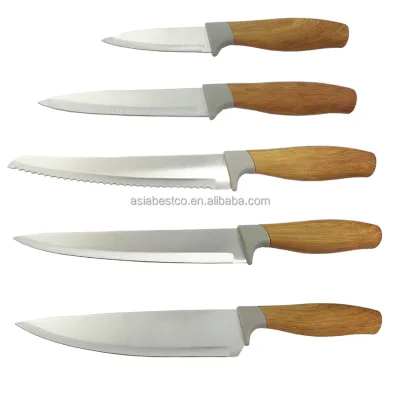


Utensils Cookware Kitchenware Tool Cutlery Chef Knife Stainless Steel Kitchen Knife
$2.00 - $2.50
MOQ: 400 Pieces


Comprehensive Sourcing Guide
Strategic Sourcing Guide for Kitchen Knife Procurement
Understanding Product Variability and Core Specifications
The global market for kitchen knives presents a complex landscape where a single core keyword, "Kitchen Knife," encompasses a vast array of distinct product categories, each with unique functional requirements and technical specifications. For procurement professionals, the initial challenge lies in distinguishing between general-purpose tools and specialized implements. The available product data reveals a clear segmentation based on function, ranging from slicing knives and fruit knives to paring knives and multi-functional utility knives. This diversity necessitates a rigorous approach to specification definition before engaging with suppliers.
When defining technical requirements, buyers must scrutinize the blade dimensions and standard lengths provided in product listings. The observed data indicates specific standard lengths such as 250mm, 160mm, and 10-inch blades, alongside specific inch measurements like 6 inches. These dimensions are not merely descriptive; they dictate the tool's intended application. A 250mm blade is typically optimized for slicing larger cuts of meat or bread, whereas a 160mm or 6-inch blade is better suited for precision tasks like paring or general kitchen cutting. Furthermore, the product models listed, such as KU6891, KU6797, and KH-0060, serve as unique identifiers that correlate with specific design features. Procurement teams should treat these model numbers as critical data points for traceability and quality assurance, ensuring that the ordered item matches the exact technical profile required for the end-user.
The material composition of the knife is equally critical to performance and longevity. The supply data highlights a primary use of stainless steel for the blade, specifically citing SUS420j2 as a standard material grade. This alloy is known for its balance of corrosion resistance and edge retention, making it a common choice for general kitchen use. However, buyers must verify if this material specification applies to their specific order, as some listings may feature different alloys or treatments. The handle material also varies significantly, with observations noting both plastic and metal options. The choice between plastic and metal handles impacts the ergonomics, weight distribution, and grip security of the tool, particularly in wet or oily kitchen environments.
Compliance, Certification, and Safety Standards
In the B2B procurement of kitchenware, compliance with international safety and quality standards is non-negotiable. The presence of CE certification in the product data indicates that certain items meet the European Union's health, safety, and environmental protection standards. For buyers targeting markets in Europe or regions that recognize CE marks, this certification is a primary filter for supplier qualification. However, the absence of a listed certification in a specific product listing does not automatically imply non-compliance; rather, it suggests that the buyer must explicitly request proof of certification before finalizing a contract.
Beyond specific certifications, the manufacturing origin plays a significant role in compliance verification. The data points to production locations in China, specifically within the Guangdong province and Fenghua regions. These areas are known for their manufacturing clusters, but they also require rigorous due diligence regarding labor standards and environmental regulations. Buyers should verify that the supplier adheres to local laws and international trade compliance requirements. Additionally, the product condition is listed as "New," which is a standard expectation but must be confirmed to ensure that no refurbished or second-hand items are inadvertently supplied.
The packaging standards also serve as an indirect indicator of compliance and care in handling. Listings mention "Export Canton" and "PP+Carton" packaging, alongside "Safe Package" and "One Piece Into One Bag" options. These descriptions suggest a focus on protecting the product during transit, which is essential for maintaining the sharpness of the blade and the integrity of the handle. For buyers, the packaging specification is not just about logistics; it is a reflection of the supplier's commitment to product quality. A supplier offering robust, export-standard packaging is more likely to maintain high quality control throughout the supply chain.
Cost Drivers and Pricing Dynamics
The pricing structure for kitchen knives is influenced by a complex interplay of factors, including material costs, manufacturing complexity, and order volume. The observed price range in the market spans from $0.11 to $100, a wide disparity that reflects the diversity of the product category. At the lower end of the spectrum, prices likely correspond to disposable or single-use knives, as indicated by the "Disposable" feature in some listings. These products are typically made with lower-cost materials and simpler manufacturing processes, targeting high-volume, low-margin markets.
Conversely, the higher price points are associated with knives featuring premium materials, such as metal handles and specialized blade finishes like laser finish or satin polish. The cost drivers for these premium items include the expense of high-grade stainless steel, the precision required for the finishing processes, and the added value of customization options. The data confirms that customization is available for many products, which inevitably adds to the unit cost. Customization can range from logo engraving to specific handle colors, such as the observed orange, black, or colored options.
Order quantity is another significant determinant of cost. The minimum order quantity (MOQ) ranges from 1 to 12,000 units, indicating a flexible market that accommodates both small-scale buyers and large distributors. For buyers seeking to minimize unit costs, negotiating based on higher volume tiers is essential. However, the trade-off between price and quality must be carefully managed. A lower unit price achieved through high-volume orders should not come at the expense of material quality or safety compliance. Buyers should analyze the cost per unit relative to the specific material specifications and certification status to ensure value alignment.
Typical Applications and Functional Segmentation
The functional segmentation of kitchen knives is a critical factor in matching the right product to the end-user. The data identifies several distinct usage profiles, including "for Housewives," "for Chef," and "Utility Knife" or "Multi Functional Knife" applications. These labels suggest that the market is segmented by the skill level and specific needs of the user. Chef-grade knives, often associated with higher quality and specific blade lengths like 250mm, are designed for professional environments where durability and precision are paramount. In contrast, utility knives and multi-functional tools may be targeted at general household use, offering versatility for various cutting tasks.
The "Main Usage" is consistently listed as "Kitchen Cutting Foods," which serves as a broad category encompassing a wide range of specific tasks. However, the specific function, such as "Slicing Knife" or "Paring Knife," dictates the blade geometry and edge angle. Slicing knives typically feature longer, thinner blades to facilitate smooth, continuous cuts, while paring knives have shorter, more maneuverable blades for detailed work. Understanding these functional distinctions is vital for procurement teams to avoid mismatches between the product ordered and the actual needs of the customer base.
Furthermore, the "Folding" attribute, listed as "Unfolded" in the data, suggests that the products are fixed-blade knives rather than folding pocket knives. This distinction is important for safety and storage considerations. Fixed-blade knives generally offer greater stability and strength, making them suitable for heavy-duty kitchen tasks. Buyers should ensure that the product specifications align with the intended usage environment, particularly if the knives are intended for commercial kitchens where high-frequency use is expected.
Supplier Evaluation and Quality Assurance
Evaluating suppliers for Kitchen Knife procurement requires a multi-dimensional approach that goes beyond price and lead time. The availability of customization options, such as "Customized" and "Customization Available," indicates a supplier's flexibility and capacity to meet specific buyer requirements. However, this flexibility must be balanced with the supplier's ability to maintain consistent quality. The "Quality" attribute is listed as both "Good" and "High" in different listings, but these terms are subjective and require objective verification.
Buyers should implement a rigorous quality control process that includes pre-shipment inspections and material testing. The blade finish, whether "Laser Finish" or "Satin Polish," should be inspected for consistency and absence of defects. The handle material, whether plastic or metal, must be checked for structural integrity and ergonomic design. Additionally, the "Condition" of the product must be verified to ensure it is new and free from manufacturing defects.
The origin of the product, specifically from regions like Guangdong and Fenghua in China, provides context for the manufacturing ecosystem but does not guarantee quality. Buyers should request samples from different production batches to assess consistency. The packaging method, such as "Export Canton" or "PP+Carton," should also be evaluated to ensure it meets the requirements for international shipping and storage. A supplier that invests in high-quality packaging demonstrates a commitment to protecting the product and maintaining its value until it reaches the end-user.
Long-Term Procurement Considerations and Market Trends
Long-term procurement of kitchen knives requires a strategic approach that considers market trends, supply chain resilience, and product lifecycle management. The wide range of observed product models, from KU6891 to KH-0076, suggests a dynamic market with frequent product iterations. Buyers should establish a system for tracking product updates and discontinuations to ensure a stable supply chain. The availability of customization options also points to a trend towards personalized products, which may require closer collaboration with suppliers to manage design changes and inventory levels.
Sustainability is another emerging consideration in the kitchenware market. While the data does not explicitly mention eco-friendly materials, buyers should inquire about the environmental impact of the manufacturing process and the recyclability of the materials used. The use of stainless steel, a durable and recyclable material, is a positive factor, but the sourcing of raw materials and the energy efficiency of the production facilities are also important.
Finally, the relationship between the buyer and the supplier should be built on transparency and mutual trust. Clear communication regarding specifications, quality standards, and delivery timelines is essential for a successful partnership. By maintaining a proactive approach to supplier evaluation and quality control, buyers can mitigate risks and ensure a steady supply of high-quality kitchen knives that meet the evolving needs of their customers. The ability to navigate the complex landscape of specifications, certifications, and cost drivers will ultimately determine the success of the procurement strategy.
FAQs
What blade materials are used for kitchen knives?
Stainless steel is the primary blade material used, with SUS420j2 being a specific standard grade observed. This alloy offers a balance of corrosion resistance and edge retention suitable for general kitchen cutting tasks.
Which certifications are available for Kitchen Knife products?
CE certification is available for certain Kitchen Knife models to meet European safety standards. Buyers should verify this certification explicitly as it indicates compliance with health and environmental protection requirements.
Can kitchen knives be customized for specific needs?
Customization is available for many Kitchen Knife models to meet specific buyer requirements. Options may include specific handle colors like orange or black, as well as tailored packaging solutions for export.
What are the standard blade lengths for these knives?
Standard blade lengths vary, including 250mm, 160mm, and 10-inch options. Specific models also feature 6-inch blades, allowing selection based on the intended cutting function such as slicing or paring.
Where are these kitchen knives manufactured?
Products originate from China, specifically from regions like Guangdong and Fenghua. These locations are known manufacturing clusters for kitchenware, requiring due diligence on labor and environmental standards.
How does the MOQ range for kitchen knives?
The minimum order quantity ranges from 1 to 12,000 units depending on the supplier and product type. This flexibility accommodates both small-scale buyers and large distributors seeking volume discounts.