Source Large Anti Slip Hair Band for Daily Use, Fashion, and Girls
Compare 30 listings for Large Anti Slip Hair Band options suitable for women, girls, and daily use. Buyers can review materials like fabric, rubber, and plastic, along with customization and packaging details from suppliers in China.
Key considerations
Products List


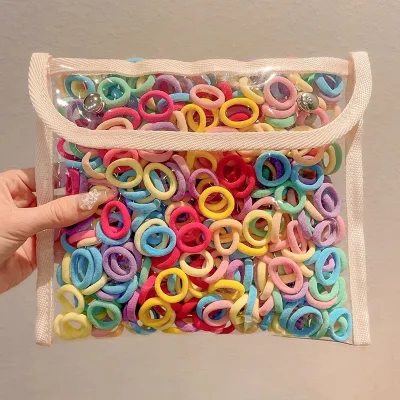
Elastic Accessories Ties Fine Curly Hair Sensitive Scalps Pain Free Hair Bands
$0.03 - $0.04
MOQ: 25000 Pieces




Comprehensive Sourcing Guide
Strategic Sourcing Guide for Large Anti-Slip Hair Bands
Understanding Product Variants and Technical Specifications
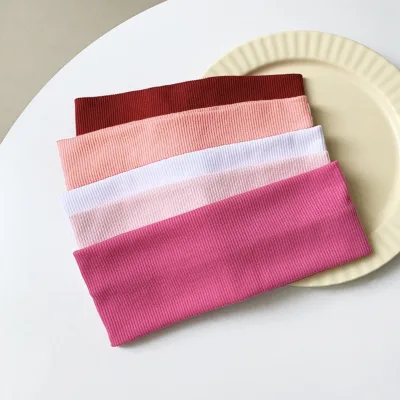
When sourcing large anti-slip hair bands, buyers must first navigate the diverse technical landscape of hair accessories available in the global market. The term "large anti-slip hair band" often encompasses several distinct product categories, ranging from elastic fabric bands to spiral wire designs and fixed cover headbands. Based on observed market data, the physical specifications vary significantly depending on the material composition and intended function. For instance, elastic hair bands are frequently characterized by an outer diameter ranging from 3 to 8 centimeters, designed to accommodate various head sizes while maintaining a secure fit. These products are typically constructed from fabric or rubber materials, offering flexibility and comfort for daily use.
In contrast, spiral wire hair bands, often referred to as telephone wire hair bands, present a different set of technical attributes. These items are noted for their unique construction, featuring a thickness between 2 and 6 millimeters and a diameter of approximately 2 inches. The material composition for these specific variants is often plastic, which allows for the retention of the spiral shape while providing the necessary grip to prevent slipping. Additionally, there are specialized products labeled as "Anti-Slip Fixed Cover Head" or hair caps, which utilize injection molding techniques to create rigid or semi-rigid structures. These items may feature specific shapes, such as bowknots, and are available in colors like pink or black.
The distinction between these variants is critical for procurement accuracy. A buyer seeking a "large" band must verify whether the diameter refers to the outer circumference of an elastic loop or the width of a fixed cover. The observed size specifications indicate that a standard elastic band might have an outer diameter of 3-8cm, while a spiral wire variant might be defined by a 2-inch diameter. Understanding these dimensional nuances ensures that the ordered product aligns with the intended application, whether it is for securing thick hair, acting as a fashion accessory, or providing a fixed cover for specific activities. The mode of operation also differs; some products function as general hair accessories for women and girls, while others are designed specifically as spiral wire bands or fixed covers.
Material Composition and Durability Considerations
The longevity and performance of anti-slip hair bands are intrinsically linked to the materials used in their manufacture. The market data reveals a primary reliance on fabric, rubber, and plastic. Fabric-based bands are often associated with a "fashion" style and are suitable for daily use, offering a soft texture that is gentle on the hair. These are frequently categorized under elastic hair bands and are designed to stretch without losing their structural integrity. The "High" quality designation often found in product listings suggests that these fabric bands undergo specific treatments to ensure they do not snag hair or lose elasticity over time.
Rubber is another prevalent material, particularly for bands requiring a stronger grip. Rubber components are essential for the anti-slip functionality, providing the friction necessary to hold hair in place without the need for tight knotting. However, the interaction between rubber and hair can vary, and buyers should verify the specific formulation to ensure it does not cause breakage or discomfort. Plastic materials are typically utilized in spiral wire hair bands and injection-molded fixed covers. These materials offer durability and shape retention, making them suitable for users who require a rigid structure that does not deform easily. The "Telephone Wire Hair Band" designation specifically points to a plastic-based spiral design that mimics the flexibility of a wire while maintaining a smooth surface.
When evaluating material quality, buyers should look for evidence of high-quality standards in the product descriptions. The presence of "High" quality attributes in listings indicates that manufacturers are likely adhering to specific production standards. However, the absence of explicit certification data in the provided context means that buyers must independently verify material safety and durability. For instance, while plastic is listed for spiral bands, the specific grade of plastic (e.g., BPA-free, hypoallergenic) is not explicitly detailed. Similarly, the fabric composition for elastic bands is not broken down into specific fiber types (e.g., cotton, polyester, spandex blend). Therefore, procurement strategies should include requests for material safety data sheets (MSDS) or specific fiber composition reports to ensure the materials meet the buyer's internal quality and safety requirements.
Compliance, Certification, and Safety Standards
Navigating the compliance landscape for hair accessories requires a careful approach, especially given the direct contact these products have with the human body and hair. While the provided product facts do not list specific certifications such as CE, ASTM, or ISO, the mention of "Global Export Markets" implies that suppliers are accustomed to meeting international trade requirements. However, the absence of explicit certification data in the source material necessitates a proactive verification process for buyers.
Buyers should verify that the materials used, particularly plastics and rubbers, comply with relevant safety standards for children's and adult accessories. For products marketed to "Girls" and "Youth," compliance with regulations regarding small parts, toxicity, and flammability is paramount. The "Injection Molding" technique mentioned for certain hair caps suggests a manufacturing process that can be tightly controlled, but the resulting product must still meet safety thresholds. Buyers should request documentation confirming that the plastic used in spiral wire bands and fixed covers does not contain harmful substances like lead, phthalates, or other heavy metals, which are common concerns in plastic toy and accessory manufacturing.
Furthermore, the "Customized Logo" and "Customized Design" options available in the market introduce additional compliance considerations. When a supplier applies a logo or specific design to the product, the inks, dyes, and adhesives used must also be non-toxic and safe for skin contact. The "High" quality attribute often implies adherence to strict internal quality control, but this is not a substitute for third-party testing. Buyers should insist on test reports from accredited laboratories to validate claims of safety and durability. This is particularly important for products intended for export to markets with stringent regulatory environments, such as the European Union or North America.
Cost Drivers and Pricing Dynamics
The pricing of large anti-slip hair bands is influenced by a complex interplay of factors, including material costs, customization requirements, and order volume. The observed price range in the market spans from $0.03 to $5.00 USD, a wide spectrum that reflects the diversity of product types and quality levels. The lower end of this range likely corresponds to basic fabric or rubber elastic bands produced in high volumes with minimal customization. These items often have a simple design and are packaged in bulk or standard configurations like 6 pieces per card.
Conversely, the higher end of the price range may be associated with specialized products such as spiral wire hair bands or injection-molded fixed covers. These items often involve more complex manufacturing processes, such as injection molding or the assembly of spiral wires, which can drive up production costs. Additionally, the availability of customization options, including custom logos and designs, adds a layer of cost. Suppliers offering "Customized Design" and "Customized Logo" services typically charge a premium for the setup costs and the additional labor required to implement unique branding or design elements.
Order volume is another significant cost driver. The Minimum Order Quantity (MOQ) varies widely, ranging from as low as 200 sets for certain injection-molded items to as high as 2400 sets for spiral wire styles and 1200 sets for elastic bands. While some listings mention an MOQ of 5 to 25,000 units generally, specific product types have distinct thresholds. Buyers ordering at the lower end of the MOQ spectrum may face higher per-unit costs due to the fixed costs of production runs. Conversely, larger orders can leverage economies of scale to reduce the unit price. The packaging method also influences cost; options like "6PCS/Card+Polybag" or "24PCS/Card+12cards/Polybag" add material and labor costs compared to bulk packaging.
Supplier Evaluation and Production Capabilities
Selecting the right supplier for large anti-slip hair bands requires a thorough evaluation of their production capabilities, geographic location, and flexibility. The market data indicates that many suppliers are based in Yiwu City, Zhejiang Province, China, a region renowned for its extensive manufacturing ecosystem and specialization in small commodities and accessories. This location offers access to a robust supply chain, which can facilitate efficient production and logistics. However, buyers should verify the specific factory capabilities rather than relying solely on the general location.
Key evaluation criteria include the supplier's ability to handle customization requests. The availability of "Customized Design" and "Customized Logo" services suggests that suppliers are equipped to handle bespoke orders. Buyers should assess the supplier's design team's capacity to translate concepts into production-ready files and their ability to manage the associated tooling costs. Additionally, the "Stock Available: Yes" attribute for certain items indicates that some suppliers maintain inventory of standard products, which can be advantageous for buyers seeking immediate delivery or smaller trial orders.
Production capacity and lead times are also critical factors. While specific lead times are not provided in the source data, the variation in MOQs suggests that suppliers have different production scales. A supplier with a high MOQ (e.g., 2400 sets) may have a larger production line capable of handling bulk orders efficiently, whereas a supplier with a lower MOQ (e.g., 200 sets) might be more suited for smaller, customized batches. Buyers should inquire about the supplier's current production schedule and their ability to scale up if demand increases. The "Global Export Markets" designation implies that the supplier has experience with international shipping and compliance, but buyers should still verify their track record in their specific target markets.
Quality Control and Long-Term Procurement Strategy
Ensuring consistent quality is paramount when sourcing hair accessories, as defects can lead to customer dissatisfaction and returns. The "High" quality attribute found in product listings is a positive indicator, but it should be treated as a claim that requires verification through rigorous quality control (QC) protocols. Buyers should implement a multi-stage QC process that includes pre-production sample approval, in-process inspections, and final random inspections before shipment. For products with specific dimensions, such as the 3-8cm outer diameter or 2-6mm thickness, precise measurement checks are essential to ensure consistency across the batch.
Long-term procurement strategies should focus on building strong relationships with suppliers who demonstrate reliability and flexibility. The ability to offer "Customized" packaging, such as "6PCS/Card+Polybag" or "Carton" options, allows buyers to tailor the product presentation to their brand identity. Suppliers who are willing to accommodate "Customer Demand" for packaging and design are more likely to be valuable partners in the long run. Additionally, buyers should consider the sustainability of the materials used. While the current data does not explicitly mention eco-friendly materials, the trend towards sustainable sourcing is growing, and buyers may wish to explore suppliers who offer fabric or plastic options with recycled content.
Finally, buyers should maintain a diversified supplier base to mitigate risks associated with supply chain disruptions. Relying on a single source for large anti-slip hair bands can be risky, especially given the varying MOQs and production capacities observed. By engaging with multiple suppliers, buyers can compare quality, pricing, and service levels, ensuring they have the flexibility to adapt to changing market conditions. Regular communication and clear specification of requirements will help maintain high standards and ensure that the procured products meet the expectations of the end consumers.
FAQs
What materials are used for large anti-slip hair bands?
These bands are commonly made from fabric, rubber, or plastic. Fabric and rubber options provide flexibility for daily use, while plastic is often used for spiral wire designs or injection-molded fixed covers to ensure shape retention.
How can I customize the design of these hair bands?
Customization is available for designs, logos, and packaging. Buyers can request specific styles like bowknots or telephone wire designs, and suppliers often accept custom packaging requirements such as 6 pieces per card with a polybag.
What are the typical size specifications for these products?
Sizes vary by type, with elastic bands often having an outer diameter of 3 to 8 centimeters. Spiral wire variants may feature a thickness of 2 to 6 millimeters and a diameter of approximately 2 inches.
Can I order small quantities for testing purposes?
Minimum order quantities vary significantly by product type and design. Some injection-molded items have an MOQ of 200 sets, while spiral wire styles may require 2400 sets per style, and elastic bands often start at 1200 sets.
Where are these hair bands typically manufactured?
Most products originate from Yiwu City in Zhejiang Province, China. This region is a known hub for small commodities, offering access to a robust supply chain for global export markets.
What is the price range for these hair accessories?
The observed price range spans from 0.03 to 5 USD per unit. Lower prices typically apply to basic fabric or rubber bands in bulk, while specialized designs like spiral wires or custom logos may cost more.