Source Large Office Desk Mouse Pad for Gaming, Work, and Study
Find 30 Large Office Desk Mouse Pad options featuring genuine leather, vegan materials, and custom designs. Buyers can compare specifications, certifications, and pricing for office, gaming, and competition use cases directly from verified manufacturers.
Key considerations
Products List


Custom RGB Mouse Pad Large Computer Gaming Mousepad Genuine Leather Desk Pad
$11.50 - $12.52
MOQ: 100 Pieces





Comprehensive Sourcing Guide
Strategic Sourcing Guide for Large Office Desk Mouse Pads
The global market for large office desk mouse pads has evolved from a simple accessory into a critical component of ergonomic workstation design. Buyers seeking "large office desk mouse pads" must navigate a complex landscape of material science, regulatory compliance, and supply chain logistics. This guide synthesizes verified product attributes and industry standards to provide a disciplined framework for procurement professionals. The focus remains on evidence-based decision-making, ensuring that sourcing strategies align with the specific technical and operational requirements of modern office environments.
Technical Specifications and Material Composition
The foundation of a successful procurement strategy lies in a precise understanding of technical specifications. In the current market, large desk mats are not monolithic products; they vary significantly in dimensions, base materials, and surface treatments. Buyers must verify the exact dimensions required for their specific desk setups. Observed data indicates that standard large formats often adhere to dimensions such as 800x400mm or 60x30cm, though custom irregular standards also exist. The thickness of the mat is another critical variable, with 3mm being a common specification that balances stability with comfort.
Material selection is perhaps the most defining characteristic of these products. The market currently offers distinct categories based on raw materials. One prominent category utilizes genuine cow leather, often treated to a top grain finish to ensure a soft and comfortable hand feeling. These products are frequently marketed for their durability and the premium aesthetic they bring to an office environment. Conversely, a significant segment of the market focuses on eco-friendly alternatives, utilizing natural rubber bases paired with vegan leather or PU leather surfaces. These materials are often treated with PVC or other synthetic finishes to achieve specific texture profiles, such as a smooth surface ideal for high-precision mouse tracking.
The base material is equally important for functionality. A non-slip rubber base is a standard requirement to prevent the mat from shifting during use, particularly in high-activity office settings. The surface texture is typically smooth, facilitating fluid mouse movements, though some buyers may seek specific textures for gaming or specialized competition use. The shape is predominantly rectangular, but custom designs are available to accommodate unique desk layouts. When evaluating suppliers, procurement teams should request detailed material breakdowns to distinguish between genuine leather, vegan leather, and fabric-based options, as these differences directly impact longevity and user experience.
Compliance, Certification, and Safety Standards
Navigating the regulatory landscape is essential for international procurement, particularly when sourcing from major manufacturing hubs. Buyers must verify that suppliers adhere to recognized safety and environmental standards. The supply chain data highlights several critical certifications that serve as proxies for quality and safety. These include BSCI, Sedex, Reach, Ca65, PAHs, RoHS, ISO9001, and PFAS compliance. These certifications indicate that the manufacturer has undergone rigorous auditing for labor practices, chemical safety, and environmental impact.
Specifically, the CPSIA (Consumer Product Safety Improvement Act) certification is a key indicator for products intended for markets with strict safety regulations regarding children's products or general consumer goods. The presence of RoHS and Reach compliance suggests that the materials used are free from restricted hazardous substances, which is crucial for indoor air quality and long-term health. Furthermore, the "Sustainable, Non-Toxic, Lead Free" standard is a recurring attribute in high-quality listings, reinforcing the need for buyers to demand proof of non-toxicity.
When evaluating a supplier, buyers should not rely on marketing claims alone. Instead, they must request valid certificates for the specific batch of goods. The distinction between "Eco-Friendly" as a general feature and specific certifications like BSCI or Sedex is vital. While "Eco-Friendly" may describe the design intent, certifications provide the third-party verification required for corporate social responsibility (CSR) reporting. Additionally, the absence of lead and adherence to non-toxic standards are non-negotiable for office environments where prolonged contact with materials is expected.
Cost Drivers and Pricing Dynamics
Understanding the cost structure of large desk mouse pads requires an analysis of raw material costs, production complexity, and order volume. The observed price range in the market spans from $0.80 to $92.85 USD, a variance that reflects the disparity between basic synthetic options and premium genuine leather products. The primary cost driver is the raw material. Genuine cow leather and top grain leather command a significantly higher price point compared to PU leather, PVC, or fabric alternatives. The "Advantage" of genuine leather is often cited as durability and premium feel, which justifies the higher unit cost for buyers prioritizing longevity and aesthetics.
Minimum Order Quantity (MOQ) is another critical factor influencing the total cost of ownership. Data indicates that MOQs can range from 10 pieces to 1,000 pieces, depending on the supplier and the specific product model. Some suppliers offer low MOQs of 10 pieces, which is advantageous for small businesses or prototyping phases, while others require orders of 100 or more pieces to achieve optimal pricing tiers. The "Customization" attribute is a significant cost driver; products featuring custom designs, specific colors (such as red, green, gray, blue, black, or fully customized palettes), and unique branding often incur higher setup and production costs.
The printing method also impacts pricing. Techniques such as CMYK sublimation heat transfer printing allow for high-fidelity, full-color customization but require specialized equipment and processes. Buyers should be aware that while the unit price may decrease with volume, the initial investment in tooling and setup for custom orders can be substantial. When budgeting, procurement teams must balance the desire for customization against the constraints of MOQ and lead time. A strategic approach involves consolidating orders to meet higher volume thresholds, thereby reducing the per-unit cost, especially for standard models like the BM231207 or BM2203A series.
Typical Applications and Use Cases
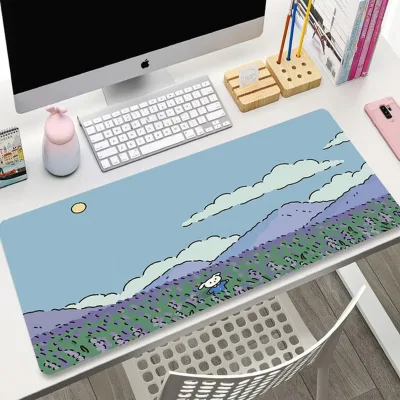
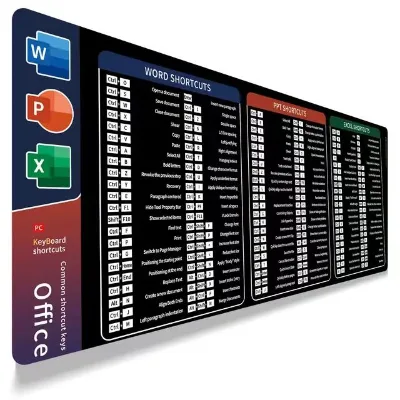
The versatility of large office desk mouse pads extends beyond simple computer usage. While the primary application is clearly defined as an "Office Desk Mat," the market data reveals a broader spectrum of use cases. These products are increasingly utilized in gaming setups, trade show displays, and competitive environments where precision and aesthetics are paramount. The "Type" of product is often categorized as an "Advertising Mousepad," indicating its utility in corporate branding and promotional campaigns.
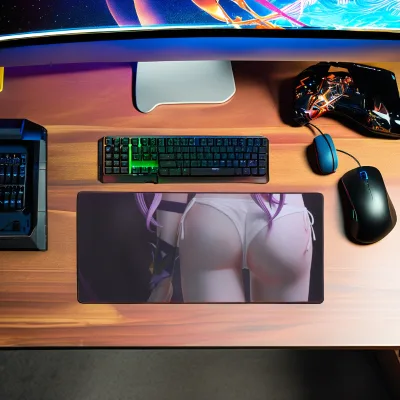
In an office setting, the large surface area provides ample space for both mouse movement and keyboard placement, enhancing ergonomic efficiency. The "Soft and Comfortable" hand feeling is a key attribute for users who rest their wrists on the mat, although it is important to note that many models are supplied "Without Wrist Rest," requiring users to rely on the mat's surface texture for comfort. For gaming and competition applications, the non-slip rubber base and smooth surface texture are critical to ensure consistent performance. The "Double Sided" feature of some models offers additional versatility, allowing for different textures or designs on each side, which can be useful for seasonal branding or dual-purpose setups.
The "Feature" of being "Non-Heated" is a standard specification, distinguishing these mats from specialized heated accessories. This confirms their role as passive ergonomic aids rather than active heating devices. The ability to customize colors and designs makes these mats ideal for corporate events, where companies may wish to match their branding colors or display specific promotional graphics. Whether for a standard office cubicle or a high-end executive desk, the application of these mats is defined by the need for a stable, comfortable, and visually cohesive workspace.
Supplier Evaluation and Quality Control
Selecting the right supplier requires a rigorous evaluation process that goes beyond price comparison. Buyers should prioritize suppliers who demonstrate transparency in their production processes and material sourcing. The "Surface Treatment" and "Raw Material" attributes are key indicators of a supplier's capability. A supplier offering "Top Grain Leather" treatment should be able to provide samples that match the description of "Genuine Cow Leather" and "Durable" advantages. Similarly, suppliers claiming "Eco Friendly" status should be able to substantiate this with the aforementioned certifications like BSCI and Sedex.
Quality control (QC) protocols must be established before production begins. Given the variation in materials, from fabric to leather to rubber, QC checks should focus on dimensional accuracy, surface texture consistency, and adhesion of the non-slip base. The "Standard" of "Irregular" or specific dimensions like "800x400x3mm" must be strictly adhered to. Buyers should verify that the "Packing" method, such as "PE Bag with Carton Box" or "OPP Bag/EVA Bag/Box/Carton," protects the product during transit, especially for delicate leather surfaces.
When evaluating suppliers, look for those who offer "Custom Design" capabilities with a clear workflow for proofing and sampling. The "Printing" method, specifically CMYK sublimation heat transfer, requires precise color calibration to ensure the final product matches the design intent. Buyers should request pre-production samples to test the "Hand Feeling" and "Surface Texture" against their requirements. Additionally, verifying the "Product Origin" as China, while common, should be accompanied by checks on the specific factory's capacity and history to ensure reliability.
Long-Term Procurement Considerations
Sourcing large office desk mouse pads is not merely a transactional activity but a strategic decision with long-term implications. The durability of the product is a primary concern. Genuine leather products, while expensive, offer superior longevity and develop a patina over time, whereas synthetic options like PU leather or PVC may show wear more quickly. Buyers must weigh the initial cost against the expected lifespan of the product. The "Advantage" of durability is a key selling point for genuine leather, but it must be balanced against the higher MOQ and price.
Sustainability is another long-term consideration. With the increasing demand for "Eco-Friendly" products, buyers should prioritize suppliers who adhere to "Sustainable" standards and hold relevant certifications. This not only aligns with corporate CSR goals but also future-proofs the supply chain against evolving environmental regulations. The "Non-Toxic" and "Lead Free" attributes are essential for maintaining a healthy office environment over the long term.
Finally, the flexibility of the supply chain is crucial. Suppliers who offer "Customization" and varying MOQs provide the agility needed to adapt to changing business needs. Whether scaling up for a large office expansion or reducing orders for a specific project, the ability to adjust order volumes without compromising quality is a hallmark of a reliable supplier. By focusing on these long-term factors, buyers can ensure a steady supply of high-quality desk mats that meet both functional and aesthetic requirements for years to come.
Comparative Analysis of Product Attributes
To assist in the decision-making process, the following table summarizes the key attributes observed in the market, highlighting the distinctions between different material types and their associated benefits.
| Attribute Category | Genuine Leather Option | Vegan/PU Leather Option | Fabric/Rubber Option |
|---|---|---|---|
| Raw Material | Genuine Cow Leather | Natural Rubber with Vegan Leather | Fabric with Non-slip Rubber Base |
| Surface Treatment | Top Grain Leather | Vegan PU Leather / PVC | Smooth Texture |
| Key Advantage | Durable, Premium Feel | Eco Friendly, Cost Effective | Soft, Comfortable |
| Certifications | CPSIA, Non-Toxic, Lead Free | BSCI, Sedex, RoHS, Reach | ISO9001, Ca65, PAHs |
| Typical MOQ | 100 PCS | 100 PCS | 50-1000 PCS (Variable) |
| Standard Size | 800x400x3mm | 60x30cm, 80x40cm | Irregular / Custom |
| Application | Office, Executive Desk | Office, Gaming, Promotion | Gaming, Show, Competition |
| Packing | PE Bag with Carton Box | OPP Bag / EVA Bag / Box | OPP Bag / EVA Bag / Box |
This comparison underscores the trade-offs buyers must make between material quality, cost, and specific application needs. By carefully analyzing these attributes against the specific requirements of their organization, procurement professionals can make informed decisions that optimize both performance and budget.
FAQs
What materials are used for large office desk mouse pads?
Materials include genuine cow leather, top grain leather, natural rubber with vegan leather, PU leather, and fabric. The choice depends on whether you prioritize durability and a premium feel or eco-friendly synthetic alternatives for your office setup.
Which certifications ensure safety and compliance for these mats?
Valid certifications include CPSIA, BSCI, Sedex, Reach, Ca65, PAHs, RoHS, ISO9001, and PFAS compliance. These documents verify that the products are non-toxic, lead-free, and meet international safety and labor standards for office environments.
How does the minimum order quantity vary for these products?
Minimum order quantities range from 10 pieces to 1,000 pieces depending on the supplier and specific model. Some vendors offer low MOQs for prototyping, while others require higher volumes to achieve optimal pricing tiers for custom designs.
Can I request custom designs and colors for the mouse pads?
Yes, customization is available for custom designs, specific colors like red, green, gray, blue, and black, or fully customized palettes. This often involves CMYK sublimation heat transfer printing to ensure high-fidelity branding on the smooth surface.
What are the standard dimensions and thickness for large mats?
Standard large formats often adhere to dimensions such as 800x400mm, 60x30cm, or 80x40cm with a thickness of 3mm. Custom irregular standards also exist to accommodate unique desk layouts and specific ergonomic requirements.
How do prices differ between genuine leather and synthetic options?
Prices range from 0.80 to 92.85 USD, driven primarily by raw material costs. Genuine cow leather commands a higher price point due to its durability and premium aesthetic, while PU leather and PVC options offer more budget-friendly alternatives.