Source Laser Printing Container Bolt Seal for Trucks, Doors, Containers
Compare 30 verified Laser Printing Container Bolt Seal options featuring ISO/PAS 17712 certification and customizable laser logos. Buyers can evaluate steel and plastic materials, tensile strengths over 13000N, and various color choices for securing trucks, doors, and containers.
Key considerations
Products List
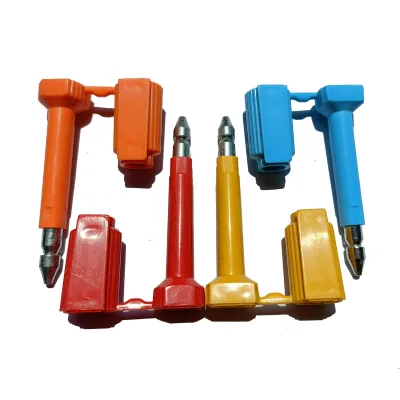


Laser Marking 8mm Numbered Bolt Seal BS001 Security Container Bolt Seal
$0.12 - $0.14
MOQ: 10000 Pieces


Logo Printing Container Bolt Seal High Tamper Evident Bolt Seal Transport Bolt Seal
$0.18 - $0.21
MOQ: 5000 Pieces

ISO 17712 High Security Container Laser Printing Bolt Seal for Shipping Container Lock
$0.12 - $0.15
MOQ: 5000 Pieces

Laser Printing Container Customized Logo High Grade Container Security Bolt Seal
$0.12 - $0.15
MOQ: 1000 Pieces


High Quality Security Bolt Seal Metal Container Seal with Custom Laser Printing
$0.11 - $0.15
MOQ: 1000 Pieces


Laser Printing Logo Anti Tamper Shipping Lock Container Security Bolt Seal
$0.12 - $0.16
MOQ: 1000 Pieces


Container Security Seals Bolt Seals
$0.13 - $0.18
MOQ: 5000 Pieces
Shandong Province Qingyun County Junchuang Lock Industral Co., Ltd.


Disposable High Quality Container Seal Bolt Seal
$0.13 - $0.18
MOQ: 1000 Pieces
Shandong Province Qingyun County Junchuang Lock Industral Co., Ltd.


Metal Seal for Container Door Locking Bolt
$0.03 - $0.07
MOQ: 10000 Pieces
Shandong Province Qingyun County Junchuang Lock Industral Co., Ltd.


High Security Metal Seal for Container Door Locking Bolt Seals Laser Printer Marker
$1000.00 - $2200.00
MOQ: 1 Pieces
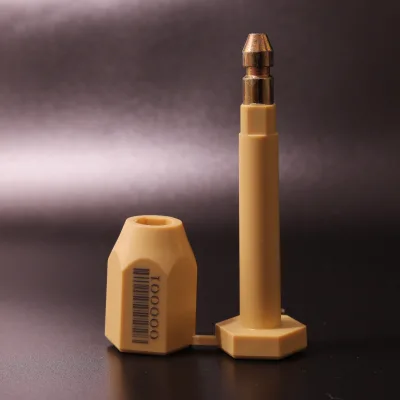

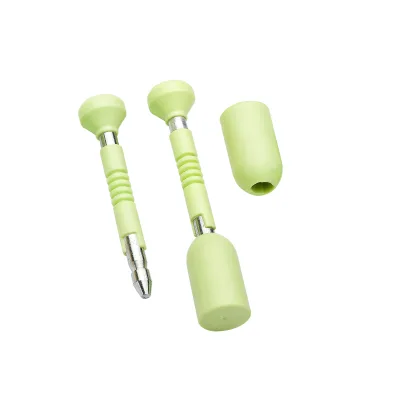

Comprehensive Sourcing Guide
Strategic Sourcing Guide for Laser Printing Container Bolt Seals
Understanding the Technical Architecture of High-Security Seals
When sourcing laser printing container bolt seals, buyers must first distinguish between general locking mechanisms and specialized security devices designed for international shipping. The core product in this category is a bolt seal, a rigid security device that prevents unauthorized access to container doors during transit. The defining technical characteristic of the specific items observed in the market is the integration of laser printing capabilities directly onto the seal body. This is not merely a cosmetic feature; it is a critical security measure. The observed specifications indicate that these seals are constructed from a composite of steel and plastic, where the exterior is wrapped with plastic to provide durability and resistance to environmental factors, while the internal steel core provides the necessary tensile strength.
The physical dimensions of these seals are standardized to ensure compatibility with various container types. The typical bolt seal features a steel length of 76mm and a steel diameter of 8mm, which is a standard metric for high-security applications. The overall single package size for these units is often compact, measuring approximately 8.6 x 3.6 x 2.2 cm, facilitating efficient storage and logistics. The tensile strength of the steel component is a vital performance metric, with observed data indicating a capacity of greater than 13,000 Newtons (F>13000N). This high tensile strength ensures that the seal cannot be easily cut or broken using standard hand tools, maintaining the integrity of the cargo from the point of loading to the final destination.
The customization options available in this sector are extensive. Buyers can select from a wide range of colors, including red, yellow, green, blue, orange, white, brown, silver, black, and grey. Furthermore, the option for customer-required colors allows for brand-specific identification or color-coding systems within a logistics network. The laser printing feature allows for the application of a company logo, name, serial numbers, and barcodes directly onto the seal. This level of detail is essential for inventory management and anti-counterfeiting efforts. The printing process is permanent, ensuring that the identification data remains legible even if the seal is subjected to harsh weather conditions or physical abrasion.
Compliance and Certification Verification Protocols
In the realm of international trade, compliance is not optional; it is a fundamental requirement for the validity of the seal. The primary standard governing high-security seals is ISO/PAS 17712:2013. This standard defines the criteria for high-security seals, including the mechanical strength, tamper-evidence, and the ability to be uniquely identified. When evaluating potential suppliers, buyers must verify that the specific bolt seal models they are considering have passed the ISO/PAS 17712 2013 certification. This certification is a critical benchmark that distinguishes a high-security seal from a standard locking device.
Beyond the specific seal standard, broader organizational certifications play a significant role in supplier reliability. The observed market data includes references to ISOISOC-TPAT compliance. While the specific nature of these certifications may vary by supplier, they generally indicate adherence to international trade security programs and quality management systems. Buyers should request current, valid certificates from the supplier to confirm that their manufacturing processes and quality control measures align with these standards. It is important to note that the presence of a standard like ISO 9001 in general industry knowledge does not automatically apply to every product listed; therefore, the buyer must explicitly verify the certification status for the specific product model, such as GY-019 or the DL series (DL-6007, DL-6008, DL-6013, DL-6014), to ensure compliance.
The certification process also involves the verification of the seal's unique identification features. The laser printing of serial numbers and barcodes must be unique to each seal to prevent duplication. This unique identification is a prerequisite for the ISO/PAS 17712 standard. Buyers should ensure that the supplier has a robust system for generating and tracking these unique codes, as this is the primary method for verifying the seal's authenticity during customs inspections or security audits.
Cost Drivers and Pricing Dynamics in the Market
The pricing structure for laser printing container bolt seals is influenced by several distinct factors, ranging from raw material costs to the complexity of the customization required. The observed price range in the market is substantial, spanning from $0.03 to $2,200. This wide variance is not indicative of a single product type but rather reflects the difference between individual unit costs and bulk procurement scenarios, as well as the distinction between standard seals and specialized, high-volume orders.
The primary cost driver is the customization level. Standard seals with pre-printed logos or generic serial numbers are typically more affordable. However, seals requiring custom laser printing of specific company logos, unique serial number sequences, and barcodes incur additional processing costs. The complexity of the laser printing process, which requires precision equipment and quality control checks, adds to the unit price. Additionally, the material composition plays a role; seals with a higher grade of steel or specialized plastic wrapping may command a premium price compared to basic models.
Order volume is another critical determinant of cost. The Minimum Order Quantity (MOQ) varies significantly across suppliers, ranging from 1 unit to 10,000 units. Some suppliers may offer lower MOQs for trial orders or small-scale operations, while others require substantial volume commitments, such as 5,000 or 1,000 pieces, to achieve the most competitive pricing. The observed data shows specific MOQs of 5,000 PCE and 1,000 PCE for different models, suggesting that buyers should negotiate based on their projected annual usage. Bulk purchasing often leads to economies of scale, reducing the per-unit cost significantly.
Packaging and logistics also contribute to the final cost. The standard packaging for these seals is often a carton box, with specific configurations such as 250 pieces per carton. The gross weight of the packaging, which can range from 17 kg to 19.8 kg per carton depending on the model, affects shipping costs. Buyers should consider the total landed cost, including freight, when comparing quotes from different suppliers, especially if the supplier is located in a specific region like Shanghai, China, which is a known hub for manufacturing these products.
Typical Applications and Operational Use Cases
Laser printing container bolt seals are designed for a diverse range of applications, primarily focused on securing high-value cargo during international transport. The observed specifications list applications across instruments and meters, trucks, doors, and containers. This versatility makes them suitable for various logistics scenarios, from full container loads (FCL) to less than container loads (LCL) and secure trucking operations.
The primary use case is for securing shipping containers. The seal is applied to the locking mechanism of the container door, providing a visible and tamper-evident barrier against unauthorized entry. The high tensile strength of the steel bolt ensures that the seal cannot be easily cut, while the plastic wrapping protects the mechanism from corrosion and environmental damage. The laser-printed serial number and barcode allow for easy verification of the seal's integrity at every checkpoint in the supply chain.
In addition to shipping containers, these seals are used for securing trucks and other transport vehicles. The application on truck doors ensures that cargo remains secure during road transport, preventing theft or tampering. The ability to customize the color and print specific logos allows logistics companies to implement color-coded security systems, where different colors represent different routes, cargo types, or security levels. This visual management tool enhances operational efficiency and reduces the risk of human error.
The use of these seals in the context of instruments and meters suggests their application in securing sensitive equipment or specialized containers used for scientific or medical purposes. The high-security nature of the bolt seal ensures that the contents remain undisturbed, maintaining the integrity of the cargo. The robust construction and tamper-evident features make these seals ideal for applications where security is paramount and the consequences of tampering are severe.
Supplier Evaluation and Quality Assurance Strategies
Selecting the right supplier is a critical step in the procurement process. Buyers should evaluate suppliers based on their manufacturing capabilities, quality control systems, and compliance with international standards. The observed data indicates that many suppliers are located in Shanghai, China, a region known for its manufacturing expertise. However, the location alone is not a guarantee of quality; buyers must conduct thorough due diligence.
One of the key evaluation criteria is the supplier's ability to provide laser printing services. The quality of the laser printing is crucial for the longevity and legibility of the identification data. Buyers should request samples to verify the clarity and permanence of the printed text. The printing should be resistant to fading, scratching, and environmental degradation. Additionally, the supplier should have a robust system for tracking the serial numbers to ensure that each seal is unique and cannot be duplicated.
Quality control is another essential factor. Buyers should inquire about the supplier's quality assurance processes, including testing for tensile strength, tamper-evidence, and material durability. The observed tensile strength of F>13000N is a benchmark that should be met or exceeded. Buyers should also verify the supplier's certification status, ensuring that they hold valid ISO/PAS 17712 and other relevant certifications.
The supplier's production capacity and lead times are also important considerations. The observed MOQs range from 1 to 10,000 units, and buyers should ensure that the supplier can meet their volume requirements within the desired timeframe. The packaging specifications, such as the carton size and gross weight, should be reviewed to ensure they align with the buyer's logistics needs. Finally, the supplier's responsiveness and willingness to provide detailed product information and samples are indicators of their commitment to customer service and quality.
Long-Term Procurement and Supply Chain Resilience
Establishing a long-term relationship with a reliable supplier is essential for maintaining supply chain resilience. Buyers should consider the scalability of the supplier's operations, ensuring that they can accommodate increases in order volume as the business grows. The ability to customize the seals for different projects and the flexibility to adjust production schedules are valuable attributes for long-term partnerships.
Sustainability and environmental considerations are becoming increasingly important in procurement. Buyers should inquire about the materials used in the seals, particularly the plastic wrapping and steel components, to ensure they meet environmental standards. The use of recyclable materials and energy-efficient manufacturing processes can contribute to a more sustainable supply chain.
Risk management is another critical aspect of long-term procurement. Buyers should develop contingency plans to mitigate the risk of supply disruptions, such as having multiple suppliers or maintaining safety stock. The observed price range and MOQ variability suggest that buyers should diversify their sourcing strategy to avoid over-reliance on a single supplier. Regular audits and performance reviews of suppliers can help identify potential issues early and ensure that the quality and compliance standards are consistently met.
In conclusion, sourcing laser printing container bolt seals requires a comprehensive understanding of the technical specifications, compliance requirements, and market dynamics. By carefully evaluating suppliers and focusing on quality, customization, and long-term reliability, buyers can secure a supply chain that meets the highest standards of security and efficiency. The integration of laser printing technology with high-strength materials provides a robust solution for securing cargo in the complex global logistics environment.
FAQs
How is the laser printing applied to the seal?
The laser printing applies a company logo, name, serial numbers, and barcodes directly onto the seal body. This process ensures the identification data is permanent and resistant to fading or physical abrasion during transit.
What certification does the product meet?
The product has passed the ISO/PAS 17712 2013 certification standard for high-security seals. Buyers should verify this specific certification status for the model they intend to purchase to ensure compliance.
Which materials are used in construction?
The seal is constructed from steel with an exterior wrapped in plastic. This composite design provides high tensile strength while protecting the internal mechanism from environmental damage and corrosion.
Can I customize the color of the seal?
Yes, customization is available for colors including red, yellow, green, blue, orange, white, brown, silver, black, and grey. Buyers can also request specific colors to match their brand or logistics coding systems.
What is the tensile strength of the steel bolt?
The steel component offers a tensile strength greater than 13,000 Newtons. This high strength ensures the seal cannot be easily cut or broken using standard hand tools during shipping.
What is the minimum order quantity for these seals?
Minimum order quantities vary by supplier, with observed values ranging from 1 to 10,000 units. Specific models may require 1,000 or 5,000 pieces, so buyers should confirm the MOQ for their selected model.
Where are these products typically manufactured?
The products originate from Shanghai, China, which is a known manufacturing hub for these items. Buyers should verify the specific origin for each supplier to ensure accurate logistics planning.