Source Laundry Soap for Clothes Washing, Stain Removal, and Refreshing
Compare 30 verified Laundry Soap options from Chinese manufacturers featuring customizable shapes, varying TFM levels, and ISO9001 certifications. Buyers can evaluate solid forms, rich foam performance, and bulk pricing for apparel cleaning needs.
Key considerations
Products List




$510.00 - $730.00
MOQ: 25 Tons


Harmless Multi Purpose Washing Soap High Quality China Supplier Laundry Soap
$0.16 - $0.30
MOQ: 130000 Pieces

Soap Manufacturers Wholesale Soap High-Quality Individual Packing Washing Soap
$0.21 - $0.25
MOQ: 40000 Pieces
Comprehensive Sourcing Guide
Strategic Sourcing Guide for Global Laundry Soap Procurement
The global market for Laundry Soap presents a complex landscape for B2B buyers seeking to balance cost efficiency with product performance and regulatory compliance. Sourcing solid Laundry Soap, often categorized as general Laundry Soap or detergent, requires a nuanced understanding of technical specifications, supply chain variables, and quality assurance protocols. This guide synthesizes observed market data and industry standards to provide a disciplined framework for procurement professionals. The focus remains on evidence-based decision-making, ensuring that buyers can navigate the variability in product attributes, such as active ingredient content, packaging formats, and customization options, without relying on unverified claims.
Technical Specifications and Product Attributes
Understanding the technical profile of Laundry Soap is the foundational step in any sourcing strategy. The market offers a diverse range of formulations, from standard solid bars to specialized variants designed for specific fabric types. A critical observation in the current supply landscape is the variation in active ingredient content. Data indicates that active ingredient concentrations can range significantly, with some products listing content between 15% and 30%, while others offer formulations extending from 30% to 50%. Buyers must verify the specific concentration required for their target market, as higher active ingredient percentages often correlate with enhanced cleaning power but may also influence the final cost structure.
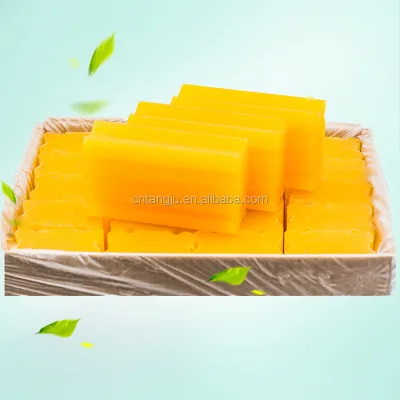
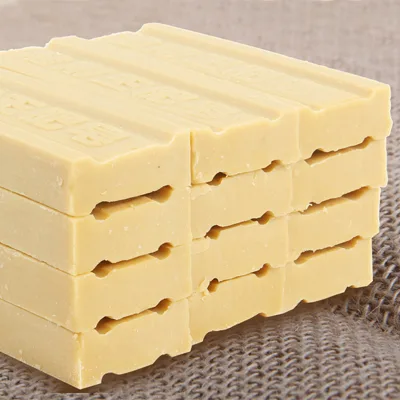
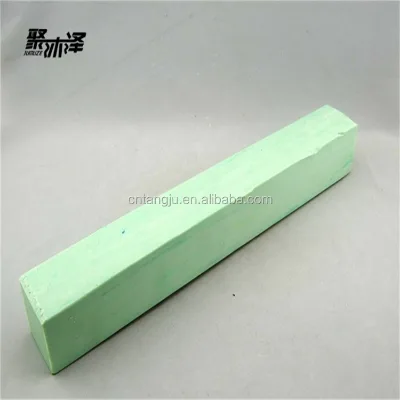
Shape and physical form are equally defining characteristics. While the industry standard often includes square or rectangular shapes, customization is a prevalent feature. Suppliers frequently offer options for "Rectangle or as customize" shapes, allowing brands to differentiate their products through unique silhouettes. The physical state is predominantly solid, with weights varying from 200 grams to 500 grams, and larger bulk options like 1 kg bars. The color profile is another variable; while white is a common baseline, suppliers also provide beige and orange options, or fully customized color solutions to match brand identity.
Fragrance profiles further segment the market. Products are available in unscented variants for sensitive skin applications, as well as perfumed or naturally scented options. Some listings highlight specific functional attributes such as "Refreshing" or "Anti-bracteial" properties, though buyers should treat these as product-specific observations rather than universal guarantees. The foam quality is another technical metric, with "rich foam" being a desirable characteristic for consumer perception, directly linked to the perceived efficacy of the detergent.
Compliance, Certification, and Regulatory Standards
Navigating the regulatory environment is essential for international trade. The Laundry Soap industry is subject to various quality management systems and safety standards. A notable certification observed in the market is ISO9001:2000, which indicates a supplier's commitment to quality management processes. Additionally, third-party verification from organizations like SGS is frequently cited, serving as a proxy for product safety and quality consistency. However, buyers must not assume that all listed products automatically possess these certifications; verification of current, valid certificates is a mandatory step in the due diligence process.
Packaging standards also play a role in compliance and logistics. The supply chain often utilizes specific packaging configurations, such as a "PP Bag with Paper Card" for individual units or "Inner Box and Standard Export Carton" for bulk transport. These packaging methods are designed to protect the product during transit while meeting export requirements. The standard dimensions for export cartons, such as 60x60x80 cm, are critical for optimizing container loading and minimizing shipping costs. Buyers should ensure that the packaging specifications align with the destination market's labeling and environmental regulations, particularly regarding the materials used for the outer transport package.
Cost Drivers and Pricing Dynamics
The pricing of Laundry Soap is influenced by a complex interplay of raw material costs, production technology, and order volume. The market exhibits a wide price range, observed from as low as $0.02 to $65,000 per unit or lot, reflecting the vast difference between single-item samples and bulk industrial orders. This disparity underscores the importance of defining the procurement scale early in the process.
A significant cost driver is the Minimum Order Quantity (MOQ). Data shows MOQs ranging from a single unit for sampling purposes to 130,000 units for large-scale production. Specific bulk orders often carry MOQs in the range of 2 to 5 tons. For instance, certain suppliers may require a 5-ton minimum for standard formulations, while others might offer more flexible terms with a 2-ton threshold. These thresholds directly impact the unit price; higher volumes typically yield lower per-unit costs due to economies of scale in production and logistics.
The technology employed in manufacturing also affects pricing. Some listings reference a "55%" technology metric, which may refer to the efficiency of the production process or a specific formulation ratio. While the exact definition requires supplier clarification, it suggests that advanced manufacturing techniques can influence the final cost. Furthermore, customization options, such as custom shapes, scents, or packaging, invariably add to the base cost. Buyers must weigh the marketing value of customization against the increased unit price and potential lead time extensions.
Typical Applications and Market Segmentation
Laundry Soap serves a broad spectrum of applications, primarily categorized by the intended use of the fabric. The primary application is "Clothes Washing" or "Apparel" cleaning. Products are often marketed as "General Laundry Soap," suitable for all types of clothing. However, specific formulations may target niche markets, such as those requiring "Stain Removal" capabilities or those designed for "Refreshing" fabrics.
The versatility of the product allows it to be used in various settings, from household laundry to industrial cleaning operations. The "Stocked" availability of certain models suggests that buyers can source ready-to-ship inventory for immediate needs, while "Customization" options cater to brands launching new product lines. The "OEM" (Original Equipment Manufacturer) capability is a key feature for buyers looking to private label products, allowing them to utilize the supplier's manufacturing capacity while applying their own branding.
Supplier Evaluation and Selection Criteria
Selecting the right supplier requires a rigorous evaluation process based on verified capabilities rather than marketing assertions. The geographic origin of the product is a critical factor; a significant portion of the market originates from China, with specific hubs like Hebei noted as production centers. Buyers should verify the "Place of Origin" to ensure alignment with their sourcing strategy and to understand the logistical implications of shipping from that region.
Supplier reliability is often gauged through their sample time and production capacity. A standard sample time of 7 days is observed, which serves as a benchmark for evaluating a supplier's responsiveness. However, buyers should confirm if this timeline is consistent or if it varies based on customization requirements. The ability to provide samples is a crucial step in validating product quality before committing to a large order.
When evaluating suppliers, buyers should look for evidence of consistent production capabilities. The presence of multiple product models, such as HBMEC682, HBMEC913, and HBMEC900, indicates a diverse product portfolio. However, the existence of a model number does not guarantee quality; it merely identifies the product line. Buyers must cross-reference these model numbers with specific technical data sheets to ensure the product meets their functional requirements.
Quality Control and Performance Verification
Quality control is paramount in the Laundry Soap sector, where performance consistency is key to customer satisfaction. Buyers should implement a robust quality assurance protocol that includes pre-shipment inspections and laboratory testing. Key performance indicators to verify include the TFM (Total Fatty Matter) content, which can range from 30% to 84% depending on the formulation. This metric is a strong indicator of the soap's cleaning efficacy and should be verified against the supplier's test reports.
The "Single gross weight" and "Single package size" are also critical for quality control. For example, a product with a single gross weight of 0.2 kg and dimensions of 20x10x10 cm must be consistently produced to ensure that the packaging and product weight remain within acceptable tolerances. Deviations in these metrics can lead to customer complaints and logistical issues.
Buyers should also verify the "Feature" claims, such as "Stain Removal" or "Anti-bracteial" properties. These should not be taken at face value but validated through independent testing or certified test results provided by the supplier. The "Function" of the soap, whether it is "Refreshing" or "Perfumed," must align with the product's actual sensory and performance attributes.
Long-Term Procurement Considerations
Sourcing Laundry Soap is not a one-time transaction but a long-term partnership that requires strategic planning. Buyers must consider the scalability of their supply chain. As demand grows, the ability of the supplier to increase production without compromising quality is essential. The "OEM" capability and "Customization" options provide flexibility for future product line expansions.
Sustainability and environmental compliance are increasingly important factors. While specific environmental certifications were not explicitly detailed in the provided data, buyers should inquire about the biodegradability of the ingredients and the recyclability of the packaging materials. The "PP Bag" and "Paper Card" packaging suggests a focus on standard industrial materials, but buyers should verify if these materials meet local environmental regulations in their target markets.
Finally, the relationship with the supplier should be built on transparency and clear communication. Establishing a clear protocol for handling defects, managing lead times, and addressing quality issues is vital for long-term success. Buyers should maintain open lines of communication regarding production schedules and any changes in raw material costs that might impact the final price. By adhering to these principles, buyers can build a resilient supply chain that delivers consistent value and meets the evolving needs of the market.
FAQs
What certifications do Laundry Soap suppliers typically hold?
Suppliers often hold ISO9001:2000 and SGS certifications to verify quality management and product safety. Buyers must request current valid certificates for each specific order, as not all listed products automatically possess these credentials without verification.
How is the active ingredient content determined for Laundry Soap?
Active ingredient content varies significantly between products, ranging from 15% to 30% or 30% to 50% depending on the formulation. Buyers should verify the specific concentration required for their target market to ensure the cleaning power matches their needs.
Can I customize the shape and packaging of the Laundry Soap?
Yes, customization is available for shapes like square or rectangle, as well as packaging options such as PP bags or export cartons. Buyers should note that custom shapes and packaging solutions may increase the unit price and extend lead times.
What is the typical minimum order quantity for bulk Laundry Soap?
Bulk orders often require a minimum of 2 to 5 tons, though some suppliers accept single units for sampling. The specific MOQ depends on the supplier and the product model, directly influencing the final per-unit cost through economies of scale.
Where are the primary manufacturing locations for Laundry Soap?
The majority of Laundry Soap originates from China, with specific production hubs noted in Hebei. Buyers should verify the place of origin to align with their logistics strategy and understand the shipping implications associated with this region.
How long does it take to receive a sample of Laundry Soap?
A standard sample time is typically 7 days for most suppliers to prepare and ship the product. This timeline serves as a benchmark for responsiveness, but buyers should confirm if customization requests might extend this period before placing a bulk order.