Source Law Enforcement Alcohol Tester for police, security, and patrol
Compare 30 Law Enforcement Alcohol Tester models from China suppliers featuring electrochemical and semiconductor sensors. Buyers can evaluate battery life, accuracy, and dimensions to find the right device for police, security, and patrol operations.
Key considerations
Products List


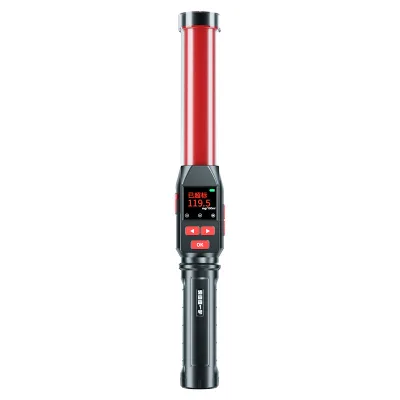
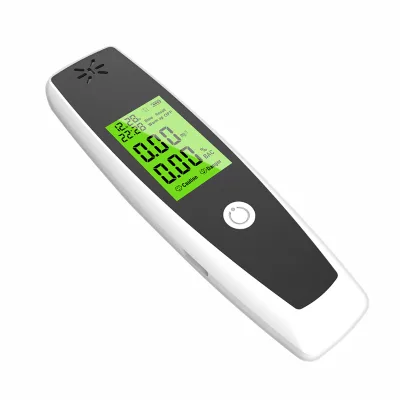
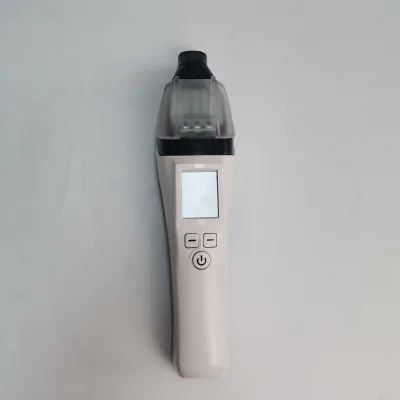
Police-Grade Digital Alcohol Tester with Data Uploading Function (AT8800)
$85.00 - $125.00
MOQ: 50 Pieces


Handheld Quick Test Digital Breath Alcohol Tester for Law Enforcement Checking Vehicles
$130.00 - $185.00
MOQ: 50 Pieces

High Accuracy At9000 Evidential Digital Alcohol Tester with Quick and Precise Analysis
$395.00 - $410.00
MOQ: 50 Pieces




Comprehensive Sourcing Guide
Strategic Sourcing Guide for Law Enforcement Alcohol Testers
Procuring alcohol testing equipment for law enforcement operations requires a rigorous approach that balances technical precision, legal admissibility, and operational durability. The market offers a diverse array of devices, ranging from portable handheld units to stationary breathalyzers, each designed to meet specific jurisdictional requirements. Buyers must navigate a complex landscape of sensor technologies, certification standards, and power management systems to ensure that the selected instruments provide reliable data that can withstand legal scrutiny. This guide outlines the critical factors for sourcing law enforcement-grade alcohol testers, focusing on the technical specifications and compliance attributes observed in current product listings.
Sensor Technology and Measurement Precision
The core differentiator among alcohol testing devices is the sensor technology employed. For law enforcement applications, the reliability of the sensor is paramount, as the results often serve as primary evidence in legal proceedings. The market currently features three primary sensor types: electrochemical fuel cell sensors, semiconductor sensors, and hybrid systems.
Electrochemical fuel cell sensors are widely regarded as the industry standard for professional use. These sensors operate by oxidizing alcohol in the breath sample, generating a current proportional to the alcohol concentration. Products in the current supply chain utilizing this technology, such as models designated At7000 and At8800, offer high specificity, minimizing false positives caused by other volatile organic compounds. The At7000 model, for instance, utilizes an electrochemical fuel cell sensor with a test range of 0.00-2.00mg/L (0-440mg/100ml), covering the full spectrum of legal intoxication limits. Similarly, the At8800 employs an electrochemical sensor with a high accuracy specification of ±0.005 at 0.05% BAC, a critical metric for ensuring legal defensibility.
In contrast, semiconductor sensors, found in models like the Dz512, operate on a different principle involving resistance changes in a metal oxide layer. While these sensors are often more cost-effective and suitable for preliminary screening, they are generally more susceptible to interference from environmental factors such as temperature and humidity. Some advanced units, such as the At7200, offer a hybrid approach, combining both fuel cell and semiconductor sensors. This configuration provides a dual-check mechanism, though buyers must verify the specific calibration protocols for each sensor type, as the fuel cell sensor typically has a lifespan of around 2 years, whereas the semiconductor sensor may last up to 5 years.
When evaluating sensor performance, buyers should look for specific working temperature ranges. The At7000 specifies a working temperature of 10℃-40℃, while the At8800 is rated for a broader environment of 0℃-50℃ with humidity up to 95% Rh. These parameters are essential for officers operating in varying climates, from cold winter nights to hot summer patrols.
Compliance, Certification, and Legal Admissibility
For law enforcement equipment, certification is not merely a regulatory formality but a prerequisite for legal admissibility. Devices must meet international safety and electromagnetic compatibility standards to be deployed in official duties. The product listings indicate that many alcohol testers carry CE and RoHS certifications. The CE mark signifies conformity with health, safety, and environmental protection standards for products sold within the European Economic Area, while RoHS (Restriction of Hazardous Substances) ensures the device is free from specific hazardous materials.
Furthermore, some models, such as the Dz512, carry FCC certification, which is mandatory for electronic devices operating in the United States to ensure they do not cause harmful interference. When sourcing, buyers must verify that the specific batch of equipment holds valid, current certifications for the jurisdiction in which they will be used. It is important to note that while ISO9001, ISO14001, and ISO13485 are often cited in broader manufacturing contexts, the immediate focus for procurement should be on the product-specific certifications like CE, RoHS, and FCC that validate the device's safety and compliance.
Buyers should also scrutinize the testing range and accuracy claims. The At9000 model, for example, specifies a testing range of 0-440mg/100ml with a warm-up time of less than 20 seconds. The ability to store extensive records, such as the 20,000 records capacity found in the At9000 or the 2,000 records in the At8800, is vital for maintaining a chain of custody and auditing historical data. The presence of a Bluetooth printer option in some models further enhances the ability to generate immediate, physical evidence at the scene.
Operational Specifications and Power Management
The operational environment for law enforcement officers is demanding, requiring devices that are robust, portable, and capable of sustained use. Power management is a critical consideration, as a device that fails to operate during a critical moment compromises the entire operation. The supply chain shows a variety of power input configurations. Some units, like the At7000, rely on 4AAA or AA Alkaline Batteries, offering the flexibility of using widely available disposable power sources. Others, such as the At8800, utilize 2 AA Batteries, while more advanced units like the At9000 and Dz512 feature integrated rechargeable lithium batteries.
The At9000, for instance, is equipped with a 7.4V Lithium Battery with a 2500mAh capacity, providing a continuous working time of at least 10 hours under normal conditions. This is a significant advantage for long shifts or multi-day operations where recharging infrastructure may be limited. The Dz512, with its 3.7V/600mAh lithium battery, claims a working time of over 200 blowing times on a full charge. Buyers must evaluate the trade-off between battery capacity and device weight. The At7000 weighs 400g with batteries, while the At8800 is significantly lighter at 120g, and the Dz512 is even more compact at 35g.
Physical dimensions also play a role in portability. The At7000 has dimensions of 284mm68.5mm74mm, which is larger and likely intended for stationary or semi-stationary use. In contrast, the At8800 measures 122mm X 67mm X 31mm, making it highly portable for handheld operations. The At7200 is notably larger at 293mm413mm407mm, suggesting it is designed for fixed installation or vehicle mounting rather than handheld use. When selecting a device, procurement teams must align the physical footprint with the intended deployment strategy.
Cost Drivers and Procurement Economics
The cost of law enforcement alcohol testers is influenced by several factors, including sensor technology, build quality, and additional features. The observed price range in the market spans from $0.20 to $500 USD, reflecting the vast difference between basic screening tools and high-end, legally certified instruments. The Minimum Order Quantity (MOQ) also varies significantly, ranging from 1 unit to 5,000 units, offering flexibility for small departments and large-scale government contracts alike.
High-cost drivers typically include the electrochemical fuel cell sensor, which is more expensive to manufacture than semiconductor alternatives. Devices with extended battery life, such as the 10-hour continuous operation capability of the At9000, command a premium. Additionally, features like Bluetooth connectivity for printer integration, large LCD displays (e.g., the 1.44-inch display on the At8800), and extensive data storage capacities contribute to higher unit costs.
Buyers should also consider the total cost of ownership, which includes maintenance, sensor replacement, and calibration. For example, the At7200 notes a fuel cell sensor life of 2 years, implying a recurring cost for sensor replacement. In contrast, the semiconductor sensor in the same model lasts 5 years. Understanding these lifecycle costs is essential for budgeting over a multi-year procurement cycle. The packaging type, such as the "Carton" used for the At7000 or the "Neutral Box" for the At8800, may also impact shipping costs and logistics planning for bulk orders.
Supplier Evaluation and Quality Control
Selecting a reliable supplier is as critical as selecting the right device. While specific supplier names should not be referenced, the evaluation criteria for potential vendors must be rigorous. Buyers should verify the product origin, with many devices listed as originating from China Mainland. It is essential to confirm that the supplier has a robust quality control system in place, ideally supported by relevant certifications like ISO9001, though the primary focus should remain on the product-specific CE, RoHS, and FCC certifications.
Quality control checks should include verifying the consistency of the sensor calibration. Devices like the At8800 boast a warm-up time of less than 10 seconds and a testing time of under 5 seconds, indicating a high level of responsiveness. Buyers should request sample units to test these performance metrics independently. Additionally, the working environment specifications, such as the temperature and humidity ranges, must be validated against the local operating conditions of the law enforcement agency.
The customization options available in the market, such as the "Available" customization status noted for some products, offer opportunities for branding or specific feature adjustments. However, buyers must be cautious, as customization can sometimes impact the lead time and certification status of the final product. It is advisable to request detailed technical data sheets and certification documents for every batch purchased to ensure compliance with local laws.
Long-Term Procurement and Operational Considerations
Long-term procurement strategies for law enforcement equipment must account for the evolving nature of technology and legal standards. The market shows a trend toward devices with digital displays, data storage capabilities, and connectivity options. The At9000, with its 20,000 record storage capacity, represents a shift toward data-driven enforcement, allowing for comprehensive analysis of alcohol-related incidents.
Buyers should also consider the training requirements associated with different devices. Models with complex interfaces or multiple sensor types may require more extensive training for officers. The At7200, with its dual sensor system, might require specific calibration procedures that differ from single-sensor models. Furthermore, the availability of spare parts and the longevity of the supply chain are crucial. Devices with proprietary batteries or sensors that are difficult to source can lead to operational downtime.
In conclusion, sourcing law enforcement alcohol testers requires a meticulous evaluation of sensor technology, certification compliance, operational specifications, and supplier reliability. By focusing on the technical attributes observed in the market, such as the electrochemical fuel cell sensors, specific temperature ranges, and robust power management systems, procurement teams can select equipment that ensures legal admissibility and operational efficiency. The decision should be driven by the specific needs of the agency, balancing the need for high precision with the practical constraints of budget and logistics.
FAQs
Which sensor types are available for law enforcement alcohol testers?
Electrochemical fuel cell sensors are the industry standard for legal admissibility, while semiconductor sensors offer cost-effective screening. Some models like the At7200 combine both types for dual verification, though buyers must verify calibration protocols for each sensor.
What certifications are required for law enforcement alcohol testing devices?
Devices must carry CE, RoHS, and FCC certifications to ensure safety and electromagnetic compatibility for official use. While ISO standards exist, product-specific marks like CE and FCC are prerequisites for legal admissibility in international jurisdictions.
How long do fuel cell sensors typically last in these devices?
Fuel cell sensors generally have a lifespan of around 2 years, whereas semiconductor sensors may last up to 5 years. Buyers should factor in these recurring replacement costs when calculating the total cost of ownership for long-term procurement.
Can these devices store extensive testing records for chain of custody?
Yes, advanced models like the At9000 can store up to 20,000 records, while others hold 2,000 records. This capacity is vital for maintaining audit trails and legal evidence, often paired with Bluetooth printer options for immediate physical documentation.
What power options are available for portable law enforcement alcohol testers?
Power inputs vary from disposable AA or AAA alkaline batteries to integrated rechargeable lithium batteries. High-capacity units like the At9000 offer over 10 hours of continuous working time, ensuring reliability during extended shifts without recharging infrastructure.
Which models offer high accuracy suitable for legal proceedings?
Models like the At8800 provide high accuracy of ±0.005 at 0.05% BAC, essential for legal defensibility. These devices often feature fast warm-up times under 10 seconds and quick testing times under 5 seconds to ensure operational efficiency.
Are customization options available for branded law enforcement equipment?
Customization is available for some products, allowing for branding or specific feature adjustments. However, buyers must verify that customization does not impact the lead time or the validity of existing certifications like CE and RoHS for the final product.