Source Leaf Spring for Trucks, Trailers, and Buses
Compare 26 Leaf Spring options from verified Chinese suppliers offering customization, ISO certifications, and various load capacities. Buyers can evaluate materials like 65Mn and 60Si2Mn, warranty terms, and delivery times for medium and heavy-duty applications.
Key considerations
Products List


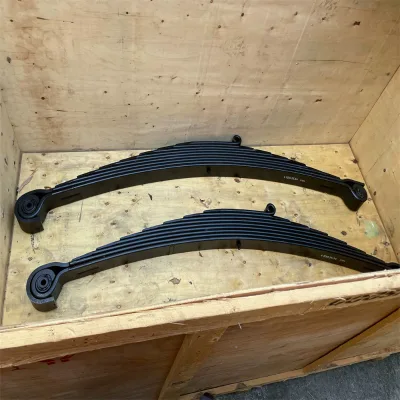

$50.00 - $56.00
MOQ: 50 Pieces


Comprehensive Sourcing Guide
Strategic Sourcing Guide for Leaf Spring Procurement
The global market for heavy-duty suspension components, specifically leaf springs, demands a rigorous approach to vendor selection and technical verification. For procurement professionals managing supply chains for medium to heavy-duty trucks, trailers, and commercial vehicles, the complexity lies in matching specific mechanical requirements with verified manufacturing capabilities. The following guide synthesizes available market data to provide a structured framework for sourcing leaf springs, focusing on material integrity, certification compliance, and logistical planning.
Technical Specifications and Material Integrity
The foundational aspect of any Leaf Spring procurement strategy is the verification of material composition and dimensional specifications. The market offers a diverse range of steel grades tailored to specific load-bearing requirements. Based on current product data, high-performance leaf springs are frequently manufactured using alloy steels such as 65Mn, 60Si2Mn, Sup9, 50CrVA, 51CrV4, and 55CrMnA. These materials are selected for their superior fatigue resistance and elasticity, which are critical for suspension systems subjected to constant cyclic loading.
Buyers must distinguish between applications based on duty cycles. Data indicates distinct product categories for "Medium Duty Truck" applications versus "Heavy Truck" applications. The distinction often correlates with the steel grade and the physical dimensions of the spring. For instance, standard specifications observed in the market include dimensions such as 760710, 1875, 2090, 20120, 1575, 2075, and 1560. These figures likely represent thickness, width, and length parameters, which must be cross-referenced with the intended vehicle's load capacity.
Furthermore, the physical configuration of the spring is a key technical variable. The "Axle Number" and "Tire Number" are critical identifiers for compatibility. Products are available with configurations ranging from 2 axles to systems supporting 6 tires, indicating versatility across different chassis designs. The "Position" of the spring, such as "Rear," is another specification that must be confirmed to ensure proper suspension geometry. Additionally, the "ABS" attribute in some listings refers to the specific type of Leaf Spring construction, while the "Condition" is predominantly listed as "New," suggesting that refurbished units are less common in this specific dataset.
Compliance, Certification, and Standards Verification
In the commercial vehicle sector, compliance with international standards is non-negotiable. Procurement teams must verify that suppliers possess valid certifications that validate their quality management systems and product safety. The observed market data highlights several key certifications, including ISO, CE, and ISO/TS16949. The presence of ISO/TS16949 is particularly significant, as it is the specific quality management standard for the automotive industry, indicating that the supplier adheres to rigorous process controls and defect prevention protocols.
Beyond general certifications, buyers should scrutinize the "Standard" attributes listed in product specifications. These vary widely, ranging from specific weight limits like 10kg, 20kg, and 35kg to custom requirements defined as "By The Customer Needs." This variability suggests that while some products may meet standardized weight classes, many are engineered to bespoke specifications. Consequently, the buyer's responsibility is to verify that the supplier can consistently meet the "Standard" requirements relevant to their specific fleet or project.
It is also essential to note the origin of the products. The majority of the observed data points to "China" as the production origin, with specific mentions of "Jinan, China" as a manufacturing hub. While this geographic concentration offers competitive advantages in cost and volume, it necessitates a thorough review of the supplier's export compliance and adherence to the destination country's import regulations. The "Certification" field often lists "ISOISO/TSOEM:Yes," which implies a capability for Original Equipment Manufacturer (OEM) production, a strong indicator of the supplier's ability to meet strict brand-specific quality benchmarks.
Cost Drivers and Pricing Dynamics
Understanding the cost structure of leaf springs is vital for budgeting and negotiation. The observed price range in the market spans from $0.01 to $700 USD. This wide disparity is not indicative of a single product type but rather reflects the vast differences in application, material grade, and customization level. A unit priced at the lower end of the spectrum likely represents a standard, off-the-shelf component for lighter applications, whereas the higher end corresponds to heavy-duty, custom-engineered springs for specialized trucks or trailers.
Several factors drive these costs. First, the material grade is a primary determinant; alloys like 50CrVA and 51CrV4 are more expensive than standard carbon steels due to their enhanced mechanical properties. Second, the level of customization significantly impacts pricing. Listings indicate that "Customization" is available and that "ODM" (Original Design Manufacturer) services are offered. Custom dimensions, such as the specific 760710 or 18*75 profiles, require dedicated tooling and production runs, which increase the unit cost compared to mass-produced standard items.
The "MOQ" (Minimum Order Quantity) is another critical cost driver, with observed ranges from 1 to 200 units. For buyers requiring small batches, the unit price may be higher due to setup costs. Conversely, bulk orders within the 200-unit range may leverage economies of scale. Payment terms, such as "T/T" (Telegraphic Transfer) and "LC" (Letter of Credit), also influence the financial dynamics of the transaction, with LCs often incurring additional banking fees but offering greater security for large international orders.
Typical Applications and Vehicle Compatibility
Leaf springs are integral to the suspension systems of a wide array of commercial vehicles. The data confirms their application in "Medium Duty Truck" and "Heavy Truck" sectors. The "Suitable for Car Brands" list is extensive, covering major global manufacturers including Kia, Mazda, Volvo, Lexus, Peugeot, Audi, Roewe, Geely, Cadillac, Chevrolet, Chery, Buick, Ford, Nissan, Jeep, Toyota, Honda, Hyundai, BMW, Benz, WuLing, and Volkswagen. This broad compatibility suggests that the supply chain is robust and capable of serving diverse OEM and aftermarket needs.
The specific application often dictates the required specifications. For example, a "Trailer Parts Leaf Spring" may have different load capacity requirements compared to a "Suspension Leaf Spring" for a heavy truck. The "Load Capacity" is explicitly mentioned as "10 tons" in some contexts, providing a benchmark for heavy-duty applications. Additionally, the "Installation Type" can vary; while traditional leaf springs are mechanically mounted, some listings mention "Airbag Kit" installation types, indicating a hybrid or specialized suspension system. Buyers must ensure that the selected Leaf Spring matches the specific installation type and load capacity of their vehicle to prevent premature failure or safety hazards.
Supplier Evaluation and Operational Capabilities
When evaluating potential suppliers, procurement professionals should look beyond the product listing and assess the operational capabilities of the vendor. Key indicators of a reliable supplier include the availability of "After-sales Service," such as a "One Year Structural Warranty" or a standard "One Year" warranty. These warranties demonstrate the supplier's confidence in their product's durability and their commitment to resolving post-purchase issues.
Logistical capabilities are equally important. The "Delivery Time" is observed to be between 7-15 working days, which is a standard lead time for manufactured goods. However, buyers must verify if this timeline applies to custom orders or standard stock items. The "Delivery Port" is frequently listed as "Qingdao China," a major port that facilitates efficient ocean freight. The "prod_packing" attributes, ranging from "Ocean Freight" and "Container" to "Steel Pallet" and "Export Standard Packing by Pallet," indicate that suppliers are equipped to handle international shipping requirements.
The "Payment" terms of "T/T, LC" are standard for international trade, but buyers should negotiate terms that align with their cash flow and risk management strategies. Furthermore, the "Customization" attribute being "Available" or "Provide" suggests that the supplier is flexible. However, buyers should verify the supplier's capacity to handle "ODM" requests, ensuring they have the engineering resources to design and produce custom components that meet specific technical drawings.
Quality Control and Long-Term Procurement Considerations
Ensuring long-term supply chain stability requires a proactive approach to quality control. The presence of certifications like ISO and ISO/TS16949 is a strong starting point, but buyers should request specific test results and quality assurance protocols. The "Condition" being listed as "New" is a baseline, but buyers must verify that the manufacturing process includes rigorous stress testing and fatigue analysis, especially for heavy-duty applications.
The "Color" of the leaf springs varies, with options including "Grey," "Black," and "Custom Made." While color is often a secondary aesthetic or protective coating feature, it can indicate the type of surface treatment used, which affects corrosion resistance. For operations in harsh environments, verifying the coating process is essential.
Long-term procurement considerations also involve the "Standard" of the product. Since many products are made "By The Customer Needs," buyers should establish a clear specification document at the outset of the relationship. This document should detail the material grade, dimensions, load capacity, and any specific testing requirements. Regular audits of the supplier's production line and quality control processes can help maintain consistency. Additionally, the "Lead Time" of 7-15 working days should be factored into inventory planning to avoid stockouts, especially for critical replacement parts.
Summary of Key Procurement Metrics
To facilitate quick decision-making, the following table summarizes the critical metrics observed in the current market for Leaf Spring procurement.
| Metric Category | Observed Data Points | Procurement Action |
|---|---|---|
| Material Grades | 65Mn, 60Si2Mn, Sup9, 50CrVA, 51CrV4, 55CrMnA | Verify grade matches load requirements. |
| Certifications | ISO, CE, ISO/TS16949 | Request valid certificates and audit reports. |
| Dimensions | 760710, 1875, 2090, 20120, 1575, 2075, 1560 | Cross-reference with vehicle chassis specs. |
| Load Capacity | 10 tons (observed), 10kg-35kg (observed standards) | Confirm capacity against actual vehicle load. |
| Lead Time | 7-15 Working Days | Plan inventory buffers accordingly. |
| Origin | China (Jinan), Qingdao Port | Verify export compliance and logistics. |
| Warranty | One Year, One Year Structural Warranty | Review terms for coverage scope. |
| Payment | T/T, LC | Align with company financial policies. |
By adhering to these guidelines and rigorously verifying the provided data points, procurement professionals can secure high-quality leaf springs that ensure the safety, reliability, and efficiency of their commercial vehicle fleets. The market offers a wide array of options, but success lies in the meticulous matching of technical specifications with verified supplier capabilities.
FAQs
What material grades are used for heavy-duty leaf springs?
Heavy-duty leaf springs are manufactured using alloy steels such as 65Mn, 60Si2Mn, Sup9, 50CrVA, and 51CrV4. These materials provide superior fatigue resistance and elasticity required for suspension systems subjected to constant cyclic loading.
Which certifications should I verify for automotive Leaf Spring suppliers?
You should verify that suppliers possess ISO, CE, and ISO/TS16949 certifications. The ISO/TS16949 standard is particularly significant as it validates the supplier's adherence to rigorous automotive quality management and defect prevention protocols.
Can I order custom dimensions for Leaf Spring applications?
Yes, customization is available and ODM services are provided by many manufacturers. Buyers can request specific dimensions like 7*60*710 or 18*75, though these custom orders may involve different lead times and pricing compared to standard stock items.
What is the typical delivery time for Leaf Spring orders?
The typical delivery time for Leaf Spring orders is between 7 to 15 working days. This timeline applies to manufactured goods and should be factored into inventory planning to avoid stockouts for critical replacement parts.
Which truck brands are compatible with these Leaf Spring products?
These products are suitable for major brands including Toyota, Ford, BMW, Volvo, and Volkswagen. The compatibility list extends to numerous manufacturers such as Kia, Mazda, and Geely, indicating a robust supply chain for diverse OEM and aftermarket needs.
How does the MOQ affect the pricing of leaf springs?
The minimum order quantity ranges from 1 to 200 units, influencing the unit price significantly. Smaller batches may incur higher costs due to setup fees, while bulk orders within the 200-unit range can leverage economies of scale.
What warranty coverage is typically offered for new leaf springs?
Suppliers typically offer a one-year structural warranty or a standard one-year warranty on new products. This coverage demonstrates the supplier's confidence in product durability and their commitment to resolving post-purchase issues effectively.