Find Left Right Passenger Front Guide for Car Seats, Buses, and Trucks
Source 30 verified listings for the Left Right Passenger Front Guide designed for automotive and commercial seating. Buyers can compare stainless steel control arms, plastic headrest guides, and executive coach components from suppliers in Ningbo and Shaanxi.
Key considerations
Products List


$1.00 - $5.00
MOQ: 100 Pieces






Comprehensive Sourcing Guide
Strategic Sourcing Guide for Front Passenger Side Guide Components
Understanding Component Variants and Technical Specifications
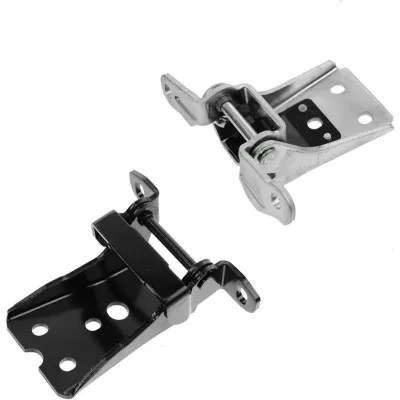
When sourcing components described by the core keyword "Left Right Passenger Front Guide," buyers must first navigate a complex landscape of automotive and seating hardware. The available product data reveals that "guide" terminology applies to distinct functional categories, ranging from suspension control arms to interior seating mechanisms. A critical initial step is distinguishing between the "Front Upper Driver & Passenger Side Control Arm" and the "Front Lower Driver & Passenger Side Control Arm." These are structural suspension components designed to maintain wheel alignment and absorb road shocks. The data confirms that these control arms are available as "Front Lower Right Control Arm" and "Front Lower Forward & Rearward Control Arm," indicating a need for precise directional identification during procurement.
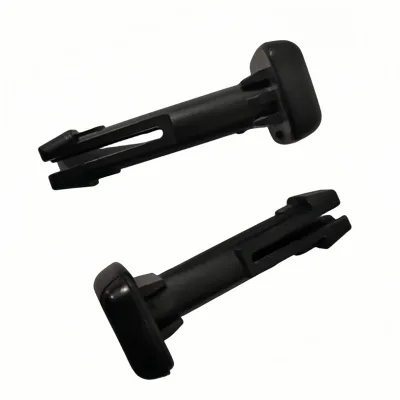
In contrast, the keyword also maps to interior seating hardware, specifically the "Car seat adjustable backseat headrest guide." This component is constructed from "plastic" and is described as a "Black Head Rest Guides Rear Set." Unlike the heavy-duty metal control arms, these guides are lightweight, with a net weight of 0.05kg and a gross weight of 0.5kg per piece. The dimensions for these plastic guides are specified as 1075cm. It is vital for buyers to recognize that while both categories may involve "left" and "right" designations, the material properties, load-bearing requirements, and installation procedures are entirely different. The control arms are made of "Stainless Steel," whereas the headrest guides are plastic. Misidentifying the material requirement can lead to catastrophic procurement errors, particularly when the application involves high-stress suspension systems versus low-stress interior trim.
Material Integrity and Structural Standards
The material composition of the sourced parts dictates their longevity and suitability for specific vehicle types. For the suspension control arms, the primary material is "Stainless Steel." This choice suggests a focus on corrosion resistance and structural integrity, essential for components exposed to road debris, moisture, and mechanical stress. The data indicates that these parts are "OEM" (Original Equipment Manufacturer) compliant, implying they are designed to meet the exact specifications of the vehicle manufacturer rather than being generic aftermarket replacements. The "Customization" attribute is available for these steel components, allowing buyers to tailor dimensions or mounting points to specific chassis requirements.
Conversely, the headrest guides are explicitly defined as "plastic" with a "Black" color finish. These components are designed for "All type of car seat, office seat, bus seat, truck seat," highlighting their versatility across different seating environments. The structure is described as "Single-Deck," which may refer to the internal reinforcement or the physical layering of the plastic molding. Buyers must verify that the plastic grade used meets the necessary impact resistance standards for the intended application, especially for bus or truck seats which endure higher wear and tear than standard passenger car seats. The "Universal" car fitment claim for the plastic guides requires careful validation, as "Universal" often implies a range of compatibility rather than a direct bolt-on fit for every model.
Compliance, Certification, and Regulatory Alignment
Navigating the regulatory landscape is a paramount concern for B2B procurement. The product data provides specific certification details that must be verified against local import regulations. For the seating components, the "Certificate" is listed as "ISOCCC." This certification is a critical indicator of compliance with specific safety and quality standards, likely related to the Chinese Compulsory Certification system for automotive parts. Buyers must ensure that the ISOCCC certificate is current and covers the specific batch of goods being imported.
For the heavy-duty vehicles, such as the "Fuel-Power Coach" with a "GVW (Kg)" of 18000, the "Emission Standard" is noted as "Euro Engine Capacity:>8L." While this specification pertains to the vehicle itself rather than the small guide components, it underscores the rigorous standards expected in the broader supply chain. The control arms are associated with a "prod_standard" of "Customization," which suggests that standard regulatory compliance may need to be supplemented by specific engineering approvals for custom orders. Additionally, the "ISO" certification mentioned in the context of the material "Stainless Steel" implies adherence to international quality management systems. Procurement teams should request valid copies of these certificates and verify their scope to ensure the parts meet the safety requirements of the destination market.
Cost Drivers and Pricing Dynamics
The pricing structure for these components exhibits a vast range, observed between $0.51 and $456,000. This extreme variance is not indicative of a single product line but rather reflects the diversity of the catalog, which includes small plastic accessories and large, complex vehicle assemblies or bulk industrial orders. The "Fuel-Power Coach" listing, with a "Top Speed (Km/H)" of 120 and a "Range (Km)" of >=700, likely represents the high-end of this price spectrum, potentially costing hundreds of thousands of dollars. In contrast, the "Car seat adjustable backseat headrest guide" with a "Selling Unit" of "Single item" likely falls near the lower end of the price range.
Buyers must analyze the "MOQ (Minimum Order Quantity)" to understand cost drivers. The data shows an MOQ range of 1 to 100. For the control arms, a specific listing indicates an MOQ of "100 Sets." This volume requirement significantly impacts the unit cost; purchasing below this threshold may result in higher per-unit prices or an inability to order. The "prod_packing" method, listed as "Pallet," suggests that logistics costs are a significant factor, particularly for the heavier stainless steel control arms. Shipping a pallet of 100 sets will incur different freight charges compared to a single plastic guide. Buyers should calculate the total landed cost, including freight, duties, and handling fees, rather than focusing solely on the unit price. The "Net weight/gross weight" data is essential for accurate freight estimation, as the 0.5kg gross weight per plastic guide contrasts sharply with the weight of the steel control arms.
Supplier Evaluation and Geographic Considerations
Geographic origin plays a significant role in supplier evaluation and logistics planning. The product data lists "Ningbo" and "Shaanxi, China" as production origins. Ningbo is a major port city known for its manufacturing and export capabilities, often associated with automotive parts and machinery. Shaanxi, a province in central China, is also a hub for heavy industry and vehicle manufacturing. When evaluating suppliers, buyers should verify the specific factory location to ensure it aligns with their logistical strategy. A supplier based in Ningbo may offer faster shipping times to international ports compared to one in Shaanxi, depending on the destination.
The "Brand Name" for the plastic guides is listed as "SL," while the coach vehicle is associated with "Purple Elephant." These brand identifiers help in tracing the supply chain and assessing the reputation of the manufacturer. However, the data also notes "Customization" as a standard attribute, meaning many products may be sold under the buyer's own brand or as unbranded OEM goods. Buyers should assess the supplier's capability to handle customization requests, including the ability to modify the "Model Number" or "Size" to fit specific needs. The "OEM: Yes" attribute for the control arms confirms that the supplier is experienced in producing parts for established vehicle brands like "Toyota," as indicated by the "Suitable for Car Brands" field. This experience is a strong indicator of quality control and manufacturing precision.
Quality Control and Long-Term Procurement Strategy
Implementing a robust quality control (QC) protocol is essential for managing the risks associated with these diverse product categories. For the stainless steel control arms, QC should focus on material composition verification, weld integrity, and dimensional accuracy. The "Structure" and "Size" specifications must be rigorously checked against the provided data, such as the 1075cm dimensions for the plastic guides. For the plastic headrest guides, the "Condition" is listed as "New," but buyers should verify the absence of defects like cracks, warping, or color inconsistencies, especially given the "Black" color specification.
Long-term procurement considerations involve establishing a reliable supply chain that can accommodate the "Customization" needs of the business. The availability of "Customization" suggests that the supplier is flexible, but this flexibility must be managed through clear technical drawings and agreed-upon specifications. The "Transmission Type" of "Manual" and "Fuel" type of "Diesel" mentioned in the context of the coach vehicle highlight the need for specialized knowledge when sourcing parts for heavy-duty applications. Buyers should maintain open communication with suppliers regarding the "Application" scope, ensuring that the parts are suitable for the specific vehicle models they intend to service.
Comparative Analysis of Component Categories
To facilitate decision-making, the following table summarizes the key differences between the two primary categories of "guide" components found in the supply data. This comparison aids in distinguishing between suspension hardware and interior seating accessories.
| Feature | Front Control Arm (Suspension) | Headrest Guide (Seating) |
|---|---|---|
| Primary Material | Stainless Steel | Plastic |
| Color | Not specified (Metal finish) | Black |
| Dimensions | Varies by model (OEM) | 1075 cm |
| Weight (Piece) | High (Steel density) | 0.05kg (Net) / 0.5kg (Gross) |
| MOQ | 100 Sets (Typical) | 1 (Single item available) |
| Certification | ISO / OEM Compliance | ISOCCC |
| Application | Toyota / Specific Car Brands | Universal (Car, Office, Bus, Truck) |
| Customization | Available (OEM) | Available |
| Position | Front (Upper/Lower) | Rear (Backseat) |
This table highlights that while both items may be referred to as "guides" in certain contexts, they serve fundamentally different purposes. The control arm is a critical safety component requiring high-strength materials and strict OEM compliance, whereas the headrest guide is a functional interior trim piece with universal fitment and lower weight constraints. Procurement strategies must be tailored accordingly, with the former requiring rigorous engineering validation and the latter focusing on volume efficiency and aesthetic consistency.
Final Procurement Recommendations
In conclusion, sourcing "Left Right Passenger Front Guide" components requires a nuanced approach that respects the distinct technical and regulatory profiles of the available products. Buyers must clearly define whether they require suspension hardware or seating accessories, as the material, certification, and cost implications differ drastically. The presence of "Customization" options offers flexibility but demands precise communication of technical requirements. Verification of "ISOCCC" and other certifications is non-negotiable for compliance, and understanding the "Place of Origin" is crucial for logistics planning. By adhering to these evidence-based guidelines and avoiding assumptions about product capabilities, buyers can build a resilient and compliant supply chain for their automotive and seating component needs.
FAQs
What material is used for the front passenger side control arms?
The front passenger side control arms are constructed from stainless steel to ensure corrosion resistance and structural integrity. This material choice supports OEM compliance and is suitable for specific car brands like Toyota.
Can I customize the dimensions of the control arm components?
Yes, customization is available for the control arm components to meet specific chassis requirements. Buyers can tailor dimensions or mounting points while maintaining the stainless steel material standard.
What is the minimum order quantity for the control arm sets?
The minimum order quantity for the control arm sets is 100 sets. This volume requirement applies to the stainless steel suspension components rather than the smaller plastic guide accessories.
Which certification applies to the car seat headrest guide components?
The car seat headrest guide components carry an ISOCCC certificate to ensure safety and quality compliance. This certification is critical for importing seating hardware into regulated markets.
Where are the control arm products manufactured?
The control arm products originate from Ningbo and Shaanxi, China. These locations serve as key production hubs for automotive parts and heavy vehicle components.
What is the net weight of a single headrest guide piece?
A single headrest guide piece has a net weight of 0.05kg and a gross weight of 0.5kg. These lightweight plastic components are designed for universal fitment across various seat types.
Which car brands are the control arms suitable for?
The control arms are suitable for Toyota car brands and other specific models requiring OEM parts. They are designed as front upper or lower driver and passenger side components.
How are the control arm products packed for shipment?
The control arm products are packed on pallets for efficient shipping and handling. This packaging method is standard for the heavier stainless steel suspension components.