Source Lightweight On Board Charger for EV, Bus, and Truck
Find and compare 30 Lightweight On Board Charger options for electric vehicles, buses, and trucks. Review specifications including 3.3kW and 2.0kW models with air or liquid cooling, 48V to 540V voltage levels, and CE/RoHS certifications to select the right component for your application.
Key considerations
Products List


Does This Portable Car Charger Have a Lightweight Design for Easy Carrying?
$125.00 - $216.00
MOQ: 50 Pieces

What Is off Board Charger for Electric Vehicle Including Portable Models?
$59.00 - $65.00
MOQ: 50 Pieces


What Should I Look for in a Portable Charger Besides Capacity and Price?
$59.00 - $65.00
MOQ: 50 Pieces





Comprehensive Sourcing Guide
Lightweight On Board Charger Sourcing Guide
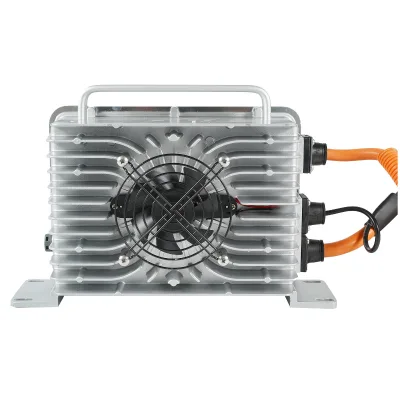
The Lightweight On Board Charger (OBC) represents a critical component for modern electric mobility, specifically designed to integrate seamlessly into vehicles where weight reduction directly impacts range and efficiency. Based on observed market listings, these units are engineered for diverse applications including electric vehicles, buses, boats, and trucks, offering a versatile solution for various mobility sectors. The primary value proposition lies in the balance between compact physical dimensions and robust power conversion capabilities, allowing manufacturers to optimize vehicle payload without sacrificing charging performance. Buyers should recognize that "lightweight" in this context often correlates with specific cooling architectures, such as force air cooling or liquid cooling, which are selected to maintain thermal efficiency while minimizing the mass of the heat dissipation system.
Procurement decisions for these chargers must account for the specific voltage and power requirements of the target vehicle platform. The market data indicates a wide range of voltage levels, from 48V up to 540V, and power outputs ranging from 2.0kW to 20kW, necessitating a precise match between the charger's rated voltage and the vehicle's battery system. For instance, specific models are identified as 3.3kW units with 94% efficiency, while others are configured as 2.0kW or 6.6kW+1.5kW 2-in-1 solutions. This variability means that a generic approach to sourcing is insufficient; buyers must verify that the selected unit supports the exact input voltage (typically 110VAC/220VAC/230VAC) and output voltage (ranging from 24V to 100V DC) required by their specific battery chemistry, whether lead-acid or lithium-ion.
Product Scope and Observed Listing Signals
The product scope for lightweight on board chargers encompasses a variety of form factors and functional configurations, ranging from single-output units to integrated multi-function systems. Listings frequently highlight models described as "High Durability Liquid Cooling Small Size" or "Lightweight Design" units, indicating that manufacturers are prioritizing space-constrained installations. The physical dimensions observed in the market vary significantly, with some compact units measuring approximately 22.3cm by 11cm by 13.1cm, while others are larger, such as those measuring 353mm by 230mm by 160mm. These dimensional differences often reflect the internal cooling strategy and the power density of the unit, requiring buyers to carefully review the physical specifications to ensure compatibility with their vehicle's chassis or mounting points.
Commercial signals in the market suggest a high degree of customization and flexibility in supply terms. The observed minimum order quantity (MOQ) ranges from 1 to 150 units, allowing both prototyping and small-batch production runs to be feasible without excessive inventory pressure. Pricing is similarly variable, with observed ranges spanning from $1 to $750, reflecting the differences in power rating, cooling technology, and feature sets like CAN bus control. Additionally, the availability of free mating connector kits is a notable market feature that can reduce integration costs and simplify the assembly process for the end-user. Buyers should also note that some listings specify the product origin as China, with specific regional hubs like Anhui emerging as production centers, which may influence logistics planning and lead time expectations.
Technical Specifications to Verify
When evaluating technical specifications, the cooling method is a primary differentiator that impacts both performance and weight. The market presents options for both force air cooling and liquid cooling, with some listings explicitly stating "Force Air Cooling/Liquid Cooling" as available configurations. Force air cooling is often associated with lighter, simpler designs suitable for lower power densities, whereas liquid cooling is typically employed in high-performance or space-constrained applications to manage thermal loads more effectively. Buyers must verify which cooling method is standard for the specific model they are considering, as this choice directly affects the unit's weight, noise profile, and long-term reliability under continuous operation.
Electrical performance parameters require rigorous verification to ensure compatibility with the vehicle's electrical architecture. Key specifications to confirm include the rated voltage, which can range from 48V to 540V, and the maximum output current, with observed values reaching up to 32A. The efficiency of the charger is another critical metric, with high-performance units achieving 94% efficiency, which minimizes energy loss during the AC-to-DC conversion process. Furthermore, the control method, often utilizing CAN bus control or enable signals, must be compatible with the vehicle's existing communication protocols. Buyers should also check the input voltage compatibility, ensuring the unit supports the local grid standards (110VAC, 220VAC, or 230VAC) and the specific output voltage requirements of their battery system, which may include 24V, 36V, 48V, 60V, 72V, or 100V DC.
Compliance and Safety Documentation
Compliance and safety documentation are non-negotiable elements of the procurement process, particularly for products intended for use in electric vehicles and commercial transport. The observed market listings consistently cite certifications such as CE, ISO, and RoHS, which indicate adherence to European safety standards, international quality management systems, and restrictions on hazardous substances. These certifications serve as a baseline assurance that the product has undergone necessary testing for electrical safety and environmental compliance. Buyers should request valid certification documents for each batch of products to ensure that the specific units delivered meet the regulatory requirements of their target market, as these standards can vary by region and application type.
In addition to standard certifications, buyers must verify the specific safety standards applicable to the charging application, such as those related to battery charging safety and electromagnetic compatibility. While some background knowledge suggests standards like UL 4900, the primary focus should remain on the certifications explicitly listed in the product data, such as CE and RoHS. It is also essential to confirm the product's recyclability status, as sustainability is increasingly becoming a procurement criterion. The documentation should clearly outline the product's compliance with environmental regulations and provide evidence of the materials used, ensuring that the lightweight design does not compromise safety or environmental standards.
Cost Drivers and Commercial Terms
The cost of a Lightweight On Board Charger is driven by several key factors, including power rating, cooling technology, and the level of integration. Higher power units, such as the 20kW models, naturally command a higher price point compared to lower power 2.0kW or 3.3kW units. The choice of cooling method also significantly impacts cost, with liquid cooling systems generally being more expensive than force air cooling due to the complexity of the components and the manufacturing process. Additionally, features like CAN bus control and the inclusion of free mating connector kits can influence the final price, offering value-added benefits that reduce overall system integration costs.
Commercial terms, including minimum order quantities and lead times, play a crucial role in the total cost of ownership and supply chain planning. The observed MOQ range of 1 to 150 units provides flexibility for buyers to scale their orders based on production needs, allowing for smaller initial purchases to test the product before committing to larger volumes. However, buyers should be aware that lead times and pricing may vary based on the specific model and the supplier's current capacity. The product origin, often listed as China, may also affect shipping costs and import duties, which should be factored into the total procurement budget. Buyers should negotiate clear terms regarding payment schedules, warranty periods, and after-sales support, which is typically offered for 12 months, to mitigate financial risks associated with the purchase.
Supplier Qualification and Quality Control
Supplier qualification is a critical step in ensuring the reliability and consistency of lightweight on board chargers. Buyers should prioritize suppliers who can demonstrate a track record of producing units that meet the specified technical and compliance requirements. The presence of certifications like CE, ISO, and RoHS is a strong indicator of a supplier's commitment to quality, but buyers should also verify the supplier's manufacturing capabilities and quality control processes. This includes assessing their ability to maintain consistent product standards across different batches and their capacity to handle customization requests, which are noted as available in the market.
Quality control measures should extend beyond the initial certification to include ongoing testing and inspection protocols. Buyers should request detailed quality assurance reports that cover performance testing, thermal management verification, and electrical safety checks. The observation of specific product models, such as the "High Durability" or "Reliable Quality" variants, suggests that suppliers are marketing their units based on durability and performance. To ensure these claims are substantiated, buyers should implement a rigorous incoming inspection process that verifies the physical dimensions, electrical specifications, and cooling performance of the received units. Additionally, establishing a clear communication channel with the supplier for addressing any quality issues or deviations from the agreed specifications is essential for maintaining a stable supply chain.
Long-Term Procurement Checks
Long-term procurement checks are essential for maintaining the reliability and performance of lightweight on board chargers over the lifecycle of the vehicle. Buyers should establish a schedule for periodic performance audits and maintenance checks to ensure that the chargers continue to operate within the specified parameters. This includes monitoring the efficiency of the power conversion, the integrity of the cooling system, and the functionality of the control interfaces. Regular checks can help identify potential issues before they lead to system failures, thereby reducing downtime and maintenance costs.
Furthermore, buyers should maintain a proactive relationship with the supplier to stay informed about any updates or improvements to the product line. The market for electric vehicle components is rapidly evolving, and suppliers may introduce new models with enhanced features or improved efficiency. By staying engaged with the supplier, buyers can ensure that their procurement strategy remains aligned with the latest technological advancements and industry standards. Additionally, buyers should review the after-sales support terms, which typically include a 12-month warranty, to ensure that they have access to technical assistance and replacement parts if needed. This long-term perspective helps to mitigate risks and ensures a sustainable supply of high-quality on board chargers for their electric mobility applications.
FAQs
What is the typical efficiency of a Lightweight On Board Charger?
The typical efficiency is 94%. This high performance ensures minimal energy loss during the charging process. It supports various voltage levels including 48V, 72V, and 144V. The design prioritizes energy conservation for electric vehicles. This efficiency rating applies to models with force air cooling or liquid cooling options.
Can I customize the voltage output for my specific vehicle?
Yes, customization is available for most models. You can select from output voltages such as 24V, 36V, 48V, 60V, 72V, or 100V DC. Input options include 110VAC, 220VAC, or 230VAC. This flexibility allows integration with various battery types. Contact suppliers to confirm specific voltage configurations for your application.
What certifications are required for these chargers?
Common certifications include CE, ISO, and RoHS. These ensure compliance with international safety and environmental standards. Some models may also carry specific regional approvals. Verify the exact certification list with the supplier before purchase. These credentials are essential for legal installation in many markets.
How is the cooling system designed for these units?
Cooling methods include force air cooling and liquid cooling. Air-cooled models are often smaller and lighter. Liquid-cooled variants offer higher durability for demanding applications. The choice depends on your vehicle's thermal management needs. Both types are designed to maintain optimal operating temperatures.
What is the minimum order quantity for these chargers?
The minimum order quantity ranges from 1 to 150 units. This flexibility supports both sample testing and bulk procurement. Smaller orders are suitable for initial market entry. Larger orders may qualify for better pricing tiers. Check with individual suppliers for their specific MOQ policies.
Are mating connectors included with the charger?
Yes, mating connector kits are provided free with the product. This simplifies installation and reduces additional procurement costs. The connectors are designed for secure and reliable connections. Ensure the kit matches your vehicle's port type. This inclusion is standard for many listed models.
What after-sales support is typically offered?
Standard after-sales support includes a 12-month warranty. This covers manufacturing defects and performance issues. Suppliers may offer additional technical assistance or replacement parts. Review the specific warranty terms provided by each vendor. Reliable support ensures long-term operational stability for your fleet.