Source lightweight multi-tool wrench for home repair, garden work, and industrial maintenance
Compare 30 listings for a lightweight multi-tool wrench suitable for home repair, garden work, and industrial maintenance. Buyers can review specifications, materials, and customization options from verified suppliers in China.
Key considerations
Products List


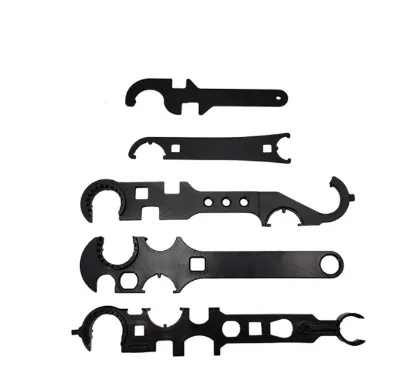


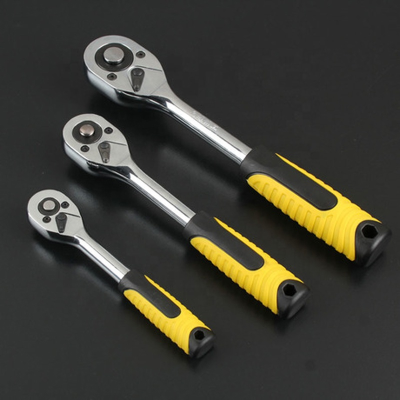
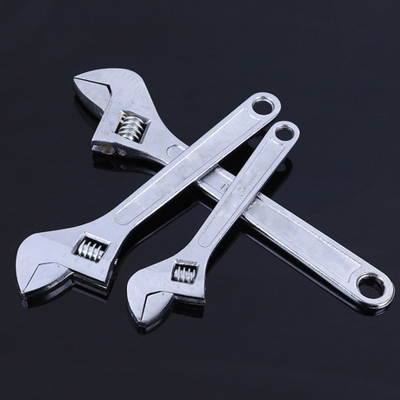
Comprehensive Sourcing Guide
Strategic Sourcing Guide for Lightweight Multi-Tool Wrenches
Understanding Product Variants and Technical Specifications
When sourcing a lightweight multi-tool wrench, buyers must first navigate a fragmented market where the term "multi-tool" often encompasses distinct product categories ranging from airless spray guns to combination wrenches and hex keys. The supplied data reveals a critical distinction: while some listings describe airless spray guns with models like GT-JC01, others explicitly identify the product type as a Combination Wrench, Ring Spanner, or Hex Wrench. For a buyer specifically seeking a "lightweight multi-tool wrench," the focus must be on the latter categories, particularly those constructed from Aluminum Alloy or Chrome-vanadium Steel, as these materials directly influence the weight-to-strength ratio.
The technical specifications observed in the market indicate a wide variance in physical dimensions and standard types. Some products adhere to the German Type standard, while others follow Metric or American Type specifications. Dimensions are not uniform; one observed specification lists a size of 1653822MM, while others are categorized simply as "Common" or "S165-S170, S180-S200." This variability necessitates a rigorous verification process where the buyer must confirm the exact jaw opening, handle length, and overall mass before placing an order. The working mode is predominantly manual, and the design style is often described as "Modern," yet the functional application remains strictly mechanical, intended for wrenching tasks.
A crucial observation regarding the "lightweight" attribute is the material composition. The data explicitly lists Aluminum Alloy as a material option, which is the primary candidate for reducing tool weight compared to traditional steel. However, other listings specify High Carbon Steel or Chrome-vanadium Steel. While these materials offer superior durability and hardness, they inherently increase the tool's mass. Therefore, a "lightweight" classification is not universal across all listings; it is a specific attribute that must be verified against the material specification. Buyers should not assume that a product labeled as a "wrench" is lightweight unless the material is confirmed as Aluminum Alloy or a specific lightweight alloy variant.
Compliance, Certification, and Safety Standards
In the industrial procurement of hand tools, compliance with safety standards is non-negotiable, particularly for tools used in environments where explosion risks exist. The supplied data highlights a specific feature: "Anti-Explosion." This indicates that certain multi-tool wrenches are designed for use in hazardous locations, such as oil and gas facilities or chemical plants, where spark-free operation is required. The presence of this feature suggests adherence to specific safety protocols, though the exact standard numbers are not provided in the general listing data.
Buyers must verify the "Standard" attribute for each potential supplier. The data shows entries for "Customized," "OEM," "German Type," "Metric," and "American Type." These refer to dimensional and geometric standards rather than safety certifications. To ensure compliance, a buyer must request documentation confirming that the "Anti-Explosion" feature meets recognized international standards, such as ATEX or IECEx, which are common for such applications. The data also mentions "High carbon Steel" and "Chrome-vanadium Steel," materials that must be processed correctly to maintain their anti-spark properties.
Furthermore, the "Finish" attribute is listed as "Black" in some contexts, which often relates to corrosion resistance and surface treatment. While not a certification itself, the finish quality is a proxy for the manufacturing process's attention to detail. Buyers should inquire about the specific plating or coating processes used to ensure the tool resists rust and maintains its structural integrity over time. The "Standard" field also notes "as customer required," indicating that many suppliers operate on a custom basis. In such cases, the buyer bears the responsibility of defining the compliance requirements in the purchase order, ensuring the supplier understands the necessary safety thresholds for the intended application environment.
Cost Drivers and Pricing Dynamics
The pricing landscape for lightweight multi-tool wrenches is characterized by significant volatility, with observed price ranges spanning from $0.12 to $65 USD. This wide disparity is driven by several factors, including material costs, manufacturing complexity, and customization levels. The lower end of the price spectrum likely corresponds to basic, mass-produced tools made from standard steel with minimal finishing, while the higher end reflects specialized tools made from premium Aluminum Alloy or Chrome-vanadium Steel with anti-explosion features and custom branding.
Material selection is the primary cost driver. Aluminum Alloy tools are generally more expensive to manufacture than standard steel counterparts due to the cost of the raw material and the specialized machining required to maintain strength without adding weight. Additionally, the "Anti-Explosion" feature adds a premium, as it requires specific non-sparking alloys and rigorous quality control to prevent defects that could lead to spark generation. Customization is another significant cost factor. The data confirms that "Customized" is a common attribute, with options for "Customized Logo" and "Custom Color." These customizations require setup costs and minimum order quantities (MOQs) that can vary widely, ranging from 1 unit to 5000 units.
The "Selling Units" attribute indicates that some suppliers offer single items, while others may have bulk pricing structures. The "MOQ" field shows a specific entry of 100, suggesting that for custom orders, a minimum threshold is often required to justify the setup costs. Buyers should be aware that the "Feature" is listed as "Ordinary" in some cases, which typically correlates with lower pricing, whereas "Anti-Explosion" features command a higher price point. When evaluating cost, buyers must look beyond the unit price and consider the total cost of ownership, including shipping, packaging (ranging from "Carton" to "Wooden Case"), and the potential cost of non-compliance if the tool fails in a hazardous environment.
Typical Applications and Usage Scenarios
The versatility of the lightweight multi-tool wrench is evident in its diverse application listings. The data indicates usage in "Paint Spray Gun," "Hopper Gun," and "Garden Gun" contexts, although these seem to refer to the broader category of tools or specific attachments rather than the wrench itself. More directly, the "Functional Application" is explicitly stated as "wrench," and the "Application" field notes "Indoor/Outdoor" suitability. This suggests that these tools are designed for general maintenance, assembly, and repair tasks in various environments.
The "Application Age" is listed as "Adult," confirming that these tools are intended for professional or serious DIY use rather than children's toys. The "Design Style" being "Modern" implies an ergonomic focus, likely incorporating features like "Folded" or "Unfolded" mechanisms to enhance portability and ease of use. The "Folded" attribute suggests that some multi-tool wrenches may have collapsible handles or adjustable heads, making them ideal for confined spaces or for carrying in a tool kit.
In industrial settings, the "Anti-Explosion" feature points to critical applications in petrochemical, mining, and manufacturing sectors where flammable gases or dust are present. In these scenarios, a standard steel wrench could generate a spark upon impact, posing a severe safety risk. The lightweight nature of Aluminum Alloy variants makes them particularly suitable for overhead work or prolonged use, reducing operator fatigue. The "Market" is described as "Worldwide," indicating that these tools are designed to meet global standards and are suitable for export to various regions, provided they meet local safety and dimensional requirements.
Supplier Evaluation and Sourcing Strategy
Evaluating suppliers for lightweight multi-tool wrenches requires a deep dive into their manufacturing capabilities and geographic origins. The data lists origins in Zhejiang, Guangdong, and Jiangsu, all provinces in China known for their robust manufacturing sectors. However, the specific location can influence lead times and shipping costs. Buyers should verify the "Place of Origin" and "Country of Origin" to ensure consistency, as some listings may conflate the two.
The "OEM" attribute is marked as "Yes" in several entries, indicating that suppliers are capable of Original Equipment Manufacturing. This is crucial for buyers seeking private labeling or custom specifications. The "Customization" field confirms that customization is available, but buyers must clarify the extent of this customization. Does it include logo placement, color, or structural modifications? The "More details" attribute advises contacting the supplier directly, suggesting that the initial product listing may not contain all necessary technical nuances.
When evaluating a supplier, buyers should request samples to verify the "Feature" claims, such as the "Anti-Explosion" capability and the "Lightweight" material composition. The "Finish" quality, such as the "Black" coating, should be inspected for uniformity and durability. Additionally, the "Packing" method, which ranges from "Carton" to "Wooden Case," is an indicator of the supplier's attention to product protection during transit. A supplier offering "Wooden Case" packing for a single item may be over-engineering, while one offering only "Carton" for bulk orders might be cost-effective but less protective.
Quality Control and Long-Term Procurement Considerations
Quality control is paramount when sourcing tools that may be used in hazardous environments. The "Standard" field often lists "Customized" or "OEM," which means the quality benchmarks are defined by the buyer rather than a universal standard. Buyers must establish clear acceptance criteria for material hardness, dimensional accuracy, and surface finish. The "Material" specifications, such as "High carbon Steel" or "Chrome-vanadium Steel," must be verified through mill certificates or third-party testing to ensure they meet the required mechanical properties.
Long-term procurement considerations include the consistency of the "Feature" and "Application" attributes. A tool that is "Anti-Explosion" today must remain so after years of use. Buyers should inquire about the warranty and the supplier's track record for replacing defective units. The "MOQ" of 100 or higher suggests that for custom orders, the buyer is committing to a significant volume, making the relationship with the supplier critical. If the supplier fails to maintain quality, the cost of switching suppliers and re-tooling can be substantial.
Furthermore, the "Working Mode" being "Manual" implies that the tool relies on human force, making ergonomic design a key factor in long-term usability. Tools that cause fatigue or discomfort can lead to reduced productivity and increased risk of injury. Buyers should consider the "Handle Color" and "Folded" status as indicators of ergonomic design. A "Colorful" handle might offer better visibility in low-light conditions, while a "Folded" design enhances portability.
Finally, the "Market" being "Worldwide" means that the tool must comply with various international regulations. Buyers should ensure that the supplier has experience exporting to their target market and can provide necessary documentation for customs clearance. The "Standard" of "German Type" or "Metric" must align with the local infrastructure to ensure compatibility with existing fasteners and machinery. By focusing on these long-term factors, buyers can secure a reliable supply chain that delivers high-quality, safe, and efficient multi-tool wrenches for their operations.
FAQs
What materials are used for lightweight multi-tool wrenches?
Aluminum Alloy is the primary material for lightweight variants, while High Carbon Steel and Chrome-vanadium Steel are also common. Buyers must verify the material specification to ensure the tool meets weight requirements, as steel options are heavier despite offering superior durability.
Can these wrenches be used in hazardous environments?
Yes, specific models feature an Anti-Explosion design suitable for indoor or outdoor hazardous locations. This feature requires non-sparking materials, so buyers should confirm the Anti-Explosion attribute and request safety documentation before purchasing for oil or chemical facilities.
Which customization options are available for these tools?
Customization is available for logos, colors, and specific product standards like German or Metric types. Suppliers typically require a Minimum Order Quantity of 100 units for custom orders, so buyers should clarify the extent of branding and dimensional changes before placing an order.
How do pricing and MOQs vary for these wrenches?
Prices range from 0.12 to 65 USD depending on material and features, with MOQs starting at 1 unit but often set at 100 for custom work. Basic Ordinary features cost less, while Anti-Explosion models and Aluminum Alloy construction command higher prices due to specialized manufacturing.
Where are these wrenches manufactured and shipped from?
Products originate from Chinese provinces including Zhejiang, Guangdong, and Jiangsu. Buyers should verify the specific Place of Origin listed for each supplier, as shipping costs and lead times may vary depending on whether the factory is located in Zhejiang or Guangdong.
What standards do these wrenches comply with?
Standards vary between German Type, Metric, American Type, and custom OEM requirements. The product dimensions can differ significantly, such as 165*38*22MM or Common sizes, so buyers must specify the exact standard needed to ensure compatibility with their existing tools.