Source Long Sleeve Cotton Linen Cardigan for Retail, Wholesale, and Custom Orders
Explore 30 verified listings for a Long Sleeve Cotton Linen Cardigan featuring knitted construction, V-neck or round neck styles, and customizable options. Buyers can compare specifications like material blend, size, and seasonal suitability across multiple suppliers in China.
Key considerations
Products List


Ladies Spring Summer Crew Neck Long Sleeve Casual Soft Handfeeling Cardigan
$13.30 - $13.90
MOQ: 300 Pieces


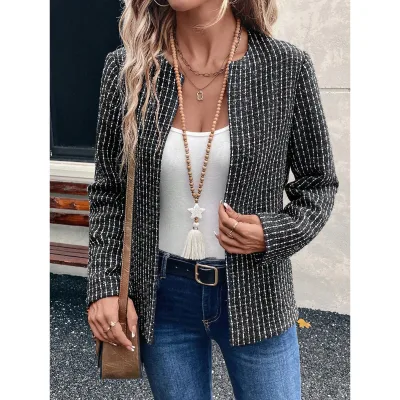


Women's Long Sleeve Cardigan - Fitted Design with Durable Yarn Dye Finish
$16.00 - $17.00
MOQ: 100 Pieces

Elegant Long Sleeve Women's Cardigan - Anti-Wrinkle Fitted Yarn Dye Style
$16.00 - $17.00
MOQ: 100 Pieces


Comprehensive Sourcing Guide
Strategic Sourcing Guide for Long Sleeve Cotton Linen Cardigans
The global apparel market continues to demonstrate robust demand for versatile outerwear, with the Long Sleeve Cotton Linen Cardigan emerging as a staple item for both casual and semi-formal wardrobes. For B2B procurement professionals, sourcing this specific category requires a nuanced understanding of material composition, manufacturing techniques, and supply chain logistics. While the core keyword suggests a specific blend of cotton and linen, the actual market data reveals a complex landscape where "cotton linen" often serves as a descriptive umbrella for various blends including polyester, cotton, and spandex. This guide provides a disciplined approach to evaluating suppliers, verifying product attributes, and ensuring procurement quality without relying on unverified claims or speculative data.
Material Composition and Technical Specifications
The foundation of any successful procurement strategy lies in the precise definition of material specifications. In the context of long sleeve cardigans, the observed market data indicates a significant variance in fabric composition. While the search term emphasizes "cotton linen," the available product facts reveal that many suppliers offer blends such as Polyester/Cotton and Cotton/Spandex. This discrepancy highlights the necessity for buyers to explicitly define their material requirements in the Request for Quotation (RFQ). A cardigan labeled as "cotton linen" might technically be a synthetic blend designed to mimic the drape of natural fibers while offering enhanced durability.
Technical specifications further differentiate these products. The observed data points to specific knitting techniques, with "Knitted" and "Flat Knitted" (noted as "Tochnice: Flat Knittad" in some listings) being the primary construction methods. The choice between these techniques impacts the garment's texture, elasticity, and final appearance. Furthermore, size specifications vary widely, ranging from specific measurements like "S" to "Free Size" options. Buyers must verify if the supplier offers a full size run or relies on one-size-fits-all models, as this affects inventory management and return rates. The clothing length is also a critical variable, with "Regular" length being a common standard, though custom lengths may be available depending on the supplier's customization capabilities.
Design Attributes and Customization Potential
Design flexibility is a primary driver for sourcing long sleeve cardigans in the B2B sector. The observed product attributes indicate a high degree of customization availability. Suppliers frequently offer options for collar styles, including V-Neck, Round Neck, Crew Neck, and even multi-option listings such as "V-Neck/Round Neck/Square Neck/Low Neck." This variety allows buyers to tailor the product to specific target demographics, whether targeting a youthful, casual market or a more elegant, professional audience.
Decoration and closure types also play a pivotal role in the final aesthetic. The data shows that "Button" closures are standard, often accompanied by decorative elements like "Lace" or additional buttons. The pattern options range from "Pure Colour" to "Patterned," and color customization is explicitly listed as an available feature, with "White" being a common base offering. Seasonal targeting is another design consideration; while some listings specify "Spring / Autumn," others explicitly categorize the item for "Winter," suggesting that weight and thermal properties vary significantly between suppliers. Buyers should verify the intended seasonal use to ensure the product matches their marketing calendar.
Production Standards and Packaging Logistics
Understanding the logistical framework of a supplier is essential for maintaining supply chain efficiency. The observed data reveals diverse packaging standards, ranging from "1PCS/PP Bag, 50PCS/Carton" to "Standard Transport Packaging" and "Pak Bag/Carton." These variations directly impact shipping costs and the condition of goods upon arrival. For bulk orders, the carton dimensions are critical for container optimization. Specific standard dimensions observed include "4030CM" for product standards and packaging sizes like "45cm35cm5cm" or "6040*40cm." Buyers must confirm these dimensions to calculate freight costs accurately and ensure the packaging meets their retail display requirements.
Origin and supply type are also key logistical factors. The majority of the observed data points to "China" as the production origin, with specific mentions of "Sichuan, China." This geographic concentration can influence lead times and shipping routes. Additionally, the "Supply Type" is identified as "OEM Service," indicating that suppliers are equipped to handle private labeling and custom manufacturing. The availability of customized labels and the ability to adjust production standards to "Customizable" requirements further support the feasibility of developing a unique brand identity. However, buyers must verify the specific capabilities of the supplier regarding label placement and material sourcing to ensure alignment with brand standards.
Quality Control and Feature Verification
Quality assurance in the apparel sector relies heavily on verifying functional features against marketing claims. The observed product attributes list several performance features, including "Anti-Pilling," "Anti-Wrinkle," "Quickdry," and "Breathable." While these are common selling points, they must be treated as observations rather than universal guarantees. For instance, one listing mentions "Soft Breathable," while another highlights "Quick Dry, Breathable." The presence of "High Quality" as a general attribute is noted, but without specific test data or third-party certification, this remains a subjective claim.
Buyers should implement a rigorous quality control protocol that includes requesting fabric swatches and testing for the claimed features. The "Anti-Wrinkle" and "Anti-Pilling" claims are particularly important for cardigans intended for frequent wear. Verification should involve checking the fabric density and the effectiveness of the finishing treatments. Additionally, the "Closure Type" of "Single Button" and the "Decoration" elements like lace and buttons require durability testing to ensure they do not detach during normal use. Since the data does not provide specific test results, the procurement strategy must include a pre-shipment inspection or a third-party audit to validate these performance claims before finalizing large orders.
Cost Drivers and Pricing Dynamics
The pricing landscape for long sleeve cotton linen cardigans is influenced by multiple variables, including material composition, customization level, and order volume. The observed price range in the market spans from $6.8 to $46.9 USD. This wide disparity suggests that factors such as fabric quality, design complexity, and brand positioning significantly impact the final cost. Lower-priced items likely correspond to basic polyester/cotton blends with minimal customization, while higher-priced items may feature premium cotton/linen blends, intricate lace detailing, or specialized finishes like "Quick Dry" and "Anti-Wrinkle" treatments.
Minimum Order Quantity (MOQ) is another critical cost driver. The observed MOQ range is extensive, from 1 to 1000 units. This flexibility allows buyers to test the market with small batches or commit to large volumes for better unit economics. However, the specific MOQ requirements often correlate with the level of customization requested. Suppliers offering "Customized" packing or specific "prod_model" numbers like "PSP-0032" or "ZPM25041231" may have different MOQ thresholds compared to those selling standard stock items. Buyers must balance the desire for low MOQs with the need for competitive pricing, understanding that smaller orders often incur higher per-unit costs due to setup and production inefficiencies.
Supplier Evaluation and Long-Term Procurement Strategy
Selecting the right supplier requires a holistic evaluation of their capabilities beyond just product specifications. The observed data indicates that suppliers are located primarily in China, with a focus on OEM services. This suggests a mature manufacturing ecosystem capable of handling complex orders. However, buyers should verify the supplier's capacity to handle specific "prod_model" numbers and their ability to maintain consistency across production runs. The presence of "Customizable" standards and "Accepted Customized" labels indicates a willingness to adapt, but the buyer must ensure that the supplier has the technical expertise to execute these changes without compromising quality.
Long-term procurement considerations involve building a relationship with suppliers who can scale with business growth. The "Supply Type" being OEM implies that the supplier can grow with the buyer, offering private label solutions and custom designs. However, the lack of specific certification data in the provided facts means buyers must independently verify compliance with international safety and quality standards. Establishing clear communication channels and defining quality expectations early in the relationship is crucial. Additionally, monitoring the supplier's lead times and ability to meet delivery schedules will be vital for maintaining inventory levels and responding to market trends. By focusing on these strategic elements, buyers can secure a reliable supply chain for long sleeve cotton linen cardigans that supports their brand's growth and reputation.
FAQs
What materials are used for long sleeve cotton linen cardigans?
Materials vary, often including Polyester/Cotton or Cotton/Spandex blends. While the search term suggests cotton linen, actual listings show synthetic blends for durability and drape, so buyers must verify fabric composition in their RFQ.
Which collar styles are available for these cardigans?
Available styles include V-Neck, Round Neck, Crew Neck, and Square Neck options. Some suppliers offer multi-option listings, allowing buyers to tailor the design to specific target demographics ranging from casual to elegant.
Can buyers customize the packaging and labels for orders?
Yes, customization is available for packaging and labels. Options range from 1PCS/PP Bag to 50PCS/Carton, with standard transport packaging or customized dimensions like 45cm*35cm*5cm, and labels can be accepted as customized.
What is the price range for long sleeve cotton linen cardigans?
The observed price range spans from 6.8 to 46.9 USD per unit. This variance depends on material quality, design complexity, and customization levels, with lower prices often corresponding to basic blends and minimal features.
Which features are commonly claimed for these garments?
Commonly claimed features include Anti-Pilling, Anti-Wrinkle, Quick Dry, and Breathable properties. Buyers should treat these as observations and request fabric swatches or test results to verify performance before finalizing large orders.
What is the minimum order quantity for these products?
The MOQ range observed is from 1 to 1000 units. This flexibility allows for market testing with small batches, though specific MOQ thresholds often correlate with the level of customization requested for models like PSP-0032.
Where are these cardigans typically manufactured?
Products are primarily manufactured in China, with specific origins noted in Sichuan. This geographic concentration influences shipping routes and lead times, requiring buyers to verify specific supplier locations for accurate logistics planning.