Source Machinist Brass Sledge Hammer for Machining, Construction, and Decoration
Compare 30 Machinist Brass Sledge Hammer options from verified Chinese manufacturers. Buyers can evaluate models ranging from 3LB to 12LBS with brass heads, rubber or wood handles, and precision casting processes for industrial and building decoration applications.
Key considerations
Products List




Comprehensive Sourcing Guide
Strategic Sourcing Guide for Machinist Brass Sledge Hammers
Understanding Product Specifications and Material Composition
When sourcing a Machinist Brass Sledge Hammer, the primary objective is to identify tools that balance durability with the specific safety and performance requirements of precision machining environments. The core material composition is a critical differentiator in this category. Based on available product data, the hammer head is frequently constructed from brass. This material choice is not merely aesthetic; brass is non-sparking, which makes it essential for environments where flammable gases, vapors, or dusts may be present. However, buyers must carefully distinguish between products labeled as "brass" and those made from "high quality carbon steel" or "steel," as the latter are standard for general-purpose heavy-duty striking but do not offer the same explosion-proof characteristics.
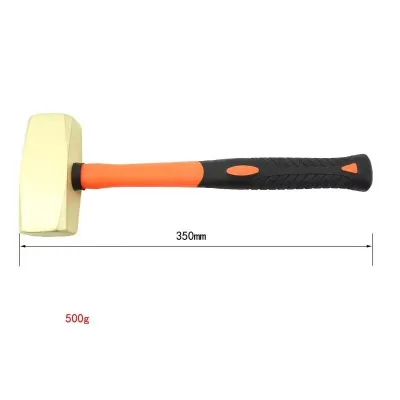
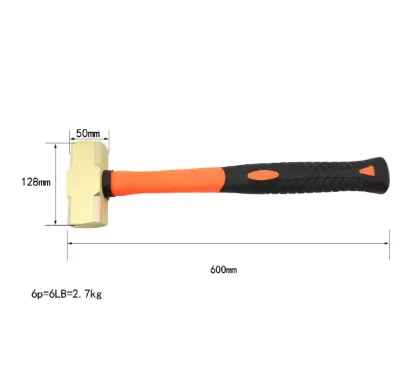
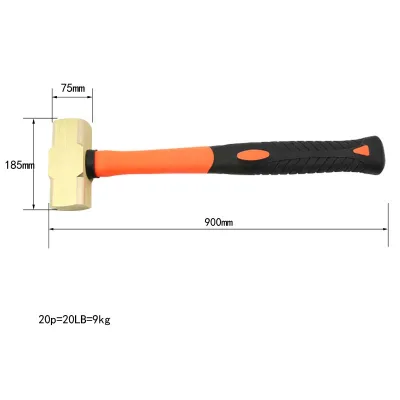
The physical specifications of these tools vary significantly across the market. Observed product models indicate a range of standard weights, including 3LB, 4LB, 5LB, 6LB, and heavier variants up to 12LBS. The length of the hammer is another vital dimension, with specific models noted to have a length of 400mm. Weight specifications for individual units can reach approximately 1545g, which corresponds to the heavier end of the standard spectrum. The handle material is equally diverse, with options ranging from rubber to wood. The rubber handle often provides better shock absorption and grip, while wooden handles offer a traditional feel but may require more maintenance. Buyers should verify the handle material against their specific ergonomic needs and the operating environment, as the handle color can also vary from pure tones to colorful finishes, though this is largely an aesthetic preference.
Compliance, Safety Attributes, and Certification Verification
Safety compliance is paramount when selecting a machinist hammer, particularly regarding explosion-proof capabilities. The product data presents a clear divergence in safety attributes. Some listings explicitly state that the product is "Not Explosion-proof," while others are certified as "Explosion-proof." This distinction is not trivial; it dictates the permissible application areas. For instance, a hammer labeled as "Explosion-proof" is suitable for hazardous locations such as oil and gas facilities or chemical processing plants where spark generation could trigger an ignition. Conversely, a "Not Explosion-proof" unit, even if made of brass, may not meet the rigorous safety standards required for such high-risk zones.
Buyers must verify the specific certification status of any supplier's product before procurement. While the provided data mentions "3LB" and "5LB" as product standards, these appear to be weight classifications rather than international safety certifications. There is no explicit mention of ISO, ANSI, or CE certifications in the supplied facts. Therefore, procurement teams must request valid test reports and certification documents directly from the supplier to confirm that the "Explosion-proof" claim is backed by recognized third-party testing. Relying solely on the product title or a generic "standard" label without supporting documentation poses a significant liability risk. Additionally, the application age is listed as "Adult," indicating that these tools are designed for professional use and require the physical capability and training associated with adult operation.
Cost Drivers and Pricing Dynamics
The pricing structure for machinist brass sledge hammers is influenced by several key factors, including material costs, manufacturing processes, and customization levels. The observed price range in the market spans from $0.30 to $110.80 USD. This wide disparity suggests that the lower end of the spectrum may represent accessories, smaller components, or potentially misleading listings, while the higher end likely reflects fully assembled, high-quality, certified tools with specialized features. The cost is heavily driven by the material; brass is generally more expensive than carbon steel, and the inclusion of explosion-proof certification adds to the manufacturing and testing overhead.
Manufacturing processes also play a significant role in cost determination. The data indicates that "Precision Casting" is a common process for these hammers. Precision casting allows for complex shapes and tight tolerances but can be more expensive than simpler forging methods. Furthermore, surface treatments such as "Polishing" add value and cost, ensuring a smooth finish that prevents corrosion and improves aesthetics. Customization is another major cost driver. The availability of OEM/ODM services means that buyers can request specific branding, handle lengths, or weight adjustments. However, these customizations often come with a Minimum Order Quantity (MOQ) requirement. The observed MOQ range is broad, spanning from 1 unit to 1000 units. Buyers seeking small quantities may face higher per-unit costs or limited customization options, whereas bulk orders can leverage economies of scale to reduce the unit price.
Typical Applications and Operational Environments
The versatility of the Machinist Brass Sledge Hammer extends across various industrial and commercial sectors. The primary application is identified as "Machinist Hammer," designed for precision work where metal-on-metal contact must be minimized to prevent sparks or damage to delicate workpieces. Beyond general machining, these tools are utilized in "Building Decoration," suggesting their use in construction and renovation tasks where noise reduction and spark prevention are beneficial. The data also lists applications for "Pick Hammer," "Nail Hammer," "Roofing Hammer," and "Electrical Tool Set," indicating that these hammers often serve as multi-purpose tools in a toolbox.
The intended user demographic is clearly defined as adults, and the tools are suitable for environments ranging from general workshops to specialized industrial sites. The "Use Place" attribute of "Building Decoration" implies that these hammers are robust enough for construction tasks but refined enough for finishing work. The variety of weights, from 2LB to 16LB, allows buyers to select the appropriate tool for specific tasks. Lighter hammers (2LB-6LB) are ideal for detailed machining and assembly, while heavier variants (12LB-16LB) are better suited for demolition or heavy-duty striking. It is crucial to match the hammer's weight and handle material to the specific task to ensure operator safety and efficiency. For example, a rubber-handled hammer may be preferred for electrical work to provide better insulation and grip, whereas a wooden handle might be chosen for traditional carpentry.
Supplier Evaluation and Geographic Considerations
When evaluating potential suppliers for machinist brass sledge hammers, geographic origin and logistical capabilities are critical factors. The supplied data indicates that products originate from various locations in China, specifically Botou, Hebei, and the general region of China. Botou and Hebei are known industrial hubs for tool manufacturing, suggesting a concentration of supply chain expertise in this region. Buyers should verify the specific factory location to assess the supplier's proximity to raw material sources and their logistical efficiency.
The delivery logistics are another area requiring careful scrutiny. The data specifies the delivery port as "Xingang, Tianjin," which is a major port on the Bohai Sea. This information is vital for calculating freight costs and transit times. The standard delivery time is noted as "About 30-45 days on Confirming The Order." This lead time should be factored into the procurement schedule, especially for time-sensitive projects. Buyers must confirm whether this lead time includes production, quality control, and packaging, or if it is an estimate subject to change based on order volume and raw material availability.
Packing standards also vary by supplier. Some products are packed in "Bubble Pad, Inner Carton," while others use "Carton" or specific configurations like "4PCS/Carton" or "10PCS/Carton." The packing method affects the protection of the product during transit and the efficiency of storage upon arrival. For international shipments, robust packaging is essential to prevent damage. Buyers should request detailed packing lists and ensure that the packaging meets the requirements of their destination country's import regulations.
Quality Control and Long-Term Procurement Strategy
Ensuring consistent quality in machinist brass sledge hammers requires a rigorous quality control (QC) process. The observed product attributes, such as "Precision Casting" and "Polishing," suggest that surface finish and structural integrity are key quality indicators. Buyers should implement a QC protocol that includes visual inspections for casting defects, checks on handle attachment security, and verification of weight and dimensions against the specified standards. The "Item No." and "prod_model" numbers provided in the data serve as unique identifiers that should be used to track specific batches and ensure traceability.
Long-term procurement strategies should focus on building relationships with suppliers who offer reliable OEM/ODM services and consistent quality. The availability of customization allows buyers to tailor products to their specific brand and operational needs, fostering a competitive advantage. However, buyers must be wary of suppliers who cannot provide consistent lead times or who fail to meet the stated weight and material specifications. Establishing clear communication channels and setting expectations for quality standards from the outset is essential.
Furthermore, buyers should consider the total cost of ownership, not just the unit price. A cheaper hammer that requires frequent replacement or causes operator fatigue due to poor ergonomics may ultimately cost more than a higher-priced, high-quality alternative. The "High Quality Carbon Steel" and "Brass" materials mentioned in the data should be verified through material analysis reports to ensure they meet the specified standards. By prioritizing quality, safety, and supplier reliability, buyers can secure a steady supply of machinist brass sledge hammers that meet their operational requirements and safety standards.
Comparison of Key Product Attributes
To facilitate a clearer understanding of the variations available in the market, the following table summarizes the key attributes observed in the product data. This comparison highlights the diversity in models, standards, and materials that buyers must navigate.
| Attribute | Observation A | Observation B | Observation C | Observation D |
|---|---|---|---|---|
| Hammer Material | Brass | Steel | High Quality Carbon Steel | Brass |
| Handle Material | Rubber | Wood | Rubber | Wood |
| Explosion-proof | Not Explosion-proof | Explosion-proof | Not Specified | Not Specified |
| Weight Standard | 3LB | 5LB | 6LB-12LB | 2LB-16LB |
| Product Model | 2101A-1004 | OY2101A-1010 | SM02PL | SH811 |
| Origin | Botou, China | China | Hebei, China | China |
| Packing | Bubble Pad, Inner Carton | Carton | 4PCS/Carton | Sh811 |
| Process | Precision Casting | Polishing | Precision Casting | Polishing |
This table illustrates that no single product specification applies to all items in the category. Buyers must carefully match their specific requirements—such as the need for explosion-proof safety or a specific weight standard—to the correct product model. The variation in origin locations within China also suggests that buyers should evaluate the specific manufacturing capabilities of each facility, as regional differences in quality control and production standards may exist. By using this structured approach, procurement teams can make informed decisions that align with their operational needs and safety mandates.
FAQs
What materials are used for the hammer head?
The hammer head is commonly made from brass or high quality carbon steel. Brass is selected for its non-sparking properties in hazardous environments, while steel offers durability for general heavy-duty striking tasks.
Are these hammers explosion-proof for hazardous zones?
Some listings explicitly state the product is explosion-proof, while others are not. Buyers must verify specific certification documents for each model to ensure compliance with safety standards for flammable gas or dust environments.
Which handle materials are available for these tools?
Available handle materials include rubber and wood. Rubber handles provide better shock absorption and grip, whereas wooden handles offer a traditional feel but may require more maintenance during regular professional use.
What is the typical delivery time for orders?
The standard delivery time is about 30-45 days after confirming the order. This lead time covers production, quality control, and packaging before the goods are shipped from the Xingang, Tianjin port.
Can buyers request customization for these hammers?
Yes, OEM and ODM customization services are available for these products. Buyers can request specific branding or weight adjustments, though these customizations often require meeting a minimum order quantity ranging from 1 to 1000 units.
What weight standards are offered for these hammers?
The products come in various weight standards ranging from 2LB to 16LB. Specific models include 3LB, 4LB, 5LB, 6LB, and heavier variants up to 12LBS to suit different precision machining or demolition tasks.