Source Magic Ice Cooling Towel for Beach, Gym, and Outdoor Sports
Find and compare 30 Magic Ice Cooling Towel options from Chinese manufacturers. These woven polyester and nylon blends offer instant cooling, UV protection, and sweat absorption for athletic and leisure use.
Key considerations
Products List
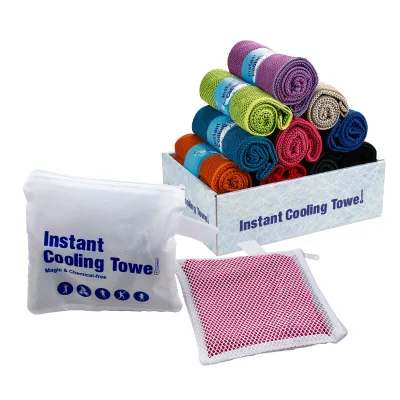


Cooling Mint Ice Towel Provides Instant Relief From Summer Anytime Anywhere
$0.28 - $0.30
MOQ: 150000 Pieces


Sport Custom Cold Towel Ice Towel Instant Cooling Soft Breathable Chilly Cooling Towel
$0.38 - $0.45
MOQ: 500 Pieces

Comprehensive Sourcing Guide
Magic Ice Cooling Towel Sourcing Guide
Sourcing magic ice cooling towels requires a nuanced understanding of the intersection between textile engineering and promotional utility. These products are distinct from traditional cotton or microfiber towels, relying on specialized synthetic blends to achieve rapid evaporative cooling effects. Buyers must navigate a market where product performance is heavily dependent on material composition, weaving techniques, and post-production finishing. The following guide provides a structured approach to evaluating suppliers, verifying technical claims, and managing commercial risks associated with this category.
The procurement process begins with defining the specific use case, whether for beach activities, sports events, or corporate giveaways. The observed market signals indicate a strong presence of OEM manufacturers based in China, particularly in Guangdong and Qingdao regions. These suppliers often leverage extensive experience in custom manufacturing to offer tailored solutions for branding and packaging. Understanding the baseline capabilities of these suppliers is essential for aligning product specifications with budget constraints and volume requirements.
Product Scope and Observed Listing Signals
The current market landscape for magic ice cooling towels is characterized by a wide variance in pricing and minimum order quantities. Observed listing prices range from $0.12 to $2.99 USD, reflecting differences in material quality, printing complexity, and packaging options. Minimum order quantities (MOQs) vary significantly, starting as low as one piece for sampling purposes and extending up to 150,000 pieces for large-scale industrial orders. This disparity allows buyers to scale their procurement strategy based on immediate needs, from small promotional batches to massive distribution campaigns.
Product attributes observed in the market highlight key features such as instant cooling, UV protection, and sweat absorption. These towels are typically described as "magic ice" or "cooling" towels, with styles ranging from plain to those featuring silkscreen or digital photo printing. The physical form factor is generally square or long, with dimensions commonly cited as 20x70 cm, 30x80 cm, or 30x100 cm. Buyers should note that while many listings claim specific performance metrics, these are often observations rather than guaranteed standards, necessitating rigorous verification before finalizing orders.
Technical Specifications to Verify
Material composition is the most critical technical factor determining the efficacy of a cooling towel. Trusted category knowledge suggests that high-performance cooling towels often utilize blends of nylon and spandex or polyester, with specific ratios such as 55% nylon and 45% polyester being common in high-end variants. Buyers must verify the exact material breakdown, as lower-cost alternatives may use 100% polyester or lower-grade synthetics that do not retain water or evaporate heat as effectively. The GSM (grams per square meter) is another vital metric, with many products falling at 299 GSM or below, indicating a lightweight, flimsy texture that is essential for portability but may affect durability.
Printing and packaging specifications also require close attention to detail. Suppliers often offer individual polybag, composite bag, PVC zipper bag, or PP tube packaging, with some providing customized packaging solutions. The printing methods available include silkscreen and digital photo printing, which can impact the final cost and lead time. Buyers should confirm the single package size, which is often around 20x20x5 cm, and the gross weight, typically around 0.500 kg per unit. Additionally, the shelf life and validity period, often cited as three years for unopened products, should be clarified to ensure inventory management aligns with product longevity.
Compliance and Safety Documentation
While specific certification statuses are not universally mandated for all cooling towels, buyers must ensure that products comply with relevant safety standards for textiles and consumer goods. This includes verifying that materials are free from harmful substances such as azo dyes, formaldehyde, and heavy metals, which are regulated in many international markets. Buyers should request test reports from accredited laboratories to confirm that the nylon, spandex, or polyester blends meet these safety thresholds. Without such documentation, products may face regulatory hurdles or consumer safety concerns, particularly in regions with strict chemical regulations.
Packaging compliance is another area requiring attention, especially if the product is intended for retail sale. Buyers should verify that packaging materials are non-toxic and meet local recycling or waste disposal regulations. For instance, PVC zipper bags may be subject to restrictions in certain markets due to environmental concerns, making PP tubes or paper-based alternatives more suitable. Additionally, labeling requirements, including care instructions, material composition, and country of origin, must be accurately reflected on the product or packaging to avoid customs delays or consumer confusion.
Cost Drivers and Commercial Terms
Several factors influence the final cost of magic ice cooling towels, with material quality and printing complexity being primary drivers. High-tech cooling polyester or specialized nylon-spandex blends command higher prices due to their superior performance characteristics. Similarly, digital photo printing is generally more expensive than silkscreen printing due to the complexity and precision involved. Buyers should also consider the impact of packaging choices on cost, with customized packaging options often incurring additional setup fees and higher per-unit prices compared to standard individual polybags.
Commercial terms, including lead times and supply ability, play a crucial role in procurement planning. Many suppliers offer a supply ability of 20,000 pieces per day, with delivery times ranging from 20 to 25 days. However, these timelines can vary based on order volume, customization requirements, and seasonal demand. Buyers should negotiate clear terms regarding sample availability, which is often free, and clarify any additional costs for tooling or design setup. Understanding these commercial dynamics helps in budgeting accurately and managing expectations regarding delivery schedules.
Supplier Qualification and Quality Control
Supplier qualification is essential to ensure consistent product quality and reliable service. Buyers should prioritize manufacturers with a proven track record in OEM production, as indicated by years of experience and established supply chains. Factories located in industrial hubs like Guangdong and Qingdao often have access to advanced weaving and printing technologies, which can enhance product quality. However, buyers must conduct due diligence to verify the supplier’s production capabilities, including their ability to handle large volumes and maintain quality control standards.
Quality control measures should be integrated into the procurement process to mitigate risks. Buyers should request pre-production samples to evaluate material feel, cooling performance, and print quality. During production, implementing random inspections or third-party quality audits can help identify defects early. Key quality indicators include the consistency of the weave, the durability of the print, and the integrity of the packaging. Establishing clear acceptance criteria and communication channels with the supplier ensures that any issues are addressed promptly, reducing the likelihood of receiving substandard products.
Long-Term Procurement Checks
Long-term procurement success depends on continuous monitoring of supplier performance and market trends. Buyers should regularly review supplier reliability, including adherence to delivery times, responsiveness to issues, and consistency in product quality. Building a strong relationship with a trusted supplier can lead to better pricing, priority production slots, and improved support for future orders. Additionally, staying informed about advancements in cooling towel technology, such as new material blends or printing techniques, can provide competitive advantages and enhance product offerings.
Sustainability and ethical sourcing are increasingly important considerations in long-term procurement strategies. Buyers should evaluate suppliers’ environmental practices, such as waste management and energy efficiency, and their commitment to ethical labor standards. As consumer awareness grows, products that align with sustainable values may gain market preference. By integrating these considerations into their sourcing strategy, buyers can build a resilient supply chain that meets both current demands and future regulatory and consumer expectations.
FAQs
What materials are used to make the cooling towel?
The cooling towel is made from high-tech cooling polyester, nylon, or spandex blends. Some specific models use a composition of 55% nylon and 45% polyester to ensure durability and effective sweat absorption during beach activities.
Can I get a free sample before placing a large order?
Yes, free samples are available for potential buyers to evaluate product quality. This allows you to test the instant cooling and UV protection features before committing to a bulk purchase with the standard minimum order quantity.
What is the minimum order quantity for this product?
The standard minimum order quantity is 200 pieces per order. However, observed listings show a broader range from 1 to 150,000 units, allowing flexibility for different business sizes and specific customization needs.
How long does it take to deliver the order?
The typical delivery time ranges from 20 to 25 days after order confirmation. This lead time applies to orders shipped from the factory in Guangdong, China, with a daily supply ability of up to 20,000 pieces.
Which printing methods are supported for custom designs?
The manufacturer supports both silkscreen printing and digital photo printing for custom designs. These methods allow for various styles, including plain colors or specific graphics, to be applied to the square-shaped cooling towels.
What are the available sizes for the magic ice towel?
Available sizes include 20 by 70 cm, 30 by 80 cm, and 30 by 100 cm. These dimensions cater to different usage needs while maintaining the long shape and flimsy thickness required for effective cooling performance.
Is OEM service available for branding the product?
Yes, OEM services are available for buyers who want to brand the product. The manufacturer has over 15 years of experience in OEM order manufacturing and can customize packaging and product details to meet specific requirements.