Source Magnetic Proximity Cooker Reed Switch for Home, Industry, Traffic
Compare 30 listings for the Magnetic Proximity Cooker Reed Switch from verified manufacturers in Ningbo. Buyers can evaluate specifications like voltage, current, and gap distance for applications in home, industry, and traffic systems.
Key considerations
Products List


Comprehensive Sourcing Guide
Strategic Sourcing Guide for Magnetic Proximity Cooker Reed Switches
Understanding the Technical Architecture and Core Specifications
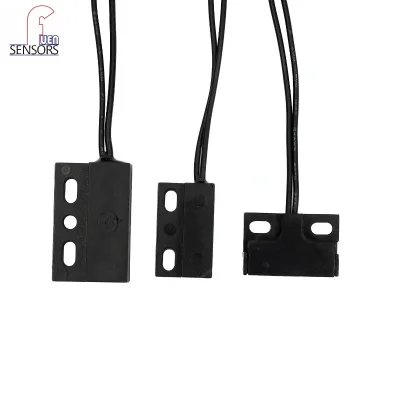
When sourcing magnetic proximity cooker reed switches, buyers must first distinguish between the sensor mechanism and the complete alarm system. The core component is the reed switch, a hermetically sealed glass tube containing ferromagnetic reeds that close or open an electrical circuit when exposed to a magnetic field. In the context of cookers and kitchen safety, these devices often function as part of a larger proximity sensor switch assembly designed to detect the presence or absence of a magnetic element, such as a lid or a specific cooking vessel.
Based on observed market data, the technical profile of these components varies significantly. Some units operate as simple two-wire switches with a maximum current rating of 0.5A and a maximum voltage of 220V. This low-current specification is critical for integration into low-power control circuits or battery-operated alarm systems. The operating principle is typically electromagnetic, utilizing the interaction between the permanent magnet and the reed switch contacts. The physical gap between the magnet and the switch is a defining parameter; observed specifications indicate functional gaps ranging from 15-25mm to 20-30mm. This range dictates the mounting distance and the strength of the magnet required for reliable operation.
Housing materials are equally vital for durability in a kitchen environment. Available options include ABS material, with specific variants offering fireproof ABS housing to meet safety standards. Other configurations utilize copper material, often finished in copper yellow, which may offer different thermal or electrical properties. The color of the unit is frequently white or brown, allowing for aesthetic integration into various appliance designs. The installation process is generally described as easy, suggesting a design that minimizes complex wiring or mechanical adjustments. However, the specific model numbers, such as MR2314, MR0525, MR0650, MR2919, and Fbm5c-32, indicate that buyers must verify the exact model against their application requirements, as performance characteristics can differ between these identifiers.
Compliance, Certification, and Regulatory Standards
Navigating the compliance landscape is a non-negotiable aspect of sourcing magnetic proximity switches, particularly for applications involving cooking appliances where fire safety and electrical standards are paramount. The market data reveals a diverse array of certifications held by different suppliers and product lines. Buyers should expect to encounter products certified under ISO standards, which indicate adherence to international management system requirements. Furthermore, CE certification is frequently listed, signifying conformity with health, safety, and environmental protection standards for products sold within the European Economic Area.
For products intended for the North American market or those requiring strict environmental compliance, RoHS (Restriction of Hazardous Substances) certification is a common requirement. Some high-compliance units carry a broader suite of certifications, including DOT, FCC, CCC, and GS. The FCC certification is particularly relevant for wireless variants of these sensors, ensuring that the electromagnetic interference emitted by the device does not disrupt other radio communications. The CCC mark is essential for products sold in China, while the GS mark indicates safety compliance in Germany and other European markets.
The electrical specifications also align with specific standards. Observed data points to "Electrical Specification" as a standard category, alongside ROHS compliance. It is crucial for buyers to verify that the specific unit they are purchasing carries the certifications relevant to their target market. For instance, a switch intended for a commercial kitchen in the EU must possess CE and RoHS marks, whereas a unit for the US market might require FCC certification if it includes wireless transmission capabilities. The presence of multiple certifications on a single product listing, such as ISO, RoHS, and CE, suggests a robust quality management system, but buyers must confirm that these certifications apply to the specific model number and batch being ordered, not just the general product line.
Cost Drivers and Pricing Dynamics
The pricing structure for magnetic proximity cooker reed switches is influenced by several key factors, including material composition, certification depth, and order volume. The observed price range in the market spans from $0.10 to $3.08 USD per unit. This wide variance suggests that the lower end of the spectrum likely corresponds to basic, non-certified, or bulk-standard models, while the higher end reflects units with specialized housing (such as fireproof ABS), advanced certifications (like FCC or GS), or custom design features.
Order volume plays a decisive role in determining the final unit cost. The Minimum Order Quantity (MOQ) ranges from 10 units to 20,000 units. This flexibility allows small-scale prototyping or custom projects to begin with a low MOQ, while large-scale manufacturers can leverage economies of scale by ordering in the thousands. However, the specific MOQ is often tied to the customization level. Products with "Own Design" capabilities or specific customization requests may carry higher MOQs or different pricing tiers compared to standard off-the-shelf models.
Packaging also impacts the overall cost structure. While some units are supplied in simple bags, others are packaged in standard export cartons or specific carton configurations. The choice between "Bags and Cartons" versus "Standard Export Carton" can affect the logistics cost and the perceived value of the product. Additionally, the production location, specifically Ningbo, Zhejiang, China, is a major manufacturing hub that influences labor and material costs. Buyers should be aware that while the base unit price may be low, the total landed cost will include shipping, duties, and potential tariffs, which vary based on the destination country and the specific HS codes associated with the product.
Typical Applications and Functional Versatility
Magnetic proximity reed switches serve a wide array of applications beyond simple cooker detection. The observed data highlights their use in home, industry, car/motorcycle, special equipment, traffic, and communication electronic products. In the specific context of cooking appliances, these switches are integral to safety mechanisms that detect if a pot is missing, a lid is removed, or a door is opened. The usage scenarios include window monitoring, smoke detection, fire alarms, and personal safety devices.
The functional versatility extends to alarm systems. Some configurations operate as a "Home Alarm" type, utilizing a wireless transmission mode with a receive frequency of 315MHz. These units can trigger an alarm volume of at least 90dB within a 1-meter radius, providing an audible warning in case of a breach or safety violation. The working mode is often passive, meaning the sensor does not emit energy but rather detects the presence of a magnetic field, which conserves power and extends the lifespan of the device. The transmission mode can be either wired or wireless, with wireless options offering greater flexibility in installation but requiring battery management and frequency compliance.
For industrial applications, the switches are used in special equipment and traffic systems where reliable detection is critical. The ability to function in both indoor and outdoor environments makes them suitable for a broad range of settings. The specific gap requirements (15-25mm or 20-30mm) must be matched to the physical design of the cooker or appliance to ensure the magnetic field is strong enough to actuate the switch reliably. The "Proximity Sensor Switch" and "Proximity Switch Reed Sensor" designations indicate that these components are often part of a larger system rather than standalone devices, requiring integration with control boards or alarm panels.
Supplier Evaluation and Production Capabilities
When evaluating potential suppliers for magnetic proximity reed switches, buyers should prioritize manufacturers with a proven track record in the region of Ningbo, Zhejiang, China. This area is known for its robust electronics manufacturing ecosystem. The company profile of suppliers often indicates they are direct manufacturers rather than trading companies, which can offer better control over quality and pricing. The availability of "Own Design" capabilities is a significant differentiator, allowing buyers to customize the product for specific applications, such as unique housing shapes or specific gap requirements.
The production process should be scrutinized for consistency. Suppliers offering "Standard" products with "Electrical Specification" compliance are likely to have established production lines, while those offering "Customization" may require a longer lead time and a higher MOQ. The packaging method, whether "Bags and Cartons" or "Standard Export Carton," reflects the supplier's attention to detail and their ability to protect the product during transit. Buyers should verify that the supplier can consistently meet the observed specifications, such as the 0.5A current limit and 220V voltage rating, across all batches.
Furthermore, the diversity of certifications held by a supplier is a strong indicator of their quality management system. A supplier that holds ISO, CE, RoHS, and potentially FCC or GS certifications demonstrates a commitment to meeting international standards. However, buyers must ensure that these certifications are current and applicable to the specific product model being sourced. The "Easy" installation feature mentioned in product attributes suggests that the supplier designs their products with user-friendliness in mind, reducing the risk of installation errors and subsequent field failures.
Quality Control and Long-Term Procurement Considerations
Ensuring long-term reliability requires a rigorous quality control (QC) strategy. Buyers should implement incoming inspection protocols that verify the physical dimensions, specifically the gap distance, and the electrical continuity of the reed switches. The housing material, whether ABS or copper, must be tested for fire resistance and durability, especially for applications in high-heat environments like cookers. The "Fireproof ABS Housing" option, if selected, should be verified against relevant fire safety standards to ensure it meets the required performance criteria.
For wireless variants, signal transmission testing is essential. The 315MHz frequency must be confirmed to ensure it does not interfere with other devices in the target market. The alarm volume of ≥90dB should be measured under controlled conditions to guarantee that the safety alert is audible in noisy kitchen environments. Additionally, the working principle of electromagnetic induction should be validated to ensure consistent performance over the product's lifespan.
Long-term procurement considerations include the stability of the supply chain and the availability of spare parts. Given the MOQ range of 10 to 20,000 units, buyers should plan their inventory levels carefully to avoid stockouts while minimizing holding costs. The lead time, though not explicitly stated in the provided data, is likely influenced by the customization level and order volume. Establishing a long-term relationship with a manufacturer that offers "Own Design" capabilities can provide a competitive advantage, allowing for continuous product improvement and adaptation to changing market needs. Finally, buyers should maintain a clear audit trail of certifications and test results for each batch received to ensure compliance with regulatory requirements and to mitigate liability risks in the event of product failure.
FAQs
What certifications are available for magnetic proximity cooker reed switches?
Available certifications include ISO, CE, and RoHS, with some models also holding FCC, DOT, CCC, and GS marks. Buyers must verify that specific certifications apply to the intended model and target market, as requirements vary by region and application safety standards.
How does the gap distance affect the operation of these switches?
The functional gap typically ranges from 15-25mm or 20-30mm depending on the specific model. This distance dictates the required magnet strength and mounting configuration to ensure reliable circuit closure or opening when the magnetic field is present or absent.
Which housing materials are used for these proximity sensors?
Housing options include ABS material, with fireproof variants available for enhanced safety, and copper material finished in copper yellow. The choice of material impacts durability and thermal resistance, which is critical for kitchen and industrial environments.
Can these switches be customized for specific applications?
Customization is available for many models, allowing for tailored designs and specifications. However, custom orders may require higher minimum order quantities and longer lead times compared to standard off-the-shelf units with fixed electrical and physical properties.
What is the maximum current and voltage rating for these devices?
The maximum current rating is 0.5A and the maximum voltage is 220V. These specifications are suitable for low-power control circuits and battery-operated alarm systems, ensuring safe integration into various proximity sensor switch assemblies.
Where are these products typically manufactured?
Products are manufactured in Ningbo, Zhejiang, China, a major hub for electronics production. This location influences labor and material costs, and buyers should consider shipping logistics and tariffs when calculating the total landed cost for international orders.
What wireless features are included in some proximity switch models?
Some models feature wireless transmission at 315MHz with a passive working mode and alarm volume of at least 90dB. These units are designed for home alarm applications and require verification of frequency compliance for the specific target market.