Source Magnetic Push Latch Cabinet Damper for Kitchen, Bathroom, and Office
Explore 30 listings for the Magnetic Push Latch Cabinet Damper to compare specifications like material, size, and customization options. Buyers can evaluate stainless steel and plastic-iron variants suitable for various furniture applications.
Key considerations
Products List


Magnetic Door Latch Cabinet Damper Buffer Kitchen Cabinet Open Door Latch
$0.27 - $0.41
MOQ: 500 Pieces


Push to Open System Damper Buffer Door Catch Magnetic Push Latches Release for Kitchen Cabinet
$0.12 - $0.36
MOQ: 1000 Pieces


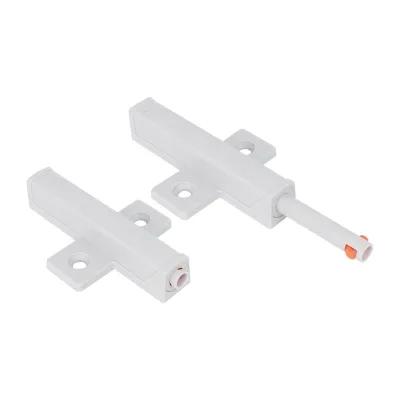
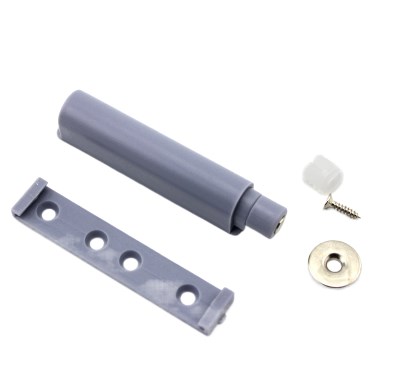


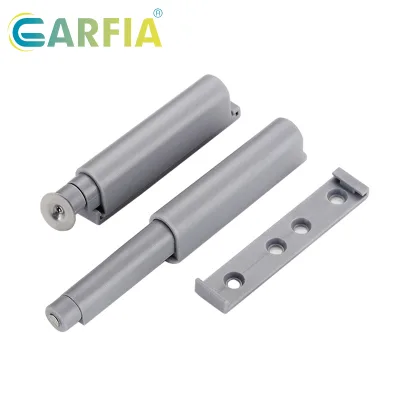
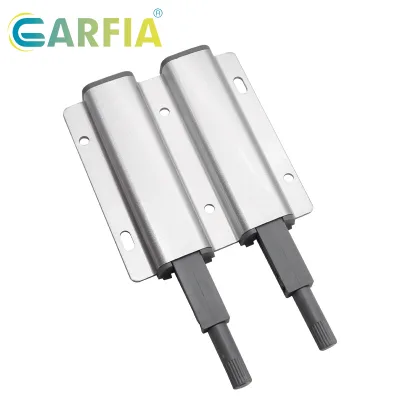
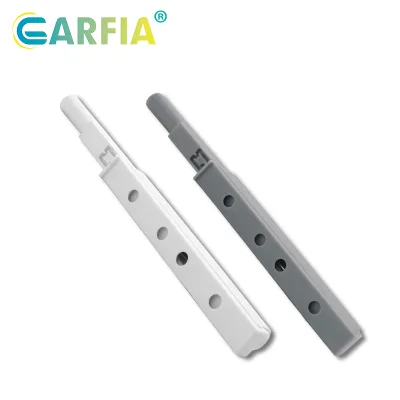

Furniture Hardware Accessories Cabinet Door Push Latch Magnetic Rebound
$0.27 - $0.32
MOQ: 5000 Pieces

Furniture Fittings and Accessories Magnetic Rebound Cabinet Door Push Latch
$0.27 - $0.34
MOQ: 10000 Pieces

Furniture Hardware Accessories Cabinet Door Push Latch Magnetic Adhesive Rebound
$0.29 - $0.34
MOQ: 10000 Pieces

Cabinet Furniture Hardware Accessories Smooth and Silent Cabinet Magnetic Rebound Damper
$0.28 - $0.36
MOQ: 5000 Pieces
Comprehensive Sourcing Guide
Strategic Sourcing Guide for Magnetic Push Latch Cabinet Dampers
The global market for furniture hardware has seen a significant shift toward seamless, touch-activated mechanisms that enhance user experience while maintaining structural integrity. For procurement professionals specializing in cabinetry, the core keyword "Magnetic Push Latch Cabinet Damper" represents a critical component in modern joinery. These devices combine the functionality of a latch, which secures the door in a closed position, with a damping mechanism that controls the closing speed to prevent slamming. Sourcing these components requires a nuanced understanding of material science, mechanical specifications, and supply chain reliability. This guide provides a comprehensive framework for evaluating potential suppliers and products based on verified market data and technical requirements.
Technical Specifications and Material Composition
The performance of a Magnetic Push Latch Cabinet Damper is fundamentally dictated by its material composition and mechanical design. In the current market, stainless steel remains a dominant material choice due to its resistance to corrosion and high tensile strength, making it suitable for both indoor and outdoor applications. However, specific product listings indicate the existence of hybrid constructions utilizing plastic and iron combinations. These materials are often selected to reduce overall weight and manufacturing costs while maintaining the necessary magnetic force for latching.
When evaluating technical specifications, buyers must scrutinize the functional attributes of the device. The primary function is often categorized as a "Stop" or a "Push Open Cabinet Door Magnet," indicating a mechanism that allows the door to be opened by a simple push and held securely by magnetic force. The installation type is typically "Outside-mounted," which simplifies retrofitting into existing cabinetry without requiring complex internal modifications. Furthermore, the "Fixed" nature of these units suggests they are not adjustable once installed, necessitating precise measurement during the procurement phase.
Dimensional consistency is another critical technical factor. Data from various product models reveals standard lengths ranging from 107mm to 125mm, with specific models like BP002, BP004, BP006, and BP008 adhering to these measurements. The force required to operate the latch, often cited in the range of 50N to 200N, is a vital specification that determines the ease of use. A lower force threshold ensures accessibility for all users, while a higher force ensures the door remains securely latched against vibration or accidental bumps. Buyers should verify that the specific model selected aligns with the intended application's force requirements.
Compliance, Certification, and Standard Verification
In the realm of B2B procurement, compliance with international standards is non-negotiable, particularly for products destined for commercial or institutional environments. While some product listings indicate a "Customized" standard, others reference specific numerical ranges such as 50N-200N for force or 107mm-125mm for dimensions. These figures serve as benchmarks rather than universal mandates, meaning buyers must verify that the supplier's quality control processes consistently meet these parameters.
Certification status is often a point of confusion in the hardware sector. It is essential to distinguish between product standards and supplier certifications. For instance, a product may be manufactured in Guangdong, China, adhering to local production standards, but this does not automatically imply compliance with international safety or environmental regulations such as REACH or RoHS unless explicitly stated. Buyers should request documentation proving that the materials used, particularly the "Plastic Cement" or "Plastic+iron" composites, meet the safety standards of the destination market.
The "Standard" attribute in product listings can sometimes refer to the physical dimensions rather than a regulatory body. For example, a standard of "107mm" likely refers to the length of the latch mechanism. Procurement teams must clarify whether the supplier adheres to specific industry standards like ISO for hardware testing or if they rely on internal quality benchmarks. In cases where the standard is listed as "Customized," the buyer must define the exact technical requirements in the purchase order to ensure the final product meets the design specifications of the furniture assembly.
Cost Drivers and Pricing Dynamics
Understanding the cost structure of magnetic push latches is essential for budgeting and negotiation. The observed price range in the market spans from $0.10 to $1.21 per unit, a variance that reflects differences in material quality, manufacturing complexity, and order volume. Stainless steel components generally command a higher price point compared to plastic-iron hybrids due to the raw material costs and the additional processing required for metal finishing.
Order Volume is the most significant driver of unit cost. The Minimum Order Quantity (MOQ) observed in the market ranges from 200 to 10,000 pieces. Suppliers offering lower MOQs, such as 200 or 1,000 pieces, often charge a premium per unit to cover setup costs and maintain production flexibility. Conversely, orders exceeding 10,000 pieces can secure the lower end of the price spectrum. Buyers must balance the need for inventory flexibility with the economic benefits of bulk purchasing.
Additional cost factors include customization services. While many suppliers offer "OEM and ODM" services, allowing for branding and specific design modifications, these services typically incur extra charges. The "Free Sample" availability is a common industry practice that allows buyers to test product quality before committing to a large order, though shipping costs for samples are often the responsibility of the buyer. Packaging requirements also influence cost; standard export packing is generally more economical than custom packaging solutions, which may be necessary for retail-ready products.
Typical Applications and Usage Scenarios
The versatility of magnetic push latch cabinet dampers allows them to be deployed across a wide array of environments. The "Usage" attribute in product data explicitly lists applications in kitchens, bathrooms, home offices, living rooms, and bedrooms. This broad applicability stems from the clean, modern aesthetic these latches provide, which eliminates the need for visible handles or knobs.
Beyond residential use, these components are critical in commercial and institutional settings. The data indicates suitability for hotels, hospitals, schools, malls, and warehouses. In healthcare facilities, the push-to-open mechanism offers a hygienic advantage by allowing doors to be opened without physical contact, reducing the spread of pathogens. In hospitality and retail environments, the seamless design enhances the visual appeal of cabinetry and storage units.
The "Installation Type" being "Outside-mounted" makes these latches particularly suitable for retrofitting existing furniture or cabinets where internal modifications are not feasible. However, for new construction, the "Doorframe" installation type suggests that the latch is integrated into the frame structure. Buyers must ensure that the chosen application matches the specific mounting requirements of the furniture design. The "Push Open Cabinet Door Magnets" function is ideal for lightweight to medium-weight doors, while heavier doors may require reinforced models with higher force ratings.
Supplier Evaluation and Service Capabilities
Selecting the right supplier is as important as selecting the right product. The market data highlights several key service attributes that should be part of the evaluation criteria. "OEM and ODM" services are widely available, indicating that suppliers are capable of producing custom-branded products or modifying existing designs to meet specific client needs. This flexibility is crucial for brands looking to differentiate their furniture lines.
Payment terms are another critical factor in supplier evaluation. The observed payment methods include T/T (Telegraphic Transfer), Western Union, and PayPal. While these are standard methods, buyers should negotiate terms that protect their interests, such as partial payments upon order confirmation and the remainder upon shipment or delivery. The availability of "Free Samples" is a strong indicator of supplier confidence in their product quality and should be utilized to verify the tactile feel, magnetic strength, and durability of the latches.
Location and logistics play a significant role in the procurement process. Many suppliers are based in Guangdong, China, a major hub for hardware manufacturing. This concentration of suppliers offers competitive pricing and a wide variety of options. However, buyers must consider lead times and shipping logistics when planning their supply chain. The "Packing" details, such as "Carton Boxes" or "1000 PCS / CTN," must be verified to ensure they align with the buyer's storage and distribution capabilities.
Quality Control and Long-Term Procurement Considerations
Ensuring consistent quality is paramount for maintaining the reputation of the end product. The "Condition" of the products is listed as "New," but this does not guarantee long-term durability. Buyers should implement a rigorous quality control protocol that includes testing the magnetic force, the durability of the latch mechanism, and the resistance of the materials to wear and tear. The "Fixed" nature of the installation means that any quality issues discovered after installation can be costly to rectify.
Long-term procurement considerations involve establishing a reliable supply chain that can scale with demand. The observed MOQ ranges from 200 to 10,000 pieces, suggesting that suppliers can accommodate both small-batch and large-scale orders. However, buyers should assess the supplier's capacity to handle sudden increases in demand without compromising quality or delivery timelines. The "Standard Export Packing" is a good baseline, but for long-term partnerships, buyers may negotiate for improved packaging solutions that reduce damage during transit.
Finally, buyers should maintain open communication with suppliers regarding product updates and technological advancements. The hardware industry is evolving, with new materials and designs emerging regularly. By staying informed and maintaining a flexible procurement strategy, buyers can ensure they are always utilizing the most efficient and cost-effective solutions for their Magnetic Push Latch Cabinet Damper needs. The combination of technical precision, supplier reliability, and strategic planning will lead to successful procurement outcomes in this competitive market.
FAQs
What materials are used for magnetic push latch cabinet dampers?
These latches are commonly made from stainless steel or a combination of plastic and iron. Stainless steel offers corrosion resistance, while plastic and iron hybrids reduce weight and cost. Buyers should verify the specific material composition for their intended application environment.
How are these latches installed on furniture?
The installation type is typically outside-mounted and fixed to the doorframe. This design allows for easy retrofitting into existing cabinetry without complex internal modifications. Precise measurement is required before installation since the units are not adjustable once fixed.
Which models have specific dimensional standards?
Several models adhere to specific length standards ranging from 107mm to 125mm. Examples include models BP002, BP004, BP006, and BP008 which match these dimensions. Buyers must select the correct model size to ensure compatibility with their furniture assembly.
Can I get free samples before placing a large order?
Yes, free samples are available for many suppliers to verify product quality. While the sample itself is free, shipping costs are often the buyer's responsibility. This allows procurement teams to test magnetic strength and durability before committing to bulk purchases.
What is the minimum order quantity for these products?
The minimum order quantity ranges from 200 to 10,000 pieces depending on the supplier and customization needs. Lower MOQs like 200 or 1,000 pieces often carry a higher unit price, while larger orders can secure better pricing. Buyers should balance inventory needs with cost efficiency.
Where are these products typically manufactured?
Most products originate from Guangdong, China, a major hub for hardware manufacturing. This location offers competitive pricing and a wide variety of options for buyers. Buyers should consider logistics and lead times when sourcing from this specific region.
What payment methods are accepted by suppliers?
Suppliers typically accept payment via T/T, Western Union, or PayPal. These are standard methods for international trade, but buyers should negotiate terms that protect their interests. Partial payments upon order confirmation and the remainder upon shipment are common protective measures.