Source Manual Non Motorized Stair Trainer for Home Gym and Commercial Use
Find 30 Manual Non Motorized Stair Trainer options for home gyms, commercial facilities, and community centers. Compare steel and plastic models with varying step lengths and weight capacities to find the right fit for your sourcing needs.
Key considerations
Products List

Commercial Stair Trainer for Stepper Exercise Stair Simulator Training Machine
$35.00 - $53.00
MOQ: 100 Pieces

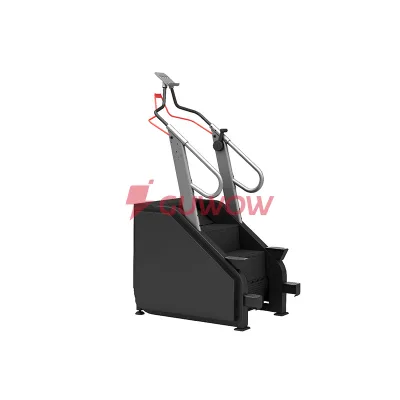
Commercial Home Fitness Equipment Unpowered Manual Stepper Stairwell Climbing Machine
$702.59 - $760.88
MOQ: 1 pieces


Ergonomically Designed Professional Gym Equipment Stair Trainer for Exercise
$573.00 - $673.00
MOQ: 1 Pieces


Gym Fitness Equipment Stair Stepper Master Powered Electric Stairs Climber
$658.00 - $800.00
MOQ: 1 Pieces


Climbing Gym Equipment Step Stair Trainer Stepmill Stairmaster Machine for Gym
$900.00 - $1100.00
MOQ: 1 Pieces


Premium Metal Stair Climber Home Gym Stepper Mill Stair Master Trainer
$639.00 - $659.00
MOQ: 1 Pieces


Climbing Stepper Vertical Staircase Machine LCD/LED Screen Stair Climber
$600.00 - $630.00
MOQ: 1 Pieces
Comprehensive Sourcing Guide
Manual Non Motorized Stair Trainer Sourcing Guide
Sourcing manual non-motorized stair trainers requires a careful balance between mechanical simplicity and structural durability. These units rely on user-generated momentum rather than electric motors, which significantly reduces maintenance complexity but places higher demands on the frame’s load-bearing capacity and the pedal mechanism’s smoothness. Buyers must prioritize equipment that offers a natural stepping motion while ensuring the unit can withstand high-frequency commercial use without mechanical failure. The absence of electronic components simplifies logistics and installation but necessitates rigorous verification of the mechanical control methods and material integrity to ensure long-term reliability.
The procurement landscape for these devices is diverse, ranging from basic home-use models to heavy-duty commercial units designed for gymnasium and community centers. Observed market signals indicate a wide variance in specifications, with some models featuring adjustable resistance or multifunctional capabilities while others remain strictly single-purpose. Buyers should distinguish between units intended for light residential exercise and those built for high-traffic commercial environments, as the latter require reinforced steel frames and higher weight capacities. Understanding these distinctions is critical for aligning product selection with the specific operational needs of the end-user facility.
Product Scope and Observed Listing Signals
The current market for manual stair trainers exhibits a broad price range, typically spanning from $35 to $1,285 USD, reflecting significant differences in build quality, material composition, and intended application. Lower-priced units often target the home or light commercial segment, utilizing standard steel pipes and PP plastic components, while higher-priced models may feature enhanced durability, custom branding options, and more robust mechanical systems. The minimum order quantity (MOQ) varies widely from 1 to 100 units, allowing for flexibility in procurement strategies, whether for small boutique gyms or large-scale commercial rollouts. Buyers should correlate price points with observed material specifications and certification levels to avoid under-specifying equipment for high-use environments.
Observed product attributes reveal a mix of manual and electric functions, with a strong emphasis on customization and specific application settings. Many listings highlight features such as eco-friendly designs, adjustable components, and multifunctional capabilities, catering to diverse user preferences. The color options are generally limited to standard industrial finishes like black, though customized logos and branding are frequently available for bulk orders. Applications span from home and gymnasium use to universal and commercial settings, indicating that buyers must carefully match the product’s stated application with their facility’s actual usage patterns to ensure appropriate durability and performance.
Technical Specifications to Verify
Verifying the physical dimensions and weight capacity is the first critical step in technical evaluation. Buyers must confirm the overall size of the unit, which can range from compact home models to large commercial installations measuring up to 11508501980mm. The maximum user weight is a key safety parameter, with observed limits varying from 100kg to 200kg, depending on the frame’s structural integrity. Additionally, the step length and width, such as 557mm and 230mm respectively, directly impact user comfort and biomechanical efficiency. Ensuring these dimensions align with the target demographic’s physical characteristics is essential for preventing injury and enhancing workout effectiveness.
The material composition and mechanical control methods also require close scrutiny. Most units are constructed from steel pipes combined with PP plastic pedals, offering a balance of strength and cost-effectiveness. The control method is typically mechanical, relying on the user’s movement to drive the mechanism, which eliminates the need for external power sources. Buyers should verify whether the unit is foldable or fixed, as non-collapsible models often provide greater stability for commercial use. Furthermore, the track travel distance, observed at around 450mm, influences the range of motion and should be assessed for ergonomic suitability. Confirming these technical details ensures the selected equipment meets both safety standards and user experience expectations.
Compliance and Safety Documentation
Certification verification is paramount for ensuring that the stair trainers meet international safety and quality standards. Many suppliers provide CE certification, indicating compliance with European health, safety, and environmental protection standards. Some listings also mention ISO9001 certification, which reflects adherence to quality management systems, although buyers should request valid certificates directly from the supplier rather than relying solely on product descriptions. The presence of these certifications is a strong indicator of a manufacturer’s commitment to quality control and regulatory compliance, reducing the risk of procuring substandard equipment.
Warranty terms and safety features are additional critical components of the compliance framework. A typical warranty for the main frame may extend up to five years, signaling confidence in the product’s structural durability. Buyers should also verify the inclusion of safety features such as comfortable and secure pedal designs, which minimize the risk of slips or falls during intense workouts. Documentation regarding the product’s origin, such as manufacturing in Zhejiang or Shandong, China, can provide insights into the supply chain’s transparency. Ensuring that all safety and warranty documentation is clear and legally binding protects the buyer from potential liabilities and enhances customer trust.
Cost Drivers and Commercial Terms
Packaging and logistics play a significant role in the total cost of ownership for manual stair trainers. Units are typically packed in cartons with dimensions around 901450cm or in wooden boxes for heavier commercial models, affecting shipping volume and freight costs. The packaging quantity, often one piece per carton, simplifies handling but may increase the number of individual shipments required for large orders. Buyers should calculate the landed cost by considering not only the unit price but also packaging efficiency, freight rates, and potential customs duties, as these factors can significantly impact the final procurement budget.
Customization and branding options can also influence commercial terms. Many suppliers offer customized logos and packaging, which may incur additional setup fees or require higher MOQs. These services are particularly valuable for commercial gyms and fitness chains seeking to maintain brand consistency across their facilities. Buyers should negotiate clear terms regarding customization costs, lead times, and minimum order requirements to avoid unexpected expenses. Additionally, understanding the selling units and packaging details helps in planning inventory management and storage logistics, ensuring that the procurement process runs smoothly from order placement to delivery.
Supplier Qualification and Quality Control
Evaluating supplier qualifications is essential for mitigating procurement risks. Buyers should verify the supplier’s manufacturing capabilities, particularly their experience in producing fitness equipment with steel and PP plastic components. Factories located in established manufacturing hubs like Zhejiang and Shandong often have mature supply chains and skilled labor forces, which can contribute to consistent product quality. Requesting factory audits or third-party inspection reports can provide deeper insights into the supplier’s production processes, quality control measures, and ethical labor practices. This due diligence helps ensure that the supplier can meet the buyer’s volume and quality requirements reliably.
Quality control protocols should be clearly defined and enforced throughout the production process. Buyers should insist on pre-shipment inspections to verify that the products meet the agreed-upon specifications, including dimensions, weight capacity, and material quality. Checking for defects in the steel frame welds and PP plastic pedals is crucial, as these are common points of failure. Additionally, verifying that the products are in new condition and properly packaged to prevent damage during transit is essential. Establishing a robust quality control framework with the supplier ensures that the delivered equipment meets the highest standards of safety and performance.
Long-Term Procurement Checks
Long-term procurement success depends on establishing strong relationships with suppliers who can support ongoing needs and future expansions. Buyers should prioritize suppliers who offer responsive customer service, reliable after-sales support, and consistent product quality over time. Regular communication and feedback loops can help identify potential issues early and foster continuous improvement in the supply chain. Additionally, staying informed about industry trends and technological advancements in manual stair trainers can help buyers make informed decisions about future purchases and upgrades.
Monitoring supplier performance and market dynamics is also crucial for maintaining a competitive edge. Buyers should track key performance indicators such as delivery times, defect rates, and cost fluctuations to assess supplier reliability. Diversifying the supplier base can mitigate risks associated with single-source dependencies, ensuring continuity of supply even in the face of disruptions. By maintaining a proactive approach to supplier management and market analysis, buyers can secure a steady supply of high-quality manual non-motorized stair trainers that meet their evolving business needs.
FAQs
What is the maximum user weight for manual stair trainers?
The maximum user weight is typically 100kgs for standard models. Some heavy-duty units support up to 200kg. Always verify the specific load rating before purchase to ensure safety and durability for your intended users.
Can these machines be customized with a logo?
Yes, customized logos are available for most manual stair trainers. Buyers can request branding on the frame or pedals. This service supports private labeling for gyms and commercial facilities seeking specific brand identity.
What certifications do manual stair trainers usually have?
Most units carry CE and ISO9001 certifications. These indicate compliance with European safety and quality management standards. Verify specific certificates with suppliers to ensure they meet local regulatory requirements for your target market.
How is the warranty structured for these machines?
Warranties often cover the main frame for five years. Other components may have shorter coverage periods. Check the specific warranty terms provided by the manufacturer to understand what parts are included and the duration of support.
What materials are used in manual stair trainer construction?
Frames are typically made from steel pipe for strength. Pedals often use PP plastic for durability and comfort. This combination ensures a sturdy, stable workout experience while maintaining a manageable weight for shipping and installation.
Are manual stair trainers suitable for commercial use?
Yes, many models are designed for commercial applications. They feature durable steel frames and high weight capacities. Ensure the selected unit meets the specific usage intensity of your facility to guarantee long-term performance and safety.