Source Manual Pad Printing Steel Plate for Tubes, Cylinders, and Containers
Find 30 Manual Pad Printing Steel Plate options with varying sizes like 100*100mm and 100*250mm. Buyers can compare semi-automatic and manual grades, plate features, and delivery times from suppliers in China and India.
Key considerations
Products List


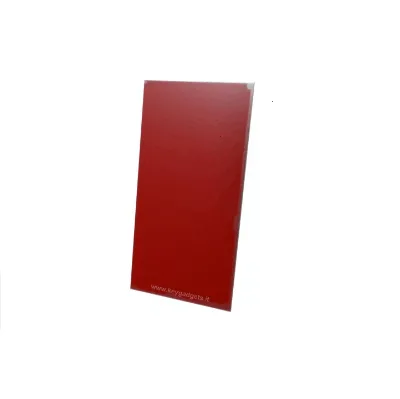
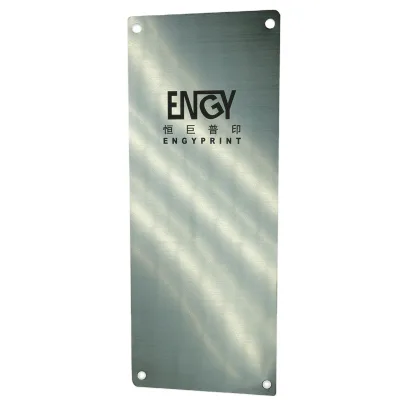
Factory Price 10mm Pad Printing Steel Plates for Pad Printer/Printing Machine
$20.00 - $50.00
MOQ: 1 Pieces



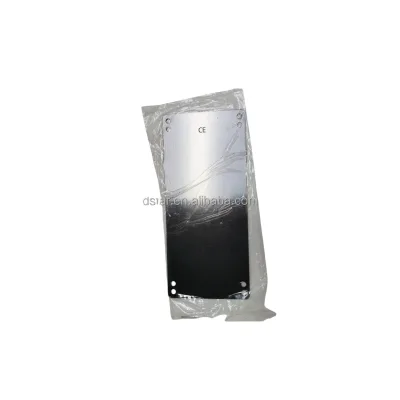
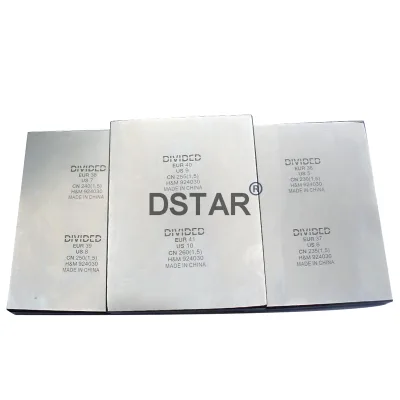
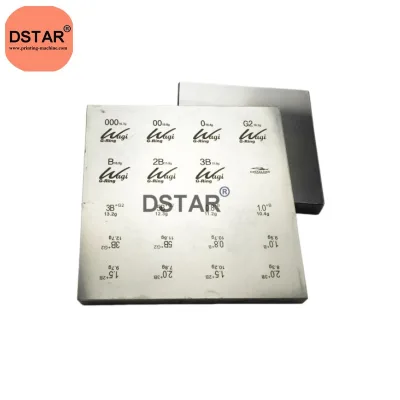
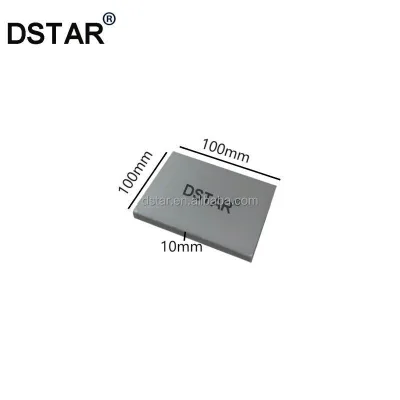



$600.00 - $800.00
MOQ: 1 Tons


Comprehensive Sourcing Guide
Strategic Sourcing Guide for Manual Pad Printing Steel Plates
Understanding the Technical Landscape of Manual Pad Printing Components
The procurement of manual pad printing steel plates requires a precise understanding of the specific attributes that define their functionality within a semi-automatic or fully manual printing environment. Unlike automated systems where speed and integration are paramount, manual operations prioritize the tactile control of the operator and the physical durability of the printing surface. The core component in this ecosystem is the steel plate, often referred to as a cliché, which serves as the matrix for the ink transfer. Based on observed market data, these plates are frequently categorized by their automatic grade, with a significant segment designated as "Manual" or "Semi-Automatic," indicating the level of machinery integration required.
The physical dimensions of the steel plate are a critical specification that dictates its compatibility with the printing machine and the target product. The observed data reveals a diverse range of sizes, including standard formats such as 100100mm, 100250mm, and various inch-based measurements like 4"x4", 4"x6", 4"x8", 6"x6", and 6"x8". The thickness of these plates also varies significantly, with observations noting specific instances of 10mm and 0.5mm. This variance suggests that buyers must carefully match the plate thickness to the etching depth required for their specific application. A thicker plate, such as the 10mm variant, may offer greater stability for heavy-duty or high-volume manual operations, while thinner plates might be suited for delicate or intricate designs where minimal ink volume is necessary.
Furthermore, the transmission type associated with these plates is often pneumatic, even in manual setups, which implies that the plate must be compatible with pneumatic pads that press the ink onto the substrate. The print size capability is another vital metric; for instance, a specific model may support a print area of 5252mm, which is smaller than the plate size itself, indicating that the plate is larger than the actual printed area to allow for mounting and handling. The machine dimensions associated with these plates, such as 260328*485mm, provide context for the footprint required in the production facility. Buyers must ensure that the physical space allocated for the printing station can accommodate the machine and the plate handling equipment without congestion.
Material Composition and Surface Engineering Standards
The longevity and print quality of a Manual Pad Printing Steel Plate are inextricably linked to its material composition and surface treatment. The primary material identified in the market observations is stainless steel, specifically noted as "Stainless Steel Scrap" in some contexts, which implies a focus on the raw material source. However, the critical factor is the final engineering of the surface. The observed data points to a "Galvanized" surface treatment, a process that applies a protective zinc coating to the steel to prevent rust and corrosion. This is particularly important in environments where humidity or chemical exposure might degrade the plate's surface, leading to print defects.
The standardization of these plates is governed by a variety of international and regional specifications. The market data lists a comprehensive set of standards including AISI, ASTM, BS, DIN, GB, and JIS. These acronyms represent different national and international bodies that set the criteria for steel composition, tensile strength, and dimensional tolerances. For a buyer, this means that a single plate may be certified under multiple standards depending on the supplier's origin and target market. For example, a plate originating from China might adhere to GB (Guobiao) standards, while one from India might reference specific local or international adaptations. The presence of these standards indicates that the plates are manufactured to meet rigorous quality benchmarks, but the buyer must verify which specific standard applies to the batch being purchased to ensure compatibility with their quality assurance protocols.
The shape of the plate is generally described as "Bar" or rectangular, designed to fit into the machine's plate holder. The composition is also noted to be suitable for "High-strength Steel Plate," "Wear Resistant Steel," and "Mold Steel," suggesting that the material is engineered to withstand the mechanical stress of the printing process. The "Hot Rolled" technique mentioned in the data indicates the manufacturing process used to shape the steel, which affects the grain structure and mechanical properties. A hot-rolled surface may require additional finishing to achieve the smoothness necessary for high-resolution printing. Buyers should verify the surface finish quality, as any irregularities can lead to uneven ink distribution or premature wear of the etched image.
Cost Drivers and Pricing Dynamics in the Market
The pricing of manual pad printing steel plates is influenced by a complex interplay of factors, including material costs, manufacturing complexity, and logistical expenses. The observed price range in the market is exceptionally broad, spanning from $0.10 to $11,000. This vast disparity indicates that the market includes both low-cost, single-use consumables and high-value, precision-engineered components. The lower end of the spectrum likely corresponds to basic steel plates with standard dimensions and minimal customization, while the upper end may reflect specialized plates with complex etching, custom sizes, or high-grade materials.
The Minimum Order Quantity (MOQ) is another significant cost driver, with observed ranges from 1 to 1000 units. A low MOQ of 1 allows for small-scale testing or prototyping, which is beneficial for buyers evaluating new suppliers or testing specific plate designs. However, higher MOQs often correlate with lower unit prices, making them more economical for large-scale production runs. The customization options available, such as specific plate sizes or etching patterns, can also impact the final cost. Customization is a key feature of the market, allowing buyers to tailor the plate to their exact needs, but this service often comes with a premium.
Logistics and shipping methods play a crucial role in the total cost of ownership. The data indicates various shipping methods, including FedEx and Ocean Freight. FedEx is typically used for smaller, urgent shipments, while Ocean Freight is more cost-effective for bulk orders. The packaging method, whether "Plywood" or "by Box," also affects shipping costs and the risk of damage during transit. Plywood packaging is generally more robust and suitable for heavy or large plates, whereas box packaging may be sufficient for smaller, lighter items. Buyers should factor in these logistical costs when comparing supplier quotes, as a lower unit price might be offset by higher shipping or packaging fees.
Typical Applications and Operational Use Cases
Manual pad printing steel plates are versatile tools used across a wide range of industries, from consumer electronics to automotive components. The primary application is for "Tube Printer" operations, where the plate is used to print logos, text, or graphics onto cylindrical or tubular objects. The "Pad Printing Machine" use case is also prominent, indicating that these plates are integral to the broader pad printing ecosystem. The "Stable" feature of the plate ensures consistent print quality over time, which is essential for maintaining brand consistency in mass production.
The "Lasting Time" of the plate is a critical performance metric, with observations noting a lifespan of over 500,000 impressions. This high durability makes these plates suitable for high-volume production environments where frequent plate replacement would be cost-prohibitive. The "Monochrome" and "Single-Colour" attributes suggest that these plates are primarily designed for single-color printing, although some models may support "Multicolor" applications depending on the machine setup and ink system. The "OEM Service" provided by suppliers indicates that manufacturers are willing to produce custom plates for specific client requirements, further expanding the range of potential applications.
The "Special Use" category highlights the adaptability of these plates for various steel types, including "Silicon Steel," "Cold Heading Steel," and "Free Cutting Steel." This versatility allows buyers to select plates that are optimized for specific substrates or printing conditions. The "All Brands" compatibility suggests that these plates are designed to work with a wide range of pad printing machines, reducing the risk of compatibility issues. However, buyers should still verify the specific model numbers, such as "HX-MT," "10-SP," "0.5-SP," and "100," to ensure that the plate matches their existing equipment.
Supplier Evaluation and Quality Assurance Protocols
When evaluating suppliers for manual pad printing steel plates, buyers must look beyond the basic product specifications and assess the supplier's ability to deliver consistent quality and reliable service. The "Quality" attribute is explicitly noted as "High-Quality" in the market data, but this is a claim that must be verified through independent testing or customer references. Buyers should request samples to evaluate the plate's surface finish, dimensional accuracy, and etching quality before committing to a large order.
The "OEM Service" provided by suppliers is a strong indicator of their flexibility and capability to meet custom requirements. However, buyers should also inquire about the supplier's production capacity, lead times, and quality control processes. The observed delivery time of 7-10 days is a benchmark that buyers can use to plan their procurement schedules, but this may vary depending on the order size and customization level. The "Payment" terms, such as "T.T" (Telegraphic Transfer), are standard in the industry, but buyers should negotiate terms that protect their interests, such as partial payments or escrow services.
Certification and compliance are also critical factors in supplier evaluation. While the data lists various standards like AISI, ASTM, and DIN, buyers should verify that the supplier can provide documentation proving compliance with these standards. The "Standard" attribute for the plate itself, such as "100*100mm" or "4"x4"", should be clearly defined in the product specifications to avoid ambiguity. Additionally, the "Product Name" and "Item" descriptions should be consistent with the actual product being supplied to ensure that the buyer receives the correct item.
Long-Term Procurement Considerations and Inventory Management
Long-term procurement of manual pad printing steel plates requires a strategic approach that balances cost, quality, and supply chain reliability. The "Customization" availability suggests that buyers can develop long-term partnerships with suppliers who can produce custom plates as their needs evolve. However, buyers should also consider the obsolescence risk associated with specific model numbers and dimensions. As production lines change or products are updated, the demand for specific plate sizes may fluctuate, making it essential to maintain a flexible inventory strategy.
Inventory management is another key consideration. The "Plywood" and "by Box" packaging options offer different levels of protection, which can impact the shelf life of the plates. Buyers should store plates in a dry, controlled environment to prevent corrosion, especially if the plates are not galvanized or if the galvanized coating is damaged. The "Weight" of the plates, ranging from 1kg to 25kg, also affects storage and handling requirements. Heavier plates may require specialized equipment for safe lifting and storage, while lighter plates can be managed with standard warehouse practices.
Finally, buyers should monitor the market for changes in material costs and shipping rates, as these factors can significantly impact the total cost of ownership. The "Shipping Way" and "Delivery Time" are variables that can be influenced by global events, such as supply chain disruptions or geopolitical tensions. By maintaining a diverse supplier base and regularly reviewing procurement strategies, buyers can mitigate these risks and ensure a steady supply of high-quality manual pad printing steel plates.
Comparative Analysis of Plate Specifications and Performance
To facilitate informed decision-making, the following table summarizes the key specifications observed in the market for manual pad printing steel plates. This comparison highlights the diversity of options available and helps buyers identify the most suitable product for their specific needs.
| Specification Category | Observed Values | Notes for Buyers |
|---|---|---|
| Plate Size | 100100mm, 100250mm, 4"x4", 4"x6", 4"x8", 6"x6", 6"x8" | Verify compatibility with machine plate holder dimensions. |
| Thickness | 0.5mm, 10mm | Thicker plates offer stability; thinner plates suit delicate prints. |
| Print Size | 52*52mm | Ensure the print area matches the design requirements. |
| Automatic Grade | Manual, Semi-Automatic | Match the grade to the machine's automation level. |
| Material | Stainless Steel (Scrap), High-Strength, Wear Resistant | Confirm material grade for durability and corrosion resistance. |
| Surface Treatment | Galvanized | Essential for preventing rust in humid environments. |
| Lasting Time | Over 500,000 Times | High durability suitable for mass production. |
| Origin | China, India | Verify standards and certifications based on origin. |
| Packing | Plywood, by Box | Select packaging based on shipping distance and fragility. |
| Delivery Time | 7-10 Days | Plan production schedules accordingly. |
This table serves as a reference point for buyers to compare different product offerings and make data-driven decisions. By carefully evaluating these specifications against their operational requirements, buyers can optimize their procurement strategy and ensure the successful implementation of manual pad printing processes.
FAQs
What is the typical lasting time for manual pad printing steel plates?
The lasting time is over 500,000 impressions for high-quality plates. This durability ensures consistent print quality during high-volume production runs without frequent replacement.
Which plate sizes are commonly available for manual pad printing?
Common sizes include 100*100mm, 100*250mm, and inch-based options like 4x4 or 6x8 inches. Buyers must match these dimensions to their specific machine plate holder requirements.
Can I find manual pad printing steel plates with custom specifications?
Yes, customization is available for specific plate sizes and etching patterns. This allows buyers to tailor the plate to unique product shapes or branding needs beyond standard dimensions.
What is the standard thickness for these steel printing plates?
Observed thicknesses include 10mm and 0.5mm depending on the specific model. Thicker plates often provide stability for heavy-duty use while thinner ones suit delicate designs.
How long is the typical delivery time for these steel plates?
The standard delivery time is 7 to 10 days from the order date. This timeline applies to standard orders, though complex customizations may require additional processing time.
What surface treatment is used to protect the steel plates?
The plates typically feature a galvanized surface treatment to prevent rust and corrosion. This protective coating is essential for maintaining print quality in humid or chemical-heavy environments.
Which international standards do these steel plates comply with?
These plates comply with standards such as AISI, ASTM, DIN, and GB. Buyers should verify the specific standard applicable to their batch to ensure material quality and dimensional accuracy.