Source Marine Steering Wheel Grip for boats, yachts, and cars
Find and compare 30 Marine Steering Wheel Grip options from verified Chinese suppliers. Buyers can review specifications like PVC and aluminum alloy materials, CE certifications, and customization services for Volkswagen, Benz, BMW, and other brands.
Key considerations
Products List


$8.30 - $10.00
MOQ: 1 Pieces


316 Stainless Steel Yacht Steering Wheel, Marine Steering Wheel Boat Steering Wheel
$149.50 - $150.00
MOQ: 1 Pieces


Aluminum Alloy Yacht Steering Wheel Boat Steering Wheel Marine Steering Wheel
$49.00 - $50.00
MOQ: 1 Pieces


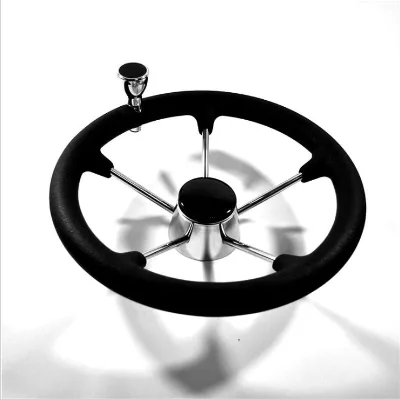
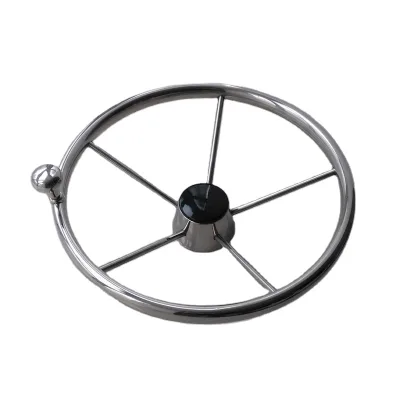


Steering Wheel for Boat Steering Wheel Set Marine USB Marine Steering Wheel
$25.59 - $25.99
MOQ: 1 Pieces


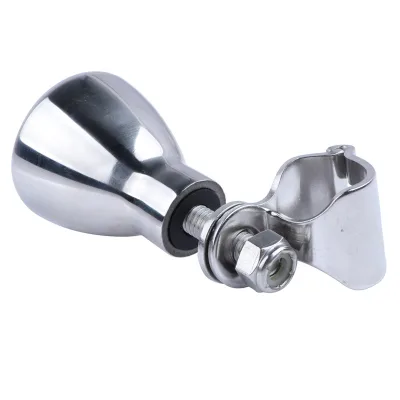
Comprehensive Sourcing Guide
Strategic Sourcing Guide for Marine Steering Wheel Grips
Understanding Product Specifications and Material Composition
When sourcing marine steering wheel grips, buyers must first distinguish between the specific material compositions and dimensional requirements that define product suitability for maritime environments. The market offers a diverse array of options, ranging from synthetic polymers to high-grade metals. A primary observation in the current supply landscape is the prevalence of PVC (Polyvinyl Chloride) as a core material for certain grip models. These products are often engineered for specific seasonal applications, such as Spring and Autumn use, suggesting that material flexibility and comfort are tailored to varying temperature conditions. However, for more demanding marine applications, the supply chain also presents alternatives like Aluminum Alloy combined with PU (Polyurethane). This composite material offers a distinct advantage in durability and resistance to saltwater corrosion, making it a critical consideration for vessels operating in harsher environments.
Dimensional specifications are equally critical, as a mismatch can compromise steering control and vessel safety. Available product models indicate a wide variance in sizing standards. Some listings specify a fixed diameter of 340mm, while others offer a 350mm standard. Furthermore, the market includes options with customizable cable sizes and diameters, allowing for bespoke integration into various steering systems. Buyers should note that while some products come in standard sizes like "M" (Medium), others provide a "Silver Black Grey" color palette or fully customized size availability. The installation method is another technical differentiator; many modern grips utilize a "Sew-free" installation approach, which simplifies the retrofitting process for existing vessels. This method reduces labor time and potential errors during installation compared to traditional sewing techniques.
The following table summarizes the key material and specification variations observed in the current market to assist buyers in initial filtering:
| Attribute Category | Observed Variations | Application Context |
|---|---|---|
| Primary Material | PVC, Aluminum Alloy + PU, 316 Stainless Steel | PVC for general use; Metal/PU for high durability; 316 SS for corrosion resistance |
| Diameter Standards | 340mm, 350mm, Customized | Must match existing steering column or wheel hub |
| Surface Treatment | High Mirror Polish, Polished | Affects grip texture and aesthetic finish |
| Installation Type | Sew-free, Custom Tooling Available | Sew-free for ease; Tooling for bespoke integration |
| Color Options | Silver, Black, Grey, Customized | Aesthetic matching or functional visibility |
Compliance, Certification, and Regulatory Standards
Navigating the regulatory landscape is a non-negotiable aspect of marine procurement. Unlike general automotive parts, marine equipment often faces stricter scrutiny regarding safety and material stability. In the current supply data, specific certifications such as CE (Conformité Européenne) and ISO standards are explicitly mentioned for certain product lines. The presence of a CE certificate indicates that the product meets EU safety, health, and environmental protection requirements, which is a significant baseline for international trade. Additionally, some suppliers offer products certified under both CE and ISO frameworks, suggesting a higher level of adherence to international quality management systems.
However, buyers must exercise caution regarding the universality of these claims. While some listings state a "universal" standard, others reference specific product standards like "DIAMETER: 340MM" or "DIAMETER: 350MM" as their defining standard rather than a broad regulatory body. This distinction implies that the "standard" may refer to dimensional consistency rather than a safety certification. For products originating from Ningbo, China, or Zhejiang, the CE certification is a common attribute, but it should be verified against the specific batch of goods being purchased. It is crucial to understand that not every listed product in a broad category search will carry these certifications. Buyers should explicitly request proof of certification for the specific model number they intend to purchase, rather than assuming it applies to the entire product line.
Furthermore, the "Standard Packaging" often varies based on order volume. Small orders may utilize neutral polybags within cartons, while bulk orders might require custom packaging with logos and designs. This packaging standard does not inherently dictate product compliance but is part of the logistical and regulatory documentation required for customs clearance. When evaluating suppliers, the presence of a "Contact Customer Service" note for standards suggests that specific regulatory requirements may need to be negotiated or confirmed on a case-by-case basis. This is particularly relevant for vessels operating in jurisdictions with unique maritime safety codes that may exceed the baseline CE or ISO requirements.
Cost Drivers and Pricing Dynamics
The pricing structure for marine steering wheel grips is highly variable, reflecting the diversity in materials, customization levels, and order volumes. The observed price range in the market spans from approximately $1.30 to $120,000 USD. This extreme variance is not indicative of a single product type but rather a spectrum ranging from basic, mass-produced grips to highly specialized, custom-engineered systems. The lower end of the price spectrum typically corresponds to standard PVC models with minimal customization and high-volume production runs. In contrast, the upper end of the range likely encompasses complex systems involving 316 Stainless Steel, custom tooling services, and bespoke engineering for specific yacht or boat applications.
Several factors drive these costs. First, the material composition is a primary determinant. Aluminum Alloy and PU composites generally command a higher price point than standard PVC due to the raw material costs and the complexity of the manufacturing process. Second, the level of customization significantly impacts the final price. Products offering "Customized Size Available" or "Custom Packaging with Logo and Design" often incur additional tooling and setup fees. The availability of "Tooling Service" suggests that buyers requiring unique dimensions or shapes will face higher initial costs, which may be amortized over larger order quantities.
Order volume also plays a pivotal role in pricing. The Minimum Order Quantity (MOQ) ranges from 1 piece to 500 units. Buyers seeking a single unit (1PC MOQ) may pay a premium per unit compared to those placing bulk orders. The "Master Carton" specifications, such as dimensions of 724734cm containing 100 sets, provide insight into the logistics cost structure. Bulk orders benefit from economies of scale in shipping and handling, whereas small orders may incur higher relative logistics costs. Payment terms, such as "by Tt" (Telegraphic Transfer), are standard but can influence cash flow and overall procurement costs depending on the supplier's credit policies. Buyers should analyze the total cost of ownership, including potential tooling fees and shipping, rather than focusing solely on the unit price.
Typical Applications and Compatibility
Marine steering wheel grips are designed for a wide array of vessel types, with specific models tailored to different operational needs. The supply data indicates a strong focus on recreational and commercial boating, with explicit mentions of suitability for "Yacht Boat" applications. This suggests that the high-end products, likely those made from 316 Stainless Steel or Aluminum Alloy, are engineered to withstand the rigors of marine environments, including exposure to saltwater, UV radiation, and constant vibration.
Compatibility with various vehicle brands is another critical application factor. While the primary focus is marine, the data lists applicability to numerous automotive brands, including Volkswagen, Mercedes-Benz, BMW, Toyota, and Ford. This indicates that some suppliers offer versatile products that can be adapted for use in amphibious vehicles or marine vehicles that share components with automotive platforms. However, for dedicated marine use, the "Sew-free" installation method and specific material choices like PVC or PU are more relevant. The "All-match" type designation suggests a universal design philosophy, allowing the grips to fit a broad range of steering wheel diameters without requiring extensive modification.
The "Applicable Season" of Spring and Autumn for certain models highlights that some grips are optimized for moderate climates. Buyers operating in tropical or arctic regions should verify if the material properties, such as the elasticity of PVC or the thermal conductivity of metal, remain stable in extreme temperatures. The "High Mirror Polish" surface treatment is particularly relevant for aesthetic applications where the visual appeal of the steering wheel is paramount, often found in luxury yachts. Conversely, the "Polished" treatment on other models may offer a balance between aesthetics and functional grip.
Supplier Evaluation and Operational Capabilities
Evaluating suppliers requires a deep dive into their operational capabilities, geographic origins, and service offerings. The majority of the observed products originate from China, with specific manufacturing hubs identified in Ningbo and Zhejiang. Ningbo, in particular, is noted as a significant port city and manufacturing center, which can facilitate efficient logistics and shipping. The "Fob: Ningbo" attribute confirms that many suppliers operate on a Free on Board basis from this location, which is a standard term for international trade and impacts the buyer's responsibility for freight and insurance.
A key differentiator among suppliers is the availability of customization services. The "OEM: Accept" and "Customization: Available" attributes indicate that many suppliers are willing to produce goods under the buyer's brand or with specific design modifications. The "Offer Tooling Service" is a critical capability for buyers with unique requirements, as it allows for the creation of molds and dies to produce custom-sized or shaped grips. However, buyers must verify the lead times and costs associated with tooling, as these can vary significantly.
The "Quantity Per Carton" of 100 sets and the "Master Carton" dimensions provide insight into the supplier's packaging efficiency. A supplier that can consistently pack 100 sets into a 724734cm carton demonstrates a mature logistics operation. Conversely, suppliers with "Bag or Carton" options for smaller orders may have less standardized processes. Buyers should also assess the supplier's response to "Contact Customer Service" for standards and certifications, as this indicates a willingness to engage in detailed technical discussions. A supplier that proactively provides certification documents and clear specifications is generally more reliable than one that requires extensive back-and-forth communication to confirm basic details.
Quality Control and Long-Term Procurement Considerations
Ensuring long-term quality and reliability is paramount in marine procurement, where failure can lead to safety hazards. The "Surface Treatment" of "High Mirror Polish" and "Polished" suggests a focus on finish quality, but buyers must also consider the underlying material integrity. For instance, the use of 316 Stainless Steel is a strong indicator of corrosion resistance, a critical quality factor for marine environments. However, the presence of PVC models requires verification of the material's resistance to UV degradation and temperature fluctuations.
Quality control should extend beyond the initial product inspection to include packaging and shipping. The distinction between "Standard Packaging" (Neutral Polybag + Carton) and "Custom Packaging" (with Logo and Design) is important for brand integrity and product protection. For bulk orders, the custom packaging option ensures that the product arrives in a condition that reflects the buyer's brand standards. Buyers should also consider the "Installation Method" of "Sew-free" as a quality indicator, as it implies a design that minimizes the risk of installation errors and ensures a secure fit.
Long-term procurement considerations involve building a relationship with suppliers who can provide consistent quality and support. The "Payment: by Tt" term is standard but should be accompanied by clear terms regarding warranty and after-sales support. Buyers should inquire about the supplier's ability to handle reorders and their process for maintaining consistency in material sourcing. Given the wide range of MOQs, from 1PC to 500, buyers should plan their inventory strategy carefully. A strategy that balances small initial orders for testing with larger bulk orders for cost efficiency can mitigate risks. Finally, buyers should remain vigilant about the "Standard" and "Certificate" claims, ensuring that the specific products they receive match the documented specifications and certifications, as these are the foundation of trust in the procurement process.
FAQs
What materials are used for marine steering wheel grips?
Materials include PVC, Aluminum Alloy combined with PU, and 316 Stainless Steel. PVC is common for general use, while metal composites offer higher durability and corrosion resistance for demanding marine environments.
Which certifications are available for these steering grips?
Some products carry CE and ISO certificates, indicating compliance with safety and quality standards. Buyers should verify specific certification documents for the model number, as not all listed items may hold these credentials.
How can I customize the size and packaging?
Customized sizes and packaging with logos are available for bulk orders. Small orders typically use neutral polybags, while larger quantities allow for tailored designs and dimensions to match specific vessel requirements.
Can I find grips with a specific diameter standard?
Available diameter standards include 340mm and 350mm, with options for customized cable sizes. Buyers must ensure the selected diameter matches their existing steering column or wheel hub specifications for proper fit.
What is the minimum order quantity for these products?
The minimum order quantity ranges from 1 piece to 500 units depending on the supplier. Single-piece orders may incur higher per-unit costs, while bulk orders benefit from economies of scale in shipping.
Where are these marine steering grips manufactured?
Products originate primarily from China, with specific manufacturing hubs in Ningbo and Zhejiang. Ningbo serves as a key port for Free on Board shipping terms, facilitating efficient logistics for international buyers.