Source Microprocessor Control Blood Bank Refrigerator for Labs, Hospitals, and Clinics
Compare 30 listings of Microprocessor Control Blood Bank Refrigerator units featuring digital displays, precise temperature ranges, and ISO certifications. Buyers can evaluate specifications like capacity, compressor types, and alarm functions to find the right medical storage solution.
Key considerations
Products List
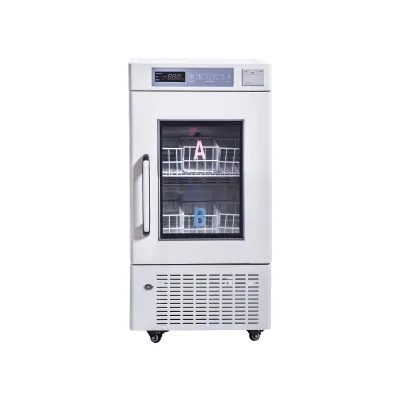

$1150.00 - $1200.00
MOQ: 1 Pieces

Biobase Blood Bank Refrigerator Bbr-4V466 Microprocessor Control Refrigerator for Lab
$100.00 - $2000.00
MOQ: 1 Pieces

Biobase Temperature Control and Storage Conditions Blood Bank Refrigerator
$800.00 - $1520.00
MOQ: 1 Pieces


380L Blood Bank Refrigerator for Hospital, Clinical and Medical Blood Storage
$2003.00 - $2187.00
MOQ: 1 Sets

Blood Bank Refrigerator with Microprocessor Control Cryogenic Freezer for Lab
$2500.00 - $3000.00
MOQ: 5 Pieces



Biobase China Blood Bank Refrigerator for Lab with Microprocessor Control Bbr-4V296
$1150.00 - $1200.00
MOQ: 1 Pieces

Biobase China Double Door Blood Bank Refrigerator for Lab with Microprocessor Control Bbr-4V626
$1500.00 - $2200.00
MOQ: 1 Pieces

Biobase M Cheap Medical Refrigerator Blood Bank Refrigerator for Hospital Laboratory
$489.00 - $980.00
MOQ: 1 Pieces

Biobase Vertical Blood Bank Refrigerator Medical Blood Bank Refrigerator
$388.00 - $988.00
MOQ: 1 Pieces

Comprehensive Sourcing Guide
Strategic Sourcing Guide for Microprocessor Control Blood Bank Refrigerators
Procuring specialized medical equipment requires a rigorous approach that balances technical precision with supply chain reliability. For buyers seeking a Microprocessor Control Blood Bank Refrigerator, the primary objective is to secure a unit capable of maintaining strict temperature stability for blood products. The market offers various configurations, ranging from compact units to large-scale storage solutions, each defined by specific capacity, cooling mechanisms, and control systems. This guide outlines the essential factors for evaluating these units, focusing on the observable attributes of current market offerings while adhering to strict verification protocols.
Technical Architecture and Temperature Control Systems
The core functionality of a blood bank refrigerator relies on its ability to maintain a narrow temperature band, preventing hemolysis or bacterial growth. In the current market, units are frequently equipped with microprocessor controllers that offer digital or LED displays for real-time monitoring. These systems are designed to provide high precision, with observed accuracy levels reaching 0.1 degrees Celsius. The temperature range is a critical specification; while some models operate within a tight band of +4 ±1 ℃, others may support a broader range of 4±2℃ or 2~6℃. Buyers must verify the specific range required for their inventory, as different blood components may have varying storage requirements.
The refrigeration mechanism typically employs a forced air refrigeration system, which ensures uniform temperature distribution throughout the interior. This is supported by high-efficiency air-cooled condensers and evaporators, often constructed from copper to maximize thermal transfer. The compressor is a vital component, with many suppliers specifying the use of international famous compressors to ensure longevity and reliability. Additionally, the internal material is predominantly stainless steel, chosen for its durability and ease of cleaning, while the external material often consists of old-rolled steel with an anti-bacteria powder coat. To manage humidity and prevent ice buildup, these units frequently feature an auto-defrost function, eliminating the need for manual intervention and reducing the risk of temperature fluctuations during maintenance.
Capacity Variations and Physical Specifications
Blood bank refrigerators are available in a spectrum of sizes, categorized by their internal volume and physical footprint. The market currently features models with capacities ranging from 108 liters to 466 liters. A 108-liter unit, often designated by model codes such as MBC-4V108, is suitable for smaller facilities or specific component storage. In contrast, larger units like the BBR-4V296 and Bbr-4V466 offer capacities of 296 liters and 466 liters respectively, catering to high-volume blood banks. The exterior dimensions vary significantly to accommodate these capacities; for instance, a 108-liter model may have an exterior size of 5226001050 mm, while larger units will require more substantial floor space.
The internal layout is equally important for operational efficiency. Units typically include adjustable shelves, with some configurations offering four pieces of shelving to allow for flexible organization of blood bags and containers. The single package size for shipping is a critical logistical consideration, often measuring around 64X74X127 cm for smaller units, though larger models will have correspondingly larger packaging dimensions. The weight of these units is substantial, with observed gross weights reaching up to 95 kg for smaller models, indicating the need for robust flooring and potentially specialized moving equipment during installation. Buyers should also note the power supply requirements, which are generally standardized at 220 V/50~60 Hz, ensuring compatibility with standard medical facility electrical grids.
Compliance, Certification, and Regulatory Standards
Navigating the regulatory landscape is paramount when sourcing medical-grade refrigeration. The market data indicates that reputable suppliers often provide units with certifications such as ISOCE, ISOFDA, and CE. These certifications suggest that the product has undergone testing for safety and performance standards relevant to medical devices. However, the presence of a certification label on a product listing does not automatically guarantee compliance for every specific transaction. Buyers must verify that the specific batch or model they are purchasing holds valid, current certification documents.
While some background information references ISO 13485, a standard for quality management systems in medical devices, this should be treated as a general industry benchmark rather than a specific attribute of every listed product. Procurement teams must request direct proof of certification for the specific model, including the scope of the certification and its expiration date. The "Scale" attribute, observed as "Large" or "Medium," may also correlate with the level of regulatory scrutiny the unit undergoes, but this is not a definitive metric. It is essential to confirm that the manufacturer adheres to the regulatory requirements of the destination country, as standards for medical equipment can vary significantly between regions.
Cost Drivers and Procurement Economics
The pricing of microprocessor control blood bank refrigerators is influenced by several factors, including capacity, brand reputation, and the complexity of the control system. Observed price ranges in the market span from approximately 100 USD to 4645 USD, reflecting the diversity from basic models to high-end, feature-rich units. The cost is driven by the quality of the compressor, the precision of the microprocessor control, and the materials used in construction. Stainless steel interiors and high-efficiency condensers contribute to higher costs but offer better long-term value through durability and energy efficiency.
Minimum Order Quantities (MOQ) are another economic factor, with observed ranges between 1 and 5 units. This flexibility allows smaller clinics to purchase single units while larger institutions can negotiate bulk pricing. The "Selling Units" are typically listed as single items, meaning that even if a facility requires multiple units, they are often procured individually unless a specific bulk agreement is reached. Buyers should also consider the total cost of ownership, which includes energy consumption. Units with a consumption rating of around 257W represent a specific efficiency profile, but this figure should be verified against the specific model's energy star rating or local energy costs.
Supplier Evaluation and Customization Capabilities
When evaluating potential suppliers, the focus should be on their ability to provide customization and support. Many suppliers in the market offer OEM (Original Equipment Manufacturer) support, allowing buyers to customize the unit to their specific branding or operational needs. The "Customized" attribute is frequently listed as "Available," indicating that features such as branding, specific shelf configurations, or alarm settings can be tailored. This flexibility is crucial for large hospital networks that require uniformity across multiple facilities.
The place of origin is a significant factor in supplier evaluation, with many units originating from Hunan, China. While this region is a known hub for medical equipment manufacturing, buyers must conduct due diligence on the specific factory's quality control processes. The "Brand Name" attribute, such as "biojoint," suggests that some suppliers operate under established brand identities, which can be a proxy for reliability. However, buyers should not rely solely on brand names and must verify the manufacturer's track record, after-sales support capabilities, and warranty terms. A standard warranty of 1 year is common, but the scope of this warranty—whether it covers parts, labor, or both—must be clearly defined in the contract.
Quality Control and Long-Term Maintenance
Ensuring the long-term reliability of a blood bank refrigerator requires a robust quality control strategy. The presence of an over-temperature alarm function is a critical safety feature, providing immediate notification if the internal temperature deviates from the set range. This function is essential for preventing the spoilage of valuable blood products. Buyers should verify the sensitivity and reliability of these alarms, ensuring they are connected to a central monitoring system if necessary.
Maintenance considerations include the defrost cycle and the accessibility of internal components. Auto-defrost systems reduce the need for manual intervention, but the frequency and efficiency of these cycles should be understood to prevent temperature spikes. The use of high-efficiency condensers and evaporators made of copper suggests a design focused on longevity, but regular cleaning and inspection are still required. The "Noise" level, observed at 49.6 dB, is a factor to consider for units placed in quiet environments, such as near patient rooms or administrative offices. Buyers should request noise test data to ensure the unit meets their specific acoustic requirements.
Comparative Analysis of Key Models
To assist in decision-making, the following table summarizes the key attributes of the observed models, highlighting differences in capacity, temperature control, and physical dimensions. This comparison is based on the specific data points available in the market listings and serves as a reference for selecting the appropriate unit for specific needs.
| Attribute | Model MBC-4V108 | Model BBR-4V296 | Model Bbr-4V466 |
|---|---|---|---|
| Capacity | 108 L | 296 L | 466 L |
| Temp. Range | +4 ±1 ℃ | 4±2℃ | 2~6℃ |
| Temp. Accuracy | Not specified | 0.1 Degree | 0.1ºC |
| Display | Digital Display | LED Display | Not specified |
| Exterior Size | 5226001050 mm | Not specified | Not specified |
| Scale | Large | Medium | Not specified |
| Certification | ISOFDA, CE | ISOCE | Not specified |
| Compressor | International Famous | International Famous | Not specified |
| Warranty | 1 year | Not specified | Not specified |
This table illustrates the trade-offs between capacity and precision. The MBC-4V108 offers a very tight temperature range, which may be ideal for specific blood components, while the Bbr-4V466 offers a broader capacity with a standard 2~6℃ range suitable for general storage. Buyers must align these technical specifications with their operational requirements to make an informed decision.
Final Procurement Considerations
In conclusion, sourcing a Microprocessor Control Blood Bank Refrigerator involves a detailed analysis of technical specifications, compliance status, and supplier capabilities. The market offers a wide range of options, from compact 108-liter units to large 466-liter systems, each with unique features regarding temperature control, materials, and energy efficiency. Buyers must prioritize verification of certifications, warranty terms, and the specific performance data of the models they are considering. By focusing on these evidence-based factors and avoiding assumptions about unverified claims, procurement teams can secure reliable equipment that ensures the safety and integrity of blood products. The ultimate goal is to establish a supply chain that supports the critical mission of healthcare delivery through robust, compliant, and high-performance refrigeration solutions.
FAQs
What is the temperature range for the Microprocessor Control Blood Bank Refrigerator?
The temperature range varies by model, with some units operating at plus or minus 1 degree Celsius and others at 2 to 6 degrees Celsius. Buyers must verify the specific range required for their inventory as different blood components have varying storage needs.
Can the Microprocessor Control Blood Bank Refrigerator be customized for branding?
Yes, customization is available for this equipment, including OEM support for specific branding or operational needs. This flexibility allows large hospital networks to ensure uniformity across multiple facilities while tailoring features like shelf configurations or alarm settings.
Which certifications are typically found on these medical refrigeration units?
Reputable units often carry certifications such as ISOFDA, CE, and ISOCE to indicate safety and performance compliance. Buyers must verify that the specific batch holds valid, current certification documents rather than relying solely on general industry benchmarks.
How does the microprocessor control system ensure temperature accuracy?
The microprocessor control system provides high precision with observed accuracy levels reaching 0.1 degrees Celsius. This digital monitoring ensures strict temperature stability to prevent hemolysis or bacterial growth in stored blood products.
What is the capacity range available for these blood bank refrigerators?
Available capacities range from 108 liters to 466 liters depending on the specific model selected. Smaller facilities may choose the 108-liter unit, while high-volume banks often require the larger 296 or 466-liter configurations.
What is the minimum order quantity for purchasing a single unit?
The minimum order quantity ranges from 1 to 5 units, allowing flexibility for both small clinics and larger institutions. This structure permits individual procurement without requiring bulk agreements unless specific volume pricing is negotiated.
Where are these microprocessor control blood bank refrigerators manufactured?
These units are primarily manufactured in Hunan, China, which is a known hub for medical equipment production. Buyers should conduct due diligence on the specific factory's quality control processes despite the regional manufacturing concentration.