Source Microwavable Biodegradable Bagasse Clamshell Boxes for catering, parties, and events
Compare 30 listings of Microwavable Biodegradable Bagasse Clamshell Boxes from verified suppliers. These eco-friendly food containers feature custom logos, various sizes, and certifications like FDA and LFGB for safe use in kitchens and outdoor events.
Key considerations
Products List


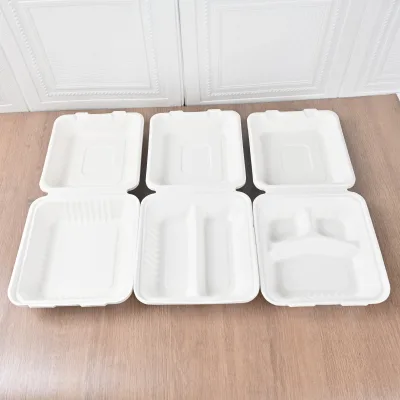
Disposable Bagasse Sugarcane Clamshell Box Biodegradable Food Packaging
$0.10 - $0.56
MOQ: 1000 Pieces


Biodegradable Bagasse Disposable Sugarcane Clamshell Box Food Packaging
$0.10 - $0.56
MOQ: 1000 Pieces

Disposable Sugarcane Biodegradable Bagasse Clamshell Box Food Packaging
$0.10 - $0.56
MOQ: 1000 Pieces


Disposable Sugarcane Bagasse 3-Compartment Microwave Food Container Box Clamshell
$0.10 - $0.11
MOQ: 100000 Pieces


Sturdy Premium-Quality Biodegradable Microwaveable Clamshell Hamburger Box
$0.04 - $0.05
MOQ: 50000 Pieces

Wholesale Microwaveable Oilproof Disposable Bagasse Pulp Clamshell Hamburger Box
$0.04 - $0.05
MOQ: 50000 Pieces

Customized Microwave-Safe Takeaway Disposable Bagasse Pulp Clamshell Hamburger Box
$0.04 - $0.05
MOQ: 50000 Pieces


Comprehensive Sourcing Guide
Strategic Sourcing Guide for Microwavable Biodegradable Bagasse Clamshell Boxes
Understanding Material Composition and Core Attributes
Sourcing Microwavable Biodegradable Bagasse Clamshell Boxes requires a deep understanding of the raw material properties and how they translate into functional performance. The primary material identified in this product category is bagasse, also known as sugarcane fiber, often blended with wheat straw. This agricultural residue is processed into a pulp that is molded into durable, heat-resistant containers. Unlike traditional petroleum-based plastics, bagasse offers a distinct advantage in sustainability, being both biodegradable and compostable under the right conditions. The observed product attributes highlight that these items are designed as disposable tableware, specifically tailored for food service applications where environmental impact is a critical concern.
The physical characteristics of these containers are defined by specific dimensions and weights. Available specifications include an 8-inch size, which is a standard dimension for serving main courses or large portions. The weight of the product varies slightly in observed listings, ranging from 28 grams to 38 grams, indicating differences in wall thickness or molding density that affect rigidity and insulation. The shape is predominantly square, offering efficient packing and stacking capabilities for both storage and transport. The color palette is generally limited to natural white or unbleached natural tones, reflecting the organic nature of the sugarcane fiber without the need for synthetic dyes. These containers are engineered to be waterproof and oilproof, ensuring that hot, greasy foods do not compromise the structural integrity of the box during service.
Technical Specifications and Functional Performance
When evaluating technical specifications, buyers must look beyond the basic dimensions to understand the functional limits of the clamshell boxes. The core functionality centers on the ability to withstand microwave heating, a critical feature for modern food service operations that rely on reheating meals. The product data confirms that these containers are rated as microwave-safe, making them suitable for heating food directly within the packaging. This feature is particularly valuable for meal prep services, catering operations, and quick-service restaurants that aim to reduce the number of dishes and utensils used.
The standard capacity for these containers is observed in volumes such as 450ml and 1000ml, catering to a wide range of portion sizes from side dishes to full meals. The physical dimensions are often standardized, with specific height and width measurements like 200x430x28/39mm, which dictate the internal volume and the fit of the clamshell lid. The packaging configuration is another vital technical aspect; products are typically packed in cartons containing 50 pieces per pack and 300 pieces per carton, or similar bulk configurations. This standardized packing ensures efficient logistics and inventory management for buyers.
Furthermore, the customization options available in this category allow for significant flexibility. Buyers can request customized logos, either through embossing or printing, to enhance brand visibility. The ability to customize the packing itself is also noted, allowing suppliers to tailor the outer packaging to specific shipping or retail requirements. The material's inherent properties, such as being biodegradable and compostable, are not just marketing claims but functional attributes that align with waste management protocols in various regions.
Compliance, Certification, and Regulatory Standards
Navigating the regulatory landscape is a paramount concern for international buyers of biodegradable food containers. The supply chain for bagasse products is heavily regulated to ensure that the materials are safe for food contact and that the environmental claims are valid. The observed certifications for these products include FDA (Food and Drug Administration), CIQ (China Inspection and Quarantine), LFGB (German Food and Feed Code), and EEC (European Economic Community) standards. These certifications are critical for market access, particularly in North America and Europe, where food safety regulations are stringent.
In addition to food safety certifications, environmental compliance is a key differentiator. Products in this category often carry certifications such as BRC (British Retail Consortium), BSCI (Business Social Compliance Initiative), and Ok Compost. The Ok Compost certification is particularly significant as it validates the compostability of the product, ensuring it breaks down within a specific timeframe in industrial composting facilities. The presence of these certifications indicates that the manufacturing process adheres to strict quality and safety protocols.
Buyers must verify that the specific batch of products they intend to purchase holds the necessary certifications for their target market. While the general product line may support FDA and LFGB compliance, it is essential to confirm that the specific model, such as the J-TC01B01B026 or TC01L001, carries the relevant documentation. The absence of these certifications can lead to regulatory hurdles, product recalls, or rejection by retailers. Therefore, a thorough review of the supplier's certification portfolio is a non-negotiable step in the sourcing process.
Cost Drivers and Economic Considerations
The pricing and economic structure of bagasse clamshell boxes are influenced by several dynamic factors. The observed price range for these products is between $0.01 and $0.56 USD per unit, a wide variance that reflects differences in material quality, order volume, and customization levels. The Minimum Order Quantity (MOQ) is a significant cost driver, with observed ranges spanning from 1,000 to 100,000 pieces. A higher MOQ typically results in a lower unit cost due to economies of scale in production and shipping.
The material cost of bagasse is subject to fluctuations based on the harvest cycle and the availability of sugarcane waste. Additionally, the complexity of the molding process and the density of the final product affect the unit price. Heavier boxes, such as those weighing 38 grams compared to 28 grams, may command a higher price due to the increased material usage. Customization, including logo embossing or unique packaging designs, adds to the overall cost and may extend the production lead time.
Buyers should also consider the total cost of ownership, which includes shipping, storage, and potential waste management savings. While the unit price of biodegradable containers may be slightly higher than conventional plastic alternatives, the ability to compost the waste can reduce disposal costs and align with corporate sustainability goals. The sample time, typically around three days, allows buyers to evaluate the product quality before committing to a large order, mitigating the risk of purchasing unsuitable inventory.
Typical Applications and Market Segments
The versatility of Microwavable Biodegradable Bagasse Clamshell Boxes makes them suitable for a diverse array of applications. The primary usage is in the food service industry, where they serve as disposable lunch boxes, food containers, and trays. Their microwave-safe and oil-proof properties make them ideal for hot meals, takeout orders, and catering services. The square shape and 8-inch size are particularly well-suited for serving main courses, salads, and desserts in a variety of dining settings.
Beyond commercial food service, these containers are widely used in personal and event-based scenarios. The observed occasions for use include camping, travel, parties, graduations, weddings, and office environments. The durability and eco-friendly nature of bagasse make it a preferred choice for outdoor events where waste disposal can be challenging. The "all-season" attribute indicates that these products perform reliably in various weather conditions, making them suitable for both indoor and outdoor dining spaces.
The market segments for these products are broad, ranging from quick-service restaurants and food delivery platforms to corporate cafeterias and event planners. The ability to customize the product with logos allows businesses to use these containers as a branding tool, reinforcing their commitment to sustainability. The classification of these items as dishes, plates, and food containers highlights their multifunctional role in the tableware market, replacing single-use plastics in a wide range of consumer interactions.
Supplier Evaluation and Quality Control Protocols
Selecting the right supplier for bagasse clamshell boxes requires a rigorous evaluation process focused on reliability, quality assurance, and production capacity. Buyers should verify the supplier's origin, with China being a primary source for these products, and assess their production capabilities to ensure they can meet the required volume and lead times. The acceptance of OEM (Original Equipment Manufacturer) and ODM (Original Design Manufacturer) services indicates that the supplier is capable of customizing products to meet specific buyer requirements.
Quality control is essential to ensure that the products meet the stated specifications and certifications. Buyers should request samples to test the microwave safety, oil resistance, and structural integrity of the boxes. The sample time of three days allows for a quick turnaround, enabling buyers to make informed decisions. It is crucial to verify that the supplier has a robust quality control system in place to maintain consistency across production batches.
When evaluating suppliers, buyers should also consider their compliance with social and environmental standards. Certifications like BSCI and BRC indicate a commitment to ethical manufacturing practices and high-quality standards. The ability to provide free samples and the flexibility in packing options are additional indicators of a supplier's customer-centric approach. By thoroughly vetting suppliers based on these criteria, buyers can mitigate risks and ensure a steady supply of high-quality, sustainable packaging solutions.
Long-Term Procurement and Sustainability Strategy
Adopting Microwavable Biodegradable Bagasse Clamshell Boxes is not just a short-term purchasing decision but a strategic move toward long-term sustainability. As global regulations on single-use plastics tighten, the demand for biodegradable alternatives is expected to grow. Sourcing these products positions buyers ahead of regulatory curves and aligns with consumer preferences for eco-friendly options. The biodegradable and compostable nature of bagasse ensures that the end-of-life disposal of the packaging is environmentally responsible, reducing the carbon footprint of food service operations.
Long-term procurement strategies should focus on building strong relationships with suppliers who can guarantee consistent quality and supply. The ability to customize packaging and the availability of various sizes and capacities allow buyers to adapt to changing market needs. By integrating these sustainable packaging solutions into their operations, businesses can enhance their brand image and contribute to a circular economy. The continuous availability of certifications and the evolving standards in the industry require buyers to stay informed and proactive in their sourcing decisions. Ultimately, the transition to bagasse-based packaging represents a commitment to environmental stewardship and operational excellence in the food service sector.
FAQs
What certifications do these bagasse boxes hold?
These Microwavable Biodegradable Bagasse Clamshell Boxes hold FDA, LFGB, CIQ, EEC, BRC, BSCI, and Ok Compost certifications. These credentials ensure food safety compliance and validate compostability for international markets, particularly in North America and Europe.
Can these boxes be used in a microwave?
Yes, these Microwavable Biodegradable Bagasse Clamshell Boxes are explicitly rated as microwave-safe. They are designed to withstand heating food directly within the packaging, making them suitable for reheating hot meals without compromising structural integrity.
What is the minimum order quantity for these boxes?
The minimum order quantity for these Microwavable Biodegradable Bagasse Clamshell Boxes ranges from 1,000 to 100,000 pieces depending on the supplier. A higher volume typically results in a lower unit cost due to economies of scale in production.
How long does it take to receive a sample?
It typically takes three days to receive a sample of these Microwavable Biodegradable Bagasse Clamshell Boxes. Some suppliers may offer free samples, allowing buyers to evaluate quality and functionality before committing to a large bulk order.
What materials are used to make these containers?
These Microwavable Biodegradable Bagasse Clamshell Boxes are made from sugarcane fiber and wheat straw. This agricultural residue is processed into a pulp to create durable, heat-resistant, and compostable containers without synthetic dyes.
Are customized logos available for these boxes?
Yes, customized logos are available for these Microwavable Biodegradable Bagasse Clamshell Boxes through embossing or printing. Buyers can also request customized packing configurations to tailor the product to specific branding or shipping requirements.
What are the standard dimensions and capacity?
Standard dimensions include an 8-inch size with capacities of 450ml or 1000ml. Specific physical measurements like 200x430x28/39mm are used to ensure efficient packing and stacking for both storage and transport in food service operations.