Source Microwavable PP Plastic Food Container for Restaurants Hotels Supermarkets
Find 30 options for Microwavable PP Plastic Food Container designed for restaurant, hotel, and supermarket use. Compare specifications including volume, shape, and customization features from verified suppliers in China.
Key considerations
Products List

Premium PP Plastic Microwavable Food Containers
$0.04 - $0.36
MOQ: 50000 Pieces
JIANGSU JINCAI POLYMER MATERIALS SCIENCE AND TECHNOLOGY CO., LTD.

Microwavable Catering PP Plastic Food Tray Containers
$0.04 - $0.36
MOQ: 50000 Pieces
JIANGSU JINCAI POLYMER MATERIALS SCIENCE AND TECHNOLOGY CO., LTD.


Factory-Direct Microwavable PP Plastic Disposable Takeaway Food Containers
$0.07 - $0.08
MOQ: 3000 Pieces
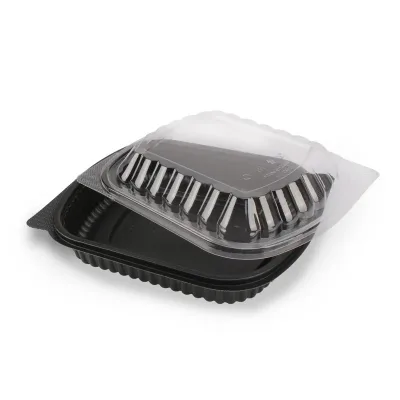


High-Quality Microwave-Safe PP Plastic Food Container Food Storage Containers
$0.90 - $1.00
MOQ: 5000 Pieces

Microwavable Disposable Plastic PP Clear Black Food Container with Lid
$0.00 - $0.01
MOQ: 10000 Pieces


Microwave PP Food Grade Takeaway Disposable Plastic Biodegradable Food Container
$0.03 - $15.00
MOQ: 10000 Pieces


Comprehensive Sourcing Guide
Strategic Sourcing Guide for Microwavable PP Plastic Food Containers
Understanding Material Properties and Thermal Performance
When sourcing microwavable PP (polypropylene) plastic food containers, the primary focus must be on the material's inherent thermal stability and chemical resistance. Polypropylene is widely recognized in the B2B packaging sector for its ability to withstand high temperatures without deforming, making it a superior choice for microwave heating applications compared to other plastics like polystyrene or polyethylene. The core technical requirement for these containers is the ability to remain structurally sound when exposed to the heat generated during food reheating.
Based on available product data, the material standard for these containers is explicitly identified as PP Material. This designation is critical because PP has a melting point significantly higher than the temperatures typically reached in commercial or household microwaves. Buyers should verify that the specific resin grade used by the supplier is virgin PP or a high-quality recycled blend that maintains thermal integrity. The product attributes indicate that these containers are designed to be "Heatable" and "Microwavable," suggesting they have been engineered to resist warping. However, the thermal performance is not uniform across all listings; some products are also noted as "Freezable," indicating a broad temperature range tolerance.
The physical dimensions of the containers vary significantly to accommodate different food volumes. Observed specifications include capacities ranging from 25 Oz to 30oz (approximately 900ml), with specific volume options listed as 180ml, 220ml, 300ml, 450ml, and 800ml. The physical form factors are diverse, with shapes available in Round, Rectangle, and Square configurations. This variety allows buyers to select containers that optimize space in both retail display units and consumer refrigerators. The compartment structure is another key technical variable, with options for Single or Multiple compartments. This feature is particularly relevant for meal-prep scenarios where separating different food types is necessary to prevent flavor transfer or uneven heating.
Compliance, Certification, and Regulatory Standards
In the food contact packaging industry, regulatory compliance is not merely a formality but a fundamental requirement for market access and consumer safety. When evaluating suppliers for microwavable PP containers, buyers must rigorously verify that the manufacturer holds valid certifications from recognized international bodies. The supply chain data indicates that high-quality suppliers often possess a portfolio of certifications including BRCGS (British Retail Consortium Global Standards), SGS, ISO9001 (Quality Management), ISO14001 (Environmental Management), and BPI (Biodegradable Products Institute, though less common for pure PP, it may indicate specific testing capabilities). Additionally, FDA (Food and Drug Administration) compliance is frequently cited as a standard requirement, ensuring the material is safe for direct food contact in the United States market.
The presence of these certifications suggests that the supplier has undergone third-party auditing for their manufacturing processes, material sourcing, and quality control systems. For instance, the BRCGS certification is particularly stringent regarding food safety management systems, while ISO9001 ensures consistent quality in production. Buyers should not rely solely on the supplier's claim of compliance; instead, they should request current, valid certificates that are specific to the product line being purchased. It is important to note that while some listings mention "Brciso14001" or similar combined terms, these should be treated as observations of specific supplier claims rather than universal standards. The buyer must verify the exact scope of each certificate to ensure it covers the specific PP material and the intended application (microwaving).
Furthermore, the HS Code (Harmonized System Code) for these products is typically 3924100000, which classifies them as tableware and kitchen utensils of plastics. This classification is vital for customs clearance and duty calculation. Buyers should ensure that the supplier's documentation aligns with this classification to avoid logistical delays. The material safety is also linked to the manufacturing process; the "PP Material" standard implies a specific polymer structure, but the presence of additives for color or strength must also be compliant with food safety regulations.
Cost Drivers and Pricing Dynamics
The pricing structure for microwavable PP food containers is influenced by a complex interplay of material costs, order volume, and customization requirements. The observed listed price range for these products in the market is between 0 and 15 USD, though this range likely represents a broad spectrum from basic bulk orders to premium customized units. It is crucial for buyers to understand that the unit price is rarely static; it fluctuates based on the raw material market price of polypropylene, which is tied to global oil prices.
Order Volume is the most significant driver of cost reduction. The Minimum Order Quantity (MOQ) for these containers varies widely, with observed ranges spanning from 100 to 50,000 units. Some suppliers set an MOQ of 1,000 sets, while others, particularly those offering high levels of customization or specific certifications, may require orders of 30,000 sets or more. This disparity highlights the importance of aligning order volume with the supplier's production capacity. Larger orders typically benefit from economies of scale, reducing the per-unit cost significantly. However, buyers must balance this against inventory holding costs and storage limitations.
Customization is another major cost factor. The product attributes confirm that customization is available for sizes, colors, shapes, and raw materials. While a standard white or black container may be the most cost-effective option, introducing custom colors or specific shapes (e.g., a unique square design) often incurs additional tooling fees and higher MOQs. The "Custom Order" acceptance indicates flexibility, but buyers should anticipate that custom runs will carry a premium over standard SKUs. Additionally, the packaging method affects the final landed cost. Options range from simple PE Film in Cartons to more elaborate configurations involving Paper Core, Pearl Wool, Craft Paper, and Pallet Wrapping. While the latter offers superior protection during transit, it adds to the overall unit cost and weight, impacting shipping expenses.
Typical Applications and Usage Scenarios
Microwavable PP plastic food containers serve a diverse range of applications across the food service and retail sectors. The primary use cases identified include Restaurant, Hotel, and Supermarket environments. In these settings, the containers are utilized for packaging, storage, and tableware purposes. The versatility of the PP material allows these containers to transition seamlessly from the kitchen to the microwave and back to the refrigerator, making them ideal for meal-prep services, catering operations, and ready-to-eat food retail.
The "Divided Plastic Food Tray" and "Disposable Lunch Box" classifications point to specific use cases where portion control and food separation are essential. The multiple compartment options are particularly valuable for institutional catering, such as in schools, hospitals, or corporate cafeterias, where a balanced meal with distinct protein, vegetable, and carbohydrate sections is required. The leak-proof attribute mentioned in the product advantages is critical for liquid-rich foods or sauces, ensuring that the packaging remains intact during transport and heating.
For the retail sector, the containers are often used for pre-packaged meals sold in supermarkets. The "Suit for: Kitchen" attribute suggests that these products are also marketed for direct consumer use in home kitchens. The ability to be "Freezable" expands their utility, allowing consumers to store leftovers for later consumption and reheat them directly in the microwave without transferring the food to a different dish. This convenience factor is a significant selling point for modern consumers seeking time-saving solutions. The "Case Pack" of 150 sets per carton indicates that these products are designed for efficient bulk handling and distribution, reducing the labor required for unpacking and stocking in retail environments.
Supplier Evaluation and Production Capabilities
Evaluating potential suppliers for microwavable PP containers requires a deep dive into their production capabilities, geographic location, and logistical readiness. The supply chain data indicates that major production hubs for these items are located in Jiangsu and Zhejiang, China. These regions are known for their robust manufacturing infrastructure and expertise in plastic molding. When selecting a supplier, buyers should verify the specific "Place of Origin" to ensure it aligns with their sourcing strategy regarding lead times and trade agreements.
The production model for these containers often involves "OEM & ODM" (Original Equipment Manufacturer and Original Design Manufacturer) support. This means suppliers can produce goods based on the buyer's designs or create custom designs for the buyer. The "Logo: Support Customization" attribute confirms that branding is a viable option, which is essential for retailers looking to create a distinct brand identity. However, buyers must assess the supplier's capacity to handle these custom requests without compromising quality or delivery timelines.
Quality control is paramount in the evaluation process. Buyers should inquire about the supplier's internal quality assurance protocols, including in-process inspections and final product testing. The presence of certifications like SGS and BRCGS suggests a commitment to quality, but on-site audits or third-party inspections are often necessary to verify these claims. Additionally, the "Sample: Free" attribute indicates that suppliers are generally willing to provide prototypes for evaluation. This is a critical step for buyers to physically test the container's microwavability, leak-proofing, and dimensional accuracy before committing to a large order.
Quality Control and Long-Term Procurement Considerations
Ensuring consistent quality in microwavable PP containers requires a robust quality control (QC) framework that extends beyond the initial sampling phase. Buyers should establish clear acceptance criteria based on the product specifications, such as the "Dimensions" of 8.50 X 6.46 X 1.50 inches (or custom equivalents) and the "Case Wt." of 33 grams (or custom weights). Regular testing for thermal resistance is essential to confirm that the containers do not warp or release harmful chemicals when heated. The "Advantage" attributes of being microwavable, heatable, and freezable must be validated through repeated testing cycles.
Long-term procurement considerations involve building a resilient supply chain that can adapt to market fluctuations. Buyers should negotiate contracts that include provisions for price adjustments based on raw material costs, ensuring that the supplier remains financially stable and capable of maintaining production levels. The "MOQ" flexibility is a key negotiation point; buyers with varying demand levels should seek suppliers who can accommodate both small, frequent orders and large, infrequent bulk shipments.
Packaging integrity is another long-term consideration. The "prod_packing" methods, ranging from simple PE Film to complex multi-layered cartons with pallet wrapping, must be selected based on the shipping distance and handling conditions. Poor packaging can lead to product damage, resulting in financial losses and reputational damage. Buyers should also consider the environmental impact of their packaging choices, as sustainability is becoming an increasingly important factor in B2B procurement. While the primary material is PP, which is recyclable, the use of additional packaging materials like paper and plastic bags should be optimized to minimize waste.
| Feature | Standard Specification | Customization Option |
|---|---|---|
| Material | PP Material | Custom Raw Material |
| Shape | Round, Rectangle, Square | Custom Shape |
| Volume | 180ml to 800ml | Custom Capacity |
| Compartments | Single or Multiple | Custom Layout |
| Color | White / Black | Custom Color |
| Certification | ISO9001, SGS, FDA | Verified per Batch |
| MOQ | 1,000 to 30,000 Sets | Negotiable |
| Origin | Jiangsu / Zhejiang, China | Specific Location |
In conclusion, sourcing microwavable PP plastic food containers requires a balanced approach that prioritizes material safety, regulatory compliance, and cost efficiency. By leveraging the available product data and maintaining a rigorous evaluation process, buyers can secure a reliable supply of high-quality containers that meet the demands of modern food service and retail operations. The flexibility in customization and the robust certification landscape of the Chinese manufacturing sector provide ample opportunities for strategic sourcing, provided that due diligence is maintained throughout the procurement lifecycle.
FAQs
What certifications do Microwavable PP Plastic Food Container suppliers hold?
Suppliers typically hold BRCGS, SGS, ISO9001, ISO14001, BPI, and FDA certifications. These credentials verify compliance with food safety and quality management standards required for international trade and direct food contact applications.
Which capacities are available for Microwavable PP Plastic Food Container models?
Available capacities include 25 Oz, 30oz, 900ml, 180ml, 220ml, 300ml, 450ml, and 800ml. Buyers can select specific volumes to match portion sizes for restaurants, hotels, or supermarket ready-to-eat meal packaging needs.
Can I customize the shape and color of microwavable pp plastic food containers?
Yes, customization is available for sizes, colors, shapes, and raw materials. Suppliers accept custom orders for round, rectangle, or square shapes in white or black, allowing brands to tailor products to specific packaging requirements.
What is the minimum order quantity for microwavable pp plastic food containers?
Minimum order quantities range from 100 to 50,000 sets depending on the supplier and customization level. Some vendors require 30,000 sets for specific certified lines, while others may accept orders as low as 1,000 sets for standard items.
How are microwavable pp plastic food containers packaged for shipping?
Packaging options include PE film in cartons, paper carton, or paper core with pearl wool and craft paper. These methods ensure protection during transit and often include pallet wrapping for bulk shipments to international destinations.
Which materials are used to manufacture microwavable pp plastic food containers?
The primary material is PP (polypropylene), which offers high thermal stability for microwave heating. Some listings also reference CPET material, but PP is the standard for ensuring containers remain structurally sound during heating and freezing cycles.