Source Mini Light Chassis Tractor with Dumping Function for Farm, Garden, and Lawn Use
Explore 30 listings for the Mini Light Chassis Tractor with Dumping Function designed for farm, garden, and lawn applications. Buyers can compare specifications, prices, and customization options to find the right equipment for their needs.
Key considerations
Products List

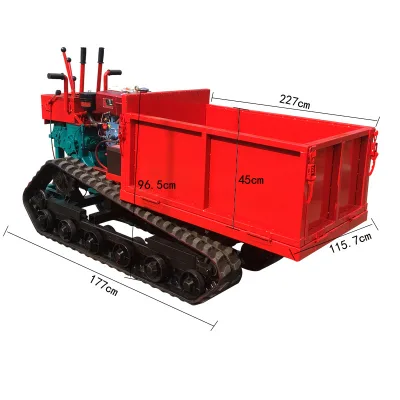


Factory mini dumper mini tractor dumper dumper mini motorized for sale
$800.00 - $1900.00
MOQ: 1 Pieces


1610mm Track Base Front Wheel Front Rear Drive Side Shifts Mini Tractor
$8500.00 - $8900.00
MOQ: 1 Pieces

2000 Working-Hour Warranty Large Steering Angle 11-Inch Clutch Mini Tractor
$8500.00 - $8900.00
MOQ: 1 Pieces


Comprehensive Sourcing Guide
Strategic Sourcing Guide for Mini Light Chassis Tractors with Dumping Function
Procuring a mini light chassis tractor equipped with a dumping function requires a disciplined approach to navigating the intersection of agricultural utility and industrial material handling. These machines, often categorized as compact tractors or mini dumper trucks, serve a dual purpose: providing the traction and power necessary for field operations while offering the logistical efficiency of a self-loading or towed dumping mechanism. For buyers in the construction, landscaping, and small-scale farming sectors, understanding the specific technical parameters, compliance requirements, and supplier capabilities is essential to mitigate procurement risks. The following guide details the critical factors for sourcing these specialized units, relying on verified product attributes and industry standards to ensure a robust acquisition strategy.
Technical Specifications and Operational Capabilities
The core of any sourcing decision lies in the technical specifications that define the machine's performance envelope. Based on observed market data, mini light chassis tractors with dumping functions typically feature a robust powertrain designed for variable terrain. A common configuration involves a four-cylinder diesel engine, such as those manufactured by Yunnei or Yangdong, delivering rated speeds around 2300r/Min. The power output for these units generally ranges between 150 and 250 horsepower, though specific models may vary significantly based on the intended application. For instance, certain tracked variants may operate with a diesel engine power of 22kw, catering to lighter, more specialized tasks.
The transmission system is another critical differentiator. Buyers should expect a gearbox configuration that offers flexibility, such as an 8 forward and 2 reverse setup, with optional configurations expanding to 8 forward and 8 reverse gears. This versatility allows operators to switch between high-speed transport and low-torque, high-power applications. The drive system is predominantly 4WD, ensuring traction in muddy or uneven conditions. Ground clearance is a vital metric for off-road capability, with observed minimums around 355mm, while the wheelbase typically measures approximately 1860mm to ensure stability during loading and unloading cycles.
Dimensions and weight are equally important for logistics and site compatibility. The overall dimensions for standard wheel tractors often approximate 3630mm in length, 1550mm in width, and 2370mm in height. In contrast, tracked mini dumper models present different profiles, with a carriage dimension of 2200mm by 1500mm by 600mm and a deadweight of roughly 4000kg for larger units, while smaller tracked models may weigh around 1000kg. The load capacity is a primary performance indicator, with observed ranges spanning from 1 to 10 tons, and specific models capable of handling a maximum level load of 3000kg or a maximum slope load of 2200kg.
Compliance, Certification, and Emission Standards
Navigating the regulatory landscape is a non-negotiable aspect of international procurement. Buyers must verify that the machinery meets the emission standards of the destination market. Observed data indicates compliance with Euro IV emission standards, a benchmark that is increasingly mandatory in many regions. Furthermore, the product certification landscape is diverse, with common markings including XQC, ISO, CCC, EPA, CE, and EEC. It is imperative for buyers to confirm that the specific unit they intend to purchase holds the relevant certifications for their local jurisdiction, as these documents are often required for customs clearance and operational licensing.
Safety and component integrity are further validated through the listing of core components. High-quality units typically utilize PLCs, engines, bearings, gearboxes, motors, pressure vessels, gears, and pumps from reputable manufacturers. The presence of these specific core components suggests a focus on durability and maintainability. Additionally, the product standard itself, often referenced as TT504 in specific model lines, serves as a baseline for manufacturing consistency. Buyers should request proof of these standards and ensure that the certification status aligns with the "ECE, ISO" references often found in product listings. Without these verifications, the risk of non-compliance penalties or operational downtime increases significantly.
Cost Drivers and Pricing Dynamics
The pricing structure for mini light chassis tractors with dumping functions is influenced by a complex matrix of factors, including engine type, drive system, and optional features. The observed listed price range for these units spans from $610 to $20,000 USD. This wide variance reflects differences in horsepower, the inclusion of a cabin, the choice between wheel and track systems, and the specific dumping mechanism configuration. Lower-priced units may correspond to basic tracked models with lower horsepower and minimal customization, while higher-priced units likely represent fully equipped wheel tractors with advanced transmission options and cabin packages.
Minimum Order Quantity (MOQ) is another significant cost driver. Market observations suggest an MOQ range of 1 to 2 units, indicating that these machines are often available for single-unit procurement, which is advantageous for small businesses or individual contractors. However, buyers should be aware that while the MOQ is low, the unit price may fluctuate based on volume negotiations. Packaging details, such as wooden crate packaging versus loose packing, can also impact the final landed cost due to shipping weight and volume. Additionally, the "Selling Units" are typically listed as single items, but bulk purchasing may unlock different logistical efficiencies.
Typical Applications and Usage Scenarios
The versatility of these machines defines their market appeal. The primary usage categories identified include lawn tractors, garden tractors, and farm tractors, highlighting their suitability for agricultural environments. However, the "dumping function" extends their utility to construction sites, landscaping projects, and material handling operations where the transport of soil, gravel, or debris is required. The ability to handle slopes, with a maximum slope load capacity of 2200kg, makes these units particularly valuable for uneven terrain where standard trucks cannot operate.
The choice between wheel and track systems often dictates the application. Wheel tractors, with a standard tyre size of 7.50-16 for the front and 11.2-28 for the rear, are ideal for hard surfaces and general field work. Optional tyre configurations, such as 7.50-20/12.4-28 or 6.50-16/11.2-24, allow for customization based on soil conditions. Conversely, tracked mini dumper trucks, with a ground contact length of 1950mm and crawler dimensions of 3209056mm, excel in soft, muddy, or steep environments where ground pressure must be minimized. The walking speed range, from a minimum of 2.5km/h to a maximum of 12km/h, further supports their adaptability to both slow, precise work and faster transport tasks.
Supplier Evaluation and Verification Protocols
When evaluating potential suppliers, buyers must look beyond the product listing and assess the supplier's operational transparency. A key indicator of a reliable supplier is the provision of video outgoing-inspection services. This feature allows buyers to visually verify the condition of the machine, the quality of the assembly, and the functionality of the dumping mechanism before shipment. Additionally, the "Unique Selling Point" of easy maintenance suggests that the supplier designs their units with serviceability in mind, which is crucial for long-term ownership.
The origin of the product is a critical factor in supply chain reliability. Most observed units originate from Weifang, China, a known manufacturing hub for agricultural machinery. Buyers should verify the "Place of Origin" and ensure that the supplier can provide consistent lead times and shipping logistics. The packaging details, such as the ability to load 20 or 40 FCL containers, indicate the supplier's capacity for handling both small and large orders. Furthermore, the availability of customization is a significant advantage, allowing buyers to tailor the machine to specific operational needs. Buyers should explicitly confirm the extent of these customization options, including cabin availability and specific engine or gearbox configurations.
Quality Control and Long-Term Procurement Considerations
Ensuring the longevity of the equipment is paramount for a sound investment. The observed service life for these units ranges from 6 to 10 years, contingent upon proper maintenance and operating conditions. To achieve this lifespan, buyers must prioritize quality control measures that go beyond the initial purchase. This includes verifying the condition of the clutch type, which is typically a dry-type, single-acting mechanism, and ensuring the PTO (Power Take-Off) rated power is at least 37.5, with speeds of 540/720r/Min. These specifications are critical for attaching and operating various implements.
Long-term procurement considerations also involve the availability of spare parts and the technical support structure of the supplier. The core components list, including bearings, pumps, and gearboxes, should be sourced from reputable manufacturers to ensure compatibility and ease of replacement. Buyers should inquire about the warranty terms and the availability of technical documentation. The "Condition" of the product is listed as "New," but buyers must ensure that the shipping process does not compromise this status. Proper packaging, such as wooden crates, helps protect the machine during transit. Finally, the engine capacity, noted as less than 4L for certain models, should be verified against local fuel and emission regulations to ensure ongoing compliance and operational efficiency.
Comparative Analysis of Key Configuration Options
To assist in the decision-making process, the following table summarizes the key configuration differences observed in the market for mini light chassis tractors with dumping functions. This comparison highlights the trade-offs between wheel and track systems, as well as standard versus optional features.
| Feature Category | Wheel Tractor Configuration | Tracked Mini Dumper Configuration |
|---|---|---|
| Primary Drive | 4WD with Standard Tyres (7.50-16/11.2-28) | Crawler System (3209056mm) |
| Typical Weight | Approx. 4000kg (Deadweight) | Approx. 1000kg (Unit Weight) |
| Load Capacity | Up to 10t (General Range) | Max Level Load 3000kg |
| Terrain Suitability | Hard surfaces, general fields | Soft, muddy, steep slopes |
| Engine Type | Yunnei/Yangdong 4 Cylinder | Diesel Engine (22kw observed) |
| Speed Range | Variable (Dependent on Gearbox) | 2.5km/h to 12km/h |
| Cabin Option | Optional | Often Standard or Optional |
| Emission Standard | Euro IV | Euro IV |
This comparative view underscores that the selection between wheel and track systems should be driven by the specific terrain and load requirements of the buyer's operation. While wheel tractors offer higher speeds and versatility on hard ground, tracked models provide superior traction and stability in challenging environments.
In conclusion, sourcing a mini light chassis tractor with a dumping function requires a meticulous evaluation of technical specifications, compliance documentation, and supplier reliability. By focusing on the verified attributes such as emission standards, core component quality, and service life expectations, buyers can make informed decisions that align with their operational goals. The wide range of available configurations and the potential for customization ensure that there is a suitable solution for diverse applications, from small-scale farming to heavy-duty construction tasks.
FAQs
What certifications do these tractors typically hold?
These tractors typically hold certifications including XQC, ISO, CCC, EPA, CE, and EEC. Buyers must verify that the specific unit holds relevant certifications for their local jurisdiction to ensure compliance with customs and operational licensing requirements.
How is the engine configuration specified for these units?
The engine is commonly a four-cylinder diesel unit from brands like Yunnei or Yangdong with a rated speed of 2300r/Min. Some tracked variants may operate with a 22kw diesel engine, while wheel tractors generally offer horsepower between 150 and 250hp.
Which emission standards must the machinery meet?
The machinery generally complies with Euro IV emission standards, which are increasingly mandatory in many regions. Buyers should confirm the specific unit meets the emission standards of their destination market to avoid non-compliance penalties during import.
Can buyers customize the cabin and transmission options?
Yes, customization is available for features like the cabin and transmission configurations. The gearbox often offers an 8 forward and 2 reverse setup, with optional configurations expanding to 8 forward and 8 reverse gears for specific operational needs.
What is the expected service life of these tractors?
The expected service life ranges from 6 to 10 years depending on maintenance and operating conditions. Achieving this lifespan requires prioritizing quality control of core components like bearings, pumps, and gearboxes from reputable manufacturers.
How much does a unit typically cost to purchase?
The listed price range for these units spans from 610 to 20,000 USD. This variance reflects differences in horsepower, drive systems, and optional features like cabins, with lower prices often corresponding to basic tracked models.
What is the minimum order quantity for procurement?
The minimum order quantity ranges from 1 to 2 units, allowing for single-unit procurement. This low MOQ is advantageous for small businesses or individual contractors who do not require bulk purchasing to acquire a machine.