Source mini long-endurance electric vehicle for logistics, tours, and estates
Find 30 mini long-endurance electric vehicle options with varying battery types, speeds, and load capacities. Buyers can compare specifications for delivery, community transport, and private estate use.
Key considerations
Products List


Keyu Own Brand1000W New Energy Mini Electric Vehicle for Transportation
$2010.00 - $2306.00
MOQ: 1 Pieces

Keyu Top-Notch Quality New Energy 2doors Mini Electric Vehicle for Urban Mobility
$900.00 - $1020.00
MOQ: 1 Pieces


6-8 Hours Charging Electric Bike Mini Electric Vehicle for Last-Mile Delivery
$200.00 - $205.00
MOQ: 50 Pieces


Comprehensive Sourcing Guide
Sourcing Guide for Mini Long-Endurance Electric Vehicles
Understanding the Technical Landscape of Mini Electric Utility Vehicles
The market for mini long-endurance electric vehicles presents a distinct category of compact transport solutions designed for efficiency and utility. Based on current product observations, these vehicles are characterized by their "Mini" body style and "Closed" body type, offering a compact footprint suitable for tight operational environments. The technical specifications vary significantly across listings, requiring buyers to carefully distinguish between different configurations. For instance, observed models feature a "ts" model designation alongside others labeled "MG-5" and "SJ-mini," indicating a diverse range of manufacturers and design philosophies within this segment.
A critical technical differentiator is the powertrain configuration. The observed data reveals a mix of drive systems, with "RWD" (Rear Wheel Drive) and "Rr" (Rear Drive) forms being common. Power output ranges from a baseline of 1kw to optional 3kw or 4kw AC motors, with voltage systems typically operating at 60V, though some configurations support 72V. This variability directly impacts the vehicle's performance capabilities. The maximum speed observed in this dataset ranges from 40km/H to 45km/H, suggesting these are low-speed utility vehicles rather than high-speed passenger cars.
Range and endurance are paramount for the "long-endurance" aspect of the keyword. The working range for these vehicles is reported between 70km and 100km, with some specific models indicating a range of 80-100km. This endurance is supported by battery systems that include 60V or 72V options, utilizing either Lead Acid or Lithium chemistry. Specific battery capacities noted include 45Ah, 58Ah, and 72Ah variants. The charging time for these units is estimated between 5 to 10 hours, a factor that must be integrated into the operational planning of any fleet.
Compliance, Certification, and Regulatory Verification
When sourcing electric vehicles, particularly those intended for commercial or semi-commercial use, verifying compliance and certification is a non-negotiable step. The product data indicates that certain models carry a "DOT" certification, which is a significant indicator of compliance with specific safety standards in relevant markets. Additionally, management certifications such as "ISOSeats:Steering:Left" are mentioned, suggesting that some manufacturers adhere to specific organizational or quality management protocols, though the exact scope of these certifications requires direct verification with the supplier.
Buyers must exercise caution regarding general certification claims. While "ISO9001" and "CE" are noted in background information, they should not be assumed as standard attributes for every listed product without explicit confirmation. The presence of a "DOT" mark is a concrete observation, but it does not automatically guarantee compliance with all local regulations in the buyer's destination country. For example, the "prod_standard" dimensions observed range from 240013001580mm to 330016001600mm, which may impact road legality depending on local size restrictions for low-speed vehicles.
Furthermore, the braking systems observed are primarily "Mechanical," with specific configurations utilizing "Front Disc Rear Drum" setups. While this is a standard configuration for this class of vehicle, buyers should verify that the braking method meets the specific safety requirements of their intended operating environment. The "Mgnt Certification" mentioned in the data points to a focus on management systems, but it is distinct from product safety certifications. Procurement teams should request current, valid certificates for every batch of vehicles purchased, ensuring that the specific model ordered matches the certified specifications exactly.
Cost Drivers and Pricing Dynamics
The pricing structure for mini electric vehicles is influenced by several key variables, primarily battery technology, motor power, and customization options. The observed price range in the market spans from 200 to 20,000 USD. This wide disparity is not arbitrary; it reflects the fundamental differences in component quality and configuration. Vehicles equipped with basic 1kw motors and lead-acid batteries will naturally fall at the lower end of this spectrum, while models featuring 3kw or 4kw AC motors and lithium battery packs will command prices closer to the upper limit.
Battery type is a primary cost driver. The choice between Lead Acid and Lithium batteries significantly affects the unit price. Lithium batteries, while offering higher energy density and longer cycle life, are more expensive upfront. The data shows options for 60V or 72V systems, and the capacity (45Ah to 72Ah) further dictates the cost. Buyers must calculate the total cost of ownership, considering that a higher initial investment in a lithium battery may yield savings over time due to reduced replacement frequency and lower maintenance requirements.
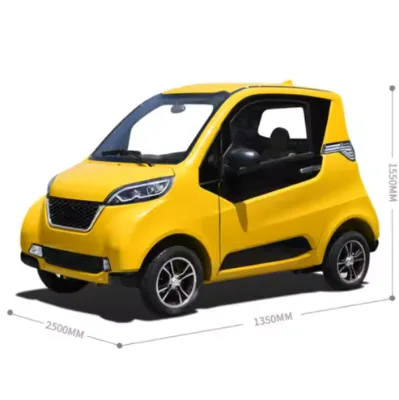
Customization is another factor that influences the final price. The product attributes indicate that "Customization" is available for these vehicles. This could include changes to the exterior color, which is observed as "Yellow" in some listings, or modifications to the seating arrangement and body style. Custom orders often incur additional costs due to the need for specialized production runs or tooling. Additionally, the "prod_packing" method, whether "Steel Frame" or "Container," can impact logistics costs, which are often bundled into the final price or quoted separately.
Typical Applications and Operational Use Cases
The specific technical attributes of these mini electric vehicles point to a narrow but highly effective set of applications. With a maximum speed of 40-45km/H and a working range of 70-100km, these vehicles are ideally suited for last-mile delivery, campus transportation, and industrial site logistics. The "Mini" body style and "Closed" body type make them appropriate for protecting cargo or passengers from the elements while navigating narrow aisles or congested urban areas.
The load capacity is a critical factor in determining suitability. The observed "Rated Load Quality" and "Loading Capacity" are consistently listed at 500kg. This capacity is sufficient for transporting goods, light equipment, or small groups of passengers (typically 2+2 seats as noted in the data). The "Total Weight" of the vehicle itself varies, with observations of 450kg and 750kg, which influences the vehicle's stability and the required infrastructure for charging and maintenance.
The "Max Climbing Ability" of 20% is a notable specification for vehicles operating in hilly terrain or industrial sites with inclines. This capability ensures that the vehicle can maintain performance on slopes that might challenge less robust models. The "Wheel Base" and "Wheel Tread" dimensions, ranging from 1580mm to 2100mm for the wheelbase and 1100mm to 1360mm for the tread, suggest a design focused on maneuverability and stability. These dimensions make the vehicles suitable for indoor warehouses, outdoor industrial parks, and gated communities where tight turning radii are essential.
Supplier Evaluation and Origin Verification
When evaluating suppliers for mini electric vehicles, the origin of the product is a key data point. The provided information identifies "Shandong, China" as the production origin for these vehicles. Shandong is a known manufacturing hub for electric vehicles and components in China, but buyers should not assume that all products from this region meet the same quality standards. It is essential to verify the specific factory location and its production capabilities.
Supplier evaluation should focus on the consistency of the product specifications provided. The data shows significant variation in dimensions and specifications across different models (e.g., "ts" vs. "MG-5" vs. "SJ-mini"). A reliable supplier will provide clear, consistent documentation that matches the physical product. Buyers should request detailed technical drawings and specification sheets that align with the observed attributes, such as the "Wheel Tread" of 1100mm or 1360mm, and the "Size" of 330016001600mm.
The "MOQ" (Minimum Order Quantity) range of 1 to 50 units indicates flexibility in the market. Some suppliers may offer single-unit purchases for testing or small fleet deployments, while others may require larger orders to achieve optimal pricing. Buyers should negotiate based on their specific volume needs, keeping in mind that higher volumes may unlock better pricing tiers or more favorable customization options. The "Lead Time" is not explicitly provided in the data, so this must be clarified during the supplier negotiation process to ensure it aligns with project timelines.
Quality Control and Long-Term Procurement Strategy
Implementing a robust quality control (QC) strategy is vital for ensuring the longevity and reliability of the mini electric vehicle fleet. Given the variability in battery types and motor configurations, QC should focus on verifying the actual performance of these components against the stated specifications. For example, buyers should verify that the "Charging Time" of 5-10 hours is achievable under standard conditions and that the "Working Range" of 70-100km is consistent with real-world usage, which can be affected by terrain and load.
Long-term procurement considerations must include the availability of spare parts and after-sales support. The "Gearbox" is listed as "Manual," and the "Braking System" is "Mechanical," which are generally robust components, but the electrical systems, particularly the battery and motor, require specialized maintenance. Buyers should ensure that the supplier offers a comprehensive warranty and a clear supply chain for replacement batteries, motors, and tires. The "Tyre" specifications, such as "4.00-10" or "155-70r12 Pneumatic Tyres," should be cross-referenced with local availability to avoid supply chain disruptions.
Finally, the "Condition" of the vehicles is listed as "New," but buyers should establish clear acceptance criteria for new deliveries. This includes visual inspections for paint quality, structural integrity, and the proper installation of all components. For long-term operations, establishing a relationship with the supplier for periodic maintenance and upgrades is recommended. The "Customization" feature allows for future adaptations, but these should be planned early in the procurement process to avoid costly retrofits later. By focusing on these strategic elements, buyers can secure a reliable fleet of mini electric vehicles that meets their operational needs efficiently.
Comparative Analysis of Key Specifications
To assist buyers in making informed decisions, the following table summarizes the key technical variations observed in the market for mini long-endurance electric vehicles. This comparison highlights the critical differences in power, range, and dimensions that influence procurement choices.
| Specification | Observation Range / Variants | Notes for Buyers |
|---|---|---|
| Model Designation | ts, MG-5, SJ-mini | Verify specific model number against requirements. |
| Body Style | Mini, Closed | Suitable for compact environments. |
| Drive System | RWD, Rr | Rear drive is standard; verify traction needs. |
| Motor Power | 1kw, 3kw, 4kw (AC) | Higher power increases cost and performance. |
| Voltage | 60V, 72V | Ensure compatibility with charging infrastructure. |
| Battery Type | Lead Acid, Lithium | Lithium offers longer life but higher upfront cost. |
| Working Range | 70-100km | Verify real-world range under load. |
| Max Speed | 40km/H, 45km/H | Low-speed classification; check local road laws. |
| Loading Capacity | 500kg | Consistent across most observed models. |
| Dimensions (LxWxH) | 240013001580mm to 330016001600mm | Critical for storage and garage fitment. |
| Wheel Base | 1580mm, 1650, 2100mm | Affects turning radius and stability. |
| Braking System | Mechanical, Front Disc/Rear Drum | Standard for this class; inspect for wear. |
| Certification | DOT, ISOSeats (Management) | Verify specific product certifications. |
| Origin | Shandong, China | Verify factory location and export compliance. |
This comparative analysis underscores the importance of detailed specification verification. Buyers should not rely on general market descriptions but must demand precise data for the specific model they intend to purchase. The diversity in specifications, from the 1kw to 4kw motor options and the varying battery chemistries, means that a "one-size-fits-all" approach is ineffective. Instead, a tailored procurement strategy that aligns the vehicle's technical capabilities with the specific operational demands of the buyer is essential for success. By adhering to these evidence-based guidelines, buyers can navigate the complexities of the mini electric vehicle market with confidence and clarity.
FAQs
What is the maximum speed of these mini electric vehicles?
The maximum speed ranges from 40km/H to 45km/H depending on the specific model configuration. This speed range classifies them as low-speed utility vehicles suitable for campus or industrial site operations rather than public roads.
Which battery types are available for these electric vehicles?
Available battery options include 60V or 72V systems using either Lead Acid or Lithium chemistry. Specific capacities observed range from 45Ah to 72Ah, allowing buyers to choose based on cost and endurance requirements.
Can these vehicles be customized for specific operational needs?
Yes, customization is available for these mini electric vehicles. Buyers can request changes to exterior colors, seating arrangements, and body styles to suit specific logistics or passenger transport requirements.
What is the typical working range for this vehicle category?
The working range is reported between 70km and 100km for most models in this dataset. This endurance supports last-mile delivery and internal logistics tasks without frequent recharging interruptions.
How much load can these mini electric vehicles carry?
The rated load quality and loading capacity are consistently listed at 500kg for these units. This capacity is sufficient for transporting light equipment, cargo, or small groups of passengers in a closed body style.
What certifications are verified for these electric vehicles?
Some models carry a DOT certification indicating compliance with specific safety standards. While management certifications like ISOSeats are mentioned, buyers must verify specific product certificates for every batch purchased.
Where are these mini electric vehicles manufactured?
The production origin for these vehicles is identified as Shandong, China. Buyers should verify specific factory locations and production capabilities as quality standards may vary across different manufacturers in this region.