Source Mint Breathable Knitted Polo Shirt for Business, Sports, Leisure
Explore 30 listings for the Mint Breathable Knitted Polo Shirt suitable for business, sports, and leisure. Buyers can compare customization options, materials like cotton and polyester, and pricing details from verified suppliers.
Key considerations
Products List


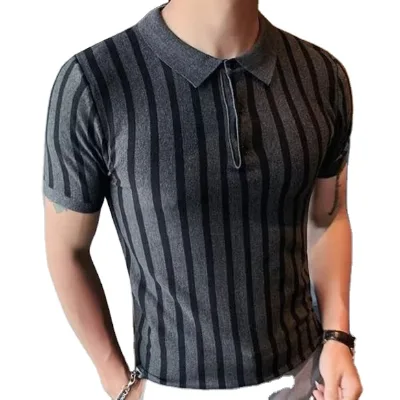
Custom Short Sleeve Polo Shirt Casual Knit Fabric Breathable Mens Polo Shirts
$5.00 - $18.00
MOQ: 100 Pieces




Comprehensive Sourcing Guide
Strategic Sourcing Guide for Mint Breathable Knitted Polo Shirts
The global market for men's casual and business-casual apparel continues to evolve, with a specific demand for breathable, knitted polo shirts in seasonal colors like mint. For procurement professionals, sourcing these garments requires a disciplined approach that balances aesthetic requirements with technical performance and supply chain reliability. The core keyword "Mint Breathable Knitted Polo Shirt" points to a specific intersection of material science, manufacturing technique, and design preference. This guide provides a structured framework for evaluating suppliers, verifying product attributes, and managing the procurement lifecycle without relying on unverified claims or speculative data.
Technical Specifications and Material Composition
Understanding the technical baseline is the first step in defining a successful procurement strategy. The product category is defined by specific attributes observed in the market data, which serve as a checklist for verifying supplier capabilities. The primary construction method for these garments is "Knitted," a technique that provides the necessary stretch and comfort associated with polo shirts. This is distinct from woven fabrics, which may lack the same level of breathability and drape.
Material composition is a critical differentiator. The market data indicates a split between "100% Cotton" and "100% Polyester Fiber" options, with some listings also referencing "Cashmere" for premium variations. For a "breathable" mint polo, 100% Cotton is often the preferred choice due to its natural moisture-wicking properties, while polyester offers durability and color retention. Buyers must verify the exact fiber content, as the term "breathable" is an attribute that varies significantly based on the yarn quality and weave density. The observed data lists "Special: 100% Cotton Yarn" as a specific feature, suggesting that high-quality cotton yarn is a key selling point for this segment.
The design specifications further narrow the scope. The "Sleeve Shape" is consistently observed as "Normal," and the "Sleeve Style" is predominantly "Short Sleeve," though "Long Sleeve" options exist in the broader market. The "Collar Style" is identified as "Polo Neck," a defining characteristic of the category. Additionally, the "Pattern" is typically "Plain," "Pure Colour," or "Solid Color," aligning with the "Mint" color requirement. The "Fit or Cut" is generally "Regular," ensuring a versatile silhouette suitable for both business and leisure occasions. Buyers should explicitly confirm these attributes in the product specification sheet to avoid receiving a woven or long-sleeved variant that does not meet the core keyword intent.
Compliance, Certification, and Quality Standards
In the B2B apparel sector, compliance is not merely a formality but a risk mitigation strategy. While specific certification names are not universally mandated for every listing, buyers must verify that the supplier adheres to relevant international standards for textile safety and environmental impact. The supply chain data indicates origins in "Sichuan, China" and "India," regions with varying regulatory frameworks. Procurement teams must ensure that the "100% Cotton" or "Polyester Fiber" claims are backed by material test reports that verify fiber content and the absence of harmful substances.
The "prod_standard" field in the data presents conflicting information, listing values such as "1 KG," "2XS-6XL," and specific dimensions like "573443" or "40X30X2 cm." These entries likely represent packaging weights, size ranges, or carton dimensions rather than textile safety standards. Consequently, buyers should not assume that a listed "standard" value equates to a safety certification like OEKO-TEX or GRS. Instead, the procurement process must include a request for third-party lab test results regarding shrinkage, color fastness, and pilling resistance.
For the "Mint" color specifically, dye stability is a crucial compliance factor. The data mentions "Digital Printing," "Screen Printing," and "Embroidery" as available techniques. If the mint color is achieved through dyeing, the supplier must demonstrate that the dyeing process meets local environmental regulations regarding wastewater treatment. If the color is applied via printing, the ink composition must be verified for compliance with REACH or similar regulations depending on the destination market. The "Washing Instructions" listed as "Machine Washable at 30°C" and "Do Not Tumble Dry" provide a baseline for care, but buyers should validate that the garment maintains its shape and color after multiple wash cycles to ensure long-term quality.
Cost Drivers and Pricing Dynamics
The pricing structure for mint breathable knitted polo shirts is influenced by several variables, including material cost, customization level, and order volume. The observed price range in the market data spans from 0.9 to 35 USD, a wide disparity that reflects differences in quality, brand positioning, and order quantity. The "MOQ" (Minimum Order Quantity) ranges from 2 to 1500 pieces, indicating that the market accommodates both small-batch trials and large-scale production runs.
Material cost is a primary driver. "100% Cotton" generally commands a higher price point than "100% Polyester Fiber" due to the raw material costs and the processing required to achieve high-quality yarn. The "Special: 100% Cotton Yarn" attribute suggests a premium tier where the cost per unit will be higher. Additionally, the "Customization: Available" attribute implies that adding logos, such as "Square Fonda or OEM," or specific branding elements will incur additional setup and production costs. The "Supply Type: OEM Service" confirms that most suppliers operate on a contract manufacturing basis, where the cost is heavily dependent on the complexity of the customization.
Volume is another critical cost factor. While the data shows an MOQ as low as "1 Piece," this likely represents a sample or a very high unit price. As the order quantity increases toward the upper end of the 1500-piece range, the unit cost typically decreases due to economies of scale in knitting, dyeing, and finishing. Buyers must balance the desire for a lower unit price against the cash flow implications of higher MOQs. The "prod_packing" details, such as "Carton" or "Men's Casual Summer Shirt" packaging, also affect the final landed cost, as specialized packaging or labeling adds to the per-unit expense.
Typical Applications and Market Segmentation
The versatility of the Mint Breathable Knitted Polo Shirt allows it to serve multiple market segments. The data explicitly lists "Applicable Occasions" as "Business, Sports, Leisure," highlighting the garment's adaptability. In a business context, the "Regular" fit and "Polo Neck" collar provide a polished yet comfortable look suitable for smart-casual environments. The "Breathable" feature is particularly valuable in warmer climates or during summer seasons, as noted in the "Season: Summer" and "Spring / Autumn" attributes.
For sports and leisure applications, the knitted construction offers the necessary flexibility for movement. The "Mint" color, being a light and refreshing shade, is often associated with summer activities and outdoor events. The "Gender" specification in the data includes both "Men" and "Unisex," indicating that these shirts can be marketed to a broad demographic. The "Brand: Raging Bull" example in the data suggests that established brands may utilize this style for their seasonal collections, while OEM suppliers cater to private label opportunities.
The "Special" attribute of "100% Cotton Yarn" makes these shirts particularly suitable for consumers with sensitive skin or those prioritizing natural fibers. This positioning allows buyers to target niche markets that value comfort and sustainability. The "Accessoties: Label Hangtag Packaging" further enhances the product's readiness for retail, allowing for immediate branding and presentation. Understanding these applications helps buyers align their procurement strategy with the specific needs of their target customer base, whether it is a corporate uniform program, a retail fashion line, or a promotional merchandise campaign.
Supplier Evaluation and Verification Protocols
Evaluating suppliers for mint breathable knitted polo shirts requires a rigorous verification process that goes beyond the information provided in product listings. The data indicates origins in "China" and "India," but specific factory locations and capabilities are not detailed. Buyers must conduct due diligence to verify the supplier's actual production capacity and quality control systems. The presence of "OEM Service" and "Logo" customization options suggests that the supplier has the necessary machinery for knitting, dyeing, and embroidery, but the quality of these processes must be independently verified.
Key evaluation criteria should include the supplier's ability to provide samples that match the "Mint" color specification and the "Knitted" texture described. Buyers should request physical samples to test the "Breathable" claim through practical wear and tear tests. The "Washing Instructions" and "Drying Instructions" should be tested to ensure the garment does not shrink or lose its shape, as indicated by the "Standard" thickness and "Regular" fit. Additionally, the "Shipping" methods listed as "by Express / Air / Sea / Air + Delivery" should be evaluated for reliability and cost-effectiveness based on the buyer's timeline.
The "MOQ" of "1 Piece" might indicate a supplier willing to take small orders, but this does not guarantee their ability to handle large-scale production. Buyers should inquire about the supplier's lead times and capacity to scale up production if the initial order is successful. The "prod_model" numbers like "MT04" and "XYW-1138" serve as internal references for the supplier, and buyers should ensure that these models correspond to the specific attributes they require. Cross-referencing the supplier's claims with third-party audits or previous client references can provide a more accurate picture of their reliability.
Quality Control and Long-Term Procurement Considerations
Implementing a robust quality control (QC) protocol is essential for maintaining the integrity of the Mint Breathable Knitted Polo Shirt supply chain. The "Quality" of the "100% Cotton" or "Polyester Fiber" must be consistent across all units. Buyers should establish clear acceptance criteria for color consistency, stitch quality, and fabric integrity. The "Printing" techniques, such as "Digital Printing" or "Screen Printing," require specific QC checks to ensure that the "Mint" color does not bleed or fade during washing.
Long-term procurement considerations involve building a sustainable relationship with suppliers who can consistently deliver high-quality products. The "Supply Type: OEM Service" suggests a partnership model where the buyer and supplier work closely to refine the product over time. Buyers should consider the "Season: Summer" and "Spring / Autumn" cycles when planning their inventory, ensuring that the supply chain can accommodate seasonal demand spikes. The "prod_packing" and "Accessoties" should be standardized to maintain brand consistency across different production runs.
Furthermore, buyers should monitor the "Standard" values for packaging and dimensions to ensure they align with logistics requirements. The "Location" of the supplier, whether "Sichuan, China" or "India," impacts shipping costs and lead times. A diversified supplier base can mitigate risks associated with geopolitical issues or supply chain disruptions. By focusing on technical specifications, compliance, and quality control, buyers can secure a reliable supply of mint breathable knitted polo shirts that meet the demands of their customers while maintaining operational efficiency.
FAQs
What material options are available for mint breathable knitted polo shirts?
Available materials include 100% Cotton, 100% Polyester Fiber, and Cashmere. Buyers should verify the exact fiber content as breathability varies significantly based on yarn quality and weave density.
Can I customize the logo and packaging for these polo shirts?
Yes, customization is available for logos like Square Fonda or OEM, and packaging can be customized. Additional setup and production costs apply for specific branding elements and specialized packaging.
What is the minimum order quantity for these knitted polo shirts?
The minimum order quantity ranges from 1 piece to 1500 pieces depending on the supplier. Lower unit prices are typically achieved as order quantities increase toward the upper end of this range.
Which sleeve styles are offered for these breathable polo shirts?
Both short sleeve and long sleeve styles are observed in the market data. Buyers must explicitly confirm the sleeve length in the specification sheet to ensure it matches the core keyword intent.
How should these cotton polo shirts be washed and dried?
The shirts are machine washable at 30°C and should not be tumble dried. Buyers should validate that the garment maintains its shape and color after multiple wash cycles to ensure long-term quality.
What are the typical applications for these mint knitted polo shirts?
These shirts are suitable for business, sports, and leisure occasions. The breathable knitted construction offers flexibility for movement while the regular fit provides a polished look for smart-casual environments.