Source Modern Durable Iron Hanging Planters for Balcony, Garden, Patio
Explore 30 listings of Modern Durable Iron Hanging Planters suitable for balconies, gardens, and patios. Buyers can compare specifications like size, weight, and customization options to find the right planter for indoor or outdoor use.
Key considerations
Products List

Self Watering Hanging Basket Plants Flower Plant Pot Brown Hanging Planters
$0.93 - $1.13
MOQ: 885 Pieces


Natural Garden Rope & Fern Round Hanging Basket Hanging Planter Plant Pot
$0.50 - $3.00
MOQ: 1000 Pieces


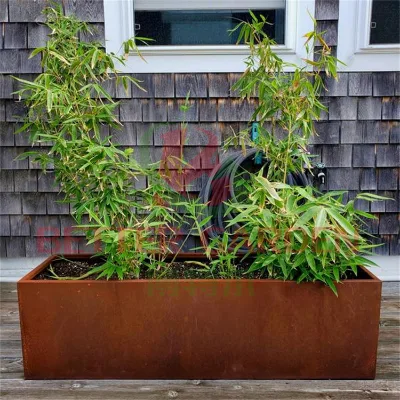
Modern Custom Light Weight Metal Steel Planters Durable Home and Garden Application
$81.54 - $254.81
MOQ: 2 pieces
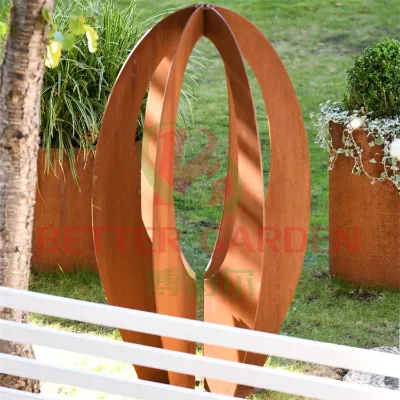
Customized Indoor or Outdoor Metal Planter for Gardening Articles Supplier
$80.00 - $250.00
MOQ: 2 pieces


Balcony Potted Wall Hanging Metal Flowerpot for Succulents, Herbs, IVY, Small Plants
$27.80 - $37.80
MOQ: 60 Pieces

Versatile Weathering Steel Modern Large Garden Pots - Multiple Sizes Available
$20.50 - $33.75
MOQ: 1 Pieces


Comprehensive Sourcing Guide
Strategic Sourcing Guide for Modern Durable Iron Hanging Planters
Understanding Product Attributes and Design Variations
When sourcing Modern Durable Iron Hanging Planters, buyers must first distinguish between the broad category of metal planters and specific product configurations that align with their design requirements. The market offers a diverse range of options, including floor-type planters, freestanding units, and specialized hanging mechanisms. A critical observation in the current supply landscape is the variation in product models, such as the TJ-014, QMT-0123, and HG2324, each presenting distinct dimensional profiles and functional applications. While some units are designed as simple square planters with a "Simple" style, others feature "Creative" designs suitable for personal decorations or promotional gifts.
The material composition is a primary differentiator. While the core keyword specifies "iron," the supply data indicates that products are frequently categorized under the broader "Metal" or specifically "Iron" classifications. This distinction is vital for procurement teams, as iron offers specific durability and aesthetic qualities compared to other metals. The production methods vary significantly, ranging from fully mechanical processes to semi-manual or even handmade techniques. This variance directly impacts the final product's consistency, surface finish, and overall cost structure. Buyers should note that while some products are explicitly described as "Handmade" with a "Creative" style, others utilize "Mechanical" production methods to achieve a "Modern" or "Contemporary" look.
Color customization is another significant attribute available in the market. The data confirms that "Various Options Available" and "Customized" colors are standard offerings, with specific instances of "Red" and "Black" finishes observed. This flexibility allows buyers to tailor products to specific branding or interior design themes, whether for "Home," "Outdoor," or "Balcony Garden" applications. The shape of the planters also varies, with "Square" being a documented option, though the "Modern" aesthetic often implies a broader range of geometric possibilities. Understanding these attribute variations is the first step in defining a precise Request for Quotation (RFQ) that avoids ambiguity.
Technical Specifications and Dimensional Standards
Technical specifications form the backbone of any successful procurement agreement for iron planters. Unlike generic descriptions, precise dimensional data ensures that the product fits the intended space and meets structural requirements. The supply data provides concrete examples of standard measurements, such as 8.3"D x 8.3"W x 6.5"H for one model and 42*70cm for another. These figures highlight the importance of verifying specific dimensions rather than relying on general terms like "Large" or "Medium." For hanging planters, the mounting type is equally critical; the data indicates "Freestanding" is a common configuration, but for hanging applications, buyers must explicitly verify the load-bearing capacity and the integrity of the hanging hardware.
Weight is another essential technical parameter. Observed weights in the supply chain range from 0.95 Pounds for lighter decorative items to 5kg for more substantial units. This variance affects shipping costs, installation requirements, and the structural load on the mounting surface. For instance, a 5kg planter requires a significantly more robust mounting system than a 0.95-pound unit. Buyers must ensure that the supplier provides weight specifications for the exact model they intend to purchase, as the "Iron" material density can vary based on the gauge and thickness of the metal used.
The production process also influences technical outcomes. Products described as "Semi-Manual" or "Handmade" may exhibit slight variations in dimensions compared to those produced via "Mechanical" methods. While handmade items often possess unique artistic value, mechanical production ensures tighter tolerances and uniformity. When sourcing for large-scale projects, buyers should prioritize suppliers who can demonstrate consistency in their mechanical processes. Additionally, the "Standard Package" often involves individual polybagging, while "Custom Package" options may include CMY printed paper boxes. These packaging standards must be clearly defined in the contract to prevent damage during transit, especially for items with delicate finishes or intricate designs.
Cost Drivers and Pricing Dynamics
The pricing landscape for Modern Durable Iron Hanging Planters is influenced by a complex interplay of factors, including material costs, production complexity, and customization levels. The observed price range in the market is extensive, spanning from $0.28 to $488.36 USD. This wide disparity reflects the difference between mass-produced, simple units and high-end, custom-designed pieces. Several key drivers contribute to these cost variations. First, the material grade and thickness of the iron directly impact the base cost. Thicker, higher-grade iron commands a premium but offers superior durability and longevity.
Second, the level of customization is a major cost determinant. Products with "Custom" designs, specific color requirements, or bespoke packaging incur higher production costs compared to standard off-the-shelf items. The data indicates that "Customization" is available, which implies that buyers can request specific modifications, but these requests will inevitably increase the unit price. Furthermore, the production method plays a role; "Handmade" or "Semi-Manual" processes are generally more labor-intensive and costly than fully "Mechanical" production lines.
Minimum Order Quantity (MOQ) also significantly affects the effective cost per unit. The observed MOQ range spans from 1 to 1200 units. Suppliers often offer lower unit prices for orders that meet higher MOQ thresholds, such as the 100PCS requirement noted for certain models. Buyers seeking to minimize initial capital outlay may opt for lower MOQs, but they should be prepared for a higher per-unit cost. Conversely, large-volume buyers can leverage economies of scale to negotiate more favorable pricing. It is crucial for procurement teams to analyze the total cost of ownership, including shipping, packaging, and potential tariffs, rather than focusing solely on the unit price.
Compliance, Certification, and Safety Verification
Ensuring compliance with safety and environmental standards is a critical component of sourcing iron planters, particularly for products intended for outdoor use or commercial settings. While the supply data does not explicitly list specific certification statuses for every product, buyers must proactively verify compliance with relevant standards. The background information mentions standards such as ISO 9001:2015, REACH, RoHS, ASTM A36, ASTM A240, and ASTM B209. However, these should be treated as reference points for verification rather than guaranteed attributes of every listed product.
Buyers should request proof of compliance for specific standards relevant to their market. For instance, if the planters are to be sold in the European Union, verification of REACH and RoHS compliance is essential to ensure the absence of hazardous substances. Similarly, for products used in construction or heavy-duty applications, adherence to ASTM standards for structural integrity and material quality is necessary. The "Metal" and "Iron" classifications should be cross-referenced with material safety data sheets (MSDS) to confirm the absence of lead, cadmium, or other toxic elements, especially if the planters are intended for use in environments where children or pets may be present.
Additionally, the origin of the product, identified as "China" in the supply data, necessitates a thorough understanding of the export regulations and quality control protocols in place. Buyers should inquire about the supplier's quality management systems and whether they adhere to international standards like ISO 9001:2015. This verification process helps mitigate risks associated with substandard materials or non-compliant manufacturing practices. It is also important to check for any specific certifications related to the "Outdoor" usage, such as weather resistance or anti-corrosion treatments, which are critical for the longevity of iron products in external environments.
Supplier Evaluation and Production Capabilities
Evaluating potential suppliers requires a deep dive into their production capabilities, supply chain stability, and ability to meet specific buyer requirements. The data indicates a "Supply Ability" of 20,000 pieces per month for certain models, which serves as a benchmark for capacity. However, buyers must verify if this capacity is consistent across different product lines and if the supplier can scale up during peak demand periods. The presence of both "Mechanical" and "Handmade" production methods suggests that suppliers may have diverse manufacturing lines, each with its own strengths and limitations.
When assessing suppliers, buyers should prioritize those who demonstrate transparency in their production processes. A supplier that clearly outlines their "Processing" methods, from raw material sourcing to final packaging, is more likely to deliver consistent quality. The "Custom Package" options, such as CMY printed paper boxes, indicate a level of flexibility that can be valuable for branding purposes. Buyers should also evaluate the supplier's experience with "Customization" requests, as the ability to accommodate specific design changes is a key indicator of a responsive and capable partner.
Furthermore, the "Location" of the supplier, specifically "China," presents logistical considerations. Buyers should assess the supplier's logistics network, including their ability to handle international shipping, customs clearance, and delivery timelines. The "Lead Time" is a critical factor that should be explicitly discussed and agreed upon in the contract. While specific lead times are not provided in the data, buyers should request this information to ensure it aligns with their project schedules. A supplier with a robust logistics network and a track record of on-time delivery is essential for maintaining supply chain continuity.
Quality Control and Long-Term Procurement Strategy
Implementing a robust quality control (QC) strategy is paramount when sourcing iron hanging planters. Given the variability in production methods and the potential for defects in metalwork, buyers should establish clear QC protocols before placing orders. This includes defining acceptance criteria for dimensions, surface finish, color consistency, and structural integrity. The "Standard Package" and "Custom Package" options should be inspected to ensure they meet the agreed-upon specifications and provide adequate protection during transit.
For long-term procurement, buyers should consider building a strategic partnership with suppliers who demonstrate a commitment to continuous improvement. This involves regular audits, feedback loops, and collaborative efforts to enhance product quality and efficiency. The "Modern" and "Durable" attributes of the planters require ongoing attention to material selection and finishing techniques to ensure they withstand environmental stressors. Buyers should also plan for potential supply chain disruptions by maintaining a diversified supplier base and securing backup inventory options.
Finally, the "Application Scene" of the planters, such as "Balcony Garden" or "Home Outdoor Yard," dictates the specific durability requirements. Buyers must ensure that the selected products are suitable for their intended environment, with appropriate corrosion resistance and weatherproofing. By integrating these considerations into their procurement strategy, buyers can secure a reliable supply of high-quality iron hanging planters that meet their design and functional needs while minimizing risks and maximizing value.
Comparative Analysis of Product Models
To facilitate informed decision-making, the following table compares key attributes of the observed product models based on the supplied data. This comparison highlights the diversity in specifications, materials, and intended uses, aiding buyers in selecting the most appropriate product for their specific requirements.
| Attribute | Model TJ-014 | Model QMT-0123 | Model HG2324 |
|---|---|---|---|
| Primary Material | Metal | Iron | Metal |
| Style | Simple | Creative | Simple |
| Shape | Square | Not Specified | Not Specified |
| Dimensions | 8.3"D x 8.3"W x 6.5"H | 42*70cm | 10.4"D x 3.9"W x 10.6"H |
| Weight | 5kg | Not Specified | 0.95 Pounds |
| Usage | Indoor, Outdoor | Personal Decorations, Home Decorations | Outdoor |
| Application Scene | Balcony Garden | Home, Garden Decor | Garden, Outdoor, Home |
| Production Method | Mechanical | Semi-Manual | Not Specified |
| Color Options | Various Options | Red | Black |
| Mounting Type | Floor Type | Not Specified | Freestanding |
| Customization | Available | Custom Design | Not Specified |
This comparative overview underscores the importance of matching product specifications to project needs. While TJ-014 offers a robust, floor-type solution with a simple aesthetic, QMT-0123 provides a creative, semi-manual option suitable for home decor. HG2324, with its lighter weight and freestanding design, may be ideal for smaller outdoor spaces. Buyers should carefully evaluate these attributes against their specific design, functional, and budgetary constraints to make the optimal selection.
FAQs
Can I customize the color and design of the planters?
Yes, customization is available for both color and design. Buyers can select from various options or request specific customized colors like red or black to match their branding or interior themes.
What are the standard dimensions for these iron planters?
Standard dimensions vary by model, with examples including 8.3 inches by 8.3 inches by 6.5 inches or 42 centimeters by 70 centimeters. Buyers must verify specific measurements for each product model before ordering.
What is the minimum order quantity for these products?
The minimum order quantity ranges from 1 to 1200 units depending on the supplier and specific product model. Some models require a minimum of 100 pieces, while others allow for smaller trial orders.
How are these metal planters packaged for shipping?
Standard packaging typically involves placing each item into a polybag, while custom options include CMY printed paper boxes. The specific packing method depends on whether the buyer selects standard or custom packaging configurations.
Are these planters suitable for outdoor balcony gardens?
Yes, the products are designed for both indoor and outdoor use, including balcony gardens. They are suitable for flowers and plants and can serve as personal decorations or promotional gifts in various settings.
What production methods are used to make these planters?
Production methods vary from mechanical processes to semi-manual and handmade techniques. The choice of method affects the final finish and consistency, with mechanical methods offering uniformity and handmade methods providing unique artistic value.