Source Modern Luxury Ceramic Coffee Mug and Saucer Set for Gifts, Hotels, and Promotions
Explore 30 options for the Modern Luxury Ceramic Coffee Mug and Saucer Set, featuring hand-painted designs and customizable shapes. Buyers can compare eco-friendly materials, high-temperature resistance, and various sizes suitable for daily use, weddings, and corporate gifts.
Key considerations
Products List
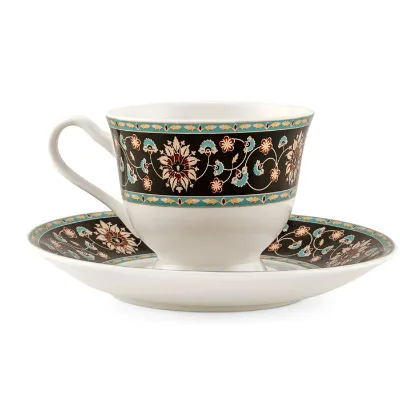


Fine Porcelain Coffee Mug Set Custom Christmas Ceramic Cup Saucer Set for Holiday Gift
$0.80 - $5.00
MOQ: 5000 Sets


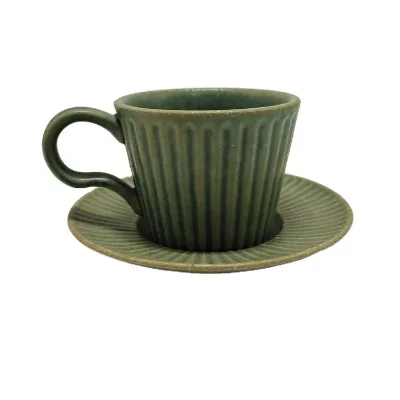
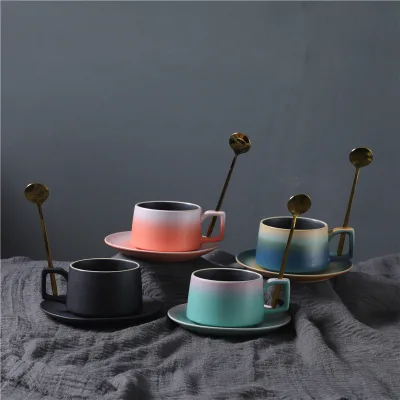
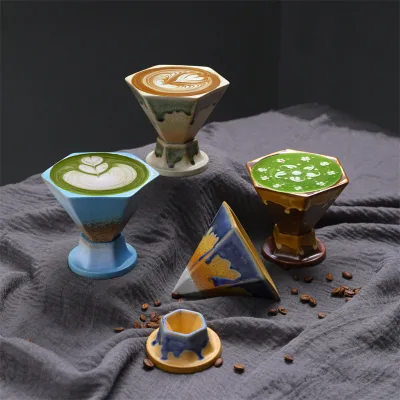


Comprehensive Sourcing Guide
Strategic Sourcing Guide for Modern Luxury Ceramic Coffee Mugs and Saucer Sets
Procuring modern luxury ceramic coffee mug and saucer sets requires a nuanced understanding of material science, aesthetic customization, and rigorous supply chain verification. The market segment defined by "modern luxury" often implies a convergence of high-end design aesthetics, functional durability, and the capacity for bespoke branding. Buyers must navigate a landscape where product attributes such as "Hand-painted" techniques, "Color Changing" features, and specific dimensional standards coexist with mass-production capabilities. This guide provides a disciplined framework for evaluating suppliers and products, ensuring that the final procurement aligns with both quality expectations and commercial viability.
Material Composition and Structural Integrity
The foundation of any luxury ceramic product lies in its material composition and structural design. In the current market, products are frequently categorized under broad material headings such as "Ceramic," "Porcelain," or "Potttery." While these terms are often used interchangeably in general listings, a luxury procurement strategy demands precise differentiation. Porcelain, often cited in high-end specifications, typically offers a finer grain and higher translucency compared to standard earthenware or generic pottery. The structural integrity of the cup is equally critical; specifications often describe the product as a "Single-layer Ceramic Cup," which influences thermal performance and weight.
Buyers must verify the specific material grade against the intended application. For instance, products labeled with the attribute "Withstand High Temperatures" are essential for daily use in hot beverage service. However, the presence of a "Color Changing" feature introduces a variable that may affect the thermal stability or the durability of the glaze. When evaluating the "Structure," it is vital to confirm whether the item is a simple single-layer vessel or if it includes an insulating layer, as this directly impacts the "Heat Preservation" capability. The "Cup Accessories" section often notes the presence of a "Handle," which must be ergonomically designed and securely attached to prevent breakage during handling.
Furthermore, the "Shape" of the vessel is a primary determinant of its luxury appeal. While some listings specify a "Round" shape, others offer "Customized Shape" options. The dimensions provided in technical specifications, such as "Top dia. 8.0xbottom5.5xH7.6cm" or "Top Dia. 9.1xbottom5xH7.9cm," serve as critical benchmarks for compatibility with existing saucer sets and tableware collections. A deviation from these standard dimensions can disrupt the visual harmony of a luxury set. Therefore, procurement teams should request detailed dimensional drawings for any non-standard or customized shapes to ensure they meet the aesthetic requirements of the target market.
Design Customization and Aesthetic Versatility
The "Modern Luxury" segment is heavily driven by the ability to customize design elements to match brand identity or specific event themes. The supply chain data indicates a high degree of flexibility, with attributes such as "Customized Logo Acceptable," "Accept Customized Designs," and "Support Custom Color" being common. This level of customization allows buyers to create unique products for occasions like "Wedding," "Birthday," or "Promotion." The "Technics" employed, such as "Hand-painted," add a layer of artisanal value that distinguishes luxury items from mass-produced goods.
However, the availability of customization does not guarantee uniformity across all suppliers. Some listings note that the product is "Stocked" while others indicate "Stock: No," implying a made-to-order model. This distinction is crucial for inventory planning. If a buyer requires immediate delivery, they must prioritize suppliers with "Stocked" inventory, even if the customization options are limited to pre-existing designs. Conversely, for exclusive luxury collections, a "No Stock" model with full design freedom is preferable, provided the lead times are manageable.
The "Style" attribute further refines the selection process. Options range from "Country" to "Simple," with "Multicolor" and "Unicolor" palettes available. A "Modern Luxury" aesthetic often leans towards minimalist "Simple" styles with high-quality glazes, but the "Color Changing" feature offers a dynamic element that can be marketed as a novelty or a premium interactive experience. Buyers should carefully evaluate the "Feature" list, which includes "Eco-Friendly" claims. While these are positive attributes, they must be substantiated by the manufacturing process, particularly regarding the pigments used in hand-painting and the firing temperatures required to achieve the "Withstand High Temperatures" capability.
Compliance, Certification, and Safety Standards
Safety and regulatory compliance are non-negotiable when sourcing ceramic drinkware for commercial or retail distribution. The most prominent certification observed in the market data is "LFGB" (Lebensmittel- und Bedarfsgegenständegesetz), a German standard that is widely recognized for food safety. This certification ensures that the ceramic materials and glazes do not leach harmful substances into food or beverages. For buyers targeting European or high-standard international markets, verifying LFGB compliance is a primary due diligence step.
In addition to specific certifications, the "Quality Standard" is a critical parameter. Listings often reference "a-B Grade" or "According to Your Requirements." The "a-B Grade" classification suggests a tiered quality system where "a" represents top-tier quality and "b" represents a lower tier, potentially with minor cosmetic imperfections. For a luxury product, buyers must explicitly demand "a" grade or equivalent, ensuring that the "Eco-Friendly" and "Hand-painted" features do not come at the cost of structural defects or glaze inconsistencies.
The "prod_standard" section provides specific dimensional tolerances, such as "Top Dia. 9.9xbottom3.8xH5.3cm." While these numbers are precise, buyers must understand that "can customized any size" implies that the standard dimensions are merely a baseline. When customizing, the supplier must adhere to strict tolerances to ensure the "Saucer" and "Cup" fit together perfectly. The "prod_packing" is listed as "Standard Export Carton," which is essential for protecting fragile ceramic items during international transit. However, for luxury goods, the internal packaging within the carton should also be evaluated to prevent chipping or scratching, especially for "Hand-painted" items where surface integrity is paramount.
Cost Drivers and Economic Considerations
The pricing of modern luxury ceramic sets is influenced by a complex interplay of factors, including material quality, customization complexity, and order volume. The observed price range in the market spans from $0.35 to $99, a disparity that reflects the vast difference between basic utility mugs and high-end, hand-painted luxury sets. The "MOQ" (Minimum Order Quantity) ranges from 1 to 5000, indicating that suppliers cater to both small-batch boutique buyers and large-scale corporate clients.
Several key cost drivers must be analyzed. First, the "Hand-painted" technique significantly increases labor costs compared to machine-printed designs. Second, the "Color Changing" feature requires specialized materials and firing processes, adding to the unit cost. Third, the "Customized Logo" and "Customized Shape" options involve setup fees and tooling costs, which are amortized over the order quantity. For buyers with high volume requirements, negotiating a lower unit price is feasible, but the "MOQ" threshold must be met. Conversely, buyers seeking small quantities may face higher per-unit costs but benefit from the flexibility of "Customized" orders without the burden of large inventory.
The "Usage" category, which includes "Promotion," "Daily Use," "Gift," and "Wedding," also impacts pricing. Promotional items often prioritize cost-efficiency, while wedding and gift sets prioritize aesthetic perfection and packaging, driving up the price. The "Brand Name" associated with the product, such as "cndahle," may also influence pricing if the brand carries a reputation for quality, though buyers should verify if this is a manufacturer brand or a trading entity. Ultimately, the total cost of ownership includes not just the unit price but also the "Standard Export Carton" packaging, shipping logistics, and any potential costs associated with quality rejection if the "a-B Grade" standard is not strictly enforced.
Supplier Evaluation and Operational Capabilities
Selecting the right supplier involves a comprehensive assessment of their operational capabilities and reliability. The "place_of_origin" is listed as "Fujian, China," a region known for its ceramic industry. While this provides a baseline for sourcing, buyers must verify the specific factory's capacity to handle "Customized" orders. The "Customization" attribute is marked as "Available," but the extent of this availability varies. Some suppliers may only offer logo printing, while others support full design and shape customization.
Buyers should evaluate the supplier's ability to manage the "prod_standard" variations. The list includes multiple dimensional standards, suggesting a versatile production line. However, the ability to switch between these standards without compromising quality is a key indicator of operational maturity. The "Stock" status is another critical factor; suppliers with "Stock: No" are likely focused on made-to-order production, which requires careful coordination of lead times. In contrast, "Stocked" items offer immediate availability but may lack the depth of customization.
The "Application Scenario" listed as "Kitchen, Hotel, Restaurant, Market, Gift, Promotion" indicates the supplier's experience across diverse sectors. A supplier experienced in "Hotel" and "Restaurant" applications is likely more attuned to durability and stackability requirements than one focused solely on "Gift" items. Additionally, the "Appendix" such as an "Iron Rack" suggests that the supplier may offer complementary storage solutions, which can be a value-add for buyers looking to provide a complete solution.
Quality Control and Long-Term Procurement Strategy
Ensuring consistent quality is paramount in the luxury ceramic market. The "Quality Standard" of "a-B Grade" highlights the need for strict inspection protocols. Buyers should implement a quality control plan that includes pre-production sample approval, in-process inspections, and final random inspections. The "Feature" of "Eco-Friendly" and "Withstand High Temperatures" must be verified through third-party testing, especially if the product is intended for commercial food service.
Long-term procurement considerations involve building a relationship with a supplier who can scale with demand. The "MOQ" range of 1 to 5000 suggests flexibility, but buyers should negotiate terms that allow for incremental order increases without significant price hikes. The "prod_packing" of "Standard Export Carton" should be reviewed for sustainability and damage prevention, especially for fragile "Hand-painted" items. Furthermore, the "Custom Color" support should be evaluated for color consistency across batches, as variations in glaze firing can lead to noticeable differences in "Multicolor" or "Unicolor" products.
In conclusion, sourcing modern luxury ceramic coffee mug and saucer sets requires a balanced approach that prioritizes material integrity, design flexibility, and rigorous quality assurance. By focusing on the specific attributes of "Porcelain" or "Ceramic" construction, verifying "LFGB" compliance, and understanding the cost implications of "Hand-painted" and "Customized" features, buyers can secure high-quality products that meet the demands of the luxury market. The ability to navigate the diverse "prod_standard" dimensions and "Usage" scenarios ensures that the final product not only meets aesthetic expectations but also performs reliably in real-world applications.
FAQs
Can I customize the logo and shape of the ceramic mug set?
Yes, customization is available for both logos and shapes. The product supports customized designs and accepts custom logos, allowing buyers to tailor the round or specific shapes to their brand identity or event themes like weddings and promotions.
What certifications ensure the safety of these ceramic mugs?
The products hold LFGB certification, which verifies food safety compliance for materials and glazes. This standard ensures the ceramic items do not leach harmful substances, making them safe for daily use in kitchens, hotels, and restaurants.
How do the dimensions vary for the different mug models?
Dimensions vary across models with specific top and bottom diameters and heights listed in the specifications. Options include sizes like 8.0cm top diameter with 7.6cm height, or 9.9cm top diameter with 5.3cm height, allowing selection based on capacity needs.
Which materials are used for the modern luxury coffee mugs?
The mugs are constructed from ceramic, porcelain, or pottery materials depending on the specific listing. These materials are selected for their ability to withstand high temperatures and provide heat preservation, suitable for serving hot beverages safely.
What is the minimum order quantity for these ceramic sets?
The minimum order quantity ranges from 1 to 5000 units depending on the supplier and customization level. Buyers can source small batches for gifts or large volumes for promotions, with some suppliers offering stock items for immediate delivery.
Can the product withstand high temperatures and heat preservation?
Yes, the ceramic structure is designed to withstand high temperatures and offers heat preservation capabilities. This feature ensures the mugs remain durable during daily use and can safely hold hot liquids without cracking or losing heat too quickly.
Where are these ceramic coffee mugs manufactured and shipped from?
These products originate from Fujian, China, a region known for its ceramic industry. They are packed in standard export cartons to ensure safe transit, with the origin location serving as the primary shipping point for international orders.