Source Modern Steel Self Storage Units with Swing Door for Warehouse, Storage, Closet
Compare 17 listings of Modern Steel Self Storage Units with Swing Door designed for warehouse, storage, and closet applications. Buyers can evaluate specifications like galvanized sheet material, customized sizes, and key lock options from suppliers in China.
Key considerations
Products List



Comprehensive Sourcing Guide
Strategic Sourcing Guide for Modern Steel Self Storage Units with Swing Doors
The global demand for secure, modular storage solutions has driven a significant shift toward modern steel self-storage units, particularly those featuring swing doors for ease of access in commercial and residential settings. For procurement professionals, navigating the market requires a disciplined approach that separates verified product attributes from marketing generalizations. The current landscape offers a diverse array of options, ranging from customized mini-warehouses to standard locker units, all manufactured primarily in industrial hubs within China. This guide provides a comprehensive framework for evaluating suppliers, verifying technical specifications, and ensuring long-term value for projects involving steel storage facilities.
Technical Specifications and Material Integrity
The foundation of any reliable self-storage unit lies in its material composition and structural design. Based on observed market data, the primary material for these units is galvanized steel sheet, with thicknesses typically ranging from 0.45mm to 1.5mm. This variation in gauge is a critical decision point for buyers; thicker sheets (approaching 1.5mm) generally offer superior durability and resistance to forced entry, making them suitable for high-security applications, while thinner gauges (0.45mm) may be appropriate for lightweight, temporary, or low-risk storage environments. The steel is often treated to prevent corrosion, a vital feature for units intended for warehouse or outdoor closet applications.
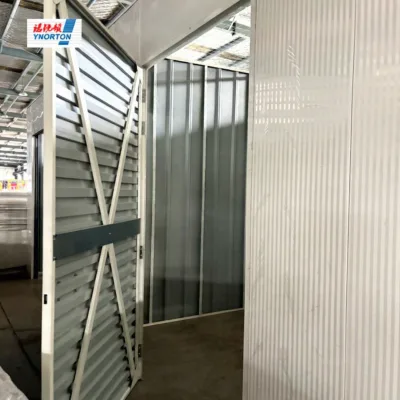
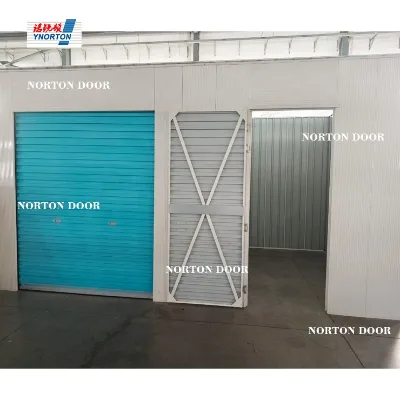
The door mechanism is another defining technical characteristic. The core keyword specifies a "swing door" style, which is confirmed by product attributes indicating an "Open Style: Swing." This design contrasts with sliding mechanisms, offering a robust sealing capability that can be enhanced with recessed locks. The locking systems observed include key locks and recessed locks, designed to integrate seamlessly with the door frame to prevent tampering. Furthermore, the connection form for the structural assembly is frequently a bolt connection, allowing for modular assembly and disassembly, which is essential for shipping efficiency and on-site customization.
| Feature | Observed Specification | Procurement Implication |
|---|---|---|
| Material | 0.45-1.5mm Galvanized Sheet | Verify specific gauge for intended security level. |
| Door Type | Swing / Recessed Lock | Ensure clearance space for door opening arc. |
| Connection | Bolt Connection | Facilitates on-site assembly and future expansion. |
| Size | Customized / Different Sizes | Confirm exact dimensions against site constraints. |
| Finish | Finished / Dark Gray, Gray White | Check for surface treatment consistency and color match. |
Compliance, Certification, and Quality Standards
When sourcing steel storage units, verifying compliance with industry standards is paramount. The product data indicates that manufacturers often offer "Grade A/B/C options," suggesting a tiered approach to quality control. However, the specific definitions of these grades are not universally standardized across all suppliers. Buyers must explicitly request the technical criteria that distinguish Grade A from Grade C units, focusing on factors such as steel purity, coating thickness, and structural load-bearing capacity.
Additionally, the sourcing guide notes the availability of "Standard Exported Packing" and "Plastic Bag+Cardboard" options, which are critical for protecting the units during international transit. The presence of a "3 years" warranty in some listings, contrasted with a "1 Year" warranty in others, highlights the variability in supplier confidence and after-sales support. It is essential to clarify the warranty terms before finalizing a contract, as the duration often correlates with the quality of the galvanization process and the robustness of the locking mechanisms.
Regarding certifications, while specific third-party test results are not universally listed in the provided data, buyers should demand evidence of compliance with relevant international safety and quality standards. The "gradeA/B/C options" imply a quality hierarchy, but without specific certification documents (such as ISO standards or fire resistance ratings), these remain internal classifications. Procurement teams should require suppliers to provide mill test reports for the steel and documentation of the galvanization process to ensure the material meets the required corrosion resistance standards for the intended environment.
Cost Drivers and Pricing Dynamics
The pricing for modern steel self-storage units is influenced by several dynamic factors, with the observed market range falling between $30 and $400 USD. This wide variance is not arbitrary but is driven by the complexity of customization, material thickness, and the scale of the order. The Minimum Order Quantity (MOQ) ranges from 1 to 200 units, indicating that the market accommodates both single-item purchases for small projects and bulk orders for large-scale developments.
Material thickness is a primary cost driver. Units constructed with 1.5mm galvanized sheet will naturally command a higher price point than those using 0.45mm sheet, reflecting the raw material cost and the additional processing required. Customization is another significant factor; while "Customized Size" is a standard offering, the engineering and tooling required to produce non-standard dimensions can increase the unit cost. Furthermore, the "Single package size" of 60x30x30 cm and the "Single gross weight" of 16.500 kg provide a baseline for logistics planning. Buyers must calculate the total landed cost, including freight, which is heavily dependent on the number of units per container and the specific packaging method chosen, such as "Nude Package or Chassis Package."
Typical Applications and Functional Requirements
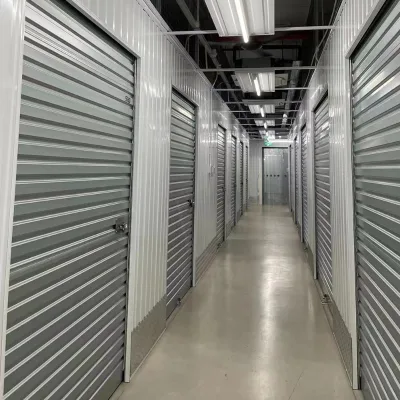
Modern steel self-storage units with swing doors are versatile assets designed for a variety of commercial and residential applications. The product attributes explicitly list usage scenarios including "Warehouse," "Storage and Closet," and "Commercial" positions. The "Floating Warehouse" characteristic suggests adaptability for temporary or semi-permanent installations, while the "Mini Warehouse" designation points to compact solutions for urban environments or space-constrained facilities.
The functional requirements extend beyond simple storage. The inclusion of "Security" and "Self Storage Door" as primary functions underscores the need for robust locking mechanisms. The "Sound Insulation" value of 25, while specific, indicates that some units are designed to mitigate noise, which is beneficial for storage units located in mixed-use developments or near residential areas. The "Design Style: Modern" and available color options like "dark gray" and "gray white" allow these units to blend aesthetically with contemporary architectural environments, making them suitable for high-end commercial properties or upscale residential complexes.
Supplier Evaluation and Project Capabilities
Evaluating a supplier for steel storage units requires a deep dive into their project solution capabilities. The data indicates that suppliers offer "graphic design" and "Others" as part of their project solution capabilities, which is a valuable asset for buyers needing custom layouts or branding integration. The "Brand Name: norton" and "Brand: Hengjie Door" mentioned in the data represent specific market players, but buyers should not limit their search to these names. Instead, the focus should be on the supplier's ability to deliver "Custom Products" and their experience with "Various Colours" and "Kinds of Designs for Choosing."
When assessing suppliers, procurement teams should verify the "Place of Origin," which is predominantly "Shandong, China" and "Foshan, China." These regions are known for their manufacturing infrastructure, but buyers must ensure that the specific factory has the capacity to meet the required lead times and quality standards. The "After-sale Service" options, including "Online Technical Support," are critical for resolving issues post-delivery. A supplier's willingness to provide detailed technical drawings and their responsiveness to customization requests are strong indicators of their reliability and professionalism.
Quality Control and Long-Term Procurement Considerations
Ensuring the longevity of steel storage units requires a rigorous quality control (QC) process. The "Surface Finishing: Finished" attribute suggests that the units undergo a final treatment, but buyers must verify the specific processes used, such as powder coating or painting, to ensure resistance to weathering and UV degradation. The "Connection Form: Bolt Connection" allows for inspection of the structural integrity upon assembly, but the quality of the bolts and the precision of the pre-drilled holes are critical factors that should be checked during the pre-shipment inspection.
Long-term procurement considerations also involve the scalability of the storage solution. The "Customized Size" and "Different Sizes" options provide flexibility for future expansion. Buyers should plan for the potential need to add more units or modify existing configurations, ensuring that the supplier can provide compatible components. The "Warranty" period, whether 1 year or 3 years, serves as a benchmark for the expected lifespan of the product. A longer warranty often indicates a higher confidence in the product's durability, but it must be backed by clear terms and conditions regarding what is covered and what constitutes a valid claim.
In conclusion, sourcing modern steel self-storage units with swing doors requires a balanced approach that prioritizes material quality, customization capabilities, and supplier reliability. By carefully analyzing the technical specifications, verifying compliance with quality standards, and understanding the cost drivers, procurement professionals can secure high-quality storage solutions that meet the specific needs of their projects. The market offers a wide range of options, from basic lockers to complex mini-warehouses, and a disciplined sourcing strategy is essential to navigate this diversity effectively.
FAQs
What material thickness is used for these steel storage units?
The units are constructed from galvanized steel sheets with a thickness ranging from 0.45mm to 1.5mm. Buyers should verify the specific gauge required for their intended security level, as thicker sheets offer superior durability against forced entry.
Can I order these units with customized dimensions?
Yes, customized sizes are available with different dimensions to fit specific site constraints. The products are designed as custom units, allowing for various configurations including two or three tiers to meet unique storage needs.
How long is the warranty period for these storage lockers?
Warranty periods vary between one year and three years depending on the specific supplier and product grade. Buyers must clarify the exact terms before contracting, as the duration often correlates with the quality of the galvanization process.
What is the minimum order quantity for these steel units?
The minimum order quantity ranges from one to two hundred units, accommodating both single purchases and bulk orders. This flexibility allows procurement professionals to scale their orders based on project requirements and available budget.
Which locking mechanisms are included with the swing doors?
The units typically feature key locks or recessed locks designed to integrate seamlessly with the door frame. These mechanisms are intended to prevent tampering and ensure the security of the stored items within the commercial or warehouse setting.
How are these units packaged for international shipping?
Packaging options include standard exported packing, plastic bags with cardboard, or nude and chassis packages. The single package size is typically 60x30x30 cm with a gross weight of 16.5 kg, which aids in logistics planning.
Can I find suppliers offering Grade A or B quality options?
Manufacturers often provide Grade A, B, or C options to denote different levels of quality control. Buyers should explicitly request the technical criteria distinguishing these grades, focusing on steel purity and coating thickness for the intended environment.