Source Moisture Proof Shampoo Sachet for hotels, airlines, and spas
Compare 30 listings for Moisture Proof Shampoo Sachet designed for hotel, airline, and spa use. Buyers can evaluate customization options, packaging types, and supplier lead times to find the right fit for their business needs.
Key considerations
Products List

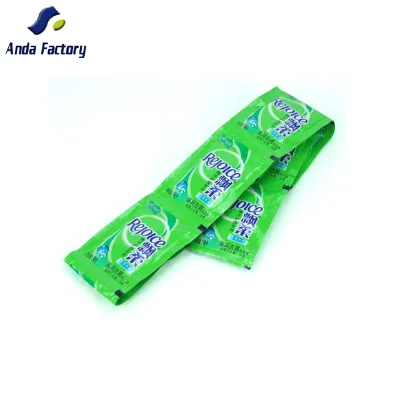
Cosmetic Hair Shampoo Sachet Packaging Mini Shampoo Pouch Custom Sachets
$0.01 - $0.02
MOQ: 50000 Pieces

Cosmetic Sample Sachet Flat Packaging Plastic Foil Pouch Packet Bag Shampoo
$0.02 - $0.03
MOQ: 50000 Pieces


Disposable 10ml Sachet Shampoo Customized Hotel Shampoo in Small Sachet
$0.02 - $0.03
MOQ: 50000 Pieces

Cosmetic Sample Sachet Flat Packaging Small Packet Bag with Printing Shampoo
$0.02 - $0.03
MOQ: 50000 Pieces


30ml Hair Treatment Shampoo Sachet Packaging Shaped Small Bag with Spout
$0.04 - $0.07
MOQ: 20000 Pieces




Custom Recyclable Thick Hair Shampoo Refill Pouch Packaging Stand up Pouch
$0.02 - $0.04
MOQ: 20000 Pieces


Custom Environmentally Friendly Shampoo Packaging Liquid Bags with Spout Pouch Doypack
$0.02 - $0.04
MOQ: 20000 Pieces

Custom Spout Pouch Printing Doypack 100g Shampoo in Sustainable Packaging Bag
$0.02 - $0.04
MOQ: 20000 Pieces


Comprehensive Sourcing Guide
Strategic Sourcing Guide for Moisture Proof Shampoo Sachets
Understanding Technical Specifications and Material Integrity
When sourcing moisture-proof shampoo sachets, the primary objective is to ensure product integrity during transit and storage, particularly for the hospitality and travel sectors where humidity and temperature fluctuations are common. Based on the available market data, these sachets are frequently categorized under "Disposable Hotel Amenities" and are designed to hold specific liquid volumes ranging from 8ml to 20ml. The core technical requirement for a moisture-proof sachet is the material composition and the sealing method used. While the provided data indicates that "Coconut Oil" is a common ingredient found within the sachets themselves, the physical barrier against moisture is determined by the packaging material.
Buyers must verify that the sachet material is capable of maintaining a hermetic seal. The observed market data highlights the use of "Waterproof Paper Bag" and "Waterproof Paper Carton" for outer packaging, which suggests a high emphasis on moisture resistance at the secondary packaging level. However, the primary sachet itself often utilizes multi-layer laminated films to prevent leakage. The data notes that the "Industrial Use" for these items is primarily "Cosmetic," which necessitates materials that do not react with the chemical composition of the shampoo or conditioner.
A critical specification to evaluate is the volume capacity. The market offers standard increments of 8ml, 10ml, 15ml, and 20ml. Selecting the correct volume is not merely a matter of convenience but a logistical decision affecting shipping weight and cost. For airlines and hotels, smaller volumes like 8ml or 10ml are often preferred to reduce waste and shipping costs, while larger volumes up to 20ml may be targeted for extended-stay guests. The "Product Type" is frequently listed as "Shampoo" or "Conditioner," and the "Item Name" often combines both as "Shampoo&Conditioner" sets.
Compliance, Certification, and Environmental Standards
In the B2B procurement of disposable amenities, compliance with international standards is non-negotiable. The supply chain data explicitly lists "ISO9001" and "GMPC" (Good Manufacturing Practice for Cosmetics) as available certifications. These are not merely marketing terms but essential verification points for any buyer. ISO9001 indicates that the manufacturer has a quality management system in place, ensuring consistent production processes. GMPC is particularly relevant for cosmetic products, as it verifies that the manufacturing environment meets hygiene and safety standards required for skin-contact products.
Beyond quality management, environmental compliance is a growing priority. The data mentions "Eco-Friendly" attributes, specifically citing "Organic" ingredients and "Biodegradable Kraft Paper Bag" options. This indicates a market shift toward sustainability. Buyers should verify if the sachet material itself is biodegradable or if the "Biodegradable" claim applies only to the outer packaging. The term "Biodegradable Karft Paper Bag" (noted as Kraft Paper Bag) suggests that the outer carton may be made from recycled or biodegradable paper, which is a significant differentiator in modern procurement.
Furthermore, the "Standard or Customize" attribute suggests that while there is a baseline standard, manufacturers are flexible. However, buyers must ensure that any customization does not compromise the "Moisture Proof" integrity. If a buyer requests a specific biodegradable film for the sachet, they must confirm that the material retains its barrier properties. The data also notes "Eco Friendly: Biodegrdable Karft Paper Bag," which implies that the outer packaging is designed to decompose, but the inner sachet's biodegradability must be explicitly confirmed to avoid greenwashing.
Cost Drivers and Economic Factors in Procurement
The economics of sourcing moisture-proof shampoo sachets are influenced by several variables, including order volume, customization, and material selection. The observed Minimum Order Quantity (MOQ) ranges significantly, from 5,000 pieces to 50,000 pieces, with some data points suggesting an MOQ of 20,000. This wide range indicates that suppliers offer tiered pricing structures, where higher volumes result in a lower cost per unit. The observed price range in the market is 0.01 to 25 USD, though this likely represents a broad spectrum from bulk raw materials to premium, fully customized sets.
Customization is a major cost driver. The data confirms that "Customization: Available" and "Logo: Customer Logo Printing" are standard offerings. The ability to print "More Than 9colors" adds complexity to the production process, which can increase costs. The "Surface Handling" is noted as "Gravure Printing," a high-quality printing method suitable for large runs but requiring significant setup time and cost. Buyers must weigh the marketing benefits of high-color branding against the budget constraints of the project.
Payment terms also play a role in the total cost of ownership. The standard payment structure observed is "30% Advance T/T 70% Balanced," which is a common practice in international trade. This requires buyers to have sufficient working capital to cover the initial deposit. Additionally, the "Production Time" varies from 10-15 days to 20-35 days, depending on the quantity and artwork. Rush orders or complex customizations will likely extend the lead time, potentially incurring expedited shipping costs that offset the savings from lower unit prices.
Typical Applications and Usage Scenarios
The versatility of moisture-proof shampoo sachets is evident in their diverse application sectors. The data lists "Home Travel Hotel SPA Airline" as primary use cases. In the hotel industry, these sachets are often part of a "Hotel Amenity Set" that includes shampoo, bath gel, conditioner, and body lotion. The specific "Hotel Amenity Set" configuration mentioned includes 30ml items, though individual sachets are typically smaller. The "Usage" category also extends to "Bar" and "Airline," where space is at a premium and single-use convenience is paramount.
For airlines, the sachets must be lightweight and secure to prevent leaks in the cargo hold or cabin. The "Waterproof Paper Bag" and "Carton" packaging are essential for protecting the sachets during the rigors of air travel. In the spa and home travel sectors, the aesthetic presentation is crucial. The "Type" is often "Disposable Hotel Amenities," but the "Product Type" can be specific, such as "Conditioner" or "Shampoo." The "Suitable for Skin Type" is listed as "Normal," suggesting these products are formulated for general use, though customization for specific skin types may be available.
The data also mentions "Hotel Slippers" and "Hotel Towel" as related items, indicating that buyers often source complete amenity kits. The "Slipper" type is noted as "Biodegradable EVA Sole Fabric Disposable Slipper," and the "Hotel Towel" is associated with "Body Lotion" in the data, which may imply a bundled offering. Understanding these ecosystem products helps buyers plan their procurement strategy to ensure consistency in branding and sustainability across all amenity items.
Supplier Evaluation and Operational Capabilities
Evaluating a supplier requires a deep dive into their operational capabilities and logistical reliability. The data indicates that the "prod_origin" is primarily "Jiangsu, China" or generally "China." This regional concentration suggests a mature supply chain with established logistics networks. Buyers should verify the specific factory location to assess shipping times and potential tariffs. The "Sampling Time" is a critical metric for supplier reliability, with data showing ranges of 3-5 days and 5-7 days. A shorter sampling time indicates a more agile production facility.
The "Sample Cost" is listed as "Free for Existing Samples," which is a favorable term for buyers evaluating multiple suppliers. However, buyers must clarify if this applies to custom designs or only standard stock. The "Production Time" of 10-15 days or 20-35 days depends heavily on the "Quantity and Artwork." Suppliers with a history of meeting these timelines are preferable. The "Packing" details, such as "Packed in OPP Bag Then in Cartons" or "Waterproof Paper Carton," with a specific "PCS/CTN" count of 2000, are vital for logistics planning. Buyers should calculate the number of cartons required for their order to optimize container loading and reduce shipping costs.
Furthermore, the "Brand" is listed as "Customized," meaning the supplier acts as an OEM (Original Equipment Manufacturer). This allows buyers to build their own brand identity. However, the "Logo" printing capabilities, including "Customer Logo Printing" and "as Per Client Request," must be verified for quality. The "Surface Handling" via "Gravure Printing" ensures high-quality graphics, but buyers should request physical samples to verify color accuracy and print durability.
Quality Control and Long-Term Procurement Strategy
Quality control (QC) is the final gatekeeper in the procurement process. Given the "Hypoallergenic: No" attribute in the data, buyers must be cautious if their target market requires hypoallergenic products. While the product contains "Coconut Oil," which is generally safe, the absence of a hypoallergenic claim means it may not be suitable for all skin types. Buyers should conduct their own patch testing or request specific skin-safety data sheets from the supplier.
The "Certificate" list of ISO9001 and GMPC provides a baseline for quality, but buyers should also inquire about specific moisture-proof testing results. The "Standard or Customize" attribute allows for tailored QC protocols. For long-term procurement, consistency is key. The "MOQ" of 5,000 to 50,000 pieces suggests that these are bulk orders. Buyers should establish a framework for ongoing quality checks, including random sampling from production batches.
Long-term success also depends on the supplier's ability to adapt to market changes. The "Eco-Friendly" and "Biodegradable" trends are not fleeting; they are becoming industry standards. Buyers who commit to sustainable materials now will likely face less regulatory friction in the future. The "Custom" attribute being "Acceptable" offers flexibility for future product iterations. However, buyers must ensure that any changes to the formula or packaging do not compromise the "Moisture Proof" integrity.
| Feature | Standard Offering | Customization Option | Verification Requirement |
|---|---|---|---|
| Volume | 8ml, 10ml, 15ml, 20ml | Customizable | Confirm seal integrity at new volumes |
| Material | Standard Film | Biodegradable Options | Verify biodegradability claims |
| Printing | Gravure (9+ colors) | Full Custom Artwork | Check color accuracy on samples |
| Packaging | OPP Bag + Carton | Waterproof Paper Bag | Test moisture resistance of outer pack |
| Certification | ISO9001, GMPC | Industry Specific | Request valid certificate copies |
| MOQ | 5,000 - 50,000 | Negotiable | Confirm lead time for smaller runs |
In conclusion, sourcing moisture-proof shampoo sachets requires a balanced approach between technical performance, regulatory compliance, and economic efficiency. By leveraging the available data on certifications, material options, and production capabilities, buyers can make informed decisions that align with their brand values and operational needs. The key is to verify every claim, from the "Biodegradable" status to the "Moisture Proof" seal, ensuring that the final product meets the rigorous demands of the global hospitality and travel markets.
FAQs
What certifications do Moisture Proof Shampoo Sachet manufacturers hold?
Manufacturers typically hold ISO9001 and GMPC certifications to ensure quality and hygiene standards. These credentials verify that the production environment meets safety requirements for cosmetic products like shampoo and conditioner.
How much is the minimum order quantity for these sachets?
The minimum order quantity ranges from 5,000 to 50,000 pieces depending on the specific supplier and customization needs. Buyers should verify the exact MOQ before placing an order as it varies by product model.
Can I request custom logo printing on the sachets?
Yes, customization is available including customer logo printing with up to nine colors using gravure printing. The design must be provided by the client, and production time depends on the complexity of the artwork.
What volume options are available for the shampoo sachets?
Standard volume options include 8ml, 10ml, 15ml, and 20ml capacities suitable for travel and hotel use. Specific models like TS24001 and TS24004 offer these standard increments for various amenity sets.
Where are these disposable hotel amenities manufactured?
These products are primarily manufactured in Jiangsu, China, with some general production also listed as China origin. Buyers should confirm the specific factory location to assess shipping times and logistics costs.
What is the typical delivery time for these orders?
Delivery times generally range from 10 to 35 days depending on the order quantity and artwork requirements. Sampling takes 3 to 7 days, while full production usually requires 20 to 35 days for large batches.