Source Montessori Metal Baby Xylophone for Early Learning, Music Play, and Sensory Development
Compare 30 verified listings for the Montessori Metal Baby Xylophone to find options in metal, wood, and plastic materials. Buyers can evaluate age ranges from 0 to 7 years, customization availability, and packaging details for bulk orders.
Key considerations
Products List

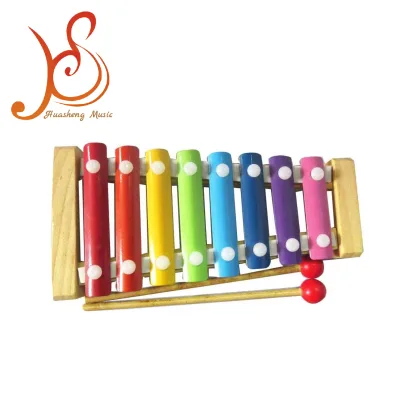
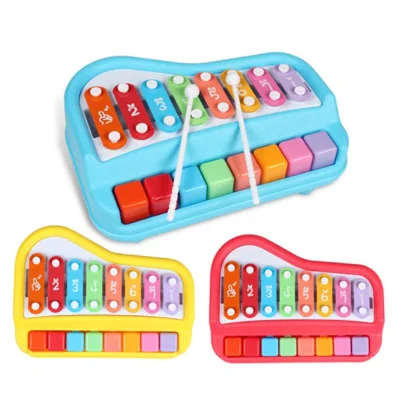
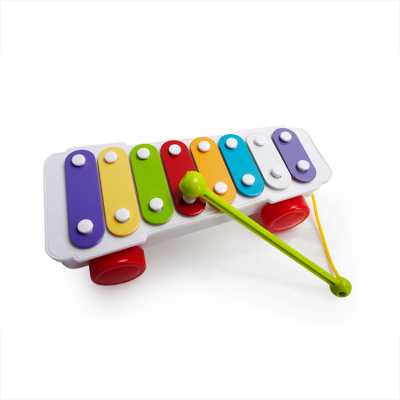
8 Key Colorful Percussion Musical Instruments Xylophone and Metallophone
$11.30 - $11.50
MOQ: 100 Pieces




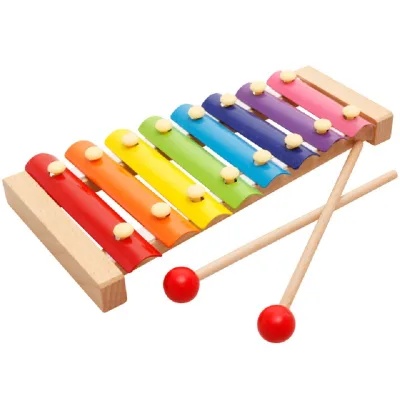
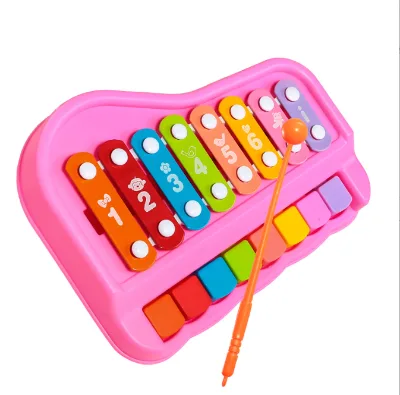
Kids Colorful Plastic Musical Instrument Multifunction Xylophone Music Toy
$3.37 - $5.70
MOQ: 240 Pieces


Comprehensive Sourcing Guide
Strategic Sourcing Guide for Montessori Metal Baby Xylophones
The global market for early childhood educational toys has seen a significant shift toward materials that offer durability, sensory feedback, and safety. Within this sector, the "Montessori Metal Baby Xylophone" represents a specific niche where the tactile experience of metal bars meets the pedagogical principles of self-directed learning. For B2B procurement professionals, sourcing these instruments requires a granular understanding of material properties, regulatory compliance, and supply chain logistics. This guide synthesizes available product data to provide a disciplined framework for evaluating suppliers and specifications, ensuring that the final procurement aligns with safety standards and educational efficacy.
Material Composition and Structural Integrity
The primary differentiator for a metal xylophone in the infant and toddler market is the material composition of the sound bars. While the provided data indicates a mix of materials across the broader category, including wooden and plastic variants, the specific requirement for a "metal" xylophone necessitates a rigorous verification of the metal alloy used. The observed product attributes confirm that "Metal" is a valid material classification for this category, distinct from the "Wooden Toy Guitar" or "Plastic" options also present in the market.
When evaluating potential suppliers, the procurement team must verify that the metal bars are constructed from a non-toxic, corrosion-resistant alloy, typically steel or aluminum, designed to withstand repeated striking by small hands. The data highlights a specific product model, EM8-15, which is associated with the "Metallohone" classification and a "Metal" material attribute. This suggests that the metal components are integral to the product's identity. However, the presence of "Wooden" and "Plastic" materials in the same dataset indicates that buyers must explicitly filter for metal construction, as many competitors may offer hybrid designs where the frame is wood or plastic but the bars are metal.
The structural integrity of the frame is equally critical. The data notes a "Package" attribute of "1 inner/Box" and "1PCS/Box," implying that these are often sold as single units rather than bulk loose items. This packaging style suggests a focus on individual presentation, which is common for premium educational toys. The buyer must ensure that the metal bars are securely mounted to the frame to prevent detachment, a common failure point in lower-quality percussion instruments. The "Color" attribute, observed as "Yellow or Blue," indicates that the metal is likely coated or painted. Procurement specifications must mandate that these coatings are lead-free and non-chipping to prevent ingestion hazards.
Technical Specifications and Dimensional Standards
Precision in product dimensions is a key indicator of manufacturing quality, particularly for toys intended for children under three years of age. The supplied data provides specific standard measurements for various models, offering a benchmark for comparison. For instance, one model is listed with a standard size of "2712.5," while another, the X011-1, measures "2216.5cm." A third model, 1907, has dimensions of "231814.5cm," and the 1904B is listed as "23102cm."
These variations highlight the importance of defining exact requirements before placing an order. A "Montessori" approach often favors smaller, manageable sizes for infants, suggesting that models like the 1904B (23102cm) might be more suitable for the "< 3 Years" age bracket observed in the data. In contrast, larger models may be better suited for the "2 to 7 Years" or "0-6 Years" ranges. The "Product Size" attribute for one item is listed as "1817.58.8cm," which provides another data point for evaluating portability and storage requirements.
Buyers should also scrutinize the "Carton Size" and "Packing Size" data to optimize logistics. The dataset includes carton dimensions such as "6954.548.5cm," "6226.539cm," and "74.54565cm." These figures are critical for calculating shipping costs and warehouse space utilization. The "Qty/CTN" (Quantity per Carton) varies significantly, with observations of "36 PCS/CTN," "48 PCS/CTN," and a minimum order quantity (MOQ) of "12PCS" for specific metal models. Understanding these packing efficiencies is essential for determining the true cost per unit, as larger cartons often reduce the per-unit shipping cost.
Compliance, Certification, and Safety Verification
Safety is the paramount concern when sourcing toys for infants and toddlers. The data explicitly lists "CE, ASTM, RoHS" as certifications associated with specific products in this category. These are not optional add-ons but baseline requirements for international trade. The "CE" mark indicates conformity with health, safety, and environmental protection standards for products sold within the European Economic Area. "ASTM" refers to American Society for Testing and Materials standards, specifically ASTM F963, which is the standard consumer safety specification for toy safety. Although the data lists "ASTM" as a certification, it also notes "ASTM F963" as a background standard, reinforcing its relevance.
The "RoHS" (Restriction of Hazardous Substances) directive is equally critical, ensuring that the metal and paint components do not contain restricted levels of lead, mercury, cadmium, and other hazardous substances. Given the "Age Range" data points of "0-6 Years," "2 to 7 Years," and "0 to 24 Months," the product must meet the most stringent safety requirements applicable to the youngest demographic.
Buyers must verify that the supplier can provide valid, up-to-date test reports from accredited laboratories. The data mentions "Low-confidence background" regarding specific standards like EN71, which is the European standard for toy safety. While not explicitly confirmed in the high-confidence facts, EN71 is a standard expectation for European markets. Procurement teams should not assume compliance based on the product listing alone; they must request current certificates for the specific model being ordered. The "Certification" attribute in the data serves as a signal of potential compliance, but it must be validated against the specific batch of goods.
Cost Drivers and Minimum Order Quantities
The financial structure of sourcing metal xylophones is influenced by several variables, including material costs, certification fees, and order volume. The observed price range in the market is broad, spanning from $0.55 to $150 USD. This wide variance suggests that the final price is heavily dependent on the quality of the metal, the complexity of the design, and the volume of the order. A unit priced at $0.55 likely represents a basic plastic or low-grade metal version, whereas a unit at $150 may include premium features, extensive packaging, or custom branding.
The Minimum Order Quantity (MOQ) is another significant cost driver. The data shows an MOQ range of 5 to 2000 units, with specific instances of "12PCS," "36 PCS," and "48 PCS/CTN." For a buyer testing the market, an MOQ of 12 units is highly favorable, allowing for a low-risk trial. However, for large-scale distribution, the ability to order in full cartons (e.g., 36 or 48 units) is necessary to achieve economies of scale.
The "G.W.&N.W." (Gross Weight and Net Weight) data, such as "16.6/14.9kg" and "12.35/11.65kg," further impacts logistics costs. Heavier metal components increase shipping expenses, particularly for air freight. Buyers should calculate the landed cost by factoring in the weight of the product plus the packaging. The "Package" types, ranging from "Color Box" to "Window Box," also affect the final price. Window boxes, which allow the product to be seen without opening, often command a higher price due to the additional material and printing costs but can enhance shelf appeal.
Supplier Evaluation and Geographic Origins
The origin of the product is a critical factor in assessing supply chain reliability and manufacturing capability. The data identifies two primary production locations: "Jiangsu China" and "Guangdong, China." Both provinces are major hubs for toy manufacturing, but they may specialize in different aspects of production. Jiangsu is known for its robust industrial base, while Guangdong is often associated with high-volume export manufacturing.
When evaluating suppliers, buyers should verify the specific factory location and request a facility audit. The "prod_origin" attribute confirms that the products are manufactured in China, but it does not guarantee the quality of the specific supplier. Buyers should look for suppliers who have a history of exporting to the target market and who can demonstrate a track record of meeting the "CE, ASTM, RoHS" standards.
The "Logo" attribute, listed as "Accepted," indicates that many suppliers offer OEM (Original Equipment Manufacturer) and ODM (Original Design Manufacturer) services. This allows buyers to customize the product with their own branding. However, customization can impact lead times and MOQs. Buyers should clarify the timeline for logo application and ensure that the customization process does not compromise the safety of the metal coating or the structural integrity of the instrument.
Quality Control and Long-Term Procurement Considerations
Maintaining consistent quality is essential for long-term procurement success. The "Style" attribute, described as "Educational Toy, Musical Toy," and the "Function" of "Early Music Education" imply that the product must deliver a specific sensory experience. The "Knock Piano Scale" of "8 Scales" is a specific technical feature that ensures the instrument produces the correct musical intervals, which is vital for the Montessori educational approach.
Quality control measures should include random sampling of finished goods to check for sharp edges, loose parts, and paint defects. The "prod_packing" of "1PCS/Box" suggests that each unit is individually packaged, which reduces the risk of damage during transit. However, the "Carton Size" and "Qty/CTN" data indicate that these individual boxes are then packed into larger shipping cartons. The buyer must ensure that the inner packaging is sufficient to protect the metal bars from denting or scratching during the outer carton's journey.
Long-term procurement considerations also involve the scalability of the supply chain. The "Age Range" data shows a broad spectrum from "0 to 24 Months" to "5 to 7 Years." A supplier capable of producing variants for different age groups can offer a more comprehensive product line. Additionally, the "Customization" attribute suggests that the supplier can adapt to changing market trends, such as new color schemes or packaging designs.
Buyers should establish a clear communication channel with the supplier regarding any changes in regulations or standards. The toy industry is subject to frequent updates in safety laws, and a proactive supplier will keep the buyer informed. Finally, the "Type" of the product as a "Percussion Instrument" and the specific "Toy Musical Instrument Type" of "Xylophone Toy" should be consistently maintained to ensure brand consistency and customer trust.
In conclusion, sourcing a Montessori Metal Baby Xylophone requires a meticulous approach that balances material quality, safety compliance, and logistical efficiency. By leveraging the specific data points regarding dimensions, certifications, and origins, buyers can make informed decisions that mitigate risk and ensure the delivery of high-quality educational toys. The focus must remain on verifying the "Metal" composition, confirming the "CE, ASTM, RoHS" certifications, and optimizing the "MOQ" and "Carton Size" for cost-effective operations.
FAQs
What certifications do these metal xylophones hold?
The products hold CE, ASTM, and RoHS certifications to ensure safety for young children. These standards verify that the metal and paint components are free from hazardous substances like lead and mercury, making them suitable for the 0-6 years age range.
Which minimum order quantity applies to metal models?
The minimum order quantity for specific metal models like EM8-15 is 12 pieces. Other variants in the category may require higher volumes, such as 36 or 48 pieces per carton, depending on the specific supplier and packaging configuration.
How are the metal xylophones packaged for shipping?
Individual units are typically packed in a single inner box or a window box for retail presentation. These individual packages are then consolidated into larger cartons with specific dimensions like 69*54.5*48.5cm to optimize logistics and protect the instrument during transit.
Can suppliers customize the product logo and colors?
Yes, suppliers accept logo customization to allow for branding on the metal xylophones. The standard color options include yellow or blue, but custom branding can be applied provided the coating remains lead-free and non-chipping for child safety.
What are the typical dimensions for these percussion instruments?
Product sizes vary by model, with common dimensions including 23*10*2cm for the 1904B model and 27*12.5cm for others. These compact sizes are designed to be manageable for infants and toddlers under three years of age.
Where are these metal xylophones manufactured?
The products originate from manufacturing hubs in Jiangsu and Guangdong, China. These regions are established centers for toy production, offering a range of suppliers capable of meeting international safety standards and export requirements.
What age groups are suitable for these metal instruments?
These instruments are designed for children ranging from 0 to 24 months up to 7 years old. The specific age suitability depends on the model, with some targeting early music education for infants and others catering to toddlers and preschoolers.