Source Toddler Soft Playmat with Crawling Support for Home, Outdoor, Kids Room
Compare 30 listings of Toddler Soft Playmat with Crawling Support featuring non-slip backing and XPE materials. Buyers can evaluate customization options, sizes, and safety certifications like EN71 for home, outdoor, or kids room use.
Key considerations
Products List


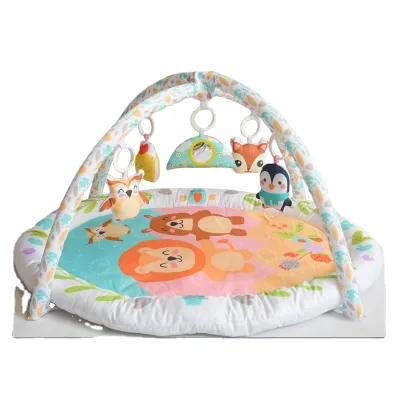
Kids Playmat Soft Infants Custom Thick Baby Play Mat Activity Playmat for Newborn
$19.20 - $21.30
MOQ: 20 Pieces


High Quality Custom Playmat Safety Soft Comfortable Newborn Baby Play Mats
$19.20 - $21.30
MOQ: 20 Pieces


Comprehensive Sourcing Guide
Strategic Sourcing Guide for Toddler Soft Playmats with Crawling Support
Procuring toddler soft playmats with crawling support requires a nuanced understanding of material science, safety compliance, and supply chain logistics. These products serve as critical infrastructure for early childhood development, providing a safe, hygienic, and comfortable environment for infants and toddlers to explore their surroundings. For B2B buyers, the decision-making process extends beyond simple aesthetics to encompass rigorous verification of material properties, manufacturing standards, and the specific functional requirements of the target market. The following guide outlines the essential parameters for sourcing these items effectively, ensuring that the final product meets both regulatory mandates and consumer expectations for safety and durability.
Technical Specifications and Material Composition
The foundation of a high-quality playmat lies in its material composition and physical dimensions. In the current market, the most prevalent material for these products is XPE (Cross-Linked Polyethylene). This material is favored for its closed-cell structure, which provides inherent water resistance and prevents the absorption of moisture, thereby inhibiting mold and bacterial growth. The tactile experience is equally critical; the product must offer a soft and comfortable hand feeling to ensure the safety of a child's skin during prolonged contact.
Dimensions vary significantly based on the intended application, ranging from compact square units to expansive floor coverings. Common specifications observed in the market include sizes such as 127127cm, 150180cm, and larger configurations like 180*200cm. For modular systems, thickness is a primary determinant of cushioning and support. Buyers should verify that the thickness options align with the intended use case, with common offerings including 1cm, 1.5cm, and 2cm. A thickness of 1cm may suffice for light indoor decoration, while 2cm provides superior shock absorption for active play and crawling.
The shape and pattern design also play a role in functionality. While square and round shapes are standard, the pattern often features cartoon animals or custom designs to engage young children. Some products offer multicolor patterns, while others provide solid colors or specific print types. The manufacturing technique is frequently "hand-made," which can influence the consistency of the final product and the texture of the surface. Buyers must ensure that the customization options for logos and patterns are clearly defined, as OEM branding is a common requirement for retail distributors.
Compliance and Safety Certification Verification
Safety is the paramount concern when sourcing products for toddlers. The regulatory landscape for children's toys and play equipment is stringent, requiring suppliers to provide documented proof of compliance. In the context of the supplied data, EN71 certification is a recurring and high-confidence fact. This European standard covers various aspects of toy safety, including mechanical and physical properties, flammability, and chemical migration.
Beyond EN71, buyers should look for additional certifications such as CE and SGS. These indicate that the product has undergone third-party testing for specific safety criteria. The material itself must adhere to standards regarding toxicity. The supply chain facts indicate that products should be non-toxic and lead-free. This is a critical verification point, as the material properties must ensure that no harmful substances are released during normal use or chewing, which is common behavior for toddlers.
Buyers must also verify the "Standard" attributes listed by the supplier. Claims of being "Sustainable" and "Eco-Friendly" should be backed by specific documentation rather than marketing language. While some background knowledge suggests standards like OEKO-TEX or GOTS, these should not be assumed unless explicitly confirmed by the supplier. Instead, the procurement strategy should focus on verifying the absence of hazardous substances and the presence of the specific certifications mentioned in the product data, such as EN71, CE, and SGS.
Cost Drivers and Pricing Dynamics
The pricing of toddler soft playmats is influenced by a complex interplay of factors, including material costs, customization levels, and order volume. The observed price range in the market spans from $0.30 to $30.00 USD, reflecting the vast difference between basic, small-scale mats and premium, large-scale, or highly customized units.
The Minimum Order Quantity (MOQ) is a significant cost driver. The data indicates an MOQ range of 10 to 5,500 units. Suppliers with lower MOQs, such as 10 or 100 pieces, often charge a higher unit price due to the inefficiencies of small-batch production. Conversely, larger orders can leverage economies of scale to reduce the per-unit cost. However, the buyer must balance the need for inventory volume with cash flow constraints.
Customization is another major factor affecting cost. Features such as OEM logos, custom patterns, and specific color requests add to the production complexity and cost. The "Customization: Available" attribute suggests that suppliers are flexible, but this flexibility comes with a price premium. Additionally, the packaging method, such as vacuum compression packaging into a box or OPP bags, impacts the final cost. Vacuum compression reduces shipping volume, which can lower logistics costs for large orders, but the packaging materials themselves add to the unit price.
Typical Applications and Usage Scenarios
The versatility of toddler soft playmats allows them to be deployed in a wide array of settings. The primary application is within the home, specifically in living rooms, bedrooms, and nurseries. In these environments, the mat serves as a soft crawling surface, protecting the child from hard floors and providing a designated play area. The "Baby Educational Toy" aspect suggests that these mats are often used for developmental activities, requiring a clean and safe surface.
Beyond the home, these mats are increasingly used in commercial and public spaces. Daycares, preschools, and pediatric clinics utilize them for their non-slip backing and ease of cleaning. The "Machine Washable" attribute is particularly valuable in these high-traffic environments, ensuring hygiene can be maintained with minimal effort.
Outdoor applications are also significant. The data highlights usage in picnics, camping, beaches, and tents. For these scenarios, the material must be water-proof and durable against outdoor elements. The "Non-Slip Backing" ensures stability on grass or sand, while the "Water-Proof" feature prevents moisture from seeping through. The "Camping" and "Travel" applications suggest that portability is a key requirement, often facilitated by the vacuum compression packaging mentioned in the specifications.
Supplier Evaluation and Quality Control
Selecting the right supplier requires a rigorous evaluation process that goes beyond price comparisons. Buyers should prioritize suppliers who demonstrate transparency in their manufacturing processes and material sourcing. The origin of the product, such as Linyi, Shandong Province, is a known manufacturing hub, but the specific factory capabilities must be verified.
Quality control measures should be a central part of the supplier evaluation. Buyers must request samples to test the "Hand Feeling" and verify the "Soft and Comfortable" claims. The "Non-Slip Feature" should be tested under various conditions to ensure it performs as advertised. Additionally, the "Cleaning & Maintenance" claims, specifically the "Machine Washable" attribute, should be validated through practical testing to ensure the mat does not degrade or lose its shape after washing.
The supplier's ability to handle customization is also a critical quality indicator. The "OEM Logo" and "Custom Patterns" capabilities should be assessed by reviewing previous work or requesting digital proofs. The "Packing" method, whether it is "Vacuum Compression Packaging Into Box" or "1PC/1 OPP Bag," should be evaluated for its ability to protect the product during transit.
Long-Term Procurement Considerations
Sourcing toddler soft playmats is not a one-time transaction but a long-term partnership that requires careful planning. The "Payment" terms, such as a 30% deposit and 70% balance before shipment, are standard but should be negotiated based on the order size and relationship with the supplier. Buyers should also consider the lead times, although specific values are not provided in the data, the complexity of customization can extend production schedules.
Sustainability is an emerging trend that will influence future procurement strategies. While the data mentions "Sustainable" as a standard, buyers should actively seek suppliers who can provide evidence of their environmental practices. This includes verifying the recyclability of the XPE material and the sustainability of the packaging.
Finally, the scalability of the supply chain is crucial. As the business grows, the supplier must be able to increase production capacity without compromising quality. The observed MOQ range of 10 to 5,500 units suggests flexibility, but buyers should ensure that the supplier can handle larger volumes if demand spikes. The "Current Speed: Fast Flow" attribute indicates that some suppliers may have high production rates, which is beneficial for meeting urgent demand.
Comparative Analysis of Product Attributes
To assist in the decision-making process, the following table summarizes the key attributes observed in the market, highlighting the variations buyers may encounter.
| Attribute Category | Common Observation | Variations to Verify |
|---|---|---|
| Material | XPE | 100% Polyester (for specific variants) |
| Thickness | 1cm, 1.5cm, 2cm | Custom thickness options |
| Size | 127127cm to 180200cm | 1.21.2m to 1.82m ranges |
| Certification | EN71, CE, SGS | Verify specific test reports |
| Features | Non-Slip, Water-Proof, Non-Toxic | Anti-Slip, Corrosion-Resistant |
| Packaging | Vacuum Compression / OPP Bag | Boxed vs. Bagged options |
| Customization | OEM Logo, Custom Patterns | Color, Shape, and Design |
| MOQ | 10 to 5,500 units | Specific tiered pricing |
This comparative view underscores the importance of defining precise requirements before engaging with suppliers. The diversity in attributes means that a "one-size-fits-all" approach is rarely effective. Buyers must align their specific needs with the capabilities of the supplier, ensuring that the final product delivers the promised value in terms of safety, durability, and aesthetic appeal. By adhering to these guidelines, B2B buyers can navigate the complex landscape of toddler soft playmat sourcing with confidence and clarity.
FAQs
What materials are used for toddler soft playmats with crawling support?
Most products use XPE material for its water resistance and soft hand feeling. Some variants are made of 100% polyester. Buyers should verify material properties to ensure non-toxic and lead-free standards.
Which certifications ensure safety for toddler soft playmats with crawling support?
High-confidence facts confirm EN71, CE, and SGS certifications are available. Products must also meet standards for being sustainable, non-toxic, and lead-free. Always request specific test reports to verify compliance.
How do sizes and thickness options affect toddler soft playmats with crawling support?
Common sizes range from 127x127cm to 180x200cm with thicknesses of 1cm, 1.5cm, or 2cm. Thicker options provide better shock absorption for active play. Select dimensions based on the intended indoor or outdoor application.
Can suppliers customize logos and patterns for toddler soft playmats with crawling support?
Yes, customization is available for OEM logos and custom patterns. Buyers can request specific colors and cartoon animal designs. Minimum order quantities vary, so confirm customization requirements before placing an order.
What are the typical minimum order quantities for toddler soft playmats with crawling support?
The observed MOQ range spans from 10 to 5,500 units depending on the supplier. Lower MOQs often result in higher unit prices due to small-batch production costs. Buyers should balance inventory needs with cash flow constraints.
How are toddler soft playmats with crawling support packaged for shipping?
Products are typically packed using vacuum compression packaging into a box or in OPP bags. This method reduces shipping volume and protects the mat during transit. Verify packing details to ensure the product arrives in good condition.