Source Motorcycle Jersey for Racing, Outdoor Work, and BMX
Find 30 Motorcycle Jersey options featuring breathable, quick-drying polyester fabric with customization services. Buyers can compare OEM/ODM capabilities, lead times, and design features for racing, outdoor work, and BMX applications.
Key considerations
Products List




Comprehensive Sourcing Guide
Strategic Sourcing Guide for Motorcycle Jerseys
Understanding Technical Specifications and Material Composition
When sourcing motorcycle jerseys, the primary focus must be on the material composition and technical attributes that ensure rider safety and comfort. Based on the available market data, the dominant material for these garments is 100% polyester. This synthetic fiber is selected for its durability, resistance to abrasion, and ability to maintain structural integrity under high-stress conditions. The fabric is often described as "knitted," a production technique that provides the necessary elasticity and stretch required for the dynamic movements associated with riding, whether on a track or in off-road environments.
The technical features observed in the current supply chain are critical for performance. Buyers should prioritize products that explicitly list "Breathable" and "Quick-Drying" as core attributes. These characteristics are essential for moisture management, preventing the garment from becoming heavy and restrictive during prolonged physical exertion. Furthermore, advanced listings indicate the presence of "Moisture-Wicking" and "Body Shape" retention features, which suggest a tailored fit that reduces wind resistance. For riders operating in variable weather conditions, the availability of "Windproof" and "Waterproof" specifications is a significant differentiator. While not all jerseys in the market possess these dual protections, the presence of such claims indicates a higher tier of protective gear suitable for winter or adverse weather racing.
The construction details also play a vital role in the garment's functionality. Specifications frequently mention a "Zipper" closure type, which allows for rapid donning and doffing, a necessity in pit stops or emergency situations. The collar style is predominantly "Round Neck," offering a balance between comfort and protection, while the sleeve style varies between "Normal" and "Long Sleeve," depending on the specific racing discipline and seasonal requirements. The "Season" attribute often points to "Winter" applications, suggesting that the sourcing strategy must account for thermal insulation properties alongside breathability.
Design Customization and Branding Capabilities
In the B2B procurement of motorcycle jerseys, the ability to customize design and branding is often as important as the physical attributes of the garment. The market data confirms that "Customization" is widely available, with suppliers offering "OEM or ODM Service." This means buyers can engage manufacturers to produce goods under their own brand name ("Custom" brand) or modify existing designs to meet specific team requirements. The "Team Name" attribute indicates that suppliers are equipped to print specific identifiers, such as "Goldleaf" or a client's own team name, directly onto the fabric.
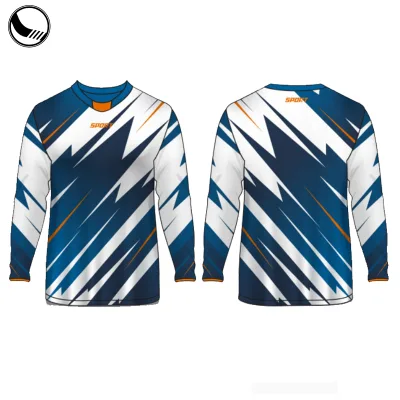
The printing technology employed is a key consideration for quality and longevity. The observed supply chain utilizes two primary methods: "Heat Transfer Print" and "Sublimation." Sublimation printing is particularly notable for its ability to infuse the dye into the polyester fibers, resulting in vibrant, patterned designs that do not crack or peel over time. This is ideal for "Patterned" jerseys where complex graphics are required. In contrast, heat transfer printing may be used for specific applications or smaller batch runs. The "Design" attribute is listed as "Customized," reinforcing the expectation that buyers will work with suppliers to create unique visual identities for their racing teams or promotional campaigns.
Size specifications in this sector are highly flexible. While some products are listed as "All Sizes" or "Free Size," others offer "Customized" sizing. This variability requires buyers to clearly define their target demographic, which is noted as "Adults" and "Unisex." The "Product Item" classification often falls under "Racing Wear" or "BMX Jersey," indicating that the design parameters are tailored for specific athletic activities. For promotional purposes, the "Promotional/Advertising" feature suggests that these jerseys can serve dual roles as functional gear and marketing tools, provided the customization capabilities are leveraged correctly.
Cost Drivers and Pricing Dynamics
The pricing structure for motorcycle jerseys is influenced by several factors, including material quality, customization complexity, and order volume. The observed listed price range in the market spans from 6 to 100 USD per unit. This wide variance suggests that the final cost is heavily dependent on the specific configuration of the order. Lower price points likely correspond to standard, off-the-shelf designs with minimal customization, while higher price points reflect complex sublimation patterns, specialized waterproofing, or premium fabric blends.
Minimum Order Quantity (MOQ) is a significant cost driver. The data indicates an MOQ range from 1 to 1500 units. The availability of "One Piece Avaliable" for small orders allows buyers to test the market or fulfill urgent, low-volume needs without a massive upfront capital commitment. However, as the order volume increases, the unit cost typically decreases due to economies of scale in production and material procurement. Buyers must balance the need for customization against the financial implications of higher MOQs. For large-scale procurement, negotiating a lower MOQ or a tiered pricing structure based on volume is a standard strategy.
Additional cost factors include the supply style and logistics. Suppliers offering "OEM or ODM Service" may charge a premium for the design and engineering support required to create custom molds or patterns. The "Shipment" method, such as "DHL," also impacts the total landed cost. While expedited shipping ensures faster delivery, it adds to the overall expense. Buyers should calculate the total cost of ownership, including the unit price, shipping fees, and any potential tariffs, rather than focusing solely on the base product price. The "Small Orders: Accepted" attribute indicates a flexible market, but buyers should be aware that per-unit costs for small batches will inherently be higher than for bulk orders.
Compliance, Certification, and Quality Verification
Ensuring compliance and verifying quality are paramount when sourcing protective gear like motorcycle jerseys. While the specific product listings do not explicitly confirm certification status for every item, the market generally expects adherence to safety standards for racing apparel. Buyers should be aware that certifications such as "CE" are relevant in this sector, although the provided data does not guarantee that every listed product holds this status. It is the buyer's responsibility to request and verify certification documents from the supplier before placing a large order.
Quality verification should begin with the material specifications. The consistent mention of "100% polyester" and "100% polyester" fabric suggests a baseline standard, but buyers must verify the density and weave quality of the knitted fabric. High-quality jerseys should demonstrate resistance to tearing and abrasion, which are critical for rider safety. The "Feature" attributes like "Compressed" and "Moisture Absorption" should be validated through physical inspection or third-party testing reports. Buyers should not rely solely on marketing claims but should request sample testing results for breathability, water resistance, and durability.
The production origin is another factor in compliance. The data indicates that products originate from "China," specifically from regions like "Shenzhen" and "Jiangsu." While these are established manufacturing hubs, buyers should conduct due diligence on the specific factory's reputation and adherence to international labor and safety standards. The "Product Standard" is listed as "100% polyester," but buyers should confirm if there are additional standards regarding fire resistance or impact protection, especially for high-speed racing applications.
Supplier Evaluation and Operational Capabilities
Evaluating potential suppliers requires a comprehensive assessment of their operational capabilities, lead times, and service models. The supply chain data reveals a diverse range of lead times, with "Sample" production taking between 5-7 days and full "Delivery" estimated at 9 workdays for some items, while others list a "Sample Time" of 15-21 days. This discrepancy highlights the importance of clarifying timelines early in the negotiation process. Buyers must distinguish between the time required for prototyping and the time needed for mass production to avoid delays in their supply chain.
The "Service" attribute, listed as "OEM ODM," indicates that suppliers are capable of handling complex manufacturing requests. However, buyers should verify the supplier's capacity to handle their specific volume requirements. The "MOQ" range of 1-1500 suggests flexibility, but suppliers with higher MOQs may offer better pricing and more consistent quality control. The "Product Packing" details, such as "1 Piece Poly Bag" or "50-100 Pieces Carton Package," provide insight into the supplier's logistics capabilities. Efficient packaging is essential for protecting the product during transit and ensuring it arrives in pristine condition.
Communication and responsiveness are also critical factors. The availability of "Customization" and "Design" services implies a collaborative relationship between the buyer and the supplier. Buyers should assess the supplier's ability to provide technical support, such as pattern adjustments or fabric recommendations, throughout the production process. The "Team Name" and "Brand" customization options suggest that suppliers are experienced in handling branding requirements, but buyers should confirm their capacity to manage complex design files and ensure accurate reproduction.
Long-Term Procurement and Application Strategy
For long-term procurement, buyers should consider the versatility and application of the motorcycle jerseys. The "Usage" attribute identifies these products primarily for "Racing," but the "Applicable" field also includes "Outdoor Worker," suggesting a broader potential market. This versatility allows buyers to diversify their product lines or target different customer segments with the same base product. The "Season" attribute, specifically "Winter," indicates that these jerseys can be adapted for seasonal campaigns, providing a strategic advantage in managing inventory throughout the year.
Sustainability and supply chain resilience are becoming increasingly important in B2B procurement. While the current data does not explicitly mention sustainable materials, the use of polyester is a standard that buyers can evaluate for recycled content or eco-friendly production processes. Establishing a long-term relationship with a supplier who offers consistent quality and reliable lead times is crucial for maintaining a stable supply chain. Buyers should aim to secure a supplier that can scale production as their business grows, ensuring that the "MOQ" and pricing structures remain favorable over time.
Finally, buyers should develop a robust quality control protocol for long-term orders. This includes regular inspections, sample testing, and feedback loops with the supplier. By maintaining high standards and clear communication, buyers can ensure that the motorcycle jerseys meet their performance and safety requirements consistently. The ability to customize and adapt to changing market trends, such as new racing regulations or fashion shifts, will be key to the long-term success of the procurement strategy.
FAQs
What materials are used for motorcycle jerseys?
Motorcycle jerseys are primarily made from 100% polyester fabric. This synthetic material is knitted to provide durability, abrasion resistance, and the necessary elasticity for dynamic riding movements.
Can I get custom designs and branding?
Yes, customization is widely available with OEM or ODM services. Buyers can request specific team names, custom brands, and unique patterns using sublimation or heat transfer printing methods.
What is the minimum order quantity for samples?
One piece is available for small orders, allowing buyers to test products before bulk purchasing. However, standard bulk orders may require higher quantities depending on the specific supplier configuration.
How long does it take to receive samples?
Sample lead times vary between 5 to 21 days depending on the specific product and customization requirements. Some standard items can be ready in 5 to 7 days, while complex designs may take up to 21 days.
Which features ensure comfort during racing?
Key features include breathable, quick-drying, and moisture-wicking properties to manage sweat effectively. Some advanced options also offer windproof and waterproof capabilities for winter or adverse weather conditions.
What printing technologies are used for designs?
The supply chain utilizes sublimation and heat transfer printing for designs. Sublimation infuses dye into polyester fibers for vibrant, durable patterns, while heat transfer is used for specific applications.
Where are these jerseys manufactured?
Products originate from China, specifically from manufacturing hubs in Shenzhen and Jiangsu. These regions are established centers for producing knitted polyester racing wear and promotional apparel.
What is the price range for motorcycle jerseys?
The observed price range spans from 6 to 100 USD per unit. Costs vary based on material quality, customization complexity, and order volume, with lower prices for standard designs and higher prices for specialized gear.