Source Multifunctional Food Flour Grinding Mill for Wheat, Corn, Rice
Find 30 Multifunctional Food Flour Grinding Mill units from verified suppliers in China. Compare specifications like output capacity, motor power, and screen mesh sizes for wheat, corn, and rice processing needs.
Key considerations
Products List


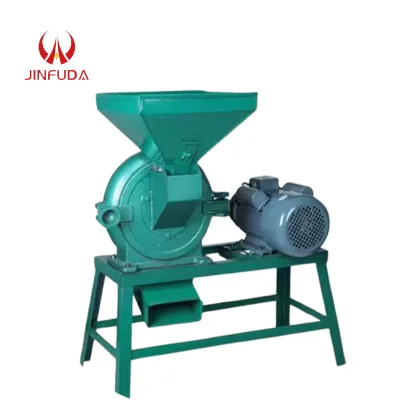
Best Flour Mill Portable Flour Milling Machine Maize Flour Milling Machine Pepper Mill Rice
$149.00 - $349.00
MOQ: 1 Minimum

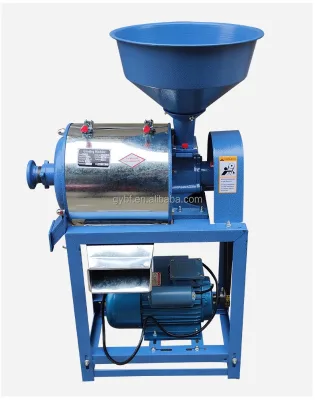


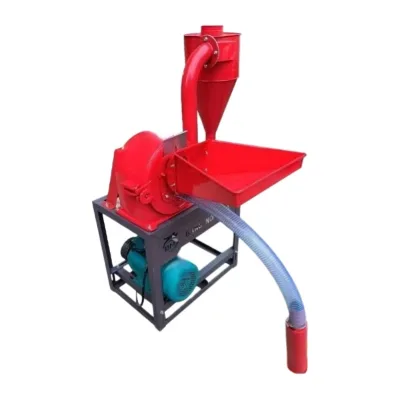
Comprehensive Sourcing Guide
Strategic Sourcing Guide for Multifunctional Food Flour Grinding Mills
Understanding the Technical Landscape of Grinding Equipment
When sourcing a Multifunctional Food Flour Grinding Mill, buyers must first distinguish between the specific mechanical architectures available in the current market. The core keyword often encompasses a broad spectrum of machinery, ranging from high-speed tooth claw mills to vertical roller mills. Based on current industry observations, the market presents distinct configurations tailored to different processing needs. One prominent category is the Tooth Claw Mill, characterized by its ability to handle mixed feed through a crushing-before-mixing process. These units typically feature a driven engine that can be either an electric motor or a diesel engine, offering flexibility for operations with unstable power grids.
The technical specifications for these units vary significantly based on the intended output and the material being processed. For instance, a specific model designated as M-360 operates with an output capacity of 1,000kg/H and is constructed from high-quality casting iron. This model utilizes a T-tooth configuration with four pieces of high-quality teeth, paired with a matched electric motor power of 7.5kw or a 15.0HP diesel engine. In contrast, another category of equipment, often labeled as vertical flour mills, presents different performance metrics. These units may feature roller teeth configurations with 16, 18, or 20 teeth, designed for applications involving flour, rice flour, and wheat. The power requirements for these vertical units can range from 11kw to 22kw, with weights varying between 760kg and 850kg depending on the specific configuration.
Screen mesh technology is a critical differentiator in these machines. The availability of screen mesh allows buyers to control the particle size of the final product. Observed specifications indicate that screen hole sizes can range from 0.2mm up to 2.0mm, including intermediate sizes of 0.4mm, 0.6mm, 0.8mm, 1.0mm, and 1.2mm. This variability is essential for buyers targeting specific end-products, whether it is fine flour for baking or coarser meal for animal feed. The machine material is consistently noted as high-quality casting iron, ensuring durability under the stress of continuous grinding operations. Buyers should verify that the specific unit they are evaluating includes the necessary screen mesh components, as this is a defining attribute of the grinding process.
Compliance, Certification, and Safety Standards
Navigating the compliance landscape for industrial grinding equipment requires a clear understanding of what constitutes a verified standard versus a market claim. While the core keyword implies a global product, the actual supply chain often originates from specific manufacturing hubs in China, such as Henan Province and Shandong Province. When evaluating suppliers, buyers must be cautious regarding certification claims. The presence of a "CE" mark is often observed in the background of product listings, but this should be treated as a background observation rather than a guaranteed attribute of every listed unit.
Buyers should not assume that a product listing automatically satisfies international safety standards without direct verification. The procurement process must include a request for the specific test reports and certification documents that validate the electrical and mechanical safety of the machine. For instance, the voltage specifications for these mills vary, with common configurations operating at 380V, while others may support 220V or offer customized voltage options. This variability necessitates a strict review of the electrical compatibility with the buyer's local infrastructure. A machine designed for 380V three-phase power will not function correctly on a 220V single-phase system without significant modification or the use of a transformer.
Furthermore, the "prod_standard" attribute often appears in product data, sometimes referencing model numbers like M-360 or specific dimensional standards. However, these references can be internal manufacturer codes rather than international safety certifications. Buyers must distinguish between a model standard and a safety compliance standard. When a supplier claims compliance, the buyer should request the official certificate issued by an accredited third-party testing laboratory. This is particularly important for equipment intended for export to markets like Bhutan, Nepal, Uganda, Cameroon, or South America, where local regulations may have specific requirements for industrial machinery. The absence of a specific certification in the provided data means the buyer must treat all compliance claims as unverified until documented proof is presented.
Cost Drivers and Pricing Dynamics
The pricing of multifunctional food flour grinding mills is influenced by a complex array of factors, resulting in a wide observed price range from $80 to $300,000. This significant variance is not arbitrary but reflects differences in capacity, power, material quality, and customization levels. The lower end of the price spectrum typically corresponds to smaller, single-function units with lower output capacities and standard motor configurations. In contrast, the higher price points are associated with high-capacity industrial units, such as those with output capacities of 1,000kg/H or more, featuring robust casting iron construction and advanced customization options.
One of the primary cost drivers is the power system. Units equipped with high-power electric motors, such as the 7.5kw or 22kw options, or those paired with diesel engines like the 15.0HP unit, will command a higher price. The choice between an electric motor and a diesel engine also impacts the overall cost, as diesel engines often include additional components like fuel tanks and exhaust systems. Additionally, the customization of the machine plays a crucial role in pricing. While some units are offered as standard "New" condition items with fixed specifications, others offer "Customized" options that allow buyers to tailor the voltage, screen mesh size, or even the overall dimensions to their specific facility requirements.
The packaging and shipping logistics also contribute to the final cost. Products are often shipped in special tailored wooden cases or plywood cases to protect the machinery during transit. The package size, noted as 1cbm for certain models, directly influences freight charges. Buyers must consider that the listed price may or may not include these specialized packaging costs and international shipping fees. Furthermore, the Minimum Order Quantity (MOQ) can affect the unit price. The observed MOQ range of 1 to 10 units suggests that buyers can often purchase a single unit, but bulk orders may negotiate better pricing structures. It is essential for buyers to request a detailed breakdown of costs, separating the machine price, packaging, and shipping to avoid hidden expenses.
Typical Applications and Processing Capabilities
The versatility of multifunctional food flour grinding mills makes them suitable for a diverse range of agricultural and food processing applications. The primary processing object for these machines is often mixed feed, but their capabilities extend far beyond this. The applications field includes a wide variety of grains and spices, such as wheat, maize, corn, paddy, rice, chilli, and pepper. This broad applicability allows a single machine to serve multiple production lines, reducing the need for specialized equipment in smaller processing facilities.
The processing technics employed by these mills, such as crushing-before-mixing, are designed to optimize the efficiency of the grinding process. This method ensures that the raw materials are properly reduced in size before being mixed, leading to a more uniform final product. The output capacity of these machines is a critical factor in determining their suitability for different scales of operation. For example, a unit with an output of 1,000kg/H is ideal for medium to large-scale commercial operations, while units with outputs of 400kg to 600kg may be better suited for smaller enterprises or pilot plants.
The specific application also dictates the required screen mesh and roller teeth configuration. For flour production, finer screen meshes are necessary to achieve the desired texture. The availability of screen hole sizes ranging from 0.2mm to 2.0mm allows buyers to select the precise mesh required for their target product. Similarly, the roller teeth configuration, with options for 16, 18, or 20 teeth, influences the grinding efficiency and the type of material that can be processed. For instance, soybean and corn processing may require different tooth configurations compared to wheat or rice flour production. Buyers should carefully match the machine's specifications to their intended application to ensure optimal performance and product quality.
Supplier Evaluation and Verification Protocols
Evaluating suppliers for multifunctional food flour grinding mills requires a rigorous approach to verify the authenticity of the product claims and the reliability of the vendor. The origin of these machines is frequently cited as Henan Province or Shandong Province in China, regions known for their manufacturing capabilities. However, the presence of a location does not guarantee quality. Buyers must conduct due diligence to confirm the supplier's manufacturing capacity, quality control processes, and after-sales support.
A key aspect of supplier evaluation is the verification of product attributes. For example, the "prod_model" and "prod_standard" fields should be cross-referenced with the physical machine to ensure consistency. Buyers should request detailed technical drawings and specifications that match the advertised model numbers, such as M-360, 6FD, or 9FC/FFC. Additionally, the "prod_packing" method, whether it is a special tailored wooden case or a plywood case, should be verified to ensure it meets the requirements for safe international transport.
Buyers should also assess the supplier's ability to provide customization. While some units are listed as "Non-Customized," others offer "Customized" options for voltage, engine type, and other parameters. The ability to tailor the machine to specific needs is a strong indicator of a supplier's flexibility and technical expertise. Furthermore, the "Condition" of the machine, typically listed as "New," should be confirmed through photos or video inspections. Buyers should avoid suppliers who are vague about the condition of the equipment or who cannot provide clear evidence of the machine's current state.
Quality Control and Long-Term Procurement Considerations
Implementing a robust quality control (QC) strategy is essential when procuring multifunctional food flour grinding mills. Given the mechanical complexity and the high-stress environment in which these machines operate, QC measures must be comprehensive. Buyers should establish clear acceptance criteria based on the observed specifications, such as the main machine weight, output capacity, and material composition. For instance, verifying that the machine is constructed from high-quality casting iron is a fundamental QC step.
Long-term procurement considerations extend beyond the initial purchase. Buyers must evaluate the availability of spare parts, such as T-tooth components and screen meshes, to ensure minimal downtime during operations. The "T-Tooth Quality" and the availability of different screen hole sizes are critical factors for maintaining the machine's performance over time. Additionally, the "Driven Engine" type, whether electric or diesel, impacts the long-term maintenance costs and the availability of service technicians.
Buyers should also consider the lead time and the logistical aspects of the procurement process. While specific lead times are not provided in the observed data, the complexity of the machine and the customization options can significantly affect the delivery schedule. The package size of 1cbm and the use of specialized wooden cases indicate that shipping logistics must be carefully planned. Finally, buyers should establish a clear communication channel with the supplier for ongoing support, ensuring that any technical issues can be resolved promptly. By focusing on these long-term factors, buyers can secure a reliable and efficient grinding mill that meets their operational needs for years to come.
Comparative Analysis of Key Specifications
To facilitate informed decision-making, the following table summarizes the key specifications observed across different models of multifunctional food flour grinding mills. This comparison highlights the variations in capacity, power, and material that buyers should consider when selecting the right equipment for their specific needs.
| Specification | Model M-360 (Tooth Claw Mill) | Model 6FD (Vertical Mill) | Model 9FC/FFC (Multi-Functional) |
|---|---|---|---|
| Output Capacity | 1,000kg/H | 400/500/600kg | Not specified |
| Main Machine Weight | 180kg | 760/810/850kg | Not specified |
| Driven Engine | Electric Motor (7.5kw) or Diesel (15.0HP) | 11/15/22kw | Not specified |
| Voltage | 380V/Customized | 380V | 220V |
| Screen Mesh | With Screen Mesh (0.2mm-2.0mm) | Not specified | Not specified |
| Material | High Quality Casting Iron | Not specified | Not specified |
| Origin | Henan Province, China | Shandong, China | China |
| Applications | Wheat, Maize, Corn, Paddy, Rice, Chilli, Pepper | Flour, Rice flour, Wheat | Flour, Beans, Wheat |
| Packing | Special Tailored Wooden Case | Wooden Box | Plywood Cases |
This comparative overview underscores the importance of matching specific technical requirements to the available models. Buyers should use this data as a starting point for further inquiry, ensuring that the selected machine aligns with their production goals and operational constraints.
FAQs
What is the output capacity of the M-360 grinding mill?
The M-360 model offers an output capacity of 1,000kg per hour. This high-volume capability makes it suitable for medium to large-scale commercial operations processing mixed feed or grains.
Which engine types are available for the tooth claw mill?
The machine can be driven by either an electric motor or a diesel engine. Specific configurations include a 7.5kw electric motor or a 15.0HP diesel engine to suit different power grid conditions.
Can the screen mesh size be customized for specific materials?
Yes, the screen mesh is available with various hole sizes ranging from 0.2mm to 2.0mm. This allows users to select precise particle sizes for different applications like flour or coarse meal.
What materials are used to construct the main machine body?
The main machine body is constructed from high-quality casting iron. This durable material ensures the equipment can withstand the stress of continuous grinding operations for grains and spices.
How is the machine packaged for international shipping?
The equipment is shipped in special tailored wooden cases or plywood cases. This packaging method, often measuring around 1cbm, ensures the machinery remains protected during transit to destinations like Bhutan or Nepal.
What is the voltage requirement for the electric motor version?
The standard voltage is 380V, though customized voltage options are available. Buyers must verify their local power infrastructure matches these specifications before purchasing to ensure proper operation.