Source Multifunctional Self-Defense Tire Pressure Tester for Cars Trucks Motorcycles
Explore 30 listings for the multifunctional self-defense tire pressure tester suitable for automotive, hydraulic, and pneumatic applications. Buyers can compare specifications like measuring ranges, calibration standards, and material durability across various models from Jiangsu, China.
Key considerations
Products List


Accurate & Heavy Duty Air Pressure Tire Gauge for Car Truck Motorcycle Bicycle
$2.50 - $3.00
MOQ: 1000 Pieces


$10000.00 - $50000.00
MOQ: 1 Sets

$10000.00 - $50000.00
MOQ: 1 Sets


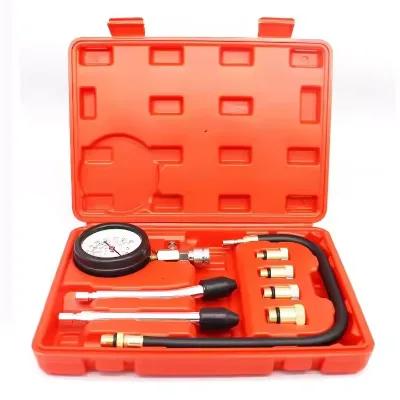
Customized Cheap Oil Pressure Gauge Multi-Function Tester Car Repair Tool
$4.18 - $4.73
MOQ: 240 Pieces


Comprehensive Sourcing Guide
Strategic Sourcing Guide for Multifunctional Self-Defense Tire Pressure Testers
The global procurement landscape for automotive diagnostic and safety equipment has expanded significantly, with buyers increasingly seeking versatile tools that combine pressure measurement with broader utility. The core keyword "multifunctional self-defense tire pressure tester" suggests a demand for devices that not only monitor tire integrity but also serve as general-purpose pressure testing instruments for various industrial and automotive applications. Based on current market data, this category encompasses a diverse range of products, from specialized automotive gauges to universal hydraulic and pneumatic testers. Procurement professionals must navigate a complex array of specifications, certifications, and supplier capabilities to ensure the acquisition of reliable equipment. This guide provides a structured approach to sourcing these tools, focusing on technical verification, compliance, and long-term value.
Technical Specifications and Functional Versatility
Understanding the technical architecture of the product is the first step in a successful procurement process. The term "multifunctional" in this context often refers to the device's ability to operate across different media and vehicle types. Data indicates that these testers are frequently designed with a "Universal" car fitment, making them suitable for cars, trucks, motorcycles, and automobiles. The functional scope extends beyond simple tire inflation checks; many units are engineered for hydraulic, pneumatic, and water treatment applications. This versatility is critical for buyers who require a single tool for maintenance in diverse environments, such as automotive repair shops, construction sites, or industrial facilities.
The physical construction of these testers varies, influencing their durability and application. Specifications highlight materials such as steel with rubber cases, zinc components, and ABS & rubber combinations. These material choices directly impact the tool's resistance to corrosion and mechanical shock. For instance, a "Steel&rubber" standard suggests a robust build for heavy-duty use, while "ABS & rubber" may indicate a focus on lightweight portability for specific automotive diagnostics. The installation structure is another key technical parameter, with options including convex, direct mounting, and embedded configurations. Buyers must align these structural requirements with their specific workflow, whether the tool needs to be permanently mounted on a machine or carried as a portable unit.
Performance metrics are equally vital. The measuring range is a primary differentiator, with observed specifications ranging from 0-60 Psi to 0-100 Psi and broader high-pressure gauge capabilities. The calibration range is a critical factor for accuracy; some units are calibrated specifically for 0-100 Psi, while others cover 0-60 Psi. Procurement teams should verify that the selected model's range matches the maximum pressure requirements of their intended applications. Additionally, the indicating pressure reference is typically a general pressure gauge, though some advanced models feature electric signal-controlled functions alongside local indication types. The working style, often described as reciprocating type, and the degree of automation, which can be semi-automatic, further define the user experience and operational efficiency.
Compliance, Certification, and Safety Standards
In the B2B sector, compliance is not merely a formality but a prerequisite for market access and operational safety. When sourcing pressure testing equipment, verifying certifications is essential to ensure the product meets international safety and quality benchmarks. The supply chain for these tools often includes products bearing ISO, RoHS, and CE certifications. These marks indicate adherence to specific international standards regarding quality management, restriction of hazardous substances, and European safety requirements. However, buyers must exercise caution; the presence of a certification mark on a product listing does not guarantee that every unit in a batch is certified. Verification should be conducted through direct communication with the supplier to confirm the validity of these certificates for the specific model number being purchased.
Safety standards are particularly important for devices labeled as "self-defense" or intended for high-pressure environments. While specific test data is not universally available in public listings, the "Durability" attribute is often cited as "Long," suggesting a design philosophy focused on longevity and safety under stress. The "Condition" of the product is typically listed as "New," but buyers should request evidence of factory testing to ensure the tool has not been refurbished or damaged prior to shipment. Furthermore, the "Quality" attribute is frequently described as "Good," a subjective term that requires objective validation through third-party inspection reports or sample testing before a large order is placed.
Regulatory compliance also extends to the materials used in construction. Standards such as "ABS & rubber" or "Steel with rubber case" imply specific material compositions that must meet environmental and safety regulations. For instance, RoHS compliance ensures that the device does not contain restricted hazardous substances, which is crucial for export to regions with strict environmental laws. Buyers should explicitly request documentation proving that the raw materials and finished products comply with these standards, especially when the equipment is intended for use in regulated industries like automotive manufacturing or public transportation.
Cost Drivers and Pricing Dynamics
The pricing structure for multifunctional pressure testers is influenced by a combination of technical complexity, material costs, and order volume. The observed price range in the market is extensive, spanning from $1.86 to $50,000 USD. This vast disparity reflects the difference between basic, single-item units and complex, industrial-grade systems with advanced features. The lower end of the spectrum likely corresponds to simple, manual gauges with basic calibration, while the higher end may include sophisticated, semi-automatic systems with electric signal control and extensive calibration capabilities.
Minimum Order Quantity (MOQ) is another significant cost driver. The observed MOQ range varies from 1 to 2000 units, offering flexibility for different buyer profiles. Small businesses or those testing a new product line can often secure single items or small batches, whereas large-scale procurement requires meeting higher volume thresholds to achieve economies of scale. The "Small Orders: Accepted" attribute indicates that many suppliers are willing to accommodate smaller initial orders, which is beneficial for risk mitigation during the supplier selection phase. However, buyers should be aware that unit prices may decrease as the order volume increases, making it essential to negotiate based on the total projected annual demand.
Additional cost factors include customization and packaging. The "Customized: Customized" and "Customization: Available" attributes suggest that suppliers can modify product specifications, branding, or packaging to meet specific client needs. These value-added services often incur additional costs but can enhance the product's marketability and brand alignment. Packaging options, such as "Individual Color Box," "White Box," "Insert Card," or "Blister Card," also impact the final price. Buyers should evaluate whether premium packaging is necessary for their target market or if standard packaging suffices to reduce overall procurement costs.
Typical Applications and Operational Context
The application scope of these testers is broad, reflecting their multifunctional design. Primarily categorized under "Automotive Tools" and "Repair Tools," these devices are essential for maintaining vehicle safety and performance. The "Car Fitment" being "Other, Universal" confirms their adaptability across various vehicle types, including cars, trucks, and motorcycles. This universality makes them ideal for general repair shops, fleet maintenance facilities, and roadside assistance services.
Beyond automotive applications, the "Fit for Use" attribute highlights their utility in hydraulic, pneumatic, and water treatment systems. This versatility allows industrial buyers to utilize a single type of tool for multiple maintenance tasks, reducing the need for specialized equipment. For example, a tester designed for car tires can also be used to check pressure in pneumatic systems or hydraulic lines in construction machinery. The "Pneumatic Drill Range" being associated with "Construction Machinery" further underscores the tool's relevance in heavy industry settings.
The "Working Style" and "Screwdriver Startup Mode" also dictate the operational context. A "Reciprocating Type" working style and "Hand Press" startup mode suggest manual operation, which is suitable for environments where power sources are limited or where precise manual control is preferred. Conversely, "Electric signal-controlled" functions and "Under Pressure" startup modes indicate a higher level of automation, suitable for high-volume production lines or automated testing facilities. Buyers must assess their operational environment to determine the appropriate level of automation and control required for their specific use cases.
Supplier Evaluation and Quality Assurance
Selecting the right supplier is critical to ensuring the quality and reliability of the sourced products. The "Place of Origin" is consistently listed as "Jiangsu, China," a region known for its manufacturing capabilities. However, the location alone does not guarantee quality. Buyers should conduct a thorough evaluation of the supplier's production capacity, quality control processes, and track record. The "Single gross weight" of 1.000 kg and "Single package size" of 13X8X9 cm provide insights into the logistics and shipping requirements, which can affect the overall cost and delivery timeline.
Quality assurance should be a central part of the supplier evaluation process. Buyers should request samples to verify the "Quality" attribute, which is often described as "Good" in listings but requires physical inspection. Testing the calibration accuracy, durability, and material integrity of the samples is essential before committing to a large order. Additionally, verifying the "Certification" status through official channels is necessary to ensure that the claimed ISO, RoHS, and CE marks are valid and applicable to the specific product model.
Communication and responsiveness are also key indicators of a reliable supplier. The "Update Method: by Email" suggests that suppliers may use email for product updates and support. Buyers should assess the supplier's ability to provide timely and accurate information regarding product specifications, lead times, and any changes in manufacturing processes. A supplier that is transparent and responsive is more likely to deliver a consistent product quality and maintain a long-term partnership.
Long-Term Procurement and Maintenance Considerations
Sourcing these tools is not just a one-time transaction but the beginning of a long-term relationship. Buyers should consider the long-term implications of their procurement decisions, including maintenance, calibration, and product lifecycle. The "Calibration" attribute, with ranges like 0-100 Psi or 0-60 Psi, indicates that regular calibration may be necessary to maintain accuracy. Buyers should inquire about the availability of calibration services or the ease of performing in-house calibration.
The "Durability" attribute, described as "Long," suggests that the products are designed for extended use. However, the actual lifespan will depend on the frequency of use and the operating conditions. Buyers should plan for periodic replacement or maintenance to ensure continuous operation. Additionally, the "Customization" options allow for future modifications, which can extend the product's relevance as needs evolve.
Finally, buyers should consider the total cost of ownership, including shipping, tariffs, and potential downtime due to equipment failure. By selecting high-quality, certified products from reputable suppliers, buyers can minimize these risks and ensure a reliable supply chain. The "Small Orders: Accepted" feature provides flexibility for initial testing, allowing buyers to scale up their orders as they gain confidence in the product and supplier. This strategic approach ensures that the procurement process is efficient, cost-effective, and aligned with long-term business goals.
FAQs
What certifications do these testers have?
The products carry ISO, RoHS, and CE certifications. These marks indicate adherence to international safety and quality standards, but buyers must verify validity for specific models through direct supplier communication.
Where are these products manufactured?
All listed items originate from Jiangsu, China. This region is a known manufacturing hub, though buyers should evaluate individual supplier production capacity and quality control processes before placing orders.
Can I order small quantities of these testers?
Yes, small orders are accepted with a minimum order quantity ranging from 1 to 2000 units. This flexibility allows businesses to test products or fulfill immediate needs without large inventory commitments.
What materials are used in construction?
Materials include steel with rubber cases, zinc components, and ABS combined with rubber. These choices impact durability and resistance to corrosion, suitable for both automotive and industrial hydraulic applications.
How is the pressure calibrated?
Calibration ranges observed include 0-60 Psi and 0-100 Psi. Buyers must select a model where the calibration range matches the maximum pressure requirements of their specific hydraulic or pneumatic applications.
Is customization available for branding?
Customization is available for product specifications and branding. Suppliers can modify packaging options like color boxes or blister cards, though these value-added services may affect the final unit price.