Source Natural Stone Beaded Necklace for gifts, fashion, and decoration
Compare 30 listings for Natural Stone Beaded Necklace options featuring stainless steel, gold plating, and various pendant shapes. Buyers can evaluate styles, MOQs, and customization features from suppliers in China.
Key considerations
Products List
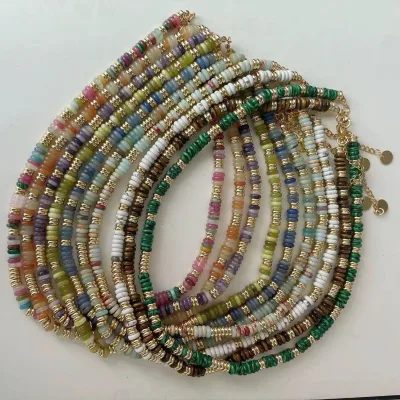


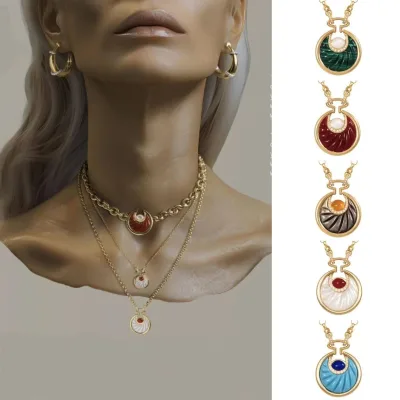


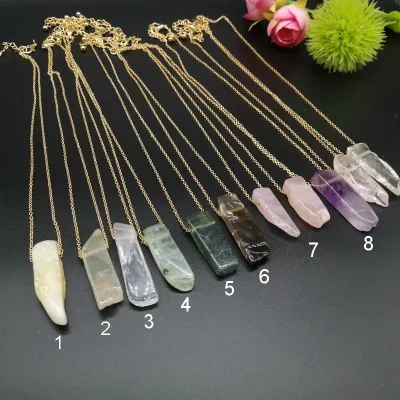


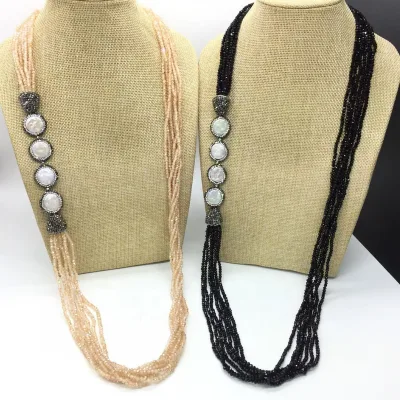
Comprehensive Sourcing Guide
Strategic Sourcing Guide for Natural Stone Beaded Necklaces
The global market for natural stone beaded necklaces presents a complex landscape for B2B buyers seeking to balance aesthetic appeal with supply chain reliability. While the core keyword suggests a focus on gemstone materials, the actual procurement reality often involves a diverse array of metal settings, plating technologies, and design variations that define the final product's market positioning. Buyers must navigate a supply chain where "natural stone" is frequently paired with stainless steel bases, gold or silver plating, and various chain types to meet specific price points and durability requirements. This guide provides a structured approach to evaluating suppliers, verifying technical specifications, and ensuring compliance without relying on unverified claims.
Technical Specifications and Material Composition
When sourcing natural stone beaded necklaces, the primary technical focus must be on the integrity of the materials and the construction of the jewelry components. The core material often cited in high-volume listings is stainless steel, which serves as a durable, hypoallergenic base for the beading process. This metal is frequently enhanced with plating technologies, specifically 18K gold plating or combinations of gold and silver finishes, to achieve the desired aesthetic. Buyers should verify the thickness of the plating, as this directly correlates with the product's resistance to tarnishing and fading over time.
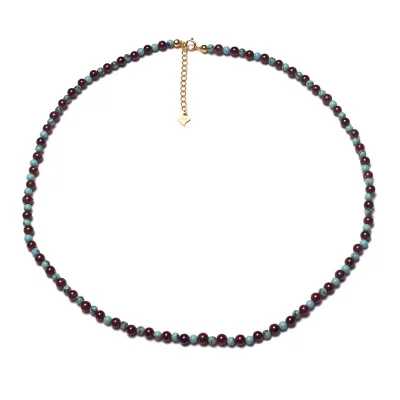
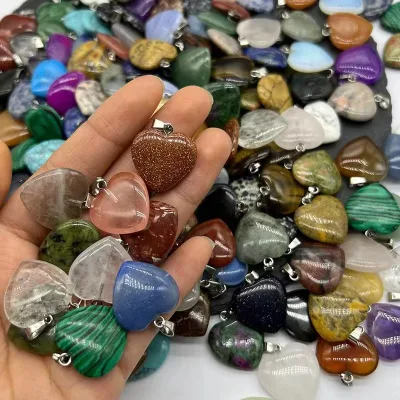
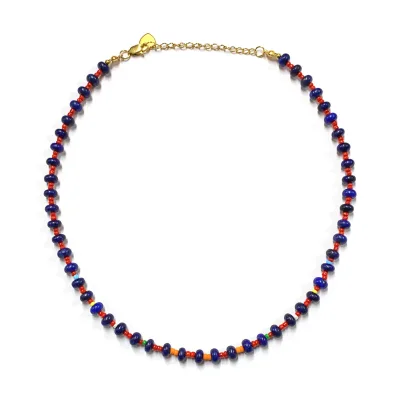
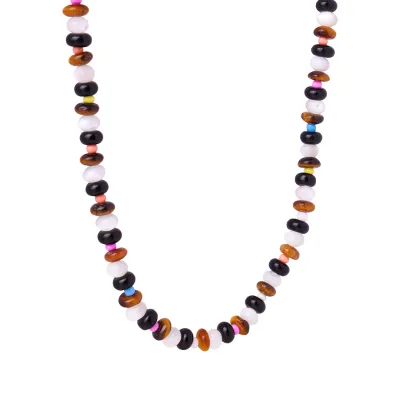
The design specifications vary significantly across suppliers. Common attributes include specific pendant shapes such as hearts, flowers, crosses, and circles, which are often attached to link chains. The chain type itself is a critical specification; link chains are prevalent, but the gauge and length must be confirmed against the intended market. Standard length specifications often appear in formats like 50cm plus a 6cm extension or 45cm plus a 5cm extension, providing flexibility for different neck sizes. Additionally, the packaging dimensions are essential for logistics planning, with single package sizes ranging from compact 3x3x3 cm units to larger cartons measuring 11x8x2 cm or 8x10 cm.
The weight of the product is another vital technical parameter. While some listings indicate a single gross weight of 0.500 kg for a set, individual item weights can vary, with specific models noting weights around 32g. These figures are crucial for calculating shipping costs and determining the perceived value of the item. The "natural stone" aspect must be scrutinized; while the core keyword implies genuine gemstones, the provided data suggests that many products in this category utilize stainless steel as the main material, with the stone elements potentially being synthetic or treated. Buyers must explicitly confirm the nature of the stones to ensure alignment with marketing claims.
Compliance, Certification, and Regulatory Standards
In the jewelry sector, compliance is not merely a formality but a prerequisite for market access, particularly in regions with strict regulations regarding precious metals and allergens. A high-confidence fact observed in the supply data is the prevalence of "Third Party Appraisal" certificates. This indicates that suppliers often utilize external agencies to verify product quality and material composition. However, the existence of a certificate does not automatically guarantee that every listed product meets specific international standards; rather, it suggests a verification process is in place.
Buyers must verify the specific standards applied to the products. While general standards like "50cm+6cm" are noted for dimensions, specific material standards for natural stones or plating thickness are often not explicitly detailed in general listings. It is the buyer's responsibility to request test reports that confirm the absence of harmful substances such as lead, cadmium, or nickel, which are common concerns in jewelry manufacturing. The origin of the products, frequently listed as Zhejiang, China, or Guangdong, China, also plays a role in compliance, as different provinces may have varying levels of regulatory oversight.
Furthermore, the "Third Party Appraisal" mentioned in the data should be cross-referenced with the specific certification body to ensure its credibility. Buyers should not assume that a generic "Certificate Type" label satisfies all regulatory requirements for their target market. For instance, entering the European market may require REACH compliance, while the US market may focus on FDA guidelines for jewelry. The supplier's ability to provide up-to-date, market-specific documentation is a key indicator of their reliability.
Cost Drivers and Pricing Dynamics
The pricing of natural stone beaded necklaces is influenced by a complex interplay of material costs, labor, and customization requirements. The observed price range in the market spans from $0.06 to $12.00 USD, a wide variance that reflects differences in material quality, plating thickness, and design complexity. The lower end of this spectrum typically corresponds to products with thinner plating and simpler designs, while the higher end may reflect more intricate work or higher-quality stone inclusions.
Minimum Order Quantities (MOQs) are a significant cost driver. The data indicates an MOQ range from 5 to 1000 units, with specific listings showing MOQs of 50 sets or 50 pieces. Suppliers offering lower MOQs may charge a premium per unit due to the higher relative cost of setup and processing for smaller batches. Conversely, larger orders often benefit from economies of scale but require a higher upfront capital investment. Customization is a major factor in pricing; options for customized logos, specific pendant shapes, and tailored packaging are available but will invariably increase the unit cost.
The "Selling Units" are typically listed as single items, but the "MOQ" is often defined in sets. This distinction is critical for budgeting. Buyers must clarify whether the price per unit applies to a single necklace or a set of multiple pieces. Additionally, the "Single gross weight" of 0.500 kg for a package can significantly impact shipping costs, especially for international freight. Buyers should calculate the total landed cost, including freight, duties, and insurance, rather than focusing solely on the FOB price.
Typical Applications and Market Segmentation
Natural stone beaded necklaces are versatile products with applications spanning various market segments. The primary usage is listed as "Decoration," but the specific occasions and target demographics dictate the product's design and marketing strategy. The data highlights "Gift" as a primary occasion, suggesting that these items are often purchased for birthdays, anniversaries, or holidays. The "Style" attributes, ranging from "Trendy" and "Fashion" to "Simple" and "Elegant," indicate that the product line caters to diverse consumer preferences.
The gender suitability is another key segmentation factor. While some listings specify "Female," others indicate "Unisex," "Male," "Children," or "Elderly." This broad suitability suggests that the supply chain is capable of producing items for a wide demographic, from children's jewelry to adult fashion accessories. The "Suitable for" attributes often include multiple groups, implying that the design is adaptable. For example, a necklace with a heart or flower pendant might be marketed primarily to females, while a cross or circle pendant could appeal to a broader audience.
The "Product Name" often includes terms like "New Fashion Earrings," which indicates that suppliers may offer a range of jewelry types under similar branding. Buyers should ensure that the specific product they are sourcing matches the intended application. If the goal is to target the gift market, the packaging and presentation must align with gifting standards, such as the use of OPP bags, bubble bags, and cartons for protection. The "Feature" of "High Quality" is a common claim, but it must be substantiated by the actual product attributes and customer feedback.
Supplier Evaluation and Verification
Evaluating suppliers requires a rigorous approach to verifying their capabilities and reliability. The data shows that many suppliers offer "OEM/ODM/Custom" services, welcoming customization requests. This flexibility is a positive indicator of a supplier's adaptability, but it also requires careful management to ensure that the final product meets the buyer's specifications. The "Brand Name" TiaoTiaoHu is mentioned, but buyers should not rely on a single brand; instead, they should evaluate multiple suppliers based on their specific product offerings and track records.
Key evaluation criteria include the supplier's ability to provide accurate product descriptions, consistent quality, and timely delivery. The "Place of Origin" is listed as both Zhejiang and Guangdong, China, which are major manufacturing hubs. Buyers should verify the specific factory location to ensure it aligns with their logistical needs. The "Customization" options, including customized logos and specific pendant shapes, should be clearly defined in the contract to avoid disputes.
Furthermore, the "Product Name" and "Model Number" (such as QT-0417, AC066, 25082009, TS2026032003) serve as unique identifiers. Buyers should maintain a database of these model numbers to track inventory and ensure consistency across orders. The "prod_packing" details, such as "Carton" or "OPP Bag + Bubble Bag + Carton," are essential for logistics planning. A supplier that offers robust packaging solutions is more likely to deliver products in good condition, reducing the risk of returns and damage.
Quality Control and Long-Term Procurement Considerations
Quality control is paramount in the jewelry industry, where even minor defects can lead to significant customer dissatisfaction. The "Feature" of "High Quality" is a common assertion, but it must be validated through rigorous inspection processes. Buyers should implement a quality control protocol that includes visual inspections for plating defects, checks for chain integrity, and verification of stone placement. The "Single package size" and "Single gross weight" should be measured to ensure they match the supplier's specifications, as discrepancies can indicate production inconsistencies.
Long-term procurement considerations involve building a sustainable relationship with suppliers. The "OEM/ODM/Custom" capabilities suggest that suppliers are willing to grow with the buyer. However, buyers must ensure that the supplier can scale production without compromising quality. The "MOQ" flexibility is a positive sign, but buyers should negotiate terms that allow for gradual order increases as demand grows.
Additionally, the "Certificate Type" of "Third Party Appraisal" should be part of the ongoing quality assurance process. Regular audits and re-certification of products can help maintain high standards. The "Style" trends, such as "Trendy" and "Fashion," change rapidly, so buyers must stay informed about market shifts and adjust their product mix accordingly. The "Usage" as "Decoration" implies that the product must remain visually appealing over time, which requires durable materials and finishes.
Comparative Analysis of Product Attributes
To facilitate decision-making, the following table summarizes key product attributes observed in the supply data. This comparison helps buyers identify the most suitable options based on their specific requirements.
| Attribute | Observation 1 | Observation 2 | Observation 3 |
|---|---|---|---|
| Plating | 18K Gold Plated | Gold, Silver | Gold |
| Main Material | Stainless Steel | Stainless Steel | Stainless Steel |
| Pendant Shape | Heart, Flower, Cross, Circle | Flower | Cross, Circle |
| Chain Type | Link Chain | Link Chain | Link Chain |
| Style | Trendy, Simple, Elegant, Fashion | Trendy | Elegant, Fashion |
| Suitable For | Female | Female, Children, Elderly | Female, Male, Children, Elderly |
| MOQ | 50 sets | 50 PS | 5-1000 |
| Origin | Zhejiang, China | Guangdong, China | China |
| Packaging | Carton | OPP Bag + Bubble Bag + Carton | Carton |
| Certification | Third Party Appraisal | Third Party Appraisal | Third Party Appraisal |
This table highlights the variability in product attributes. While the core material and chain type remain consistent, the pendant shapes, styles, and target demographics vary widely. Buyers should use this data to filter suppliers based on their specific needs, ensuring that the selected products align with their brand identity and customer expectations.
In conclusion, sourcing natural stone beaded necklaces requires a meticulous approach that balances technical specifications, compliance, cost, and quality. By leveraging the observed data and adhering to rigorous evaluation standards, buyers can build a reliable supply chain that delivers high-quality products to their customers. The key lies in verifying every claim, understanding the nuances of the market, and maintaining a proactive stance on quality control and supplier relationships.
FAQs
What material is used for natural stone beaded necklaces?
The main material is stainless steel, often enhanced with gold or silver plating. While the keyword suggests natural stones, the data indicates stainless steel is the primary base, with plating options like 18K gold available for durability and aesthetic appeal.
Which certifications are available for these jewelry products?
Third Party Appraisal certificates are commonly available to verify product quality. Buyers should request specific test reports to ensure compliance with international standards for materials like lead and nickel, as the generic certificate type does not guarantee all regulatory requirements.
What are the standard length specifications for these necklaces?
Standard lengths include 50cm plus a 6cm extension or 45cm plus a 5cm extension. These dimensions provide flexibility for different neck sizes and are critical technical parameters that must be confirmed against the intended market requirements before ordering.
How does the minimum order quantity affect pricing?
MOQs range from 5 to 1000 units, with specific listings showing 50 sets or 50 pieces. Lower MOQs often carry a higher unit cost due to setup fees, while larger orders benefit from economies of scale but require higher upfront capital investment.
Can suppliers provide customized logos and packaging?
Yes, customization for logos and packaging is available and warmly welcomed by suppliers. Options include customized logos and specific packaging types like OPP bags or cartons, though these customizations will invariably increase the unit cost and require clear contract definitions.
Which pendant shapes are commonly offered in this category?
Common pendant shapes include hearts, flowers, crosses, and circles. These designs are attached to link chains and cater to diverse consumer preferences, with styles ranging from trendy and fashion to simple and elegant for various occasions like gifting.