Source Natural Sophora Japonica Rutin Powder for Medicine, Health Care, Food
Find 30 listings for Natural Sophora Japonica Rutin Powder suitable for medicine, health care products, and food applications. Buyers can compare specifications like purity, mesh size, and packaging options from verified Chinese suppliers offering free samples and various certifications.
Key considerations
Products List






Comprehensive Sourcing Guide
Strategic Sourcing Guide for Natural Sophora Japonica Rutin Powder
Procuring high-quality Natural Sophora Japonica Rutin Powder requires a disciplined approach that balances technical specifications with rigorous compliance verification. For B2B buyers in the pharmaceutical, food, and health care sectors, the distinction between generic botanical extracts and standardized Rutin (Rutinum) from specific plant sources is critical. This guide synthesizes observed market data and technical attributes to provide a framework for evaluating suppliers, ensuring product integrity, and managing procurement risks without relying on unverified claims or specific vendor recommendations.
Technical Specifications and Botanical Identity
The foundation of any successful procurement strategy for natural rutin lies in verifying the botanical source and the resulting chemical profile. The core keyword, Natural Sophora Japonica Rutin Powder, points to a specific extraction derived from the flower or seed of the Sophora japonica L. plant. Unlike generic "rutin" which might be synthesized or derived from other sources, authentic botanical rutin must be traceable to this specific Latin name to ensure the desired bioactivity.
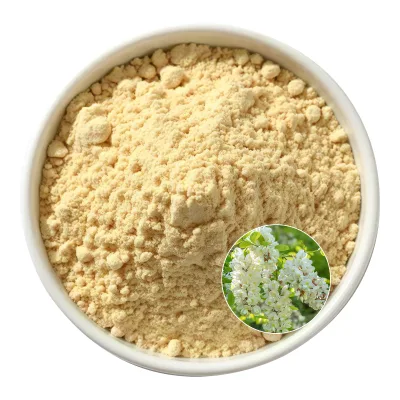
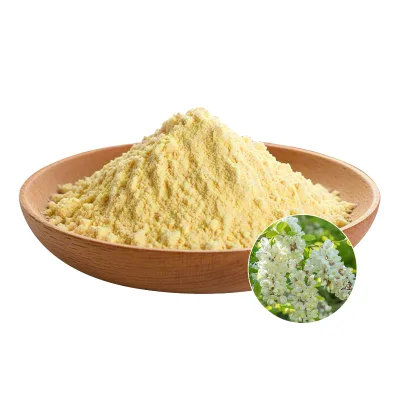
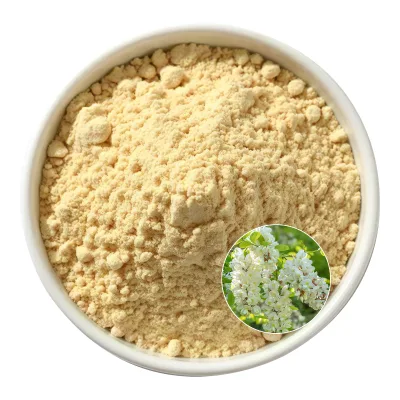
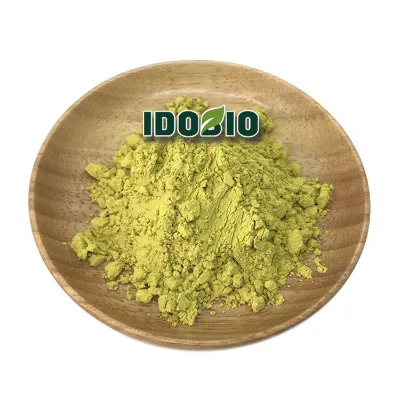
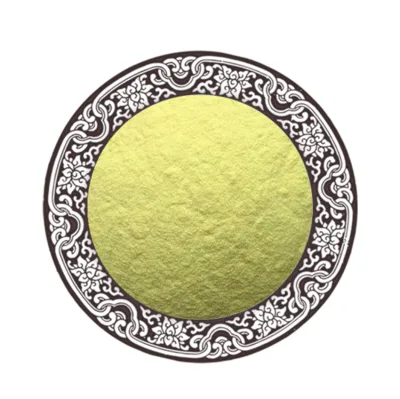
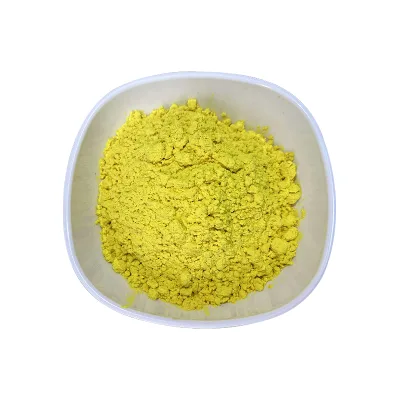
In the current market, the physical appearance of the product is a primary observation point. Buyers should expect a powder that ranges from light yellow to yellow-green in color. The particle size is a critical specification for downstream processing, particularly for capsule and tablet manufacturing. Market observations indicate that a mesh size of 80 mesh is standard, with specifications often requiring 100% of the material to pass through an 80-mesh sieve. This ensures uniform flow properties during the filling of capsules or the compression of tablets.
The chemical composition is equally vital. While some listings may reference "Rutin price" as a model identifier, the actual standard for the active ingredient is typically defined by purity percentages. Observed standards in the sector include assays where Rutin content reaches 95% or 98%, with some specifications claiming a range of 99% to 100% purity. The active ingredient is consistently identified as Rutin, though some data points may ambiguously list "Boswellic Acid" as an active component, which requires immediate clarification from the supplier as Boswellic Acid is chemically distinct from Rutin. Buyers must verify that the Assay Method is explicitly stated as HPLC (High-Performance Liquid Chromatography) or UV (Ultraviolet), as these are the industry-standard methods for quantifying flavonoid content. The extract solvent used is typically a combination of water and ethanol, a process known as solid extraction, which preserves the natural integrity of the compound.
Compliance, Certification, and Regulatory Standards
Navigating the regulatory landscape is perhaps the most complex aspect of sourcing botanical extracts. The market for natural rutin powder is heavily influenced by the certification status of the supplier and the final product. Buyers must verify that the product carries recognized certifications that align with their target market's requirements. Commonly observed certifications include USDA Organic, EU Organic, ISO, Kosher, Halal, and FDA registration.
Specific quality management systems are also prevalent. The ISO9001:2015 standard is frequently cited as a baseline for manufacturing processes, while HACCP (Hazard Analysis and Critical Control Points) is essential for food-grade applications. It is important to note that while ISO22000 and general ISO9001 are often mentioned in broader industry contexts, the specific ISO9001:2015 designation provides a more precise assurance of the quality management system in place.
Regulatory compliance extends to the product's intended application. The product is generally classified for use in Medicine, Health Care Products, and Food. This tripartite classification means the supplier must demonstrate compliance with Good Manufacturing Practices (GMP) suitable for pharmaceuticals, as well as food safety standards. The grade of the material is often listed as "Food, Pharmaceutical," indicating dual-purpose utility. However, buyers must confirm that the specific batch they purchase is certified for their intended use, as a food-grade certification does not automatically cover pharmaceutical applications without additional validation.
Cost Drivers and Pricing Structures
Understanding the cost structure of natural rutin powder involves analyzing several variables beyond the simple unit price. The observed price range in the market spans from $1 to $130 USD, a wide variance that reflects differences in purity, packaging, certification levels, and order volume. The primary cost driver is the assay standard; a product guaranteed at 98% or 99% purity will command a higher price than one at 95%.
Packaging plays a significant role in cost determination. The product is typically supplied in aluminum foil bags, paper drums, or fiber paper drums. The choice of packaging affects the unit cost, with larger drums (e.g., 25kg) generally offering a lower cost per kilogram compared to smaller retail-ready packages like 1kg or 5kg bags. The "prod_packing" attribute often lists multiple options, suggesting that buyers can negotiate packaging based on their logistics needs.
Minimum Order Quantity (MOQ) is another critical factor influencing the effective cost. While some suppliers may offer samples or small quantities, the standard bulk MOQ observed is 25kg. However, the broader market range for MOQs extends from 1 unit to 500 units, indicating flexibility for smaller buyers or larger distributors. Buyers should be aware that ordering below the standard 25kg bulk threshold may result in a significantly higher per-unit price. Additionally, the availability of stock, often cited as "In Stock" with regular stock levels around 4 tons, can impact lead times and pricing stability. Products that are "Promptly" available may carry a premium compared to those requiring a 3-5 day production or preparation window.
Typical Applications and Formulation Considerations
The versatility of Natural Sophora Japonica Rutin Powder makes it a valuable ingredient across multiple industries. The primary application forms identified are capsules and tablets, which are the standard dosage forms for dietary supplements and pharmaceutical products. The powder's physical properties, such as a bulk density of 0.4-0.6 g/ml and a loss on drying of 5%, are optimized for these applications. These characteristics ensure that the powder flows well into capsule machines and compresses effectively into tablets without excessive variation in weight or content uniformity.
In the food and beverage sector, the powder is utilized for its functional properties, though specific usage rates must be determined by the manufacturer. The product's shelf life, typically ranging from 24 to 36 months, supports long-term inventory planning. Proper storage in a cool, dry place is mandatory to maintain the integrity of the Rutin content and prevent degradation. The solvent residue test, which must be negative, is a crucial quality check for food applications to ensure no harmful traces of ethanol or water remain from the extraction process.
Supplier Evaluation and Quality Control Protocols
Evaluating a supplier for natural rutin powder requires a multi-faceted approach that goes beyond price comparison. Buyers should prioritize suppliers who provide transparent documentation regarding their extraction process and quality control measures. The "Extract Solvent" should be clearly defined as water and ethanol, and the "Extraction Type" should be confirmed as solid extraction to ensure the product is truly natural and not chemically synthesized.
Quality control protocols must be robust. The "Test Method" should consistently be HPLC, and the "Assay Method" should include UV analysis for cross-verification. Buyers should request Certificates of Analysis (CoA) that detail the specific batch results, including the exact purity percentage, loss on drying, and solvent residue status. The "Particle Size" specification of 100% passing 80 mesh should be verified through sieve analysis reports.
Furthermore, the "Free Sample" availability is a critical tool for evaluation. Suppliers offering free samples of 30-50 grams allow buyers to physically inspect the color, texture, and odor of the powder before committing to a bulk order. This step is essential for verifying that the "Appearance" matches the expected light yellow or yellow-green powder and that the product meets the buyer's sensory standards. The "Stock" status should also be confirmed; while "In Stock" is a common attribute, verifying the actual available quantity (e.g., 4 tons) ensures that the supplier can fulfill large orders without delay.
Long-Term Procurement and Supply Chain Stability
Sourcing natural rutin powder is not merely a transactional event but a strategic partnership that requires long-term planning. The "Lead Time" is a key metric for supply chain stability. While some suppliers offer "Promptly" delivery, others specify a 3-5 day window. Buyers must align these timelines with their production schedules to avoid stockouts. The "Shelf Life" of 24 to 36 months provides a buffer for inventory management, but it also necessitates a "First-In, First-Out" (FIFO) strategy to ensure product freshness.
The "Customization" availability is another long-term consideration. Suppliers that offer customization can adapt the product to specific client needs, such as adjusting the mesh size or packaging format. This flexibility is valuable for buyers looking to differentiate their products in the market. Additionally, the "Brand" association, such as "Sost," may indicate a level of consistency and reliability, though buyers should not rely solely on brand reputation without verifying the specific product attributes.
Finally, the "Product Origin" being China is a standard market fact, but buyers should ensure that the supply chain from origin to destination is transparent and secure. The "Latin Name" and "Part Used" (Flower/Seed) must be consistently documented to prevent adulteration or substitution with other botanical sources. By maintaining a rigorous focus on these technical and logistical details, buyers can secure a reliable supply of high-quality Natural Sophora Japonica Rutin Powder that meets the demanding standards of the global health and wellness industry.
| Attribute Category | Key Specification | Verification Requirement |
|---|---|---|
| Botanical Source | Sophora japonica L. | Verify Latin Name and Part Used (Flower/Seed) |
| Appearance | Light Yellow / Yellow Green Powder | Visual inspection of free sample |
| Purity/Assay | 95%, 98%, or 99%-100% | Request HPLC/UV CoA for specific batch |
| Particle Size | 80 Mesh (100% Pass) | Verify sieve analysis report |
| Certifications | ISO9001:2015, HACCP, USDA/EU Organic | Check valid certificate numbers |
| Packaging | Aluminum Foil Bag, Paper Drum, Fiber Drum | Confirm packaging integrity for shipping |
| Storage | Cool Dry Place | Ensure logistics partner meets conditions |
| Shelf Life | 24-36 Months | Check production date on CoA |
| MOQ | 25kg (Standard) | Negotiate based on volume needs |
| Lead Time | Promptly / 3-5 Days | Align with production schedule |
FAQs
What is the standard purity level for natural rutin powder?
The standard purity level typically ranges from 95% to 98% rutin content, with some specifications reaching 99% to 100%. Buyers should verify the exact assay percentage on the Certificate of Analysis to ensure it meets their specific formulation requirements.
Which certifications are commonly available for this extract?
Common certifications include ISO9001:2015, HACCP, USDA Organic, EU Organic, Kosher, Halal, and FDA registration. These certifications ensure the product meets international safety and quality standards for use in food, medicine, and health care products.
How is the particle size specified for this powder?
The particle size is typically specified as 80 mesh, with a requirement that 100% of the material passes through the sieve. This uniformity ensures optimal flow properties for capsule and tablet manufacturing processes.
Can suppliers provide free samples for quality verification?
Yes, suppliers often offer free samples ranging from 30 to 50 grams for quality inspection. This allows buyers to verify the light yellow to yellow-green appearance and physical properties before committing to a bulk order.
What is the typical minimum order quantity for bulk purchase?
The standard minimum order quantity is 25 kilograms, though market ranges can extend from 1 to 500 units depending on the supplier. Buyers should confirm specific MOQs as smaller quantities may incur higher per-unit costs.
How long is the shelf life of the rutin extract?
The shelf life is typically between 24 to 36 months when stored in a cool, dry place. Proper storage conditions are essential to maintain the integrity of the active ingredient and prevent degradation over time.