Source NBA Jersey Options for Soccer, Cycling, and Racing
Source 30 customizable NBA Jersey styles for soccer, cycling, and racing applications. Compare polyester mesh fabrics, digital printing options, and OEM services from Chinese manufacturers to find the right fit for your team needs; compare the available evidence and request quotations based on your requirements.
Updated
Key considerations
Products List






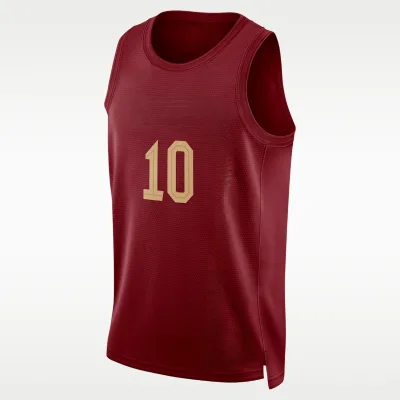
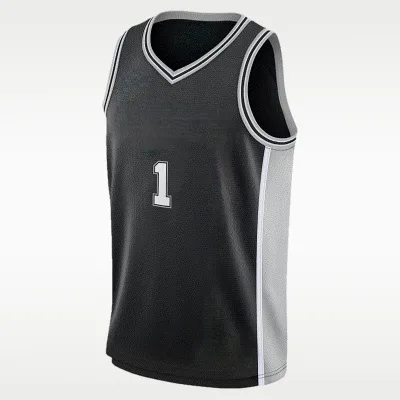
Comprehensive Sourcing Guide
NBA Jersey Sourcing Guide
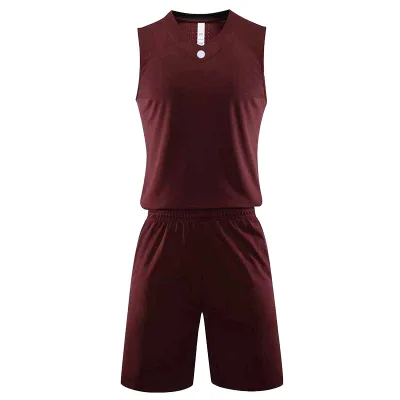
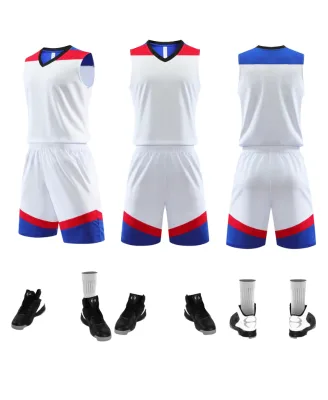
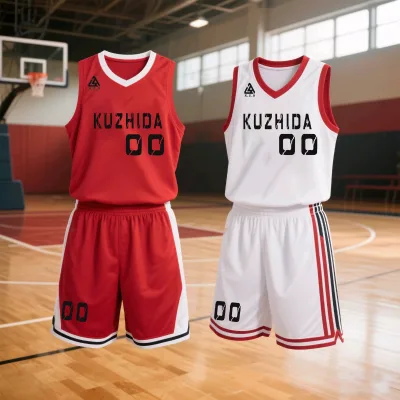
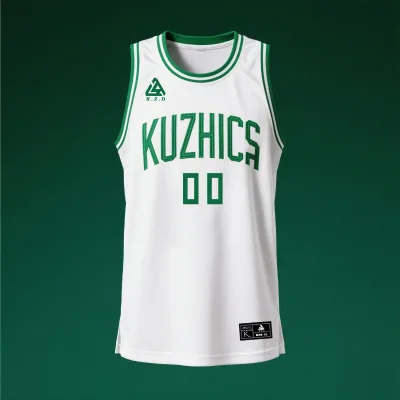
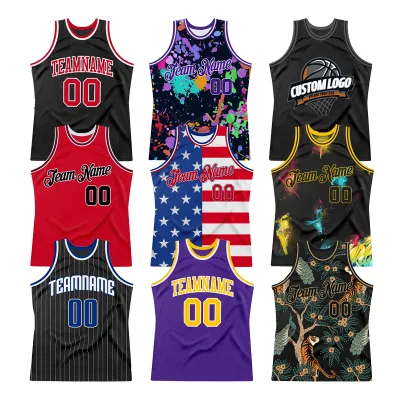
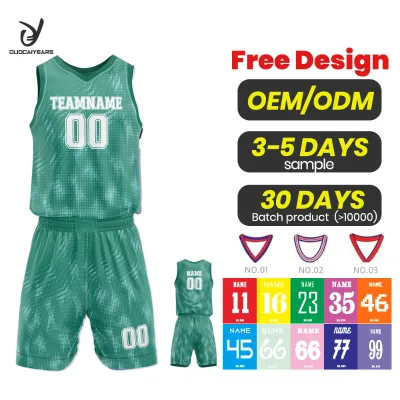
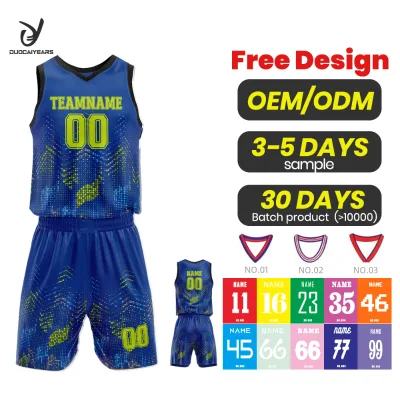
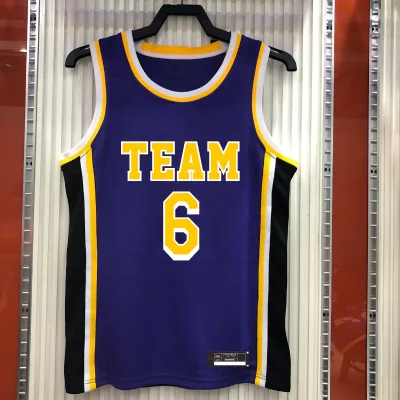
Buyers evaluating NBA-style jerseys must first distinguish between official licensed merchandise and the OEM customization market observed in current listings. The available inventory primarily features unisex and men's athletic wear designed for ball sports, soccer, racing, and cycling, rather than official league-issued uniforms. Sourcing strategies should focus on suppliers offering "OEM Service" capabilities that allow for custom team names and logo placement on the front or back of the garment.
Procurement decisions should prioritize suppliers who explicitly list "Quick-Drying," "Moisture-Wicking," and "Breathable" features as standard attributes for these athletic shirts. The observed product range includes specific model numbers like J533 and J511, which utilize polyester fabrics in mesh styles to ensure performance during high-intensity activities. Buyers must verify that the "Regular" apparel fit and specific size ranges, including extended sizes up to 5XL, align with their target demographic's sizing requirements before placing bulk orders.
Product Scope and Observed Listing Signals
The current market signals indicate a strong availability of polyester-based jerseys suitable for all seasons, ranging from winter to summer conditions. Listings frequently highlight "Digital Printing" and "Heat-Transfer Printing" as the primary methods for applying custom graphics, allowing for detailed team logos and player names. Buyers should note that the observed fabric weight varies significantly, with some items listed at 160 grams and others at 300 grams, necessitating a clear definition of the desired garment weight for the specific use case.
Sourcing teams must carefully review the "Pattern Type" and "Fabric Style" to ensure the aesthetic matches the intended brand identity. The data shows a mix of "Logo," "Print," and "Striped" patterns available on V-neck and sleeveless styles, catering to diverse team preferences. It is critical to confirm that the "Supply Type" is indeed OEM, as this ensures the supplier can accommodate custom branding requests rather than offering only pre-designed stock inventory.
Technical Specifications to Verify
Technical verification begins with confirming the exact material composition, as the majority of observed listings specify "100% Polyester" or a blend including mesh fabric. Buyers should request detailed specifications regarding the "Fabric Weight" to ensure the jersey provides the necessary durability and drape for competitive play. The presence of "Automated cutting" techniques suggests a high level of precision in manufacturing, which should be cross-referenced with sample quality to confirm consistent seam strength and edge finishing.
Size standardization is a critical technical parameter, as listings display conflicting size charts ranging from S to 5XL and specific US measurements like 34 to 48 inches. Procurement officers must validate that the supplier's size chart aligns with the target market's expectations, particularly for extended sizes like 4XL and 5XL which are explicitly mentioned in the data. Additionally, verifying the "Neckline" style, such as V-neck, and the "Sleeve length," specifically sleeveless options, is essential for meeting the functional requirements of the intended sport.
Compliance and Safety Documentation
Safety documentation should explicitly confirm the presence of "Needle detection" processes within the manufacturing facility to ensure no metal contaminants remain in the finished garments. This is a non-negotiable safety standard for apparel intended for general consumer use, particularly for items marketed to adults and unisex audiences. Buyers must request proof of this quality control step to mitigate liability risks associated with physical injuries caused by manufacturing defects.
While specific certification names are not universally listed in the provided data, the "prod_standard" field indicates a range of size and potentially quality benchmarks that suppliers claim to meet. Procurement teams should verify if the supplier adheres to any specific regional safety standards for textile products, especially given the "Guangxi" and "Fujian" origins of the listed items. Ensuring that the "Pant Closure Type" and other hardware components are free from hazardous materials is also a vital part of the compliance checklist.
Cost Drivers and Commercial Terms
Cost structures are heavily influenced by the customization level, with "OEM Service" and custom logo placement typically commanding higher unit prices than standard stock items. The observed price range of 3 to 25.98 USD suggests significant variance based on fabric weight, print technology, and order volume. Buyers should analyze whether the lower price points correspond to the lighter 160-gram fabrics or if the higher costs reflect the more substantial 300-gram materials and complex digital printing processes.
Commercial terms must account for the "7 days sample order lead time" which supports rapid prototyping but requires careful planning for bulk production schedules. The "Single package size" of 45x30x5 cm and the "Single gross weight" of 0.68 kg are critical for calculating accurate shipping costs and container utilization. Suppliers offering "1 set/OPP" packaging for individual units and "100 set/CTN" for cartons provide flexibility, but buyers must confirm if these packaging standards are included in the quoted unit price or billed separately.
Supplier Qualification and Quality Control
Supplier qualification should prioritize manufacturers who demonstrate a clear "Supply Type" of OEM service and possess the technical capacity for "Automated cutting" and advanced printing methods. The presence of multiple model numbers like K.Z.D 266191 and K.Z.D 2661830 indicates a supplier with a diverse production line capable of handling various design specifications. Buyers should assess the supplier's ability to maintain consistency across different color options, such as the observed "Pink," "Blue-Red," and "White-Orange" variations.
Quality control protocols must include a rigorous review of the "Needle detection" results and a physical inspection of the "Print Technology" application. Since the listings mention "Digital Printing" and "Heat-Transfer Printing," buyers should verify the durability of the print against washing and wear, especially for items intended for "Ball Sports" and "Rugby/Football." Establishing a clear acceptance criteria for fabric weight and stitching quality is essential to prevent receiving substandard goods that do not meet the "Quick-Drying" and "Moisture-Wicking" performance claims.
Long-Term Procurement Checks
Long-term procurement strategies should focus on maintaining a consistent relationship with suppliers who can reliably deliver the specific "prod_model" numbers and size ranges required for future seasons. The ability to source "All Seasons" apparel suggests a need for inventory planning that accounts for varying climate demands, ensuring that stock levels are sufficient for both summer and winter sales periods. Buyers should monitor the supplier's capacity to scale production while maintaining the "Regular" fit and specific fabric attributes over multiple order cycles.
Continuous verification of the "Team Name" customization capabilities and logo placement accuracy is necessary to ensure brand consistency across large orders. As the market evolves, buyers must re-evaluate the "Feature" set, such as the "Anti-Bacterial" properties, to ensure the products remain competitive against new market entrants. Establishing a feedback loop for quality issues related to the "Single package size" or "Packaging" style will help optimize logistics and reduce damage rates during international shipping.
FAQs
What customization options are available for these jerseys?
Customization is available for these jerseys, allowing buyers to add logos and team names. The fabric style includes mesh and polyester options, with digital printing and heat-transfer methods. Buyers can choose from various colors and sizes, ensuring the final product meets specific team requirements and branding needs.
Which materials are used to make these sports jerseys?
These jerseys are made from 100% polyester fabric, ensuring durability and comfort during intense physical activity. The material offers quick-drying, moisture-wicking, and breathable properties. Some variants feature a fabric weight of 160 grams or 300 grams, providing different levels of thickness and warmth for various seasonal conditions.
Can I order a sample before placing a bulk order?
Yes, sample orders are supported with a lead time of 7 days. This allows buyers to verify the quality, fit, and printing accuracy before committing to larger quantities. The sample process ensures that the final bulk production meets the expected standards for logo placement, color, and material feel.
What sizes are available for these unisex jerseys?
Sizes range from XS to 4XL, accommodating various body types. The size chart includes US measurements such as XS(34), S(36), M(38), L(40), XL(42), 2XL, 3XL(46), and 4XL(48). This extensive range ensures that both men and women can find a suitable fit for team kits.
How are the jerseys packaged for shipping?
Each jersey is packed individually in an OPP bag, with 100 sets per carton. This packaging method protects the garments during transit and simplifies inventory management. The single package size is 45x30x5 cm, and the gross weight is approximately 0.68 kg, facilitating efficient logistics and storage.
What features do these jerseys offer for athletic performance?
These jerseys feature quick-drying, moisture-wicking, and breathable properties to keep athletes cool and dry. Some models include anti-bacterial technology for enhanced hygiene. The regular fit and mesh fabric style ensure maximum airflow, making them suitable for ball sports, soccer, racing, cycling, and other high-intensity activities.