Source Needle-Punched Non-Woven Fabric for Home Textile Auto Upholstery
Compare 30 listings of Needle-Punched Non-Woven Fabric from verified Chinese suppliers. Buyers can review specifications like weight, width, and features for home textile and auto upholstery applications.
Key considerations
Products List


Needle Punch Felt Punched Nonwoven Fabric Needle Punched Non-Woven Fabric
$0.50 - $2.00
MOQ: 1000 Meters


Super Strong and Durable 100%Polyester Felt Needle Punched Nonwoven Fabrics
$0.50 - $2.00
MOQ: 1000 Meters




Comprehensive Sourcing Guide
Strategic Sourcing Guide for Needle Punched Non-Woven Fabric
Understanding Technical Specifications and Material Composition
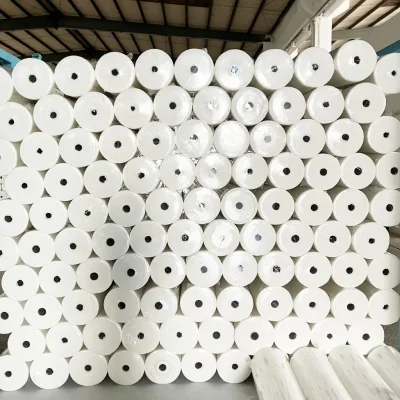
When sourcing needle punched non-woven fabric, buyers must first establish a clear understanding of the material's fundamental composition and physical properties. The core material for these products is typically 100% polyester, which provides a robust foundation for various industrial and commercial applications. The manufacturing process involves needle punching, a mechanical technique where barbed needles repeatedly penetrate a web of fibers to entangle them, creating a cohesive fabric without the need for binders or heat. This specific technic results in a fabric known for its dimensional stability and durability.
The physical specifications of the fabric vary significantly based on the intended application. A critical parameter is the weight, which is often expressed in grams per square meter (GSM). In the current market, observed weight ranges for needle punched fabrics span from 50 to 300 GSM for standard rolls, while broader industrial grades can extend up to 800 GSM. This density directly influences the fabric's stiffness, tensile strength, and filtration capabilities. Buyers should verify the specific density requirements for their project, as the standard range of 70-800 GSM covers a vast spectrum of uses, from lightweight covers to heavy-duty industrial mats.
Width is another vital specification that dictates the efficiency of downstream processing. Standard roll widths are frequently observed at 58/60 inches, which converts to approximately 150 centimeters, though some suppliers offer rolls up to 160 centimeters wide. For specialized applications, maximum widths can reach up to 3.5 meters. The thickness of the fabric is generally categorized as medium weight, but this is a relative term that must be correlated with the specific GSM and fiber density. When evaluating product models, such as those designated as "19-needle punched" or "needle punch felt," buyers should confirm that the model number correlates with the specific fiber entanglement density and final fabric weight.
Compliance, Certification, and Quality Verification
In the B2B procurement landscape, verifying compliance and certification is essential for mitigating risk and ensuring product suitability. The supplied data indicates that ISO certification is a common attribute for suppliers of needle punched non-woven fabric. While specific standards like ISO 9001 are often associated with quality management systems, buyers should explicitly request proof of current certification status rather than assuming it based on general market knowledge. The presence of ISO certification suggests that the manufacturing facility adheres to standardized quality control procedures, which is a strong indicator of consistency in production.
Beyond general certifications, specific product features often serve as proxies for performance compliance. Many needle punched fabrics are marketed with features such as being eco-friendly, breathable, anti-tear, and anti-pull. Some advanced variants also include anti-static and anti-bacterial properties, which are critical for applications in sensitive environments like healthcare or electronics manufacturing. Buyers must verify these claims through independent testing reports, as the mere listing of these features does not guarantee that every batch meets the required performance thresholds.
For applications requiring specific safety or environmental standards, buyers should inquire about compliance with standards such as OEKO-TEX or EN 13249, although these are not universally confirmed in the provided context. It is crucial to understand that "as customer's requirement" is a common standard designation, meaning the fabric can be manufactured to meet specific regulatory needs. However, the buyer bears the responsibility of defining these requirements clearly in the purchase order and requesting validation data. The absence of a specific standard in the product listing should prompt a direct inquiry to the supplier regarding their ability to meet industry-specific regulations for the target application.
Cost Drivers and Pricing Structure Analysis
The pricing of needle punched non-woven fabric is influenced by a complex interplay of material costs, production volume, and logistical factors. The observed price range in the market is extremely broad, spanning from $0.04 to $24,000. This wide variance is not indicative of a single product type but rather reflects the difference between small sample orders, standard industrial rolls, and large-scale custom projects. The primary cost driver is the weight of the fabric; heavier rolls with higher GSM values naturally command higher prices due to the increased amount of polyester fiber required.
Minimum Order Quantity (MOQ) is another significant factor affecting the unit cost. While some suppliers may offer samples with an MOQ of 1, standard commercial orders often require a minimum of 1,000 kilograms per color. This high volume requirement is typical for non-woven fabric production due to the setup costs associated with the needle punching machinery. Buyers who require smaller quantities may face higher per-unit costs or may need to pay a premium for custom cutting and packing. The ability to customize the fabric, including color and size, also adds to the cost, as it requires additional processing steps and potentially longer lead times.
Logistics and payment terms further influence the total cost of ownership. The observed delivery time is typically 15 days after receiving a deposit, with some variations extending to 20 days depending on order complexity. Payment terms usually involve T/T (Telegraphic Transfer) or LC at Sight (Letter of Credit), which are standard for international trade but require careful financial planning. The origin of the product, often from regions like Fujian, China, and the shipping ports such as Xiamen or Guangzhou, will determine freight costs. Buyers should calculate the landed cost, including shipping and insurance, rather than focusing solely on the factory gate price, as these ancillary costs can significantly impact the final budget.
Typical Applications and Usage Scenarios
Needle punched non-woven fabric is a versatile material utilized across a diverse range of industries. The primary application areas identified include home textiles and automotive upholstery. In the home textile sector, the fabric's properties such as being waterproof, breathable, and anti-tear make it suitable for furniture covers, curtains, and other interior design elements. The availability of various colors, including white and custom-dyed options, allows for aesthetic customization to match specific design requirements.
In the automotive industry, the fabric serves as a critical component for upholstery. The mechanical strength provided by the needle punching process ensures that the material can withstand the wear and tear associated with vehicle interiors. Features like anti-static and anti-bacterial properties are particularly valuable in this sector, contributing to passenger comfort and hygiene. Additionally, the fabric's density range allows it to be used for sound insulation, thermal insulation, and filtration systems within vehicles.
Beyond these primary sectors, the material's adaptability extends to other industrial uses. The ability to customize the size and weight means the fabric can be engineered for specific filtration needs, geotextile applications, or protective coverings. The "Shrink-Resistant" feature is particularly important for applications where dimensional stability is paramount, such as in outdoor covers or industrial linings. Buyers should match the specific feature set of the fabric to the environmental conditions of the end-use application to ensure long-term performance and durability.
Supplier Evaluation and Operational Capabilities
Selecting the right supplier requires a thorough evaluation of their operational capabilities and reliability. Key indicators of a capable supplier include their production capacity, customization flexibility, and sample availability. The ability to provide free samples within one day is a strong indicator of an efficient supply chain and responsive customer service. This allows buyers to physically test the fabric for quality, texture, and performance before committing to a large order.
When evaluating suppliers, buyers should assess their customization capabilities. The fact that customization is available and that standards can be set "as customer's requirement" suggests that the supplier is flexible and capable of meeting unique specifications. However, buyers must ensure that the supplier has the technical expertise to execute these customizations without compromising quality. The variety of product models, such as "needle punch felt 17" or "polyester felt 61," indicates a diverse product portfolio, but buyers should verify that the specific model meets their technical needs.
Packaging and logistics are also critical aspects of supplier evaluation. The standard packaging involves rolling the fabric inside a paper tube, with options for 2-inch or 3-inch tubes, and often includes a PE polybag for additional protection. This packaging method is designed to prevent damage during transit, but buyers should confirm that the packaging is suitable for their specific shipping conditions. The availability of multiple sea ports, such as Xiamen and Guangzhou, suggests that the supplier has experience with international logistics, which is essential for global procurement.
Quality Control and Long-Term Procurement Considerations
Implementing a robust quality control (QC) strategy is essential for maintaining product consistency and minimizing risk. Buyers should establish clear acceptance criteria based on the observed specifications, such as weight ranges of 50-300 GSM or 70-800 GSM, and width requirements. Regular inspection of incoming goods is necessary to verify that the fabric meets the agreed-upon standards for density, tensile strength, and feature performance. Given the mechanical nature of needle punching, variations in fiber entanglement can occur, making visual and tactile inspection crucial.
Long-term procurement considerations involve building a sustainable relationship with suppliers who can consistently deliver high-quality products. The lead time of 15-20 days after deposit receipt should be factored into the buyer's production schedule to avoid delays. Buyers should also consider the scalability of the supplier; as demand increases, the supplier must be able to ramp up production without compromising quality. The ability to provide free samples and the flexibility in customization are valuable assets for long-term partnerships, as they allow for continuous product improvement and adaptation to changing market needs.
Finally, buyers should maintain open communication regarding any changes in standards or requirements. Since the standard is often "as customer's requirement," any shift in regulatory or performance expectations must be communicated promptly to the supplier. By focusing on these quality control and relationship management aspects, buyers can ensure a stable supply chain and secure the high-quality needle punched non-woven fabric necessary for their operations.
Summary of Key Procurement Parameters
To facilitate a streamlined procurement process, the following table summarizes the critical parameters buyers should verify when sourcing needle punched non-woven fabric. This checklist ensures that all essential technical, logistical, and compliance aspects are addressed before finalizing an order.
| Parameter | Typical Observed Value | Verification Requirement |
|---|---|---|
| Material | 100% Polyester | Confirm fiber composition and grade. |
| Weight Range | 50-300 GSM / 70-800 GSM | Verify specific GSM for application. |
| Width | 58/60" (150cm) to 160cm / Max 3.5m | Confirm roll width and cutting capabilities. |
| Technics | Needle-Punched | Ensure mechanical entanglement process. |
| Certification | ISO | Request valid certificate copy. |
| MOQ | 1,000 kg per color | Confirm minimum order volume. |
| Lead Time | 15-20 Days | Align with production schedule. |
| Packaging | Paper Tube + PE Polybag | Verify protection against moisture/damage. |
| Features | Waterproof, Eco-Friendly, Anti-Tear, etc. | Request test reports for specific claims. |
| Origin | Fujian, China / General China | Confirm port of loading (Xiamen/Guangzhou). |
By adhering to these guidelines and maintaining a rigorous approach to verification, buyers can effectively navigate the market for needle punched non-woven fabric and secure high-quality materials that meet their specific operational needs.
FAQs
What is the standard weight range for this fabric?
The standard weight range is 50 to 300 grams per square meter for most rolls. Some industrial grades extend up to 800 GSM depending on the specific model and application requirements.
Can I request custom colors and sizes for this fabric?
Yes, customization is available for both color and size to meet specific project needs. The fabric can be dyed in various colors or kept white, and dimensions can be adjusted as per customer requirements.
What certifications do the manufacturers typically hold?
Suppliers typically hold ISO certification to ensure standardized quality control procedures. Buyers should request proof of current certification status rather than assuming it based on general market knowledge.
How long does delivery take after payment?
Delivery typically takes 15 days after receiving the deposit, though some orders may require 15 to 20 days. This timeline depends on order complexity and current production capacity at the factory.
What is the minimum order quantity per color?
The minimum order quantity is usually 1000 kilograms per color for standard commercial orders. Smaller sample orders may be available, but bulk purchases generally require meeting this volume threshold.
Which features make this fabric suitable for automotive use?
Features like anti-static, anti-bacterial, and anti-tear properties make it suitable for automotive upholstery. These characteristics ensure durability and hygiene in vehicle interior applications.