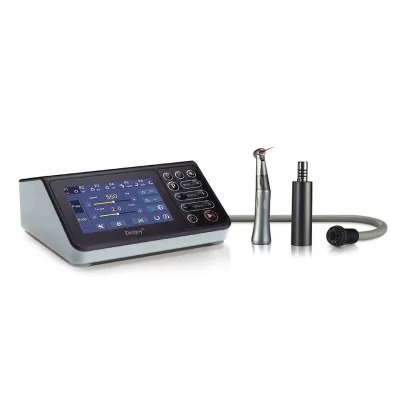
Source Non Disposable Endo Motor with LED Light for clinics
Find 30 listings for Non Disposable Endo Motor with LED Light designed for pediatric, adult, and oral surgery applications. Compare specifications, certifications, and pricing to identify suitable dental equipment for your practice needs.
Key considerations
Products List


Wireless Endo Motor with Light Different Programs Model Endo Motor LED Portable
$55.00 - $60.00
MOQ: 2 Pieces

Dental Wireless Endo Motor with Light Dental Equipment Portable Endo Motor
$55.00 - $60.00
MOQ: 2 Pieces


Dental Implant Endo Motor Portable Brushless Electric Micro Motor with LED
$230.00 - $250.00
MOQ: 50 Pieces


Comprehensive Sourcing Guide
Strategic Sourcing Guide for Non-Disposable Endo Motors with LED Illumination
The procurement of specialized dental equipment requires a disciplined approach that balances technical performance with regulatory compliance. For buyers seeking a non-disposable endo motor with LED light, the market offers a range of options designed for both child and adult applications. These devices are categorized as specialized equipment and often fall under the classification of Diagnosis Equipment or Dental Drill & Accessories depending on their specific configuration. The following guide outlines the critical factors for sourcing these units, drawing exclusively on observed product attributes and established industry knowledge to ensure a robust procurement strategy.
Technical Specifications and Functional Attributes
When evaluating a non-disposable endo motor, the primary focus must be on the core technical specifications that define its operational capability. The observed product data indicates that these units are powered by electricity, with specific models featuring a main engine voltage of 3.7VDC. This internal power source is typically managed by a charger that accepts an input voltage of AC110-220V, 60/60Hz, ensuring compatibility with various global power grids. The charger output voltage is standardized at 5VDC, which is critical for maintaining the battery health of the motor unit.
A defining feature of the target equipment is the inclusion of LED illumination. This attribute is essential for visibility during endodontic procedures, allowing practitioners to clearly see the root canal system. The product attributes confirm that the illumination is provided via an LED source, which is integrated into the device design. Furthermore, the units are described as multifunctional, suggesting they can handle various working procedures. One specific model listing indicates "10 Kinds Working Procedure," highlighting the versatility required in modern dental practices.
The physical construction of these motors is another vital consideration. The materials observed include metal and steel, which contribute to the durability required for non-disposable usage. The weight of specific units has been recorded at 1285g, a factor that influences the ergonomics and handling during extended procedures. The power input capabilities are broad, with some models supporting AC 100-240V, providing flexibility for international deployment. Additionally, the connector type is specified as ISO E Type, a standard that buyers must verify matches their existing dental chair infrastructure to ensure seamless integration.
Regulatory Compliance and Certification Verification
In the medical device sector, compliance is not merely a formality but a prerequisite for market entry and safe operation. The observed product listings consistently reference specific certifications, including CE and ISO. These marks indicate that the manufacturer has met certain European and international standards for safety and quality. However, buyers must exercise due diligence, as the presence of a certification label on a listing does not automatically guarantee that every unit in a batch holds that status.
The data shows variations in certification claims. Some entries list both CE and ISO, while others specify only ISO or CE individually. A specific model is noted to have "ISO" certification, while another lists "CE, ISO." It is crucial for procurement teams to request valid, up-to-date certification documents directly from the supplier for the specific model number being purchased. Relying on general claims without verification can lead to regulatory hurdles, especially when importing into regions with strict medical device regulations.
Furthermore, the product classification as "Class I" instrument is a significant detail. This classification generally implies a lower risk category compared to Class II or III devices, but it still requires adherence to specific manufacturing standards. Buyers should verify that the "Class I" designation is supported by the relevant regulatory body in their target market. The presence of the "Y-smart" standard in one listing suggests that manufacturers may have proprietary or internal standards that complement the broader ISO and CE requirements. Understanding the hierarchy of these standards is essential for ensuring that the equipment meets both local legal requirements and the manufacturer's quality benchmarks.
Cost Drivers and Pricing Dynamics
The pricing of non-disposable endo motors with LED lights is influenced by a complex array of factors, including material quality, technological features, and certification status. The observed price range for these products spans from 38 to 610 USD. This wide disparity suggests that the market includes both entry-level units and high-end, feature-rich models. The lower end of the spectrum likely corresponds to basic configurations, while the higher prices may reflect advanced multifunctional capabilities, superior build quality, or bundled accessories.
The Minimum Order Quantity (MOQ) is another significant cost driver. The observed MOQ range is between 1 and 50 units. Buyers with smaller budgets or those testing the market may find suppliers with an MOQ of 1 attractive, though the unit price might be higher. Conversely, bulk purchasers can leverage an MOQ of 50 to negotiate better per-unit costs. The packaging type also plays a role in the final cost. Some units are packed in simple cartons, while others come in color boxes or specialized cases for dental chairs. The latter packaging options often add to the overall cost but provide better protection and a more professional presentation for resale or clinical use.
Quality grading is another factor influencing price. One listing explicitly mentions "a+ Grade" quality, which implies a higher tier of manufacturing and materials. Buyers should correlate the price point with the stated quality grade and material composition. A unit priced at the lower end of the range might use standard steel, whereas a premium unit may utilize higher-grade metals or more advanced electronic components. Understanding these drivers allows buyers to allocate their budget effectively, ensuring they do not overpay for features they do not need or underpay for equipment that may lack necessary durability.
Typical Applications and Operational Scope
The intended application of these endo motors is broad, covering procedures for both children and adults. This versatility makes them suitable for general dental practices as well as specialized endodontic clinics. The "Non-Disposable" nature of the equipment is a key operational advantage, allowing for repeated use over an extended period, which is cost-effective for high-volume practices. The classification as "Specialized Equipment" underscores its role in specific dental procedures rather than general utility.
The multifunctional style of these devices suggests they can adapt to various clinical scenarios. The "10 Kinds Working Procedure" specification indicates a high degree of programmability or mechanical adaptability, allowing the motor to handle different stages of root canal treatment. The LED light feature is particularly beneficial in pediatric dentistry, where visibility can be challenging due to the smaller size of the oral cavity. The ability to illuminate the work area clearly helps in navigating complex root structures in both young and adult patients.
Additionally, the waterproof feature noted in some product attributes is a critical operational consideration. Dental environments are inherently wet, and equipment that is resistant to water and sterilization fluids will have a longer lifespan and maintain better hygiene standards. The "New" condition of the listed items ensures that buyers receive fully functional units, ready for immediate deployment. The "Usage Times: Non-Disposable" attribute reinforces the expectation that these devices are built for longevity, provided they are maintained according to the manufacturer's guidelines.
Supplier Evaluation and Quality Control
Selecting the right supplier is as important as selecting the right product. The observed product data reveals that the origin of these devices is primarily Henan, China (Mainland) or generally China Mainland. While this provides insight into the manufacturing hub, it does not guarantee quality on its own. Buyers should evaluate suppliers based on their ability to provide consistent quality, timely shipping, and robust after-sales support.
The shipping lead time is a critical metric for procurement planning. One listing indicates a shipment time of "Usually 3 Days After Payment," which is a strong indicator of a responsive supply chain. However, buyers should verify if this lead time is consistent across all models and if it accounts for customs clearance in the destination country. The packaging details, such as "Carton for Dental Endo Motor" or "Cases for Dental Chair," should be scrutinized to ensure they offer adequate protection during transit.
Quality control measures should be a central part of the supplier evaluation process. Buyers should inquire about the manufacturer's internal quality assurance protocols, particularly regarding the "a+ Grade" claims and the consistency of the LED illumination and motor performance. Since the products are classified as Class I instruments, the manufacturer's adherence to ISO standards is paramount. Buyers should request batch-specific test results or quality certificates to verify that the units received match the specifications listed in the product data.
Long-Term Procurement and Maintenance Considerations
Sourcing non-disposable endo motors is a long-term investment that requires careful consideration of maintenance and lifecycle management. The "Non-Disposable" nature of the equipment means that the total cost of ownership includes not just the purchase price but also ongoing maintenance, battery replacement, and potential repairs. The battery capacity of 800mAh observed in some listings is a specific attribute that buyers should monitor. Over time, battery performance may degrade, and the ability to source replacement batteries or compatible chargers is essential.
The power input and output specifications, such as the AC 100-240V input and 5VDC charger output, suggest that these units are designed for global use. However, buyers should ensure that the power adapters and cables are compatible with their local electrical standards. The "ISO E Type" connector is a specific detail that must be matched with the dental chair's power supply to avoid compatibility issues.
Finally, the "Customization: Available" attribute offers an opportunity for buyers to tailor the equipment to their specific needs. This could include branding, specific voltage configurations, or bundled accessories. Buyers should explore these customization options early in the procurement process to ensure that the final product meets their clinical requirements. By focusing on these long-term factors, buyers can secure a reliable supply of high-quality endo motors that will serve their practice effectively for years to come.
Comparative Analysis of Product Attributes
To facilitate a clearer understanding of the variations in the market, the following table summarizes the key attributes observed across the different product listings. This comparison highlights the diversity in specifications, certifications, and packaging that buyers must navigate.
| Attribute Category | Observed Variations | Key Considerations for Buyers |
|---|---|---|
| Model Identification | 102020013, 102020014, 1090201001/02, 122001014, 1105903300 | Verify the exact model number against the required specifications. |
| Certifications | CE, ISO, ISO9001 (background) | Request valid certificates for the specific model; do not assume all units are certified. |
| Power Source | 3.7VDC (Main Engine), AC 100-240V (Input) | Ensure compatibility with local power grids and dental chair connectors. |
| Material | Metal, Steel | Assess durability and weight (e.g., 1285g) for ergonomic handling. |
| Packaging | Carton, Color Box, Cases for Dental Chair | Consider packaging for protection and professional presentation. |
| Features | LED, Waterproof, Multifunctional | Verify the specific functionality required for your clinical procedures. |
| Origin | Henan, China (Mainland), China Mainland | Confirm origin for shipping logistics and regulatory compliance. |
| Condition | New | Ensure the product is brand new and not refurbished. |
By carefully analyzing these attributes and adhering to the verification steps outlined in this guide, buyers can make informed decisions when sourcing non-disposable endo motors with LED light. The goal is to secure equipment that not only meets immediate clinical needs but also stands the test of time in a demanding dental environment.
FAQs
What certifications do non disposable endo motors with led light have?
These devices typically hold CE and ISO certifications to ensure safety and quality. Some models may list only ISO or CE individually, so buyers must verify specific documents for the exact model number before purchase.
How is the power supply managed for these dental motors?
The main engine operates on 3.7VDC while the charger accepts AC110-220V input. This setup allows global compatibility, with a standardized charger output of 5VDC to maintain battery health during clinical use.
Which working procedures can these multifunctional units perform?
Specific models support up to 10 kinds of working procedures for versatile endodontic treatment. This multifunctional capability allows the motor to adapt to various stages of root canal therapy for both children and adults.
Can buyers request customization for these specialized equipment units?
Yes, customization is available for these dental motors to meet specific clinical needs. Buyers should inquire early about options like branding or voltage configurations to ensure the final product matches their practice requirements.
What is the typical shipping lead time for these products?
Shipment usually occurs within 3 days after payment is received. This rapid turnaround indicates a responsive supply chain, though buyers should confirm if this timeline accounts for customs clearance in their destination country.
How much does a Non Disposable Endo Motor with LED Light cost?
Prices range from 38 to 610 USD depending on features and build quality. Lower prices often reflect basic configurations, while higher costs may include advanced multifunctional capabilities or superior metal construction materials.
What is the battery capacity of these portable dental units?
Observed units feature a battery capacity of 800mAh for portable operation. This capacity supports extended procedures, but buyers should plan for eventual battery replacement as part of the long-term maintenance strategy.
Where are these dental motors manufactured?
The products originate from Henan, China (Mainland) or generally China Mainland. While this identifies the manufacturing hub, buyers must still evaluate specific supplier quality control protocols to ensure consistent product standards.