Source Off-road Remote-controlled Tracked Chassis for Transport, Mining, and Construction
Compare 30 Off-road Remote-controlled Tracked Chassis options from Shandong, China. These electric crawler vehicles feature 1-2 ton capacity, 48V battery systems, and collision avoidance for industrial transport and hoisting applications.
Key considerations
Products List
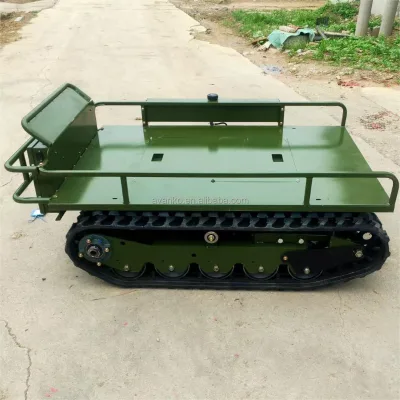
Tracked Vehicle Tracked Chassis Heavy Load Tracked Carrier Remote Control Tracked Transporte
$1006.95 - $2425.64
MOQ: 1 pieces


Manufacturers Rubber Tracked Undercarriage Electric Remote Control Tracked Robot Chassis
$2000.00 - $8000.00
MOQ: 1 Pieces


Customized Tracked Chassis for Agricultural Machinery and Construction Machinery
$8000.00 - $12000.00
MOQ: 1 Sets


Tracked Undercarriage Chassis for Remote Control Lawn Mower China Factory Supply
$3000.00 - $8000.00
MOQ: 1 Pieces


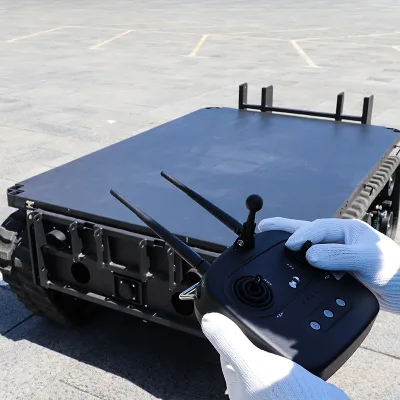


Special Climbing Transport Vehicle for Greenhouses: Electric Tracked Chassis
$1.00 - $10000.00
MOQ: 1 Sets


Remote Controlled Fully Automatic Tracked Transport Vehicle: All-Terrain
$1.00 - $10000.00
MOQ: 1 Sets


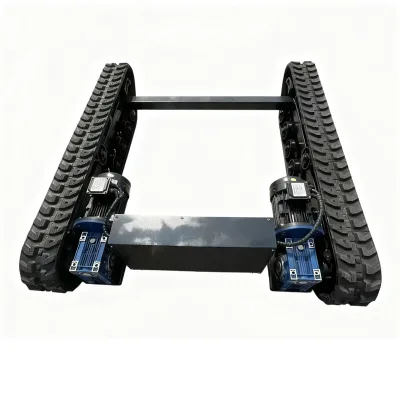
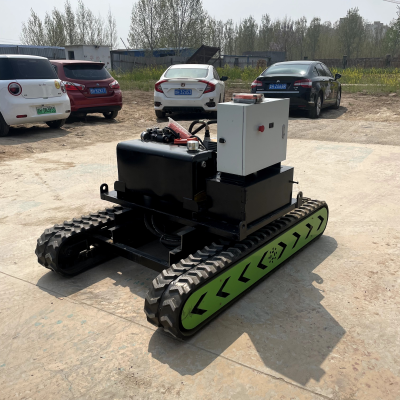
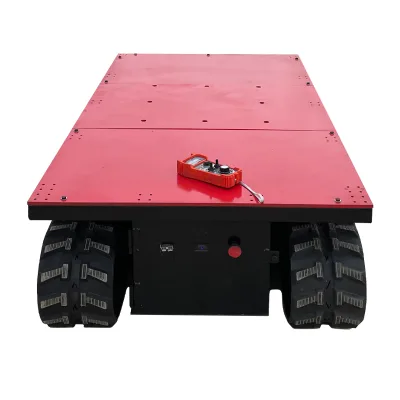
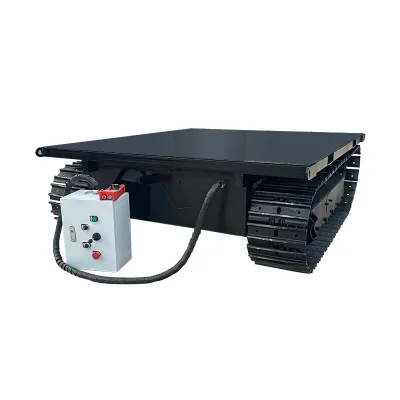
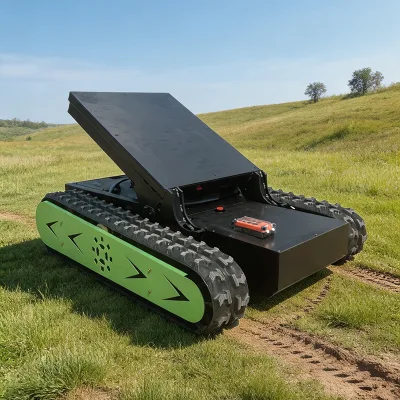

Remote Control Trackless Tracked Transport Vehicle for Outdoor Adventures
$60000.00 - $90000.00
MOQ: 1 Pieces


Electric Remote Control All Terrain Tracked Chassis for Fire Fighting Inspection Transportation
$6200.00 - $9999.00
MOQ: 5 Pieces


Comprehensive Sourcing Guide
Off-road Remote-controlled Tracked Chassis Sourcing Guide
Sourcing an off-road remote-controlled tracked chassis requires a disciplined approach to aligning technical capabilities with operational environments. These vehicles are engineered for high-productivity tasks in challenging terrains where human access is limited or hazardous. Buyers must evaluate the interplay between drive modes, load capacities, and control systems to ensure the selected chassis meets specific logistical or industrial demands. The following guide provides evidence-based procurement strategies for evaluating these specialized transport units.
Product Scope and Observed Listing Signals
The market for remote-controlled tracked chassis includes a variety of configurations designed for heavy-duty transport and specialized industrial applications. Observed listings indicate a price range from $1 to $90,000 USD, reflecting significant variation in build quality, power systems, and load-bearing capabilities. Minimum order quantities (MOQ) are typically low, ranging from 1 to 10 units, which facilitates pilot testing and small-scale deployment without excessive capital commitment. This accessibility allows procurement teams to validate performance in real-world conditions before scaling operations.
Key selling points frequently highlighted in product descriptions include high productivity and advanced safety features such as collision avoidance systems. These units are often marketed as all-terrain remote control transport trucks, capable of navigating slopes up to 30 degrees and performing 360-degree in-place rotations. The observed data suggests a strong emphasis on versatility, with options for customized colors and chassis modifications. Buyers should interpret these attributes as observations of available market offerings rather than universal guarantees for every listed product.
Technical Specifications to Verify
Power and drive systems are critical determinants of performance for off-road remote-controlled chassis. Observed specifications reveal a mix of electric and hydraulic drive modes, with some units utilizing 48V 180A batteries or servo motors rated at 48V 2000W. The core component is consistently identified as the motor, but the type—whether electric, hydraulic, or otherwise—must be verified against the specific power requirements of the intended application. Buyers should confirm the reducer parameters, such as RV63 worm gear reducers, to ensure adequate torque transmission for heavy loads.
Load capacity and physical dimensions vary significantly across different models. While some listings cite a loaded capacity of 1-2 tons, others specify a chassis load capacity of 200kg, highlighting the need for precise verification of weight ratings. The single gross weight of observed units can reach 450 kg, with single package sizes around 160x130x90 cm. Running speeds are generally low, ranging from 0 to 3 km/h, prioritizing control and stability over velocity. Buyers must match these physical and mechanical parameters to the terrain and payload requirements of their specific use case.
Compliance and Safety Documentation
Safety features are paramount when operating remote-controlled machinery in industrial or outdoor environments. The presence of a collision avoidance system is a notable attribute in several observed listings, providing an additional layer of protection against accidental impacts. Buyers should verify the effectiveness and reliability of these systems through machinery test reports, which are provided by some suppliers. These reports offer critical insights into the vehicle's performance under stress and its ability to respond to obstacles autonomously.
Control parameters and communication protocols also play a vital role in operational safety. Observed control systems support various interfaces, including CAN, PWM, 232, and 485, ensuring compatibility with existing infrastructure. The remote control distance is typically observed to be between 100 and 200 meters, allowing operators to maintain a safe distance from hazardous areas. Buyers should ensure that the control system's range and reliability meet the spatial requirements of their operational site to prevent signal loss or latency issues.
Cost Drivers and Commercial Terms
The cost of an off-road remote-controlled tracked chassis is influenced by several factors, including material composition, power system complexity, and customization options. The main material is often carbon steel, contributing to durability but also affecting the overall weight and shipping costs. Customization is available for many models, allowing buyers to tailor the chassis to specific needs, but this may impact the final price and lead time. Buyers should request detailed breakdowns of costs associated with custom features to avoid unexpected expenses.
Warranty and after-sales support are essential components of the commercial terms. A standard warranty of 1 year is observed in several listings, providing a baseline for manufacturer responsibility. Buyers should clarify the scope of this warranty, including coverage for core components like the motor and any exclusions related to wear and tear. Additionally, packaging methods, such as wooden boxes or pallets, can affect shipping costs and handling requirements. Understanding these commercial terms helps in calculating the total cost of ownership and planning for maintenance and logistics.
Supplier Qualification and Quality Control
Supplier qualification is crucial for ensuring the reliability and quality of off-road remote-controlled tracked chassis. Buyers should verify the place of origin, with Shandong, China, being a common source for these units. This region is known for its manufacturing capabilities in machinery and equipment, but buyers should still conduct due diligence on specific suppliers. Requesting machinery test reports and verifying the authenticity of provided documentation is a key step in quality control.
Quality control processes should include checks on the protection class, such as IP55, which indicates resistance to dust and water jets. This is particularly important for units operating in outdoor or harsh environments. Buyers should also inspect the tracks, which can be made of steel or rubber, to ensure they are suitable for the intended terrain. Verifying the supplier's ability to provide consistent quality and support throughout the warranty period is essential for long-term operational success.
Long-Term Procurement Checks
Long-term procurement success depends on the availability of spare parts and the supplier's ability to provide ongoing support. Buyers should inquire about the availability of replacement components, such as motors, reducers, and tracks, to minimize downtime in case of failure. The customization options available at the time of purchase may also affect the availability of compatible parts in the future. Establishing a clear relationship with the supplier for after-sales service is vital for maintaining the operational efficiency of the fleet.
Regular maintenance and performance monitoring are also key aspects of long-term procurement. Buyers should develop a maintenance schedule based on the manufacturer's recommendations and the observed operating conditions. Monitoring the performance of the remote control system and the collision avoidance features over time ensures that safety standards are maintained. By proactively managing these aspects, buyers can extend the lifespan of the chassis and maximize the return on investment.
FAQs
What is the load capacity of this remote control truck?
The chassis load capacity is 200kg, while the overall product load capacity ranges from 1 to 2 tons. This allows the vehicle to transport heavy materials across difficult terrain effectively.
How far can the remote control system operate?
The remote control distance ranges from 100 to 200 meters. This range ensures reliable operation for the electric drive mode while maintaining safety and control over the tracked vehicle.
Can the vehicle climb steep slopes?
Yes, the vehicle features a climbing ability of up to 30 degrees slope. Combined with its crawler pitch and turning radius, it handles rough off-road conditions with stability.
What is the warranty period for this equipment?
The warranty period is 1 Year for the core components and overall machinery. A machinery test report is provided to verify performance before the warranty coverage begins.
Is customization available for this tracked chassis?
Customization is available for the color and specific application needs. The main material is carbon steel, and the protection class is IP55 for durability in various environments.
What is the power source for this vehicle?
The vehicle uses an electric drive mode powered by a 48V 180A battery. The motor parameters specify a 48V 2000W servo motor for efficient power delivery.
Where is this product manufactured?
The place of origin is Shandong, China, specifically Shandongjining. This location is known for producing high-productivity machinery with a single package size of 160x130x90 cm.