Source Oil Proof Cable Markers for Repairs Insulation Protection
Compare 30 Oil Proof Cable Markers from verified Chinese suppliers. These markers offer insulation protection and are suitable for cable repairs and marking in various sizes.
Key considerations
Products List


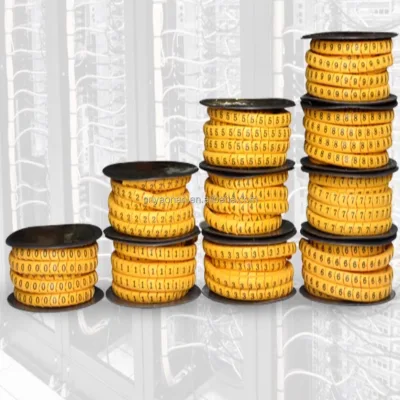


Comprehensive Sourcing Guide
Strategic Sourcing Guide for Oil-Resistant Cable Markers
Procuring specialized cable management components requires a rigorous approach to technical verification and supplier validation. When searching for oil-proof cable markers, buyers must navigate a landscape where product attributes often vary significantly between listings. The core requirement involves identifying markers that can withstand exposure to hydrocarbons, lubricants, and industrial fluids without degrading, fading, or losing structural integrity. This guide synthesizes available product data to provide a framework for evaluating potential suppliers, ensuring that the selected components meet the demanding conditions of industrial, automotive, and marine environments.
Technical Specifications and Material Composition
The foundation of a reliable oil-proof cable marker lies in its material composition and physical specifications. Based on the observed product data, the market offers markers constructed from various polymers, including Nylon, Polypropylene (PP), and Polyethylene (PE) blends. The material choice is critical because different polymers exhibit varying degrees of resistance to oil and chemical solvents. For instance, while some listings specify a material of Nylon, others indicate a composite of PP+PE. Nylon is often favored for its high tensile strength and durability, whereas PP+PE blends may offer specific flexibility or cost advantages.
Buyers must verify the specific material grade against the intended application environment. The data indicates that some products are rated as "Highly Flame Retardant" with a VW-1 rating, a crucial safety specification for electrical applications. Additionally, the thermal performance of the marker is a key technical parameter. Observed specifications include a continuous operating temperature range of -55°C to 125°C, with a minimum shrink temperature of 85°C and a full recovery temperature between 115°C and 200°C. These thermal limits define the operational envelope of the product. If the application involves high-heat zones near engines or machinery, the marker must maintain its integrity within these bounds.
The physical dimensions also play a pivotal role in selection. The available data points to specific size ranges, such as 3* and 4* dimensions, though the exact units (millimeters or inches) require confirmation with the supplier. The standard EC-0/1/2/3/J classification is frequently referenced, indicating a standardized sizing system for cable markers. This standardization ensures compatibility with various cable diameters and bundle sizes. Furthermore, the customization options available, such as marking availability for any size, length, or specific text, allow buyers to tailor the markers to specific inventory or safety protocols. The ability to customize the color, with Yellow and White being prominent options, aids in visual identification and color-coding schemes within complex wiring harnesses.
Compliance and Certification Verification
In the industrial sector, compliance with international standards is not merely a formality but a prerequisite for safety and liability protection. When sourcing oil-proof cable markers, buyers must demand evidence of certification from reputable bodies. The product data highlights several certifications, including RoHS, CE, ISO, and CCC. RoHS compliance ensures that the materials do not contain restricted hazardous substances, which is essential for environmental regulations in many markets. CE marking indicates conformity with health, safety, and environmental protection standards for products sold within the European Economic Area.
ISO certification, specifically ISO 9001 for quality management, suggests that the supplier adheres to consistent manufacturing processes. However, the presence of a certification label does not automatically guarantee that every unit in a batch meets the standard. Buyers should request current certification documents and verify their validity. The data also references specific material standards such as UL224 and Can/CSA C22.2. These standards are particularly relevant for electrical components, defining requirements for flame resistance and electrical safety. If the application is in North America, UL certification is often mandatory. Similarly, the Tcolor Code Soundness reference to SAE-AS 81531 suggests adherence to aerospace or high-reliability industry color coding standards, which may be relevant for specific sectors.
It is vital to distinguish between general certifications and application-specific approvals. While a supplier may list "CE, ISO, RoHS, CCC" as a broad set of credentials, the buyer must confirm if these certifications specifically cover the oil-resistant properties of the cable marker. Some certifications may apply to the manufacturing facility rather than the specific product formulation. Therefore, a detailed request for test reports demonstrating oil resistance is necessary. The data mentions a "Fire Rating" of 94V, which aligns with UL94 standards for flammability. Verifying that this rating applies to the specific oil-resistant variant of the marker is essential for safety compliance.
Cost Drivers and Economic Factors
Understanding the cost structure of oil-proof cable markers helps buyers negotiate effectively and budget accurately. The observed price range in the market is notably low, ranging from 0 to 5 USD, likely per unit or per small batch, depending on the packaging configuration. However, the final cost is heavily influenced by the Minimum Order Quantity (MOQ). The data shows a wide MOQ range, from as low as 5 units to as high as 10,000 units. This variance suggests that suppliers offer different pricing tiers based on volume.
The primary cost drivers include the material type, customization level, and packaging requirements. Nylon-based markers generally command a higher price than standard PP or PE alternatives due to superior mechanical properties. Customization, such as specific color codes, unique markings, or tailored dimensions, adds to the production cost. The data indicates that customization is available, which implies that buyers can request specific attributes but should anticipate a potential price premium or a higher MOQ for custom runs.
Packaging is another significant factor. The observed packing options include rolls of 250, 500, or 1000 pieces, as well as export-standard cartons. Bulk packaging reduces per-unit shipping costs and handling time, making it a cost-effective choice for large-scale procurement. Conversely, smaller quantities may incur higher per-unit costs due to the fixed costs of packaging and logistics. Buyers should also consider the lead time, which is listed as 1-2 weeks. While this is a relatively short window, rush orders or custom specifications might extend this timeline, impacting the overall project schedule and potentially incurring expedited shipping fees.
Typical Applications and Performance Requirements
Oil-proof cable markers are indispensable in environments where exposure to fluids is inevitable. The data explicitly lists applications such as cable repairs, insulation protection, and general cable protection. These markers are particularly suited for automotive wiring harnesses, industrial machinery, marine vessels, and heavy equipment where oil, grease, and hydraulic fluids are present. In these settings, standard plastic markers can degrade, become brittle, or lose their legibility when exposed to hydrocarbons.
The performance requirements for these applications are stringent. The markers must resist chemical attack without swelling or cracking. The thermal resistance is equally critical, as machinery often operates at elevated temperatures. The observed continuous operating temperature of -55°C to 125°C covers a broad spectrum of industrial conditions, but buyers must verify if the specific product variant maintains its oil resistance at the upper end of this range. The shrink ratio of 2:1 or 3:1 is a key feature for heat shrink tubing variants, allowing the marker to conform tightly to irregular cable shapes and provide a secure seal against fluid ingress.
Furthermore, the "Suitable Any Size, Length and Marking Is Available" attribute highlights the versatility of these products. This flexibility allows for the creation of complex labeling systems where different cable functions or voltage levels are distinguished by color and text. In automotive applications, for example, color-coding is often used to identify power, ground, and signal lines. The availability of Yellow and White options supports these visual identification systems. The self-locking feature mentioned in the data is also relevant, ensuring that the markers remain securely in place even under vibration, a common condition in moving machinery.
Supplier Evaluation and Quality Control
Selecting the right supplier is as important as selecting the right product. The data indicates that the products originate from China, specifically Zhejiang, a major manufacturing hub. While this provides access to a vast network of suppliers, it necessitates a thorough vetting process. Buyers should evaluate suppliers based on their production capacity, quality control systems, and responsiveness. The availability of samples is a positive indicator; the data notes that samples are available, and some listings mention free existing samples. Requesting samples is a critical step in the evaluation process, allowing buyers to physically test the oil resistance, thermal stability, and marking clarity of the product before committing to a large order.
Quality control should be a collaborative effort. Buyers should inquire about the supplier's internal testing procedures. Do they perform batch testing for oil resistance? Are there in-process checks for color consistency and dimensional accuracy? The presence of certifications like ISO and RoHS suggests a baseline level of quality management, but direct verification is necessary. Buyers should also assess the supplier's ability to handle custom orders. The data confirms that customization is available, but the lead time and minimum order quantities for custom runs may differ from standard products.
Communication and transparency are key indicators of a reliable supplier. A supplier that provides detailed technical data sheets, clear certification documents, and responsive customer service is more likely to deliver a consistent product. Buyers should also consider the supplier's logistics capabilities. The observed lead time of 1-2 weeks is favorable, but the reliability of this timeline depends on the supplier's inventory management and production scheduling. For large orders, it is advisable to discuss production capacity and potential bottlenecks to ensure timely delivery.
Long-Term Procurement Considerations
Sourcing oil-proof cable markers is not a one-time transaction but part of a long-term supply chain strategy. Buyers should consider the scalability of the supplier's production capabilities. As the buyer's operations grow, the supplier must be able to increase output without compromising quality. The wide MOQ range observed (5 to 10,000 units) suggests that suppliers can accommodate both small pilot projects and large-scale production runs. However, buyers should negotiate volume discounts and establish long-term pricing agreements to mitigate cost fluctuations.
Sustainability is another emerging consideration. While the data mentions RoHS compliance, which addresses hazardous substances, buyers may also want to explore the recyclability of the materials used. Nylon and PP/PE are recyclable, but the specific additives used for oil resistance and flame retardancy may impact the recycling process. Understanding the end-of-life disposal requirements of the markers can help in planning for environmental compliance and waste management.
Finally, buyers should maintain a diversified supplier base to mitigate supply chain risks. Relying on a single source for critical components like oil-proof cable markers can be risky in the event of production disruptions, natural disasters, or geopolitical issues. Establishing relationships with multiple suppliers in different regions, while ensuring they all meet the same technical and quality standards, provides a buffer against unforeseen challenges. Regular audits and performance reviews of suppliers will help maintain high standards and ensure a steady supply of high-quality cable markers for ongoing operations.
Summary of Key Product Attributes
To facilitate quick reference, the following table summarizes the key attributes observed in the product data that are relevant to sourcing oil-proof cable markers.
| Attribute Category | Observed Values / Specifications | Relevance to Procurement |
|---|---|---|
| Material | Nylon, PP+PE | Determines chemical and oil resistance; Nylon often preferred for durability. |
| Color Options | Yellow, White | Essential for color-coding and visual identification in wiring systems. |
| Certifications | RoHS, CE, ISO, CCC, UL224 | Verifies compliance with safety, environmental, and electrical standards. |
| Temperature Range | -55°C to 125°C (Continuous) | Defines operational limits; critical for high-heat industrial environments. |
| Flame Rating | 94V (VW-1) | Indicates flammability resistance; crucial for electrical safety. |
| Customization | Available (Size, Length, Marking) | Allows tailoring to specific project requirements and inventory systems. |
| Packaging | 250/500/1000 PCS/Roll, Cartons | Impacts handling efficiency and per-unit logistics costs. |
| Origin | Zhejiang, China | Indicates manufacturing hub; requires verification of logistics and lead times. |
| Lead Time | 1-2 Weeks | Affects project scheduling and inventory planning. |
| MOQ | 5 to 10,000 Units | Influences initial investment and inventory holding costs. |
By adhering to these guidelines and leveraging the detailed product data, buyers can make informed decisions that ensure the reliability, safety, and cost-effectiveness of their oil-proof cable marker procurement. The focus must remain on verifying technical specifications, validating certifications, and establishing robust supplier relationships to meet the demanding requirements of modern industrial applications.
FAQs
What materials are used for Oil Proof Cable Markers?
These markers are constructed from Nylon or a blend of Polypropylene and Polyethylene. The material choice determines resistance to hydrocarbons and flexibility, with Nylon offering high tensile strength for demanding industrial environments.
Can I customize the size and marking on these markers?
Yes, customization is available for any size, length, and specific marking text. Buyers can tailor the markers to specific inventory protocols or safety color codes, such as Yellow or White, to suit complex wiring harnesses.
Which certifications ensure safety and compliance for these markers?
Products typically hold RoHS, CE, ISO, and CCC certifications to ensure safety and environmental compliance. Some variants also meet UL224 and Can/CSA C22.2 standards for electrical safety and flame resistance in various global markets.
How do I verify the thermal resistance of the markers?
The markers support a continuous operating temperature range from -55°C to 125°C. They feature a minimum shrink temperature of 85°C and a full recovery temperature between 115°C and 200°C for reliable performance in heat zones.
What is the typical lead time for delivery?
The standard delivery time is 1 to 2 weeks for most orders. This timeline may vary if the order requires specific customization or exceeds standard inventory levels, so early planning is recommended for project schedules.
Which standard sizes are available for cable markers?
The markers follow the EC-0/1/2/3/J standard classification system for sizing. Specific dimensions observed include 3* and 4* variants, ensuring compatibility with various cable diameters and bundle sizes in industrial applications.
Can I order samples before placing a bulk order?
Samples are available, and some listings offer free existing samples for evaluation. Requesting samples allows buyers to physically test oil resistance, thermal stability, and marking clarity before committing to large volume purchases.