Source Orthodontic Dental Retainer Box with Mirror for clinics, labs, and orthodontic departments
Explore 30 listings for the Orthodontic Dental Retainer Box with Mirror, featuring varied sizes, colors, and customization options. Buyers can compare specifications, pricing, and OEM services to find suitable solutions for dental applications.
Key considerations
Products List


Round Plastic Dental Orthodontic Denture Retainer Aligner Box with Mirror
$0.70 - $1.10
MOQ: 200 Pieces


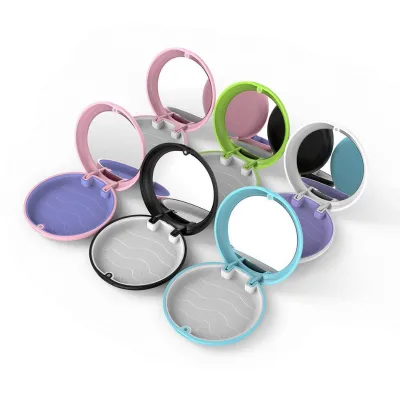


Colorful Denture Plastic Retainer Box Orthodontic Retainer Case Teeth Storage
$0.25 - $0.42
MOQ: 2000 Pieces


Comprehensive Sourcing Guide
Strategic Sourcing Guide for Orthodontic Dental Retainer Boxes with Mirror
Understanding Product Specifications and Technical Variations
When sourcing orthodontic dental retainer boxes with mirrors, buyers must first navigate a complex landscape of technical specifications that vary significantly between manufacturers. The core product serves as a protective container for dental appliances, yet the dimensions, materials, and internal features differ based on the intended model. Based on available market data, standard dimensions for these specialized equipment units often range from approximately 83mm to 88mm in width and depth, with heights varying between 27mm and 34mm. Specific model numbers such as SD-A-002 and SD-A-003 illustrate this variance, with the former measuring 888834mm and the latter 837429mm. Another variant, SD-A-008, presents a distinct profile of 87*27mm, indicating that "one size fits all" assumptions are often incorrect in this category.
Material composition is another critical technical factor. High-quality units typically utilize a combination of stainless steel and plastic to ensure durability while maintaining a lightweight profile. For instance, specific models weigh around 54g, a figure that is crucial for portability and patient comfort. The presence of a mirror is a defining feature for many of these boxes, with options available both with and without this inclusion. The mirror itself is often integrated into the lid design, sometimes utilizing magnetic closure mechanisms to ensure the mirror remains secure during transport. Additionally, the internal structure may feature silicone rubber components to cushion the dental appliance, preventing scratches or breakage. Buyers should verify whether the product is designed for single-item packaging or bulk carton packing, as standard packaging often consists of 100 pieces per carton, which impacts logistics and storage calculations.
Compliance, Certification, and Regulatory Standards
In the medical device and dental supply sector, compliance is not merely a formality but a prerequisite for market entry and liability protection. The primary certification observed in this category is the CE mark, which indicates conformity with health, safety, and environmental protection standards for products sold within the European Economic Area. While the CE certification is a high-confidence fact for certain listings, buyers must treat this as a product-specific attribute rather than a universal guarantee for all suppliers. It is essential to request current, valid certificates of conformity for each specific model being procured, as certification status can vary by batch or manufacturing location.
Beyond the CE mark, buyers should verify adherence to local regulatory standards in their target markets. For products originating from regions like Tianjin or Anhui in China, the manufacturing process must align with international quality management systems. The product nature is classified as "Specialized Equipment" or "Specialized Instrument Equipment," and the application is strictly defined for the "Orthodontic Department" and "Dental Area." This classification implies that the materials used must be biocompatible and safe for contact with dental appliances. The condition of the product is listed as "New," and the usage is defined as "Non-Disposable," suggesting that the box is intended for long-term, repeated use. Buyers must ensure that the supplier can provide documentation proving that the materials (stainless steel and plastic) meet the necessary hygiene and safety standards for medical environments.
Cost Drivers and Pricing Dynamics
The pricing structure for orthodontic dental retainer boxes is influenced by several dynamic factors, including customization levels, material quality, and order volume. The observed market price range spans from $0.10 to $4.27 USD, a wide disparity that reflects differences in feature sets and production complexity. At the lower end of the spectrum, basic models with standard colors and no mirror may fall near the $0.10 mark. Conversely, premium units featuring magnetic closures, silicone interiors, high-quality mirrors, and custom branding can approach the $4.27 range.
Material costs play a significant role in pricing. The inclusion of stainless steel components and high-grade plastics increases the base cost compared to purely plastic alternatives. Furthermore, the "Mirror" feature adds a manufacturing step and material cost, which is reflected in the price differential between models with and without mirrors. Customization is another major cost driver. Suppliers offering "Logo Printing Service" or "Customized The Color of The Box" often charge a premium. The availability of OEM services, such as printing a customer logo on the box or customizing the color palette to include shades like Rose Gold, Shampaigne Gold, or specific Pantone matches, requires additional setup and production time.
Order volume is the third critical factor. The Minimum Order Quantity (MOQ) ranges from 20 to 5000 units. Buyers purchasing small quantities, such as the 20-unit minimum, will likely face a higher per-unit cost due to the inefficiencies of small-batch production. In contrast, orders approaching the 5000-unit maximum benefit from economies of scale, potentially bringing the unit price closer to the lower end of the observed range. Buyers should also consider the "Sample" availability; while some suppliers offer free samples to verify quality, this does not negate the need to factor in shipping costs and the time required for evaluation before committing to a large order.
Typical Applications and Functional Requirements
The functional utility of orthodontic dental retainer boxes extends beyond simple storage; they are integral to the daily routine of patients undergoing orthodontic treatment. The primary application is for the safe transport and storage of dental appliances, including retainers, aligners, and other orthodontic materials. The "Usage" is explicitly defined for "Orthodontic Treatment" and "Denture Processing," indicating that these boxes are versatile enough to handle various types of dental devices. The "Nature" of the product as "Specialized Equipment" underscores its role in a professional medical context, where hygiene and protection are paramount.
The inclusion of a mirror is a significant functional enhancement. It allows patients to inspect their dental appliances and oral hygiene status on the go, a feature particularly valuable for those wearing clear aligners or invisible braces. The "Application" is listed for both "Child" and "Adult" demographics, meaning the design must accommodate different sizes of retainers and the varying needs of different age groups. The "Non-Disposable" nature of the product means it must withstand repeated opening and closing, as well as exposure to cleaning agents and moisture. The "Waterproof" feature is essential for this reason, ensuring that the internal environment remains dry and hygienic even if the box is exposed to water during travel or cleaning.
The packaging and logistics aspects also influence application. With a standard package of 100 pieces per carton, these boxes are designed for bulk distribution to dental clinics, orthodontic laboratories, or retail pharmacies. The "Single package size" of 11x11x5 cm provides a compact footprint for storage and shipping. The "Type" is categorized as an "Orthodontic Case," and the "Product name" often includes terms like "Dental Magnetic Orthodontic Case," highlighting the specific mechanism used to secure the lid.
Supplier Evaluation and Sourcing Criteria
Selecting the right supplier requires a rigorous evaluation process that goes beyond price comparison. Buyers should prioritize suppliers who demonstrate transparency in their production capabilities and quality control measures. The "Place of Origin" is a critical data point, with manufacturers located in Tianjin and Anhui, China, being prominent sources. While these locations are established manufacturing hubs, buyers must verify the specific factory's capacity and history. The "Brand Name" associated with the product, such as "AIC," can serve as an indicator of brand reputation, but buyers should not rely solely on brand recognition without verifying the specific product lineage.
Key evaluation criteria include the supplier's ability to provide OEM services. The availability of "Logo Printing Service" and "Customized The Color of The Box" indicates a flexible manufacturing process. Buyers should assess the supplier's capacity for "UV Printing" and other logo application methods to ensure the branding is durable and high-quality. The "Delivery Time" of 10 days is a standard metric to consider, but buyers must confirm if this applies to sample orders or bulk production. Lead times can vary significantly based on customization requirements and current production loads.
Furthermore, the "Sample" policy is a vital indicator of supplier confidence. Suppliers offering free samples allow buyers to physically inspect the product's build quality, mirror clarity, and magnetic closure strength before committing to a large order. The "Condition" of the product being "New" and the "Usage Times" being "Non-Disposable" should be verified through sample inspection to ensure the product meets the expected lifespan. Buyers should also check the "Certification" status of the specific batch, ensuring that the CE mark is valid and applicable to the specific model being ordered.
Quality Control and Long-Term Procurement Considerations
Maintaining consistent quality in orthodontic retainer boxes requires a robust quality control (QC) framework. Buyers should establish clear acceptance criteria for dimensions, material integrity, and finish quality. The standard dimensions, such as 888834mm or 837429mm, must be strictly adhered to; deviations can lead to fitment issues with dental appliances. The "Feature" of being "Waterproof" and "Durable" must be tested, particularly the effectiveness of the magnetic closure and the resistance of the silicone rubber to wear and tear. The "Mirror" should be free of distortions and securely attached, as a loose or cracked mirror can render the product unusable.
Long-term procurement considerations involve building a sustainable supply chain. Buyers should look for suppliers who offer consistent quality over time and can scale production as demand grows. The "MOQ" range of 20 to 5000 units suggests flexibility, but buyers should negotiate terms that allow for incremental ordering without excessive price penalties. The "Package" of 100PCS/Carton should be optimized for shipping efficiency to reduce logistics costs. Additionally, the "Customization" options should be evaluated for their long-term viability; for instance, a custom color or logo should be easily reproducible in future batches to maintain brand consistency.
Buyers must also consider the environmental impact and end-of-life disposal of the materials used. While the product is "Non-Disposable," the materials (stainless steel and plastic) should be recyclable or easily manageable. The "Standard" of 888834mm or similar dimensions should be maintained across all future orders to ensure compatibility with existing inventory and storage systems. Finally, the "Delivery Time" of 10 days should be factored into inventory planning to prevent stockouts, especially for clinics with high patient turnover. By focusing on these technical, regulatory, and logistical factors, buyers can secure a reliable supply of high-quality orthodontic dental retainer boxes with mirrors that meet the rigorous demands of the dental industry.
Comparative Analysis of Key Product Attributes
To facilitate decision-making, the following table summarizes the key attributes observed in the market for orthodontic dental retainer boxes with mirrors. This comparison highlights the variability in specifications, which buyers must navigate when selecting a supplier.
| Attribute Category | Observed Variations | Key Considerations for Buyers |
|---|---|---|
| Dimensions | 888834mm, 837429mm, 8727mm, 8722mm | Verify exact fit for specific dental appliances; do not assume standard sizing. |
| Materials | Stainless Steel, Plastic, Silicone Rubber | Ensure biocompatibility and durability; check for rust resistance in metal parts. |
| Mirror Feature | With or Without Mirror | Confirm mirror clarity and attachment method (magnetic vs. fixed). |
| Colors | White, Black, Pink, Blue, Purple, Green, Grey, Rose Gold, Shampaigne Gold | Custom colors may incur higher MOQs or setup fees. |
| Customization | Logo Printing (UV/Print), Color Customization | Verify print durability and color accuracy against brand guidelines. |
| Certification | CE (High Confidence) | Request valid certificates for specific batches; do not assume universal coverage. |
| Packaging | 100PCS/Carton, Single Item | Check carton dimensions for shipping efficiency and storage needs. |
| Origin | Tianjin, China; Anhui, China | Verify factory location and audit capabilities if required. |
| Lead Time | 10 Days (Standard) | Confirm if this applies to samples or bulk; account for customization delays. |
| MOQ | 20 to 5000 Units | Negotiate tiered pricing based on volume; balance inventory costs with demand. |
This table serves as a reference for the diverse options available in the market. Buyers should use this data to create a detailed specification sheet for their procurement requests, ensuring that all critical parameters are clearly defined to avoid misunderstandings with suppliers. By meticulously evaluating these attributes, buyers can secure products that not only meet their immediate operational needs but also support long-term business growth and patient satisfaction.
FAQs
What certifications do orthodontic dental retainer boxes with mirror have?
These specialized equipment units often carry CE certification for European market compliance. Buyers must verify the specific certificate for each batch, as status varies by model and manufacturing location rather than being a universal guarantee for all listings.
How are the dimensions of these boxes specified across different models?
Standard dimensions vary significantly, with models like SD-A-002 measuring 88*88*34mm and SD-A-003 measuring 83*74*29mm. Another variant, SD-A-008, presents a profile of 87*27mm, indicating that one size does not fit all assumptions in this category.
Can buyers request custom logos and colors for these orthodontic cases?
Yes, customization is available including logo printing via UV or standard methods and custom box colors like Rose Gold or Shampaigne Gold. Suppliers offer OEM services to print customer logos on the box or customize the color palette to specific requirements.
What is the typical delivery time for these dental retainer boxes?
The standard delivery time for these specialized instrument equipment units is 10 days. This timeline applies to production and shipment, though actual lead times may vary based on customization requirements and current production loads at the factory.
Which materials are used to construct these waterproof orthodontic cases?
These durable cases are typically constructed from a combination of stainless steel and plastic. The material composition ensures a lightweight profile, often weighing around 54g, while maintaining the necessary durability and waterproof features for repeated use.
What is the minimum order quantity for sourcing these dental products?
The minimum order quantity ranges from 20 to 5000 units depending on the supplier and customization level. Smaller orders near the 20-unit minimum often incur higher per-unit costs due to production inefficiencies compared to bulk orders near the maximum.
Are free samples available for testing the quality of these boxes?
Some suppliers offer free samples to allow buyers to verify build quality and mirror clarity before committing to large orders. While the sample itself may be free, buyers should factor in shipping costs and evaluation time before placing a bulk purchase.