Source Outdoor Air Conditioner Support Bracket for Home, Wall, and Unit Mounting
Compare 30 verified listings for the Outdoor Air Conditioner Support Bracket featuring materials like hot rolled sheet and stainless steel. Buyers can evaluate thickness options, customization availability, and MOQs ranging from 100 to 2000 units for various applications.
Key considerations
Products List


Customize OEM Bracket Support AC Outdoor Window Air Conditioner Bracket
$2.80 - $3.50
MOQ: 1000 Pieces


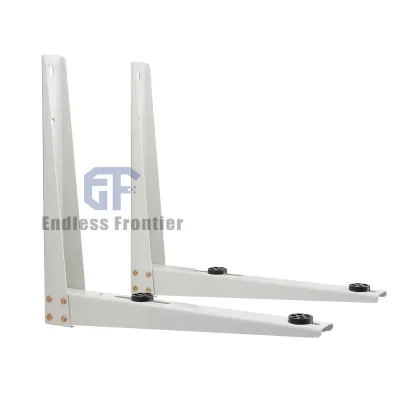
Air Conditioner Bracket Metal Split AC Bracket Outdoor AC Support Bracket
$2.80 - $3.00
MOQ: 1000 Pieces




Comprehensive Sourcing Guide
Strategic Sourcing Guide for Outdoor Air Conditioner Support Brackets
Understanding Product Variants and Core Specifications
When sourcing outdoor air conditioner support brackets, buyers must first navigate the diverse landscape of product definitions and technical specifications. The market offers a range of items often categorized under "Air Conditioner Metal Bracket," "Air Conditioner Bracket," or "Air Conditioner Steel Support." While these terms are frequently used interchangeably, the underlying engineering and material composition can vary significantly. The primary function of these components is to provide a stable, load-bearing foundation for outdoor units, ensuring they remain secure against environmental stressors such as wind, vibration, and thermal expansion.
A critical observation in the current supply base is the variation in material composition. Suppliers offer brackets constructed from Hot Rolled Sheet, Galvanized Steel, Stainless Steel, and general Steel. The choice of material directly dictates the product's resistance to corrosion, a paramount concern for outdoor applications. For instance, Hot Rolled Sheet and Galvanized options are common, while Stainless Steel variants offer enhanced durability in coastal or high-humidity environments. The structural design also differs; buyers will encounter Triangle Brackets designed for specific load distributions, Single-side Brackets for wall-mounted installations, and general Wall Bracket configurations.
Thickness is another pivotal specification that influences both cost and structural integrity. Available thicknesses in the observed market range from 1.5mm to 2.2mm, with specific options including 1.5mm, 1.8mm, 2.0mm, and 2.2mm. Some suppliers offer customized thicknesses to meet unique load requirements. Dimensional standards are equally varied, with common sizes ranging from 390mm x 430mm to larger configurations like 500mm x 550mm. The ability to customize dimensions is a standard feature, allowing procurement teams to match the bracket to specific unit footprints. Buyers should verify that the selected model, such as those designated by codes like TB, RTK133, or RTK-106, aligns with the physical constraints of the air conditioner being installed.
Compliance, Certification, and Material Standards
Ensuring that outdoor support brackets meet safety and quality standards is a non-negotiable aspect of B2B procurement. While the specific certification status of every supplier in the market cannot be universally asserted without individual verification, the presence of certifications like CE in the supply chain indicates a commitment to European safety and quality benchmarks. Buyers must actively request and validate certification documents for any batch of brackets intended for regulated markets. The absence of a visible certification does not necessarily imply non-compliance, but it requires a rigorous audit of the manufacturer's quality management systems.
Material standards are equally critical. The supply base frequently references "Hot rolled sheet" as a standard classification, yet the actual metallurgical properties can vary based on the supplier's sourcing. For outdoor applications, the standard "Hot rolled sheet" must often be treated with galvanization or other anti-corrosion processes to prevent rust. Buyers should verify the specific standard codes provided by the manufacturer, such as those referencing dimensions like 390430MM1.5MM or 5005502.2mm, to ensure the product matches the intended engineering specifications.
Furthermore, the origin of the product plays a role in compliance. A significant portion of the supply originates from manufacturing hubs in Jiangsu (Changzhou), Tianjin, and Zhejiang, all within China. These regions have established reputations for metal fabrication, but buyers must ensure that the specific factory adheres to the required international standards for their target market. The "Standard" attribute in product listings often defaults to "According to the customer," which places the onus on the buyer to define the exact technical requirements in the purchase order. This customization capability allows for tailored solutions but requires precise communication of standards to avoid manufacturing errors.
Cost Drivers and Pricing Dynamics
The pricing structure for outdoor air conditioner support brackets is influenced by a complex interplay of material costs, manufacturing complexity, and order volume. The observed price range in the market spans from approximately $1.60 to $20.00 USD per unit. This wide variance is not arbitrary; it reflects differences in material grade, thickness, and finishing processes. A bracket made from standard Hot Rolled Sheet with a thickness of 1.5mm will naturally be priced lower than a unit crafted from Stainless Steel with a thickness of 2.2mm and custom galvanization.
Minimum Order Quantity (MOQ) is a significant factor in determining the effective unit cost. The market exhibits an MOQ range from 100 to 2,000 units, with a high-confidence observation of 500 sets or pieces being a common threshold. Suppliers often structure their pricing tiers to reward larger volumes. For buyers operating with smaller procurement needs, the unit price may be higher due to the fixed costs of setup and production runs. Conversely, buyers capable of meeting or exceeding the 1,000-unit threshold can often negotiate more favorable pricing.
Additional cost drivers include packaging and logistics. While some suppliers offer basic "Carton Box" or "Carton Packing," others provide "Seaworthy Export Cartons" or "Cartons + Pallets" to ensure safe transit. The choice of packaging can impact the final landed cost, particularly for international shipments where palletization reduces handling damage and optimizes container space. Furthermore, the "Customization" attribute, which is widely available, adds a layer of cost. Custom colors, such as "Pure" or "White," and custom dimensions require dedicated tooling or production adjustments, which are typically reflected in the final quote. Buyers should request a detailed breakdown of costs to understand how much of the price is attributed to raw materials versus value-added services like customization and specialized packaging.
Typical Applications and Installation Scenarios
Outdoor air conditioner support brackets are designed for a specific set of high-stress applications, primarily supporting the weight of outdoor condenser units. The "Apply for" attribute consistently points to "Air Conditioner Outdoor Unit," confirming their specialized use case. These brackets are essential for mounting units on walls, balconies, or rooftops where the ground is unavailable or unsuitable. The "Structure" of the bracket, whether it is a "Triangle Bracket" or a "Single-side Bracket," dictates the installation method and the load distribution. Triangle brackets are often preferred for their inherent stability, distributing weight across two points of contact, while single-side brackets may be used in space-constrained environments.
The "Usage" classification as a "Wall Bracket" highlights the primary installation surface. However, the versatility of these products allows for adaptation to various building materials. The "Style" of the bracket, described as "New Classical" or "Pure," suggests that aesthetic considerations are also part of the design process, ensuring the hardware blends with the building's exterior. The "Folded" attribute indicates that some units may be designed for flat-pack shipping to reduce logistics costs, requiring assembly on-site. This feature is particularly relevant for large-scale projects where shipping volume is a concern.
Buyers must also consider the environmental context of the application. Brackets used in coastal areas require higher corrosion resistance, often necessitating Stainless Steel or heavy galvanization. In contrast, brackets for inland residential use might suffice with standard Hot Rolled Sheet. The "Adjusted" feature, noted as "With Adjusted," implies that some brackets offer flexibility in positioning, allowing installers to fine-tune the angle or height of the unit to ensure proper drainage and airflow. This adjustability is a crucial feature for maintaining the efficiency and longevity of the air conditioning system.
Supplier Evaluation and Manufacturing Capabilities
Evaluating suppliers for outdoor air conditioner support brackets requires a focus on manufacturing capabilities and supply chain reliability. The "Manufacturing Arts" are listed as "Metal," indicating a focus on metal fabrication techniques such as cutting, bending, and welding. Buyers should assess the supplier's capacity to handle the specific thicknesses and materials required. For instance, a supplier offering 2.2mm thickness must have the appropriate press brake and cutting equipment to maintain precision.
The "Customization" attribute is a key differentiator among suppliers. While many offer standard sizes, the ability to provide "Customized" dimensions and colors is a sign of a flexible manufacturing partner. This capability is essential for projects with unique architectural requirements or specific unit models that do not fit standard bracket dimensions. Buyers should verify the supplier's lead time for custom orders, as these often require additional setup time compared to stock items.
Origin and logistics are also critical evaluation criteria. The supply base is concentrated in regions like Jiangsu, Changzhou, Tianjin, and Zhejiang. These locations offer established infrastructure for metal production and export. However, buyers must verify the specific factory location to ensure it aligns with their logistics strategy. The "prod_packing" attribute varies from "Carton Box" to "Seaworthy Export Cartons," indicating different levels of logistical readiness. A supplier offering seaworthy packaging demonstrates an understanding of international shipping requirements, reducing the risk of damage during transit.
Quality Control and Long-Term Procurement Considerations
Quality control in the production of air conditioner support brackets must address both structural integrity and long-term durability. The "Warranty" attribute, observed as "1 Year" in some listings, provides a baseline expectation for product reliability. However, buyers should not rely solely on warranty periods but should implement their own quality assurance protocols. This includes verifying the thickness of the metal, the quality of the welds, and the uniformity of the galvanization or coating.
Long-term procurement considerations involve the stability of the supply chain and the consistency of product quality. The "Standard" attribute often defaults to "According to the customer," which means the buyer must define the quality metrics clearly. This includes specifying the exact dimensions, material grades, and surface treatments. Regular audits of the supplier's production line can help ensure that the quality remains consistent over time.
Additionally, buyers should consider the scalability of the supplier. As projects grow, the ability to increase order volumes without compromising quality or lead times is essential. The observed MOQ range of 100 to 2,000 units suggests that suppliers are capable of handling both small and large orders, but buyers should confirm the supplier's capacity to scale up production if needed. The "Keywords" associated with these products, such as "AC Bracket," help in identifying the right suppliers, but buyers must ensure that the specific product matches the technical requirements of their project.
In conclusion, sourcing outdoor air conditioner support brackets requires a meticulous approach to specification, compliance, cost, and supplier evaluation. By understanding the nuances of material selection, thickness, and customization, buyers can secure high-quality products that meet the demands of their specific applications. The market offers a wide range of options, but success lies in the ability to navigate these variables and establish a reliable partnership with a supplier who can deliver consistent, high-quality results.
FAQs
What materials are used for outdoor air conditioner support brackets?
Brackets are constructed from Hot Rolled Sheet, Galvanized Steel, Stainless Steel, or general Steel. The choice of material dictates corrosion resistance, with Stainless Steel offering enhanced durability for high-humidity environments.
Which thickness options are available for these metal brackets?
Available thicknesses range from 1.5mm to 2.2mm, including specific options like 1.8mm and 2.0mm. Some suppliers offer customized thicknesses to meet unique load requirements for different air conditioner models.
Can buyers request customized dimensions and colors for these brackets?
Yes, customization is widely available for dimensions, colors, and specific model requirements. Buyers can specify sizes like 390*430mm or request pure white finishes to match building aesthetics.
What is the typical minimum order quantity for these brackets?
The market exhibits an MOQ range from 100 to 2,000 units, with 500 sets being a common threshold. Suppliers often structure pricing tiers to reward larger volumes exceeding 1,000 units.
How are these brackets typically packaged for export shipping?
Packaging options include Carton Box, Seaworthy Export Cartons, or Cartons combined with Pallets. Seaworthy packaging demonstrates an understanding of international shipping requirements to reduce transit damage risks.
Which certifications are available for these support brackets?
Some listings indicate CE certification, indicating a commitment to European safety and quality benchmarks. Buyers must actively request and validate certification documents for any batch intended for regulated markets.
Where are these metal brackets typically manufactured?
Production originates from manufacturing hubs in Jiangsu, Changzhou, Tianjin, and Zhejiang within China. These regions have established reputations for metal fabrication and export infrastructure.